The following 20 techniques of Kung Fu are selected from different schools of martial arts, encompassing hand techniques, leg techniques, body movements, and skills, showing the core training of Chinese Kung Fu.
Horse Stance (Ma Bu)
The horse stance builds lower body strength and stability essential for all martial arts movements.
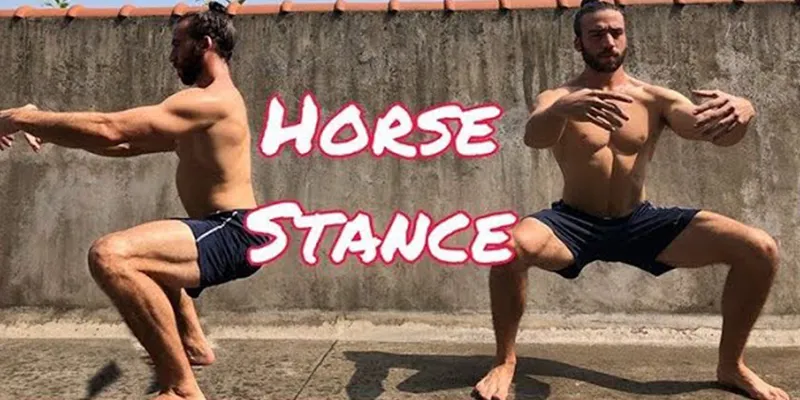
Stand with feet wider than shoulder-width apart, toes pointing forward, and slowly lower your body until thighs are parallel to the ground while keeping your back straight and core engaged. This stance develops leg endurance, improves balance, and creates a solid foundation for executing other techniques.
Regular practice strengthens the quadriceps, enhances hip flexibility, and teaches proper body alignment that carries over into every aspect of kung fu training.
Bow Stance (Gong Bu)
The bow stance provides forward power and mobility while maintaining defensive readiness.
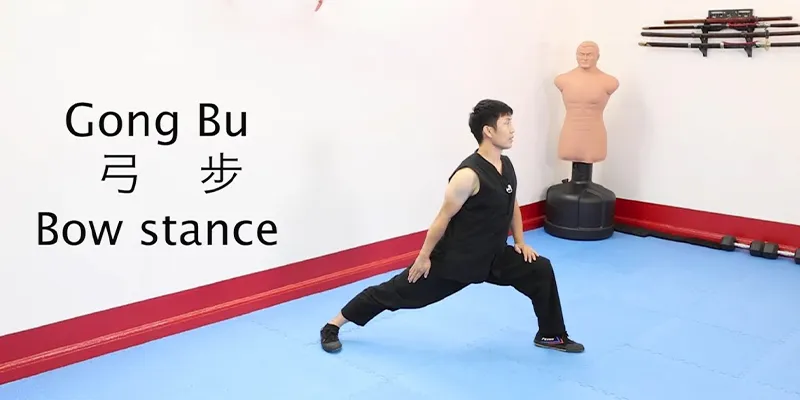
Step forward with one foot while bending the front knee to approximately 90 degrees and keeping the rear leg straight, with weight distributed primarily on the front leg. This stance allows for quick directional changes, generates momentum for strikes, and maintains structural integrity during combat applications.
This techniques of kung fu develops coordination between upper and lower body movements while teaching proper weight distribution for effective technique execution in both offensive and defensive scenarios.
Straight Punch (Zhi Quan)
The straight punch is a basic striking technique that delivers a direct, linear force to an opponent using the fist.
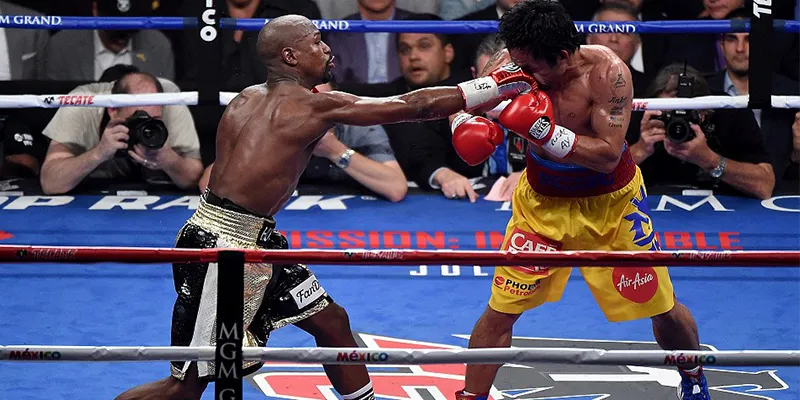
This move begins from a balanced guard position where the non-punching hand protects the face; the punching arm extends rapidly forward from the hip or chest, rotating the fist slightly for impact while engaging the core and legs for stability and power generation.
Its effects include penetrating an opponent’s defense to cause blunt trauma, disrupt balance, or create openings for subsequent attacks, making it a versatile tool in both offensive and defensive scenarios.
Swing Fist (Bai Quan)
The swing fist is a sweeping, circular punch that utilizes rotational momentum to strike from the side.
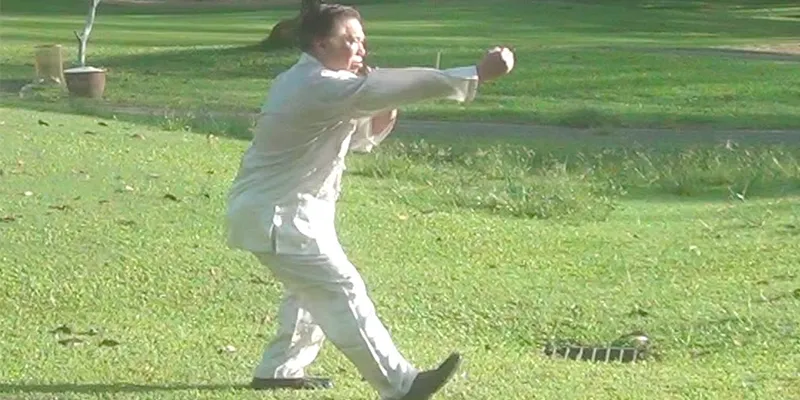
Executed by pivoting on the rear foot, the practitioner rotates the torso and shoulder to propel the arm in a wide arc, with the fist clenched and the elbow slightly bent to maintain control.
This technique of Kung Fu effects is to generate high impact force capable of disorienting or knocking down an opponent, particularly effective against targets like the head or torso, while also serving to cover lateral vulnerabilities.
Hook Pounch (Gou Quan)
The hook pounch is a curved punching motion designed to target the flanks or jawline with a hooking trajectory.
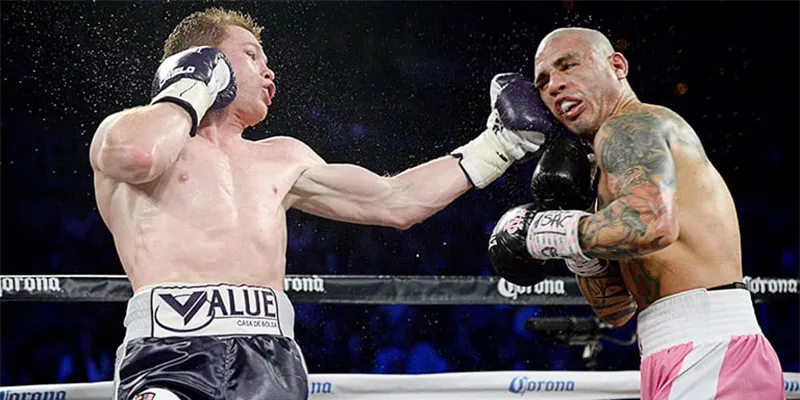
Starting from a compact stance, the arm bends at the elbow to form a hook shape, and the body twists to drive the fist inward toward the opponent, keeping the wrist aligned to avoid injury. Its effects involve delivering concentrated force to sensitive areas, potentially causing concussions, fractures, or temporary loss of equilibrium, which is especially useful in close-quarters combat to bypass straight-line defenses.
Uppercut (Chong Quan)
The uppercut is an ascending punch that rises vertically to strike underneath an opponent’s guard.
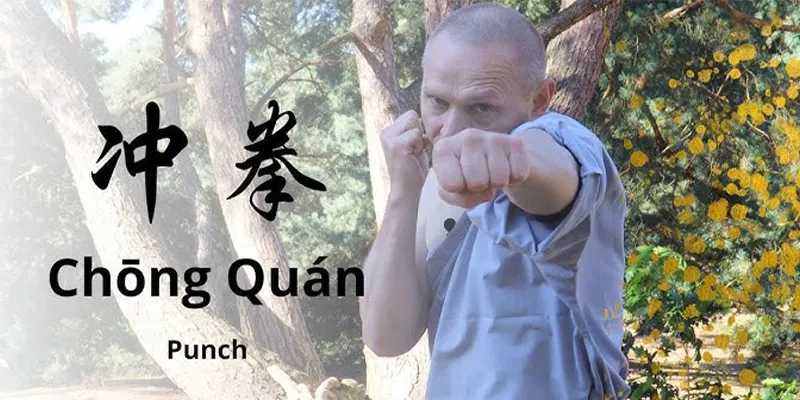
From a lowered position with knees bent, the fist is driven upward in a tight arc, powered by an explosive extension of the legs and hips, while the opposite hand remains defensive. This technique of kung fu affects the opponent by lifting the chin or body, leading to disorientation, jaw misalignment, or exposure of vital areas, proving invaluable for countering taller adversaries or in clinch situations.
Tan Tui (Spring Kick)
The spring kick is a fast, snapping lower-body attack used to intercept or surprise an opponent at close to mid-range.
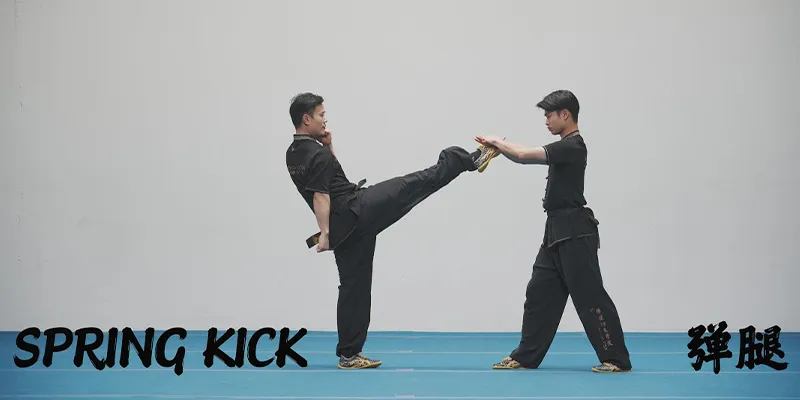
You lift the knee and quickly “snap” the lower leg forward, striking with the top of the foot or the toes before immediately retracting it. Its effect is to disrupt an opponent’s rhythm or strike sensitive targets like the shin or groin, relying on speed and the whip-like motion of the knee rather than heavy body weight.
Yun Shou (Cloud Hands)
Cloud Hands is a continuous, circular defensive movement used to redirect force and maintain a protective barrier.
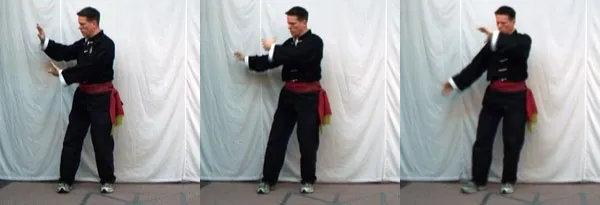
You move your hands in slow, vertical circles while rotating the waist and shifting weight from side to side. This techniques of Kung Fu allows a martial artist to catch and deflect an incoming strike, guiding the opponent’s force into “empty space” rather than resisting it with a hard block.
Deng Jiao (Heel Kick)
The heel kick is a powerful thrusting maneuver intended to push an opponent away or cause structural damage.
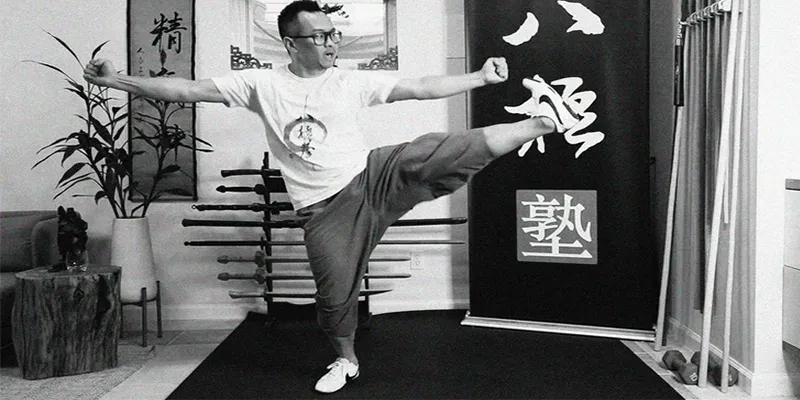
You chamber the knee toward the chest and then drive the foot forward with the toes pulled back, striking squarely with the heel. This techniques of kung fu utilizes the body’s strongest muscles—the glutes and hamstrings—to deliver a heavy blow that can break an opponent’s guard or knock them to the ground.
Pi Zhang (Chopping Palm)
This technique uses a downward or diagonal swinging motion to strike with the rigid edge of the hand.
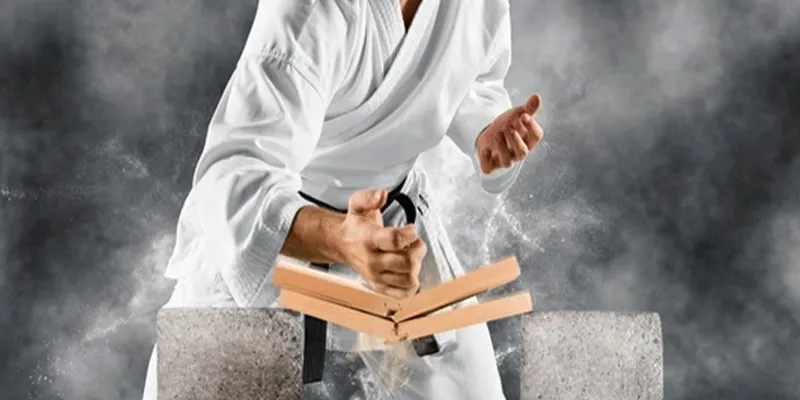
Similar to the movement of an axe, the arm is raised and then brought down forcefully, striking with the “knife-hand” edge. This is particularly effective for targeting the neck, collarbone, or bridge of the nose, as it concentrates the force of the swing into a narrow, hardened surface area.
Qin Na (Joint Locking)
Qin Na is a specialized system of grappling that focuses on controlling an opponent by manipulating their joints and pressure points.
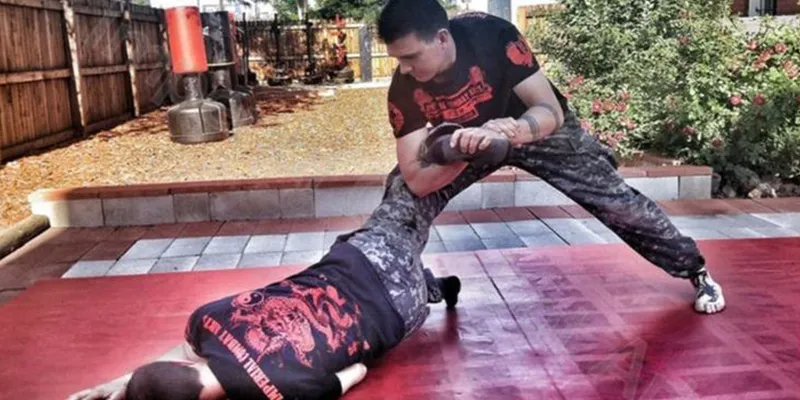
By applying leverage to an opponent’s wrist, elbow, or shoulder, the practitioner forces the joint against its natural range of motion. The effect is immediate immobilization or submission, allowing a smaller individual to control a larger attacker through mechanical advantage rather than brute strength.
Shuai Jiao (Hip Throw)
The hip throw is a wrestling technique that uses the practitioner’s hip as a fulcrum to launch an opponent over their body.
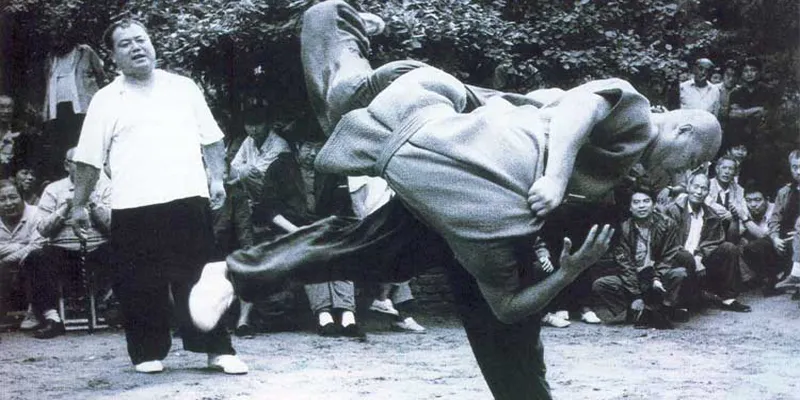
You step inside the opponent’s guard, pull your upper body close, and position your hip below the opponent’s center of gravity. With a sudden lift and rotation, the opponent is uprooted and thrown to the ground, using their own momentum and weight against them.
Bai He Liang Chi (White Crane Spreads Wings)
This is a versatile defensive-offensive posture used to clear the line of sight and prepare for a counterattack.
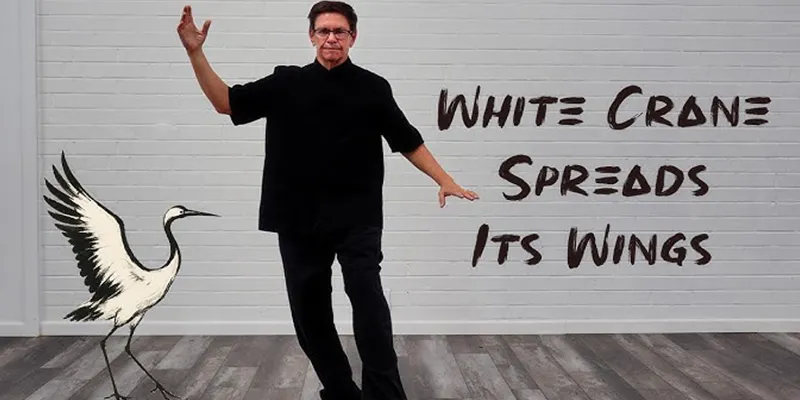
You stand in a “false stance” (weight on the back leg) while one hand sweeps upward to protect the head and the other presses down to protect the groin. This techniques of Kung Fu opens up the opponent’s defense by clearing their hands away, while the unweighted front leg remains free to deliver a sudden kick.
Kao (Shoulder Strike)
The shoulder strike is a high-impact, close-quarters attack used when there is no room to swing the arms.
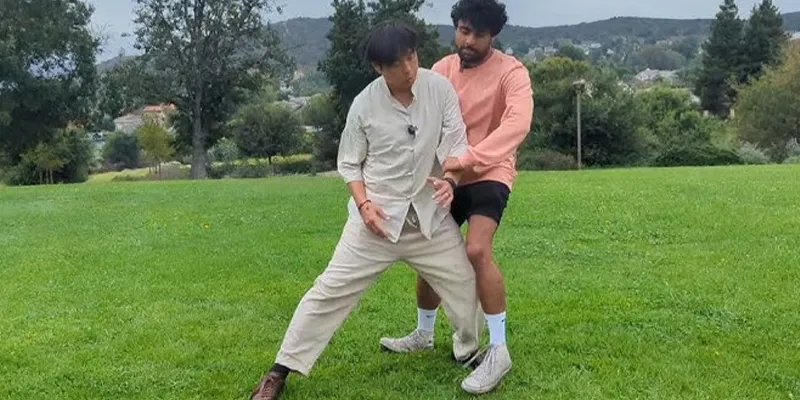
You step deep into the opponent’s space and lunge your shoulder into the opponent’s chest or ribs, powered by an explosive push from the legs. This techniques of Kung Fu is common in Tai Chi and Baji Quan, serving to knock the opponent off balance or cause internal jarring through a “short-power” burst.
Ce Chuai (Side Kick)
The side kick is a long-range defensive strike used to stop an attacking opponent in their tracks.
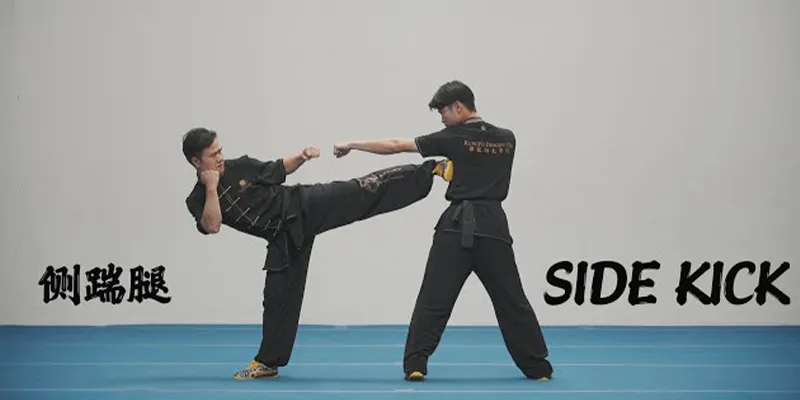
The fighter pivots the standing foot 180 degrees while extending the kicking leg sideways, striking with the sole or heel of the foot. Because it uses the full length of the leg and the strength of the hip, it acts as a “stop-hit” that can halt a charging opponent and keep them at a safe distance.
Ti Xi (Knee Lift/Strike)
The knee lift is a dual-purpose move used to block low kicks or strike the opponent at very close range.
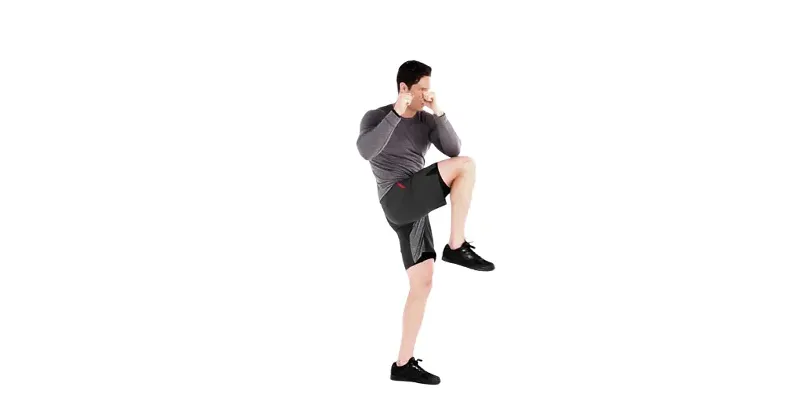
By driving the knee upward toward the opponent’s midsection or chin, the practitioner delivers a devastating blow using the hardest bone in the leg. Defensively, raising the knee (checking) acts as a shield to protect the thighs and groin from incoming kicks.
Gou Zi (Inside Leg Hook)
The inside leg hook is a subtle tripping technique used to collapse an opponent’s base during a clinch.
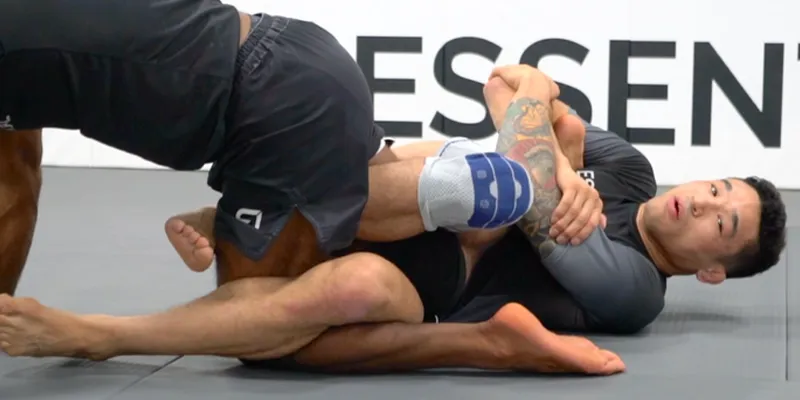
You hook your foot behind the opponent’s ankle or calf from the inside while simultaneously pushing the opponent’s upper body in the opposite direction. This creates a shearing force that removes the opponent’s support, causing them to fall backward with very little effort required from the practitioner.
Pushing Hands (Tui Shou)
Pushing Hands develops sensitivity to an opponent’s force and teaches redirection rather than direct opposition.
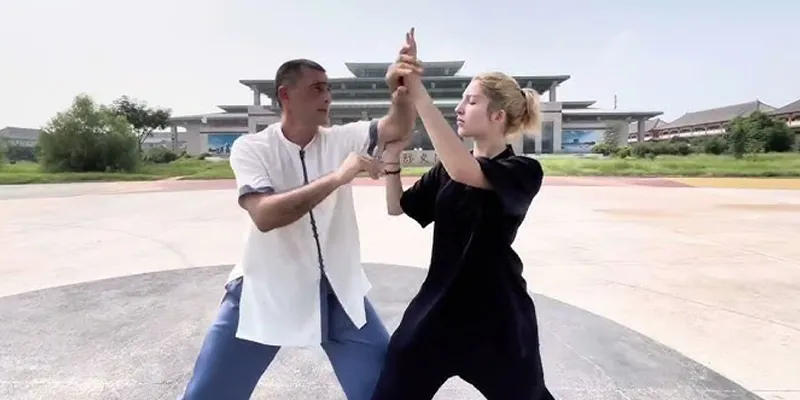
Two practitioners maintain light contact with their arms while practicing yielding, sticking, and neutralizing each other’s pushes and pulls, focusing on maintaining root and center while disrupting the opponent’s balance. This exercise builds tactile sensitivity, improves balance under pressure, and teaches the principle of using an opponent’s force against them.
Dragon Claw (Long Zhua)
The Dragon Claw technique uses the fingers and palm to control, lock, or strike vulnerable targets with precision.
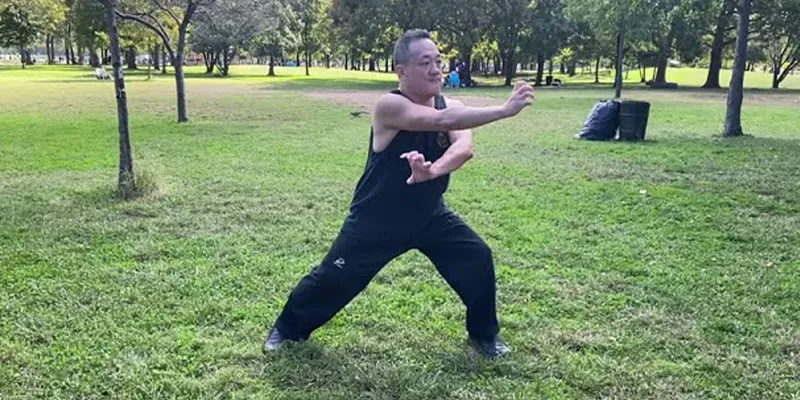
Form your hand with fingers slightly curved and spread, thumb opposed, then practice grabbing, pressing, or striking motions targeting pressure points, joints, or soft tissues. This technique of Kung Fu develops finger strength, wrist flexibility, and targeting accuracy while teaching the principle of controlling rather than merely striking an opponent.
Golden Thread Wrist Wrap (Joint Lock)
A typical grappling technique that utilizes leverage to control the wrist joint.
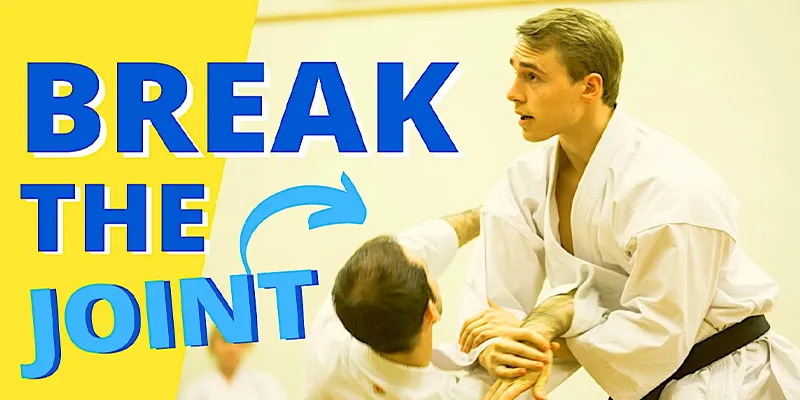
When the opponent’s right hand grasps your right wrist, your left hand immediately presses down to fix the back of their hand against your wrist. Then, using your wrist as an axis, your right hand spirals outwards and downwards, creating an extreme backbend in your wrist joint, forcing the opponent to kneel in excruciating pain or lose the ability to resist.
These 20 techniques of kung fu represent the foundation upon which countless kung fu variations and applications are built.