Tai Chi, often called “meditation in motion,” is a gentle, low-impact exercise that is exceptionally well-suited for seniors. It combines slow, flowing movements with deep breathing and mental focus.
The Cleveland Clinic’s Center for Geriatric Medicine even lists it as a top-recommended activity for older patients, with its section chief, Dr. Ardeshir Hashmi, noting its “immense” stress reduction effects.
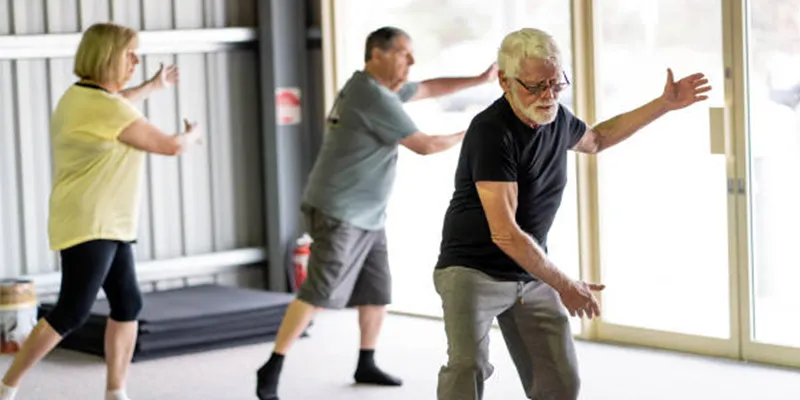
This guide details 7 basic Tai Chi exercises for seniors with pictures that form a safe and beneficial practice.
Commencing Form (Qǐshì)
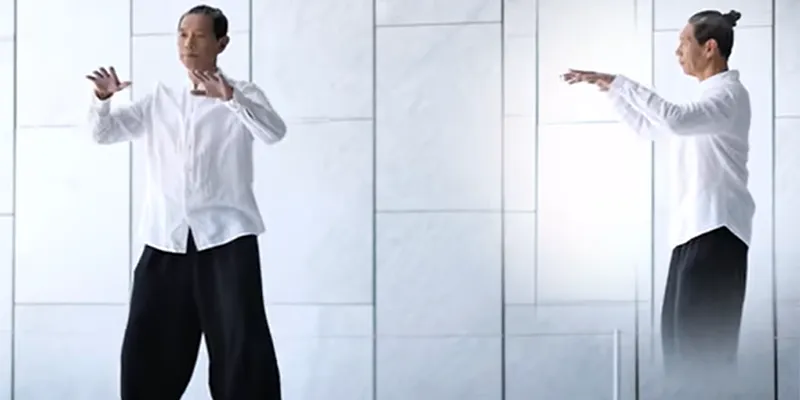
The Commencement Form is the cornerstone of practice. It teaches the fundamental Tai Chi posture—spine upright, shoulders relaxed, knees softly bent.
Research indicates that the slow, weight-shifting nature of Tai Chi acts as continuous balance training; as expert Dr. Elizabeth Eckstrom describes it, “It’s almost like falling every time you do a Tai Chi move, and you’re catching yourself.” This exercise begins the process of “separating the weight,” a key principle for stability.
Step-by-Step:
Stand with your feet parallel, shoulder-width apart.
Relax your shoulders, tuck your chin slightly, and breathe naturally.
Inhale slowly as you raise your arms forward and upward to shoulder height, as if lifting a light balloon.
Exhale as you gently press your palms down, lowering your arms back to your sides while maintaining a slight bend in the knees.
Repeat 3-5 times, focusing on smooth, continuous motion and your connection to the ground.
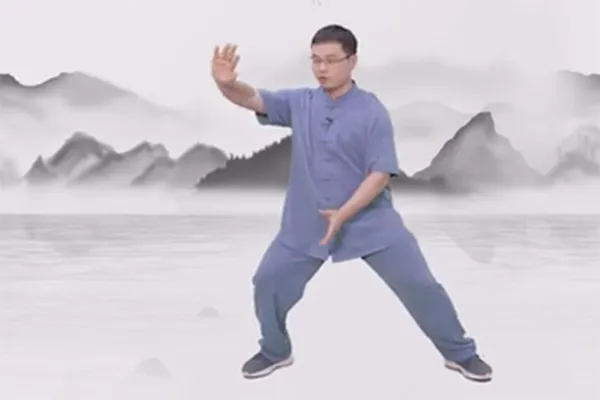
Wave Hands Like Clouds (Yún Shǒu)
This lateral movement is superb for training dynamic balance and mobility in the waist and spine. The continuous, side-to-side weight shifting challenges your stability in a different plane than walking forward and back.
According to Harvard Health, Tai Chi helps train proprioception—your body’s ability to sense its position in space. This exercise directly engages and improves that sense.
Step-by-Step:
Stand with feet wider than shoulder-width, knees softly bent.
Shift your weight to your right leg. As you do, your hands float in front of your chest, the left palm facing your body as it passes and the right palm turning outward.
Follow the movement to the left as you shift weight onto your left leg, allowing your hands to cross gently (right palm in, left palm out).
Keep the movement fluid and continuous, like softly pushing a cloud from side to side. Let your waist turn and your eyes follow your hands.
Continue for 1-2 minutes.
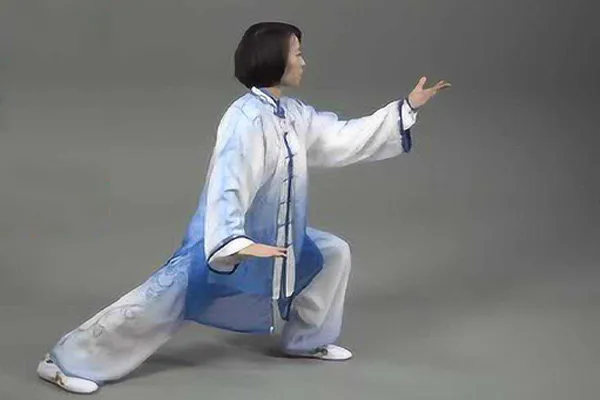
Parting the Wild Horse’s Mane (Yě Mǎ Fēn Zōng)
This movement is excellent for integrating the upper and lower body and improving coordination. It involves a clear weight shift from one leg to the other, which strengthens the legs—a critical factor in fall prevention.
The reaching and turning motion also promotes flexibility in the torso and shoulders. The flowing, circular action is characteristic of Tai Chi’s ability to work the body as a complete unit without straining joints.
Step-by-Step:
Step forward comfortably with your right foot into a stable stance.
As you shift 70% of your weight onto your right leg, your right hand rises in a gentle arc (palm facing down) as if guiding a horse’s head away, stopping near your temple.
Simultaneously, your left hand presses down gently near your right hip.
Your torso turns slightly to the right with the motion. Your gaze follows the leading hand.
Slowly shift weight back and return to center. Repeat on the left side.
Alternate for 5-10 repetitions per side.
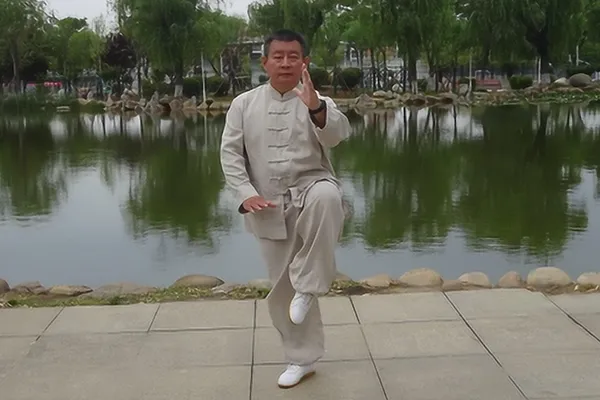
Golden Rooster Stands on One Leg (Jīn Jī Dú Lì)
This is a direct and highly effective balance training exercise. Studies have shown that Tai Chi can reduce fall risk by nearly 50%.
Standing on one leg builds strength in the ankles and standing leg while dramatically improving static balance and core stability. It also cultivates deep concentration, linking the mind and body.
Step-by-Step (Use a chair or wall for support until confident):
Shift all your weight onto your left leg.
Slowly lift your right knee, bringing your foot off the ground to a comfortable height.
Simultaneously, you may raise your arms: left arm up (palm facing up) and right hand pressing down for balance.
Hold for 3-5 breaths, focusing on a fixed point in front of you.
Gently lower the foot and arm. Alternate legs.
Aim for 3-5 holds per side.
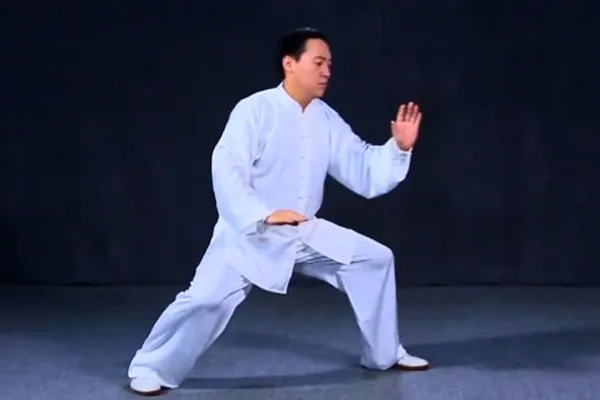
Repulse the Monkey (Dào Juǎn Gōng)
This exercise is crucial for practicing controlled backward movement, a common scenario for falls.
It enhances spatial awareness and coordination while continuing to strengthen the legs. The alternating arm movements promote shoulder flexibility and upper-body strength. The coordinated focus required stepping back while managing arm positions. It provides a cognitive challenge that can help sharpen the mind.
Step-by-Step:
Begin standing, then take a smooth, deliberate step straight back with your right foot.
As your weight settles onto your back leg, your left hand draws back in an arc past your left ear.
At the same time, your right hand extends forward with a soft pushing motion, palm facing out.
Your gaze follows the retreating (left) hand.
Return to the starting position and repeat, stepping back with the left foot.
Alternate for 5-8 steps back with each leg.
Brush Knee and Push (Lǚ Xī Ào Bù)
This movement promotes excellent coordination between the upper and lower body. The “brushing” action encourages a gentle twist and mobility in the torso, while the forward step and push build leg strength and “rooted” stability. The motion of pushing from the core can help improve overall posture.
For those with arthritis, such fluid, non-impact movements can help maintain joint mobility and reduce pain.
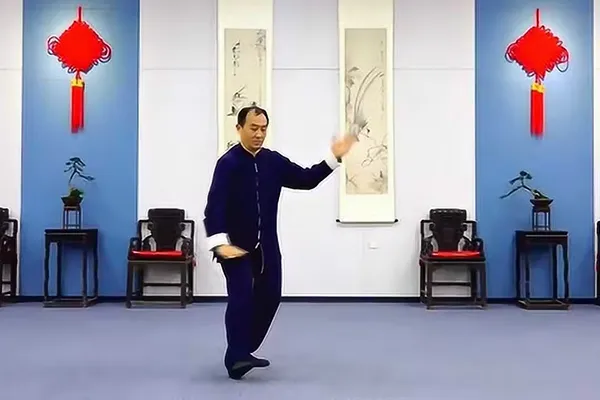
Step-by-Step:
Step forward with your left foot into a stable stance.
As you shift weight forward, your right hand “brushes” down past the outside of your left knee.
Simultaneously, your left hand pushes forward from near your left ear, palm facing out.
Ensure your forward knee stays aligned over your ankle, not past your toes.
Shift weight back and return to center. Repeat on the other side (step with right foot, brush with left hand).
Alternate for 5-10 repetitions per side.
Closing Form (Shōushì)
The Closing Form is vital for integrating the practice and returning the body and nervous system to a state of calm. It “seals” the energy cultivated during the session and promotes a sense of completion and serenity.
The deep, coordinated breathing here enhances the relaxation response, which has been linked to lowering blood pressure and reducing symptoms of anxiety and depression. It bookends the practice, just as the Commencement Form began it.
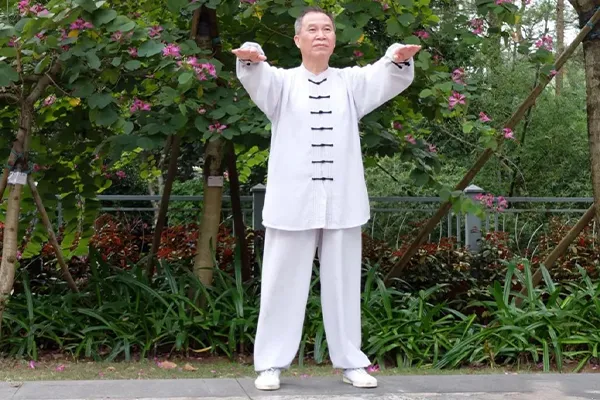
Step-by-Step:
Bring your feet together or keep them shoulder-width apart.
Inhale as you gently raise your hands in front of your body.
Exhale slowly and deeply as you turn your palms to face the ground and press them gently downward, lowering your arms to your sides.
Stand quietly for several breaths, observing the sensations in your body and a feeling of grounded calm.
This marks the end of your practice session.
Consistency is the secret to Tai Chi. Practicing these 7 Basic Tai Chi Exercises for Seniors for just 15 minutes a day will yield better results than practicing for two hours once a week. Be patient with yourself. As we say in the studio, “A journey of a thousand miles begins with a single step.”