Choosing the right Tai Chi instructor is one of the most important decisions you’ll make in your practice.
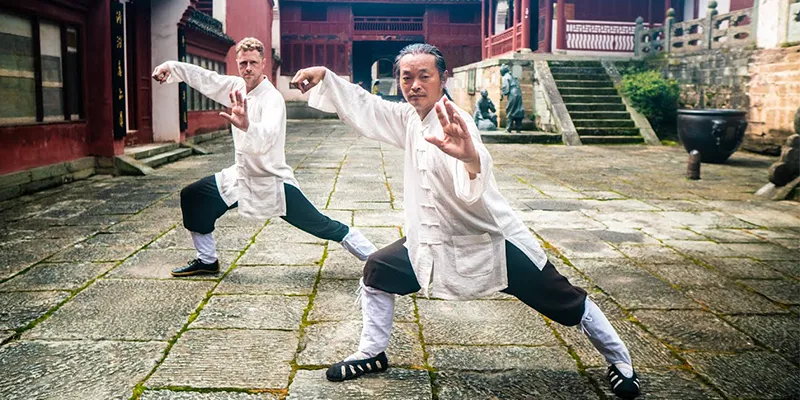
A good teacher doesn’t just demonstrate movements; he transmits decades of knowledge, refines your structure, protects your joints, and helps you progress safely toward genuine skill. Here are the key qualities to look for when evaluating a tai chi instructor.
Authentic Lineage and Long-Term Training
Look for a teacher who can clearly name their primary teacher and the lineage they belong to (Chen, Yang, Wu, Sun, or a recognized branch).
Serious tai chi instructors have usually trained for 10–30 years under direct, in-person guidance, not just weekend seminars or online videos. Ask: “Who did you study with full-time, and for how many years?” A legitimate answer should include specific names, places, and duration.
Traditional Teaching, Not Just Forms
A quality tai chi instructor teaches internal principles, including relaxation/song, root, whole-body connection, intent/yi, spiral force, etc., from day one, not merely external forms. They correct posture, weight distribution, and alignment in detail and can explain why each adjustment matters for both health and martial application.
Hands-On Correction and Individual Attention
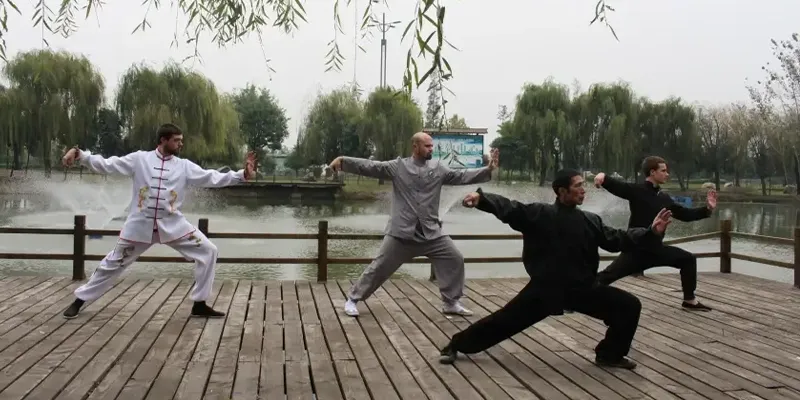
The best tai chi teachers regularly use gentle, precise touch to adjust students’ structure and help them feel correct alignment. If a teacher never touches students or only gives verbal cues from the front of the room, important nuances are usually lost.
Complete Course Structure
A serious instructor offers a complete curriculum that eventually includes:
- Qigong and foundational exercises.
- Partner sensing hands (push hands/tui shou).
- Martial applications (practical understanding of movements).
- Weapon forms (straight sword, broadsword, spear, etc., when appropriate).
A tai chi instructor who teaches only choreographed routines and never progresses to partner work or applications is usually limited in depth.
Patient, Precise, and Safety-Conscious
Good teachers adapt explanations to different learning styles and physical conditions. They never force joints into extreme positions and always prioritize knee safety, spinal alignment, and gradual progression.
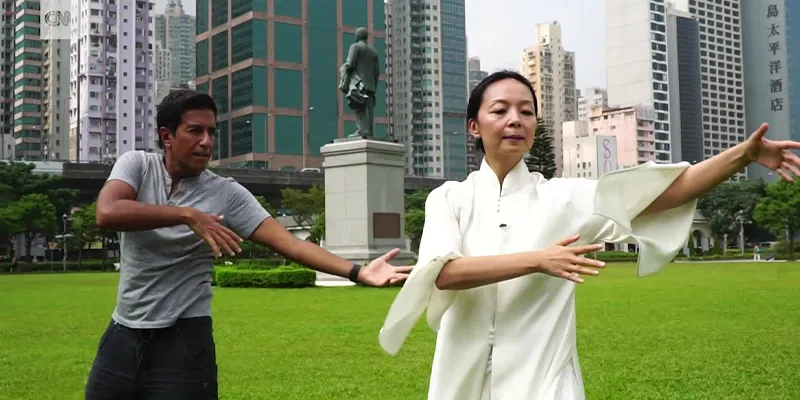
Beware of instructors who push “no pain, no gain” or encourage deep stances too early.
Personal Practice and Ongoing Training
Excellent instructors still train regularly themselves, often daily and continue studying with their own teachers or senior lineage holders. Ask when they last visited their teacher or attended an intensive training camp.
Morality and Humility
True masters are humble, respectful, and focused on students’ progress rather than self-promotion. Be cautious of anyone who:
Claims to be the “only authentic” teacher.
Guarantees quick health cures or supernatural powers.
Pressures you into expensive private lessons or endless rank certifications.
Recognition Within the Tai Chi Community
While not essential, it’s reassuring when an instructor is respected by other lineage holders or has been invited to teach at reputable international events, such as Tai Chi festivals in China, major symposiums, etc.
Introduction to Tai Chi Instructor Shen Jiangfei
Tai Chi instructor Shen is a direct disciple of Grandmaster Chen Zhenglei (the 19th-generation successor of Chen-style Tai Chi, one of the “Four Great Masters” of Chen-style Tai Chi) and also studied under Grandmaster Zhu Tiancai for many years. This ensures that he fully inherits the authentic lineage of Chen-style Tai Chi, a tradition that has continued unbroken since the 17th century, originating with Chen Wangting.
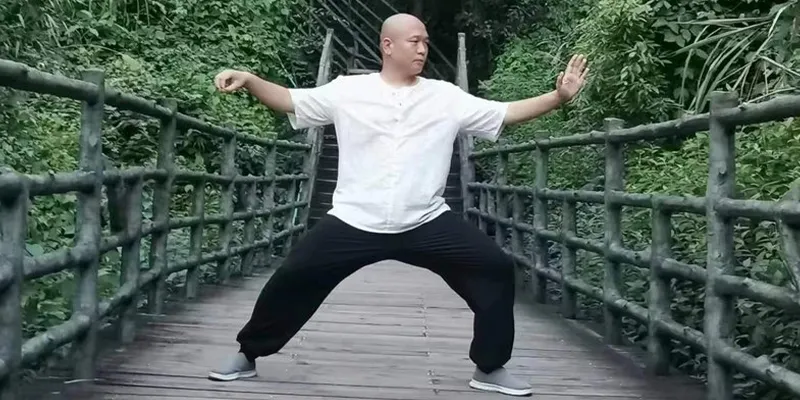
His master-disciple relationship has received formal written recognition from Chenjiagou—the birthplace of Tai Chi—and the witnessing of elders—a rarity in the Tai Chi world today.
However, what truly sets tai chi instructor Shen apart is not only the purity of his lineage but also the depth and rigor of his rigorous training.
He has devoted himself to the study of Tai Chi for over thirty-five years, undergoing long-term full-time training under his two mentors in Chenjiagou and later in Zhengzhou.
In his teaching, Tai chi instructor Shen follows the traditional curriculum of Chen-style Taijiquan exactly as it was transmitted to him:
Foundation training (zhan zhuang, silk-reeling exercises, basic conditioning)
Laojia Yilu and Erlu (the original old-frame forms)
Xinjia Yilu and Erlu (new-frame forms, when the student is ready)
Weapons (straight sword, broadsword, spear, halberd, and pole)
Push-hands (single-hand, double-hand, free steps, dalü, applications)
Theory and internal principles (at every stage, not as an afterthought)
Nothing is skipped, watered down, or turned into mere moves for performance. Every movement is taught with clear martial intent, precise body mechanics, and the characteristic spiral force (chan si jin) that defines genuine Chen Taijiquan.
Tai Chi instructor Shen is known throughout the Chinese Taijiquan community for three qualities that students consistently mention:
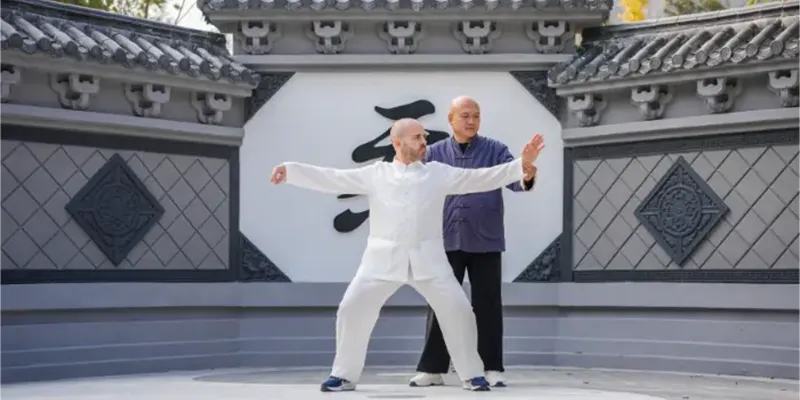
- Extraordinary patience combined with absolute precision—he will correct the angle of a finger or the placement of a heel as many times as necessary, yet never with impatience.
- An uncompromising emphasis on safety and proper structure—injuries are extremely rare in his classes because alignment and gradual progression are non-negotiable.
- A complete absence of commercial spectacle—he does not chase competition medals, social-media fame, or large franchises. His only concern is preserving and transmitting the art exactly as he received it.
He remains a dedicated practitioner himself. Even now, well into his role as a senior teacher, he continues daily standing practice, form refinement, and push-hands training. This lifelong commitment is what allows him to spot subtle errors in advanced students and to demonstrate techniques with power and softness that simply cannot be faked.
Tai Chi instructor Shen is respected by many of the most recognized names in Chen style. He has been invited repeatedly to teach in Europe, Southeast Asia, and across China, yet he still spends much of his time quietly training the next generation in small, dedicated groups—exactly the environment in which the art has always been transmitted at its highest level.
How Long Does It Take to Become a Tai Chi Instructor?
Becoming a certified or qualified Tai Chi instructor typically takes 2–6 years, depending on your starting level, the style you’re learning, the certification requirements, and how much time you can dedicate.
| Pathway/Style | Time to Teach Basic Classes | Time to Full Instructor Certification | Notes |
|---|---|---|---|
| Yang-style (most common) | 1–2 years | 3–5 years | Many schools let you assist or teach beginners after 1–2 years of regular practice |
| Chen-style | 2–3 years | 4–7 years | More physically demanding; lineage-based schools are stricter |
| Competition forms (modern wushu) | 6 months–2 years | 2–4 years | Faster if you already have martial arts background |
| Health-oriented / simplified forms (e.g., Tai Chi for Arthritis, TCA) | 6–18 months | 1–3 years | Programs specifically designed for quicker teacher training (e.g., Tai Chi for Health Institute) |
Realistic Timelines for Most People
Beginner → Assistant instructor (helping in class, teaching warm-ups): 1–3 years of consistent training (2–5 classes/week)
Beginner → Certified to lead your own beginner classes: 3–5 years
Recognized as a legitimate instructor by traditional lineage or major associations (e.g., Yang Family, Chen Village, International Yang Style Association): 5–10+ years.
Fast-Track Options (1–2 years).
These exist but are usually limited in scope:
Tai Chi for Health Institute (Dr. Paul Lam) → Certified in specific programs (e.g., Tai Chi for Arthritis) in 1–2 weekends + practice
Some YMCA/community college programs → Certificate in 6–12 months
Commercial chains (e.g., “Tai Chi for Wellness” franchises) → Often 200–400 hours of training
These fast-track certifications are respected in the health/fitness world but are not accepted by traditional martial arts lineages.
What Most Reputable Schools Require
- Traditional or high-quality modern schools usually expect:
- Minimum 300–1,000 hours of personal practice.
- Ability to perform full forms correctly with good structure and energy.
- Understanding of basic principles (relaxation, root, peng/lu/ji/an, etc.).
- Push-hands proficiency (at least basic).
- Teaching under supervision for 1–2 years.
- Passing an examination or evaluation by a senior tai chi instructor.
Conclusion
The right teacher feels like a rare find: calm, precise, generous with knowledge, and genuinely concerned with your long-term development. Take trial classes with several instructors if possible. Trust how your body feels after a month of training—more relaxed joints, better balance, and a quieter mind are far better indicators than any certificate on the wall.
We sincerely invite you to visit our school, meet our experienced and certified teachers, and experience our classroom teaching firsthand.