For many learners of Xingyi Quan, the Dragon Fight is the most mysterious and misunderstood of the Five Element Fists.
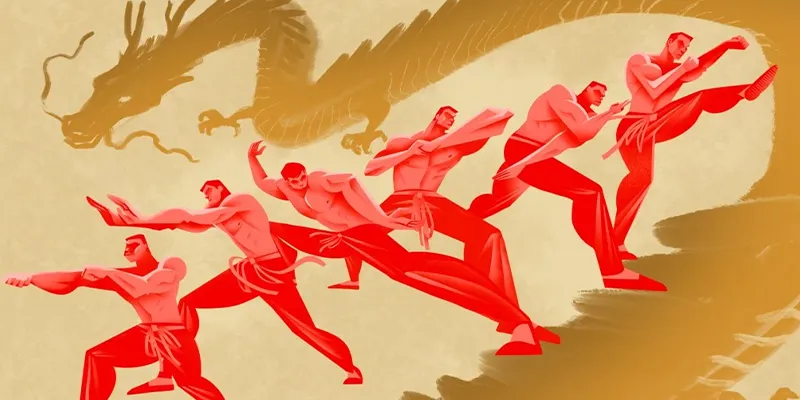
Today, I will answer: “How does the dragon fight in Xingyi?” This post shows you the dragon fight in Xingyi Quan, its core principles, movements, techniques, and combat applications. As one of the twelve animal forms, the dragon encapsulates the art’s explosive power and fluid adaptability.
Let’s begin with its principle.
Principles of Dragon Fight in Xingyi Quan
In Xingyi Quan, the dragon fight represents the pinnacle of internal cultivation. The dragon fights with evasion, coiling, and sudden expansion, overwhelming opponents through unpredictable twists rather than brute force.
Dragon Fight teaches practitioners to “shrink the body” into a compact coil, then explosively “expand” like a spring unleashing. This mirrors Xingyi’s core tenet: mind leads intent (yi), intent leads energy (qi), and energy leads strength (li). In combat, the dragon evades linear attacks by spiraling, then counters with penetrating strikes that disrupt the opponent’s center.
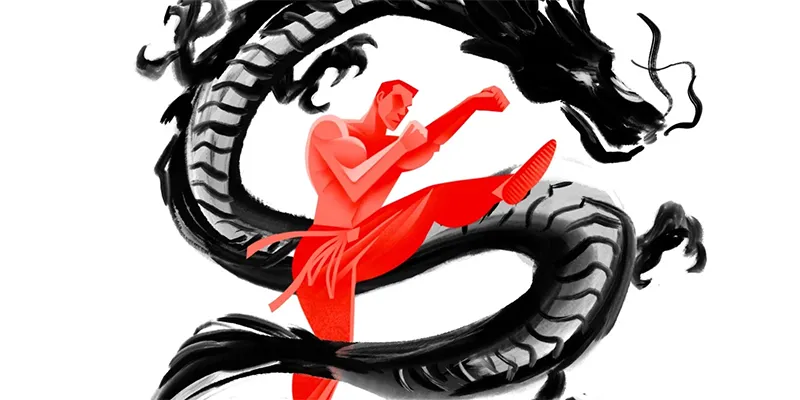
Historically, this form honed warriors for battlefield chaos, very suitable for close quarters. It has 5 core principles of dragon fight in Xingyi:
The Principle of Change and Unpredictability
- The dragon in Chinese philosophy represents transformation and the unseen. In combat, this translates to unfixed, adaptive movements that break predictable linear patterns.
- Unlike the direct, crushing power of Pi Quan (Splitting Fist) or the drilling force of Zuan Quan, Dragon Fight employs sudden changes in angle, direction, and intent. An upward rising force can instantly become a sideways wrapping or a downward press, confusing the opponent’s defense and creating openings.
The Spiraling and Coiling Force
- Power is generated and applied through a three-dimensional, spiraling motion of the entire body, akin to a coiling dragon.
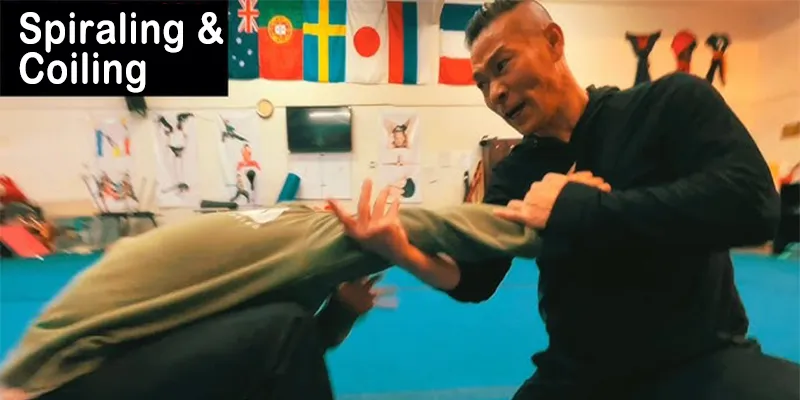
- This is not a simple rotation. It involves:
- Wrapping: The limbs (particularly the arms) spiral inward or outward to deflect, control, or trap an opponent’s limb, “coiling” around their force.
- Drilling: A deep, penetrating spiraling force that originates from the feet, winds through the torso, and is expressed through the fists or palms, seeking to destabilize the opponent’s root and structure.
The Integration of Rising and Drilling
- The quintessential Dragon Fight movement merges a rising force with a drilling force.
- The front hand rises on a spiraling path, deflecting, lifting, and disrupting the opponent’s centerline. This is immediately married to the rear hand’s drilling attack that exploits the opened gate. The two movements are one—the rise creates the condition for the drill.
The Use of “Empty” and “Full” with Fluid Stepping
- Footwork is light, agile, and deceptive, emphasizing transitions between empty and full stances.
- The stance is often narrower and more mobile than in other Xingyi fists. Weight shifts rapidly and subtly, allowing for swift advances, retreats, and side-stepping. This “dragon step” enables the fighter to “appear and disappear,” controlling distance and angle to apply the coiling techniques effectively.
The Dominance of Intent Over Form
- The external form is secondary to the internal intent and energetic feeling.
- The practitioner does not think, “My arm goes here.” Instead, they cultivate the intent of coiling, rising, and expanding. The mind leads the Qi, and the Qi drives the body.
- The feeling is one of expansive, elastic power—like a dragon soaring through clouds, its body never fully revealed but its presence and power felt everywhere.
Movements of Dragon Fight in Xingyi
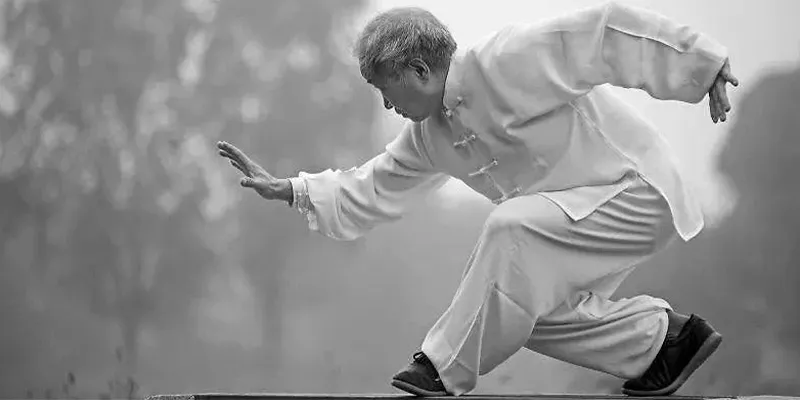
Here are dragon fight’s core movements, from foundational posture to combat.
- The Dragon Body Posture: Coiling Stance
A dynamic, slightly coiled and ready posture that replaces a static stance.
The body is not upright but subtly wrapped in on itself. The knees are slightly pressed together and inward, the torso is gently twisted, and the arms are held in a loose guarding position, one slightly higher than the other. This is a “loaded” posture where potential energy is stored in the tendons and fascia, ready to be released in any direction.
- The Rising and Coiling Arm
The signature spiraling motion of the arms, combining upward deflection with forward drilling.
This is often a two-handed, coordinated action. The leading arm rises in a palm-up, outward spiral, deflecting an incoming force and “lifting the opponent’s root.” Simultaneously, the rear arm drills forward along the same spiral path underneath the leading arm, striking with knuckles or palm. The movement feels like turning a large screw or corkscrew through the opponent’s guard.
- The Dragon’s Change Step
Agile, light, and deceptive footwork that emphasizes sudden changes in angle.
Unlike the direct, crushing steps of other forms, dragon stepping is quick and adaptive.
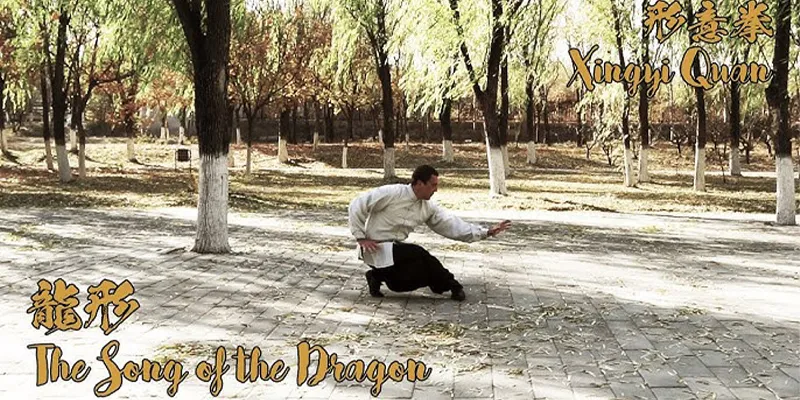
Sliding Steps: Light, quick advances where the front foot “feels” the ground like a sensing probe.
Side-Stepping: A pivoting step off the line of attack to change angle, often paired with the coiling arm to wrap the opponent.
Switching Steps: Rapid, small steps that reposition the body without a major commitment, maintaining the coiled potential. The principle is to “step like walking on moss”—lightly, cautiously, and ready to change.
- The Body’s Wave and Twist
A whipping, wave-like motion of the spine and torso.
Power is generated not from the limbs alone, but from a coiling and uncoiling of the torso. Imagine a wave rising from the feet, spiraling through the hips and waist (a movement called “dragon waist”), and whipping through the shoulders. This wave motion amplifies the spiraling force of the arms, making the strike both penetrating and destabilizing.
- The Complete Technique: Dragon Fights Its Way Out
The synthesis of all components into a comprehensive fighting action.
This is the sequence:
Receive & Coil: As an opponent attacks, use the Dragon Body Posture and a Rising Coiling Arm to deflect and trap their limb, wrapping their force.
Change Angle: Immediately follow with a Dragon’s Change Step to a 45-degree angle, breaking the opponent’s structure and balance.
Release the Wave: Unleash the stored coiling energy via the body’s wave, driving the Drilling Fist into the opponent’s exposed center or flank.
Dragon Fight in Xingyi Techniques
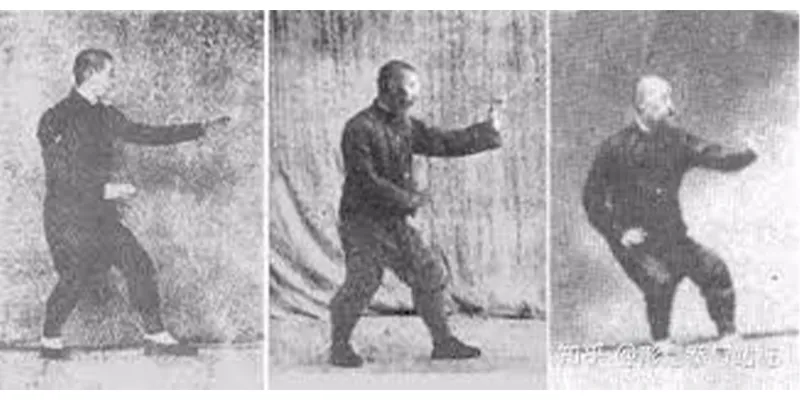
“Dragon Fight” is characterized by spiraling control, angular attack, and disruptive power. Below is a breakdown of its core techniques.
Main Technique: Rising Drill & Coiling Press
The forward hand rises in a palm-up, outward spiral to deflect and lift an opponent’s arm, simultaneously “coiling” around it to disrupt their structure. The rear hand immediately follows in a continuous spiral, drilling forward along the same central line to strike the now-exposed torso or face. The movement is one uninterrupted corkscrew motion.
Combat Application: Used to break through a high guard (e.g., a boxer’s guard). The rising coil slips inside, lifts, and binds the opponent’s limbs, creating an open gate for the drilling strike.
Body Technique: Dragon Body Wrapping
This is using the torso’s coiling and angling to absorb and wrap an opponent’s force. Rather than meeting force directly, the fighter rotates their waist and shoulders at an angle, causing the opponent’s punch to slide past while their own arm wraps around the incoming limb.
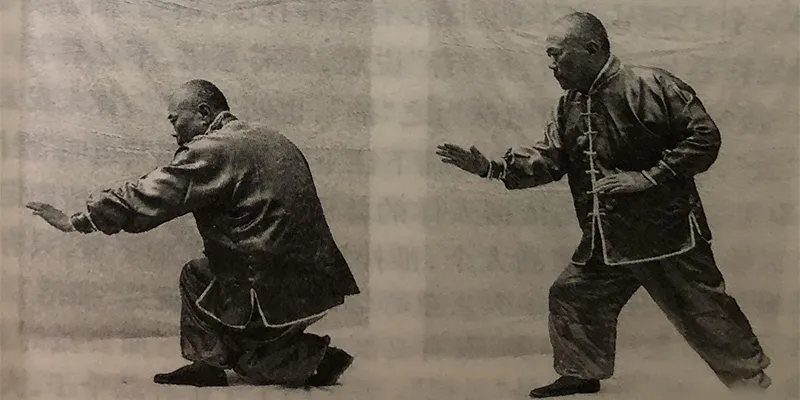
Combat Application: A close-range defensive-offensive maneuver. As a straight punch comes in, the fighter shifts off the line, wraps the attacking arm, and controls it, setting up for a throw or a strike to the opponent’s side or back.
Footwork Technique: Treading Step with Change
Dragon fight footwork is light and adaptive. The core step is a “treading,” where the front foot advances lightly as if probing, ready to change direction instantly. It is combined with **swift side-stepping to change the fighting angle by 45-90 degrees.
Combat Application: Used for controlling distance and angle. The fighter avoids a linear assault by stepping to the opponent’s “dead side,” making their attack miss while positioning themselves for a counter.
Power Generation: Wave-like Whipping Power
Power is not pushed but released like a whipped wave. It starts from the coiling of the feet and legs, spirals up through the twisting of the waist (“dragon waist”), and is finally whipped out through the shoulders and arm in a snapping motion.
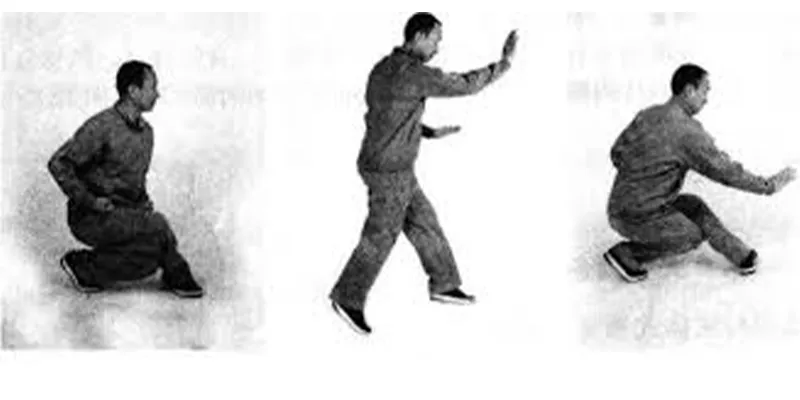
Combat Application: Generates short, penetrating power even without a large wind-up. This allows effective strikes from a controlling or wrapped position where space is limited, delivering shocking, internal force.
Strategic Technique: Binding and Seizing
Beyond striking, Dragon fight techniques specialize in “Chan “Na”—twining and seizing. The spiraling hands are used to entangle the opponent’s joints (wrist, elbow) following their force, then applying locking or controlling pressure.
Combat Application: Transitions from striking to joint manipulation. After deflecting a punch, the coiling hand continues to twine around the opponent’s elbow, controlling them and setting up for a takedown.
Technical Synthesis in a Combat Applications
A practical sequence might unfold as follows:
- Receive: As the opponent throws a right cross, the fighter steps offline with dragon footwork (treading step).
- Control: The fighter’s left arm executes a rising coil, spiraling outside the opponent’s punching arm, deflecting it and wrapping around it.
- Strike: Instantly, the fighter’s right hand drills along the coiled path, striking the opponent’s ribs or solar plexus.
- Finish: If the opponent is compromised, the twining control from step 2 can be converted into a binding technique on the elbow or shoulder to throw or submit.
Dragon Fight in Xingyi Combat Applications
The combat goal is to neutralize your opponent’s structure and power using deflections and footwork, creating a finishing blow. It specializes in dealing with strong, linear attacks. Dragon Fight’s combat applications and techniques are as follows.
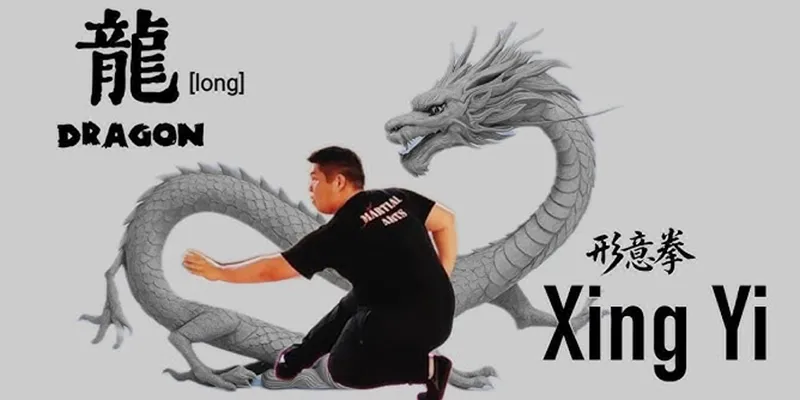
Breaking the Guard (Po Men): Used against a conventional high guard or shell defense.
This uses a leveraging and spiraling force to overcome brute strength, allowing a smaller fighter to dismantle a stronger opponent’s defense.
Method: Instead of striking against the guard, use the rising coiling arm. The lead arm spirals upward (palm up) along the opponent’s forearm, creating a powerful prying force to lift their arm and expose the centerline. The rear hand simultaneously drills through the newly opened gate.
Controlling & Trapping the Limb (Qin Na): To neutralize an opponent’s primary weapon.
This transforms a block or parry into an immediate control, shutting down their offensive chain and setting up a throw or strike.
Method: Upon contact with the opponent’s limb, immediately apply the wrapping force. Your arm coils around theirs—not with muscle, but with the entire body’s rotation—controlling the elbow and wrist. This trap is often followed by a dragon change step to an angle, hyperextending their joint or breaking their posture.
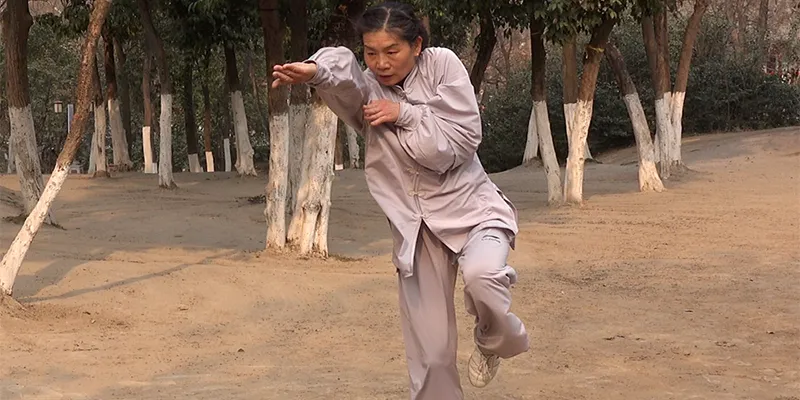
Striking from a Dominant Angle: To deliver powerful blows while being safe from counters.
This applies the military principle of “flanking” in one-on-one combat, attacking where the opponent is structurally weakest and least able to defend.
Method: The footwork (Bai Bu or Kou Bu) is used not just to evade but to secure a 45- to 90-degree angle relative to the opponent. From this “blind side” position, the coiling power of the torso is unleashed in a drilling strike to the ribs, kidney, or floating ribs.
Deflecting and Countering Linear Attacks: Against straight punches or kicks.
This is the embodiment of “using four ounces to deflect a thousand pounds,” a core internal arts concept. Minimal energy is used to redirect the opponent’s own force against them.
Method: Meet the incoming force not head-on, but with a tangential, spiraling deflection. The rising coiling arm makes slight contact with the opponent’s wrist or forearm, subtly redirecting it offline just enough for your body to slip past it. Your forward momentum and their missed attack put you in perfect range for your counter.
Conclusion
In essence, Dragon Fight for combat is the art of intelligent engagement. It avoids the double failure of a pure clash of force and a purely passive defense.
Instead, it uses spiraling mechanics to disrupt structure, agile footwork to dominate positioning, and concentrated drilling power to finish. This makes it one of the most sophisticated and effective fight systems within Xingyi Quan.