The fixed sequences of movements in martial arts are commonly known as Taolu (routines). However, within the framework of modern science, we can give them a different definition: an ancient programming language for the human body.
The Modern Definition of Taolu: An Ancient Programming Language
It all begins with a patient. In 1953, a young man underwent a brain surgery to treat intractable epilepsy. The surgeons removed his hippocampus. While the seizures were controlled, the operation led to a devastating consequence: he lost the ability to form new memories. This man became the most famous patient in neuroscience history, known as H.M.

Researcher Brenda Milner conducted a pivotal experiment with him. She asked H.M. to trace a star while looking only at its reflection in a mirror—a difficult task for anyone. He repeated this task every day. Each time he started, H.M. had absolutely no conscious memory of ever having done it before. Yet, despite his “amnesia,” his performance improved steadily; his speed increased and his error rate dropped. This proved that skill proficiency can be stored independently of conscious memory.
In 1957, Scoville and Milner published this case, providing the first clear evidence that human memory is divided into two independent systems:
- Declarative Memory: Dependent on the hippocampus, this system stores “what you know”—your breakfast, your address, or a friend’s name. This is the system H.M. lost.
- Procedural Memory: Independent of the hippocampus and relying instead on the cerebellum and basal ganglia, this system stores “how you do things”—riding a bike, tying shoelaces, or swimming. Once these programs are written into your neural circuits, they no longer require conscious thought to maintain. You can go a decade without cycling, but the moment you get on a bike, your body “remembers.”
This second system—Procedural Memory—is exactly what Taolu (routines) is designed to train. The cerebellum performs a singular, tireless function: it repeats, detects errors, corrects them, and repeats again. It pushes a movement from “thinking about it” to “just doing it.” This process doesn’t require your intellectual understanding; it only requires your execution.
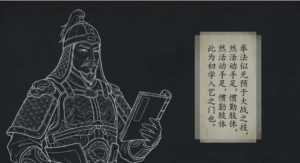
Five hundred years ago, the legendary Chinese General Qi Jiguang wrote in his New Treatise on Disciplined Service: “Boxing may seem irrelevant to the maneuvers of great battles; yet, by limbering the limbs and habituating the body, it serves as the gateway for the novice to enter the art.”

He organized 32 forms of boxing, yet he was acutely aware that these were not for direct use on the battlefield. That is why he admitted they “seemed irrelevant to great battles.” So why did he insist on the phrase “limbering the limbs and habituating the body”?
In modern terms, he was describing the automation of basic movement patterns. He wasn’t asking soldiers to memorize “fancy moves”; he was using these fixed sequences to “program” flexibility, coordination, and agility directly into the soldiers’ bodies.
Five centuries ago, the term “Procedural Memory” did not exist. Qi Jiguang knew nothing of the cerebellum or the basal ganglia. Yet, through years of professional military experience, he accurately identified the core of procedural memory training. He simply used the language of his time.
To this professional commander, Taolu was a foundational training tool, not a collection of secret combat lethalities. Its purpose was twofold: to activate the body and to automate basic movement patterns.
Therefore, Taolu is not “fighting” in itself. It is a “programming language” for the body—a sophisticated training tool invented by the ancients through empirical experience long before the birth of modern neuroscience.
Redefining Taolu: The Three Layers of Body Programming
What exactly is Taolu (routine training) writing into your nervous system? We can break it down into three distinct layers of “biological code.”
Level 1: Basic Movement Primitives
This is the most fundamental layer: walking, running, jumping, rotating, and shifting weight. Once these low-level patterns are written into your system, they stay for life. The footwork and body mechanics in Taolu are essentially drills designed to reinforce the cerebellum, turning deliberate movements into procedural memory for automated execution. This is what Qi Jiguang meant by “habituating the limbs”—making the body instinctively industrious and efficient.
Level 2: Calibration of Proprioception
Proprioception is your body’s internal GPS. Even with your eyes closed, you know where your arm is and which way your torso is twisted. This relies on muscle spindles (detecting length) and Golgi tendon organs (detecting tension) within your joints and muscles. When a practitioner repeats a movement to find the “perfect” angle of a lunge or the exact degree of a waist turn, they aren’t “gathering mystical energy.” They are calibrating the precision of this internal positioning system. In Chinese Martial Arts, this is called “Finding the Jin” (找劲); in sports science, it is Proprioceptive Training.
Level 3: Automation Under Pressure
The final stage is moving from “conscious execution” to “automatic output.” When an untrained person is suddenly pushed, their instinct is to freeze, lean back, and flail. However, a person whose nervous system has been programmed with Taolu weight-shifting patterns will trigger a stable response program automatically. The center of gravity drops, the torso rotates, and the footwork adjusts—not because the brain commanded it, but because the cerebellum and basal ganglia invoked the program under stress. This is the ultimate goal of “habituating the limbs”: letting the body handle the crisis without waiting for a command from the conscious mind.
The Fatal Flaw: The “Garbage In, Garbage Out” Rule
There is a critical rule in neurobiology: The cerebellum does not judge right from wrong. It simply records.
Procedural memory is written through repetition and calibration. If the movement pattern is validated by reality and corrected by an expert, the nervous system burns in a high-efficiency habit.
However, without external validation and stress testing, the cerebellum will just as precisely solidify a mistake. In closed traditional systems where there is no “live” pressure—no one to tell you if the move actually works—practitioners simply repeat what was passed down. If the original form was flawed, the next generation will only execute that flaw with greater precision.
In the field of Motor Learning, research shows that the deeper an error is written, the higher the cost of correction. Because neural pathways have solidified, “unlearning” requires tearing down an old road to build a new one. This is why many who have practiced “performance-only” routines for decades crumble in a real fight. It’s not that they haven’t practiced enough; it’s that their bodies have been programmed with sequences that are incompatible with the “software” of real combat.
A Tool Misunderstood
Taolu is often mocked as “flowery boxing and embroidered kicking” (花拳绣腿). But the fault lies not in the tool, but in its application.
Taolu is not a collection of “secret fighting techniques”; it is a Body Programming Language. It was an empirical training system invented by the ancients long before neuroscience existed to explain it. Its function is to write movement kernels, calibrate proprioception, and automate foundational agility.
Qi Jiguang, a professional commander who spent his life in the reality of war, understood this perfectly. He positioned Taolu as the “gateway for the novice”—the basic training, not the battle itself.
The tragedy of modern martial arts is that later generations mistook the “programming language” for the “application.” They replaced real-world validation with repetitive forms. They spent a lifetime writing code but never once asked the ultimate question:
“If I run this program in a real fight, will it crash?”