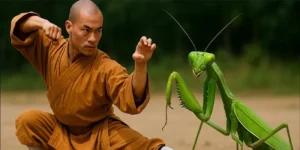
Practicing Tai Chi Chuan is an exercise, a martial art, and a system of health movement. As practitioners, we seek to integrate mind, body, and spirit, transforming simple movements into a moving meditation.
Drawing from decades of study and practice, this guide presents the 10 best tips for anyone from the beginner to advanced student seeking refinement.
Tip 1: Practice the Wuji Zhan Zhuang Posture
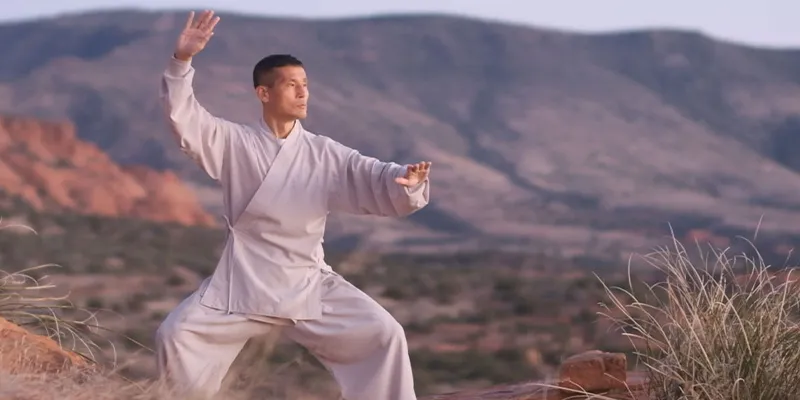
Practicing Tai Chi does not begin with movement but with stillness. The Wuji (“No Limit” or “Emptiness”) is the preparing posture, a seemingly simple standing meditation that holds the key to the entire tai chi.
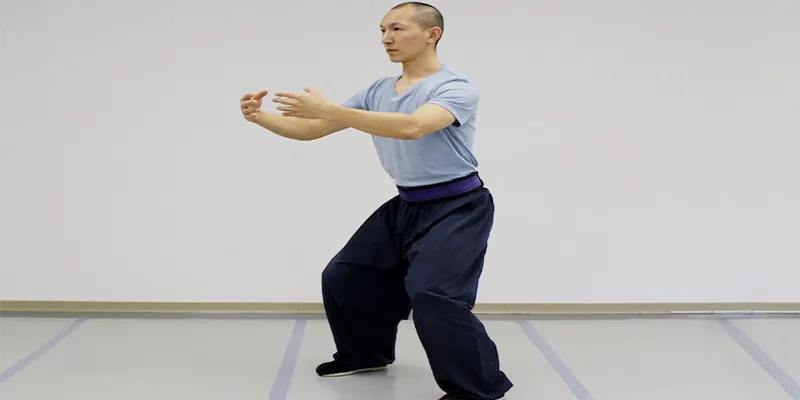
The Tip: Before every movement, and as an independent practice, dedicate sufficient time to Wuji.
Wuji is the transition from chaos to order. It is the moment you consciously let go of external tension and internal chatter.
Its goal is to stand naturally: feet shoulder-width apart, knees slightly bent, tailbone slightly tucked, like sitting on a high stool, shoulders relaxed, and the crown of the head suspended.
This establishes the central equilibrium and allows the Qi to sink to the lower Dantian. Without a stable, relaxed, and centered Wuji, your movements will be disconnected and your energy will remain trapped in the upper body, leading to tension and instability.
Wuji is the blank canvas from which all the movements emerge, representing the initial state of Tai Chi waiting to be manifest.
Tip 2: Master Deep Relaxation
Deep relaxation is not mere floppiness or lethargy; it is a deep, conscious, and structural relaxation.
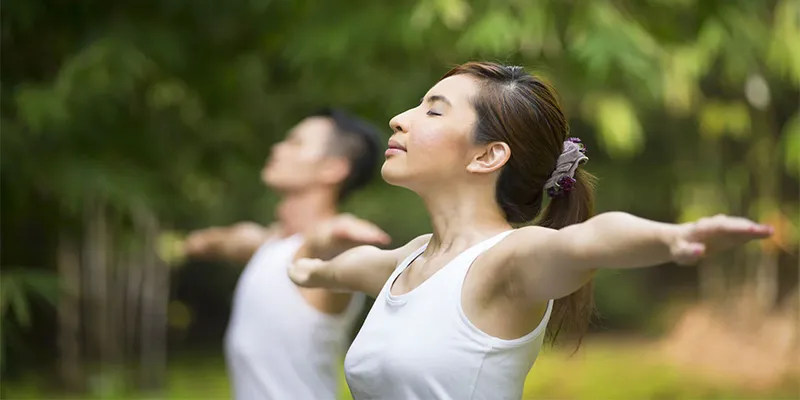
The Tip: Practice deep relaxation not just in the joints and muscles, but in the fascia, mind, and breath.
Deep relaxation means “to let go” or “to relax.” In Tai Chi, tension is the enemy of Qi flow. Every Tai Chi emphasizes its necessity: “If one place is tense, all is tense.” True deep relaxation involves:
- Physical Relaxation: Shoulders and elbows drop, the chest is empty, the back is straight, and the hips and area of the hip/inguinal crease are open and supple.
- Internal Relaxation: The deep-seated muscles around the spine and joints, which often hold chronic stress, must soften.
- Mental Relaxation: The mind must be calm, free from striving. This is the intention to lead the Qi.
When genuine deep relaxation is achieved, the body becomes structurally sound yet fluid, like a chain. The muscles stop doing the primary work, and the energy is allowed to circulate freely, leading to the famed “iron wrapped in cotton” strength of Tai Chi.
Tip 3: Weight Distribution
Tai Chi is defined by constant, cyclical transitions between Yin and Yang. This is most visibly expressed in the distribution of weight between your feet.
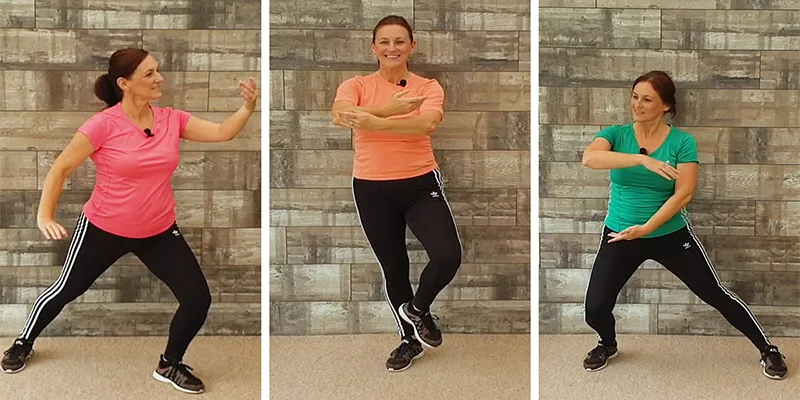
The Tip: Be absolutely careful about fully separating the weight in your legs. Aim for 100% fullness in the supporting leg before initiating any movement with the empty leg.
Weight distribution is the basis for balance, rooting, and power generation. A common mistake is to maintain a 70/30 or 80/20 distribution. This results in “double weighting,” where both legs are full.
Double weighting locks the hips, prevents Qi from sinking, makes transitions slow, and renders the practitioner easily losing balance. By committing 100% of the weight to one leg before moving the other, you can establish a single, stable root.
This allows the empty leg to move effortlessly and the waist to act as the primary rotational pivot, giving rise to “four ounces deflecting a thousand pounds” of power.
Tip 4: Use the Yi (mind) to Guide the Qi (energy)
Tai Chi is an internal martial art, meaning the mind is the precursor and governor of your body’s movement and energy. The famous dictum states: Yi leads the Qi, and Qi leads the Li (physical strength).
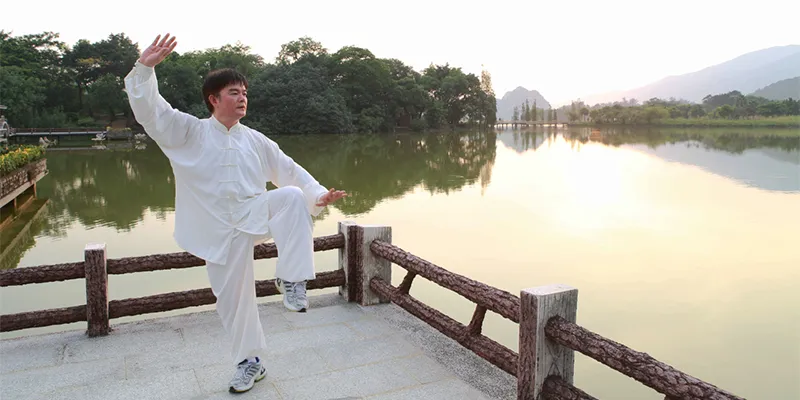
The Tip: Focus on the movement of your Qi before, during, and after every tai chi posture.
The mind must precede the action. Do not focus on where your hand goes, but on the purpose of the movement—e.g., pushing away a cloud, pulling in energy, or deflecting an attack.
This focus directs the Qi within the meridians and channels. For instance, in “Grasping the Sparrow’s Tail,” the intent should flow from the Dantian, up the spine, out the shoulder, along the arm, and into the palms, not just moving the arm mechanically.
This practice transforms the exercise from mere physical calisthenics into true internal skill. When the Yi is clear and focused, the Qi naturally follows, and the resulting physical power becomes deep, rooted, and penetrating, rather than muscular exertion.
Tip 5: Root the Movement in the Dantian and the Waist
The movements of the limbs are secondary; the power source and engine of Tai Chi are located in the center—the lower Dantian (below the navel) and the waist.
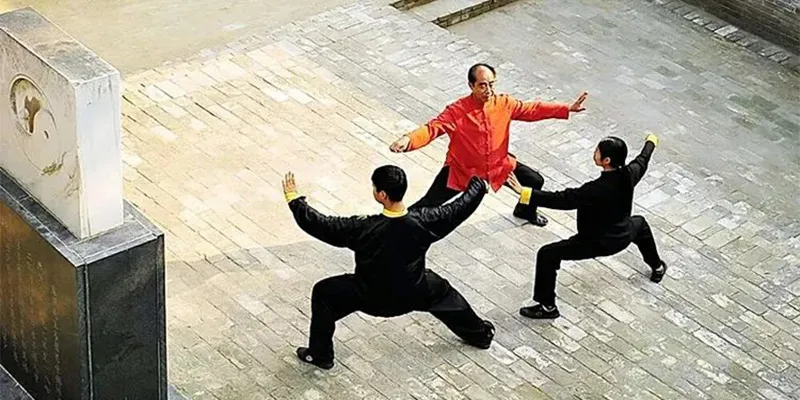
The Tip: Practice turning the waist first in every transition. The hands and feet merely follow the rotation of the center.
All effective power in practing Tai Chi is generated through the coordinated rotation of the hips and waist, which is rooted in the earth via the legs. The waist is the commander of all the body. If the arms lead the movement, the power is limited to the superficial muscles of the shoulder and arm.
If the waist turns first, the power of the ground is channeled up through the legs and spine, unified in the Dantian, and then expressed through the extremities. This is known as “Integrating Six Harmonies” (external: hands/feet, elbows/knees, shoulders/hips; internal: Yi/Qi, Qi/Li, Li/Shen).
Training the waist means keeping it relaxed, mobile, and centered. The hands should feel like merely the ends of a rope that is being pulled from the Dantian.
Tip 6: Coordinate Movement with Natural Breathing
The breath is the bridge between the internal and the external. Tai Chi movements must harmonize with the breath, which is deep, slow, and abdominal.
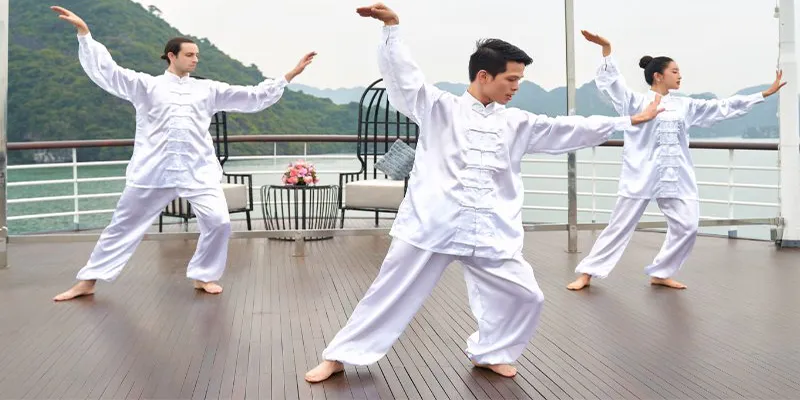
The Tip: Avoid forcing the breath. Allow the breath to become deep, slow, and Dantian-centered, naturally following the rise and fall of the body’s movements.
Tai Chi promotes “reverse abdominal breathing” (natural abdominal breathing). In reverse breathing, the abdomen gently pulls in on the in-breath and expands on the out-breath.
However, for beginners, the focus should simply be on breathing deeply into the lower Dantian area and avoiding shallow chest breathing. Generally, movements of gathering, yielding, or opening often correlate with inhaling; movements of expressing, pushing, or closing often correlate with exhaling.
Crucially, never hold your breath to complete a movement. If the movement is too slow for a full breath cycle, breathe naturally. The movement guides breath, and the breath guides movement, leading to calmness and Qi circulation.
Tip 7: Maintain the Vertical Alignment
Proper alignment ensures that gravity works with you, not against you, and is essential for effective rooting and easy movement.
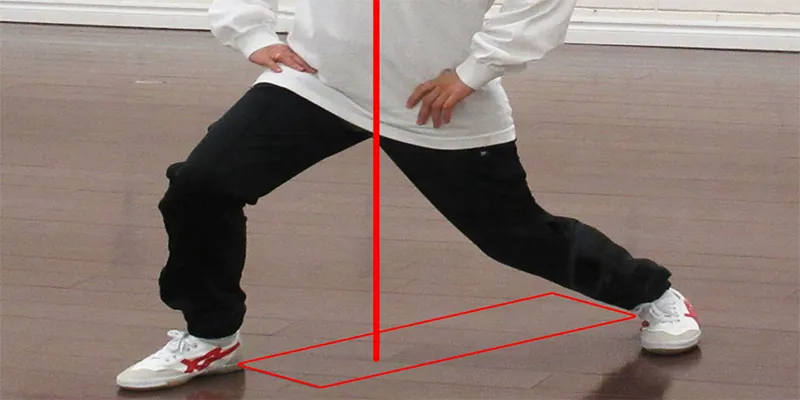
The Tip: Imagine a silk thread gently pulling the crown of your head towards the sky while the tailbone gently sinks.
Maintaining a straight, yet relaxed, spine is vital. This is achieved by the suspended strength of the head and the sinking of the tailbone.
Vertical alignment creates a sense of lightness and keeps the neck long and flexible, allowing the Qi to ascend the Du Mai (Governing Vessel). The sinking of the tailbone ensures the lower back is straight and the hips are aligned over the feet, creating a clear channel for the Qi to descend to the rooting.
If the head is tilted or the back is swayed, the central equilibrium is lost, tension accumulates, and the Qi flow is blocked. The vertical alignment is the axis around which the entire form revolves.
Tip 8: Practice the Opening and Closing
Every Tai Chi movement is a cyclical expression of opening and closing.
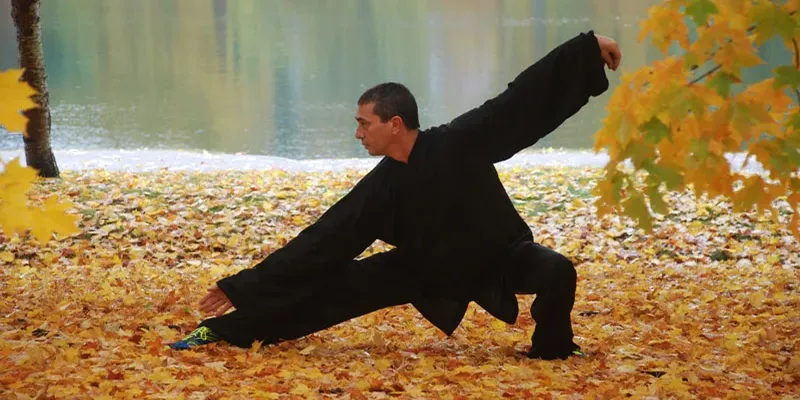
The Tip: Every posture, no matter how complex, is a subtle variation of an “opening” and “closing.”
Closing: Gathering energy, contracting the joints, inhaling, preparing the intention, yielding, and absorbing force.
Opening: Releasing energy, extending the limbs, exhaling, projecting the intention, attacking, and expressing force.
Tai chi practitioners must feel this internal rhythm. For example, in “Single Whip,” the preparation is closing before the final extension and opening.
Focusing on opening and closing ensures that power is generated from the center, accumulates internally, and is only released externally at the precise moment.
Tip 9: Seek Effortless Flow
Tai Chi is often called “moving meditation” because of its continuous, deliberate pace. Speed is not the goal; fluidity and internal awareness are.
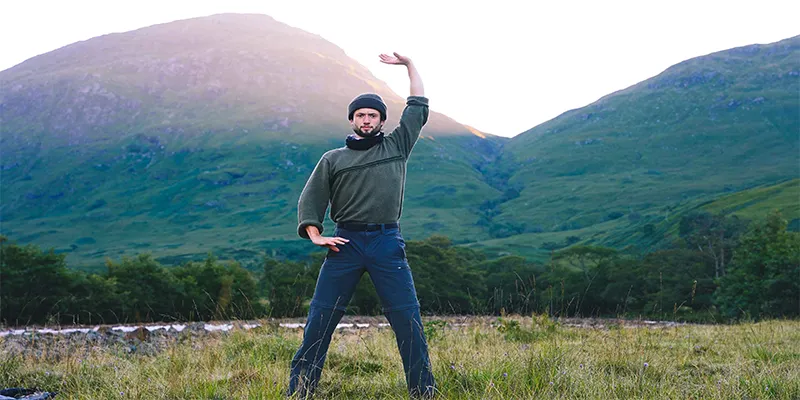
The Tip: Slow your movements down to a point where you can consciously monitor every shift of weight, every change in muscle tension, and every phase of the breath.
Practicing tai chi slowly has several critical functions.
First, it forces the practitioner to use the intention to sustain the movement, preventing the reliance on momentum or muscular brute force.
Second, it allows the mind to notice and correct subtle imperfections, such as unnecessary tension or incomplete weight separation.
Third, the slow pace is essential for continuity.
The entire Tai Chi form should be practiced as one unbroken thread, where the end of one posture flows seamlessly and inevitably into the beginning of the next. There should be no pauses, jerks, or stops—the movements should be “long and fine, continuous without interruption.”
Tip 10: Embrace the Philosophy
Ultimately, Practicing Tai Chi is a path of self-cultivation.
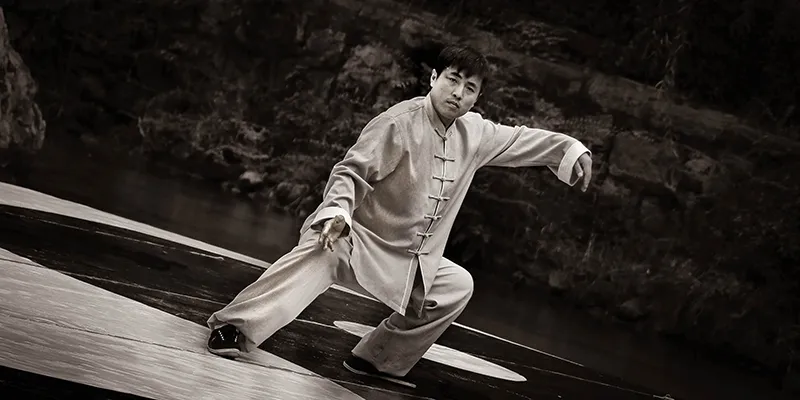
The Tip: Practice with a clear mind, a humble spirit, and a consistent commitment to self-reflection and principle.
The advanced stage of practicing tai chi is the cultivation of Shen. This means practicing with a calm, focused, and present mind. Do not judge your performance or compare yourself to others.
Instead, focus on the immediate internal experience: the Qi flow, the alignment, the relaxation, and the intention. Dedicate time not just to the form, but also to basic exercises like Zhan Zhuang and Chan Si Gong.
The greatest tip of all is to Be Consistent. Regular, dedicated, and mindful practice is the only true path to embodying the art of Tai Chi Chuan.
Conclusion
The ten tips above represent the principles passed down through generations of Tai Chi masters. They are not discrete steps but interconnected facets of a single, unified practice.
Practicing Tai Chi is not perfection of the choreography but the effortless integration of mind, body, and energy. Begin slowly, practice diligently, and allow the gentle wisdom of Tai Chi.