Excellent Kung Fu Schools Course and Life in China
China is the birthplace of kung fu, an art that has been developed for thousands of years. Kung fu is one of the oldest and most complex martial arts in existence. There are many different styles of kung fu, such as Tai Chi, Shaolin, Qigong, and Mantis Quan. If you choose to learn kung fu in China, you’ll need to understand what kung fu schools teach.
This authoritative guide details the courses, facilities, and daily life at China’s foremost Kung Fu Schools.
Excellent Kung Fu Schools in ChinaCoursesand Life
Shen Jiangfei Martial Arts Center
As an established hub for authentic Tai Chi instruction, the Shen Jiangfei Martial Arts School resides in Longhu Mountain, Jiangxi Province. Students engage in rigorous training in traditional Tai Chi, Shaolin forms, Qigong, standing meditation, seated meditation, and specialized wellness retreats.
Instruction is customized for all proficiency levels, from novices to experts, with program durations spanning summer camps (typically 2-4 weeks), short-term (1-3 months), mid-term (3-6 months), and long-term (6+ months) commitments.
Located in the scenic Longhushan region, the school delivers comprehensive training in Tai Chi, Shaolin, Qigong, and allied disciplines. Tuition, ranging from $500 to $1,200 monthly depending on program length, encompasses full-time sessions, strength conditioning, wrestling drills, and physical endurance exercises; three balanced meals daily; hot showers available 24/7; dormitory-style accommodations; and shared communal spaces for relaxation and cultural exchange.
Training is led by Shen Jiangfei, a descendant of the Hequan Dizong school and the 11th-generation inheritor of Chen-style Tai Chi.
Shaolin Temple Tagou Martial Arts School
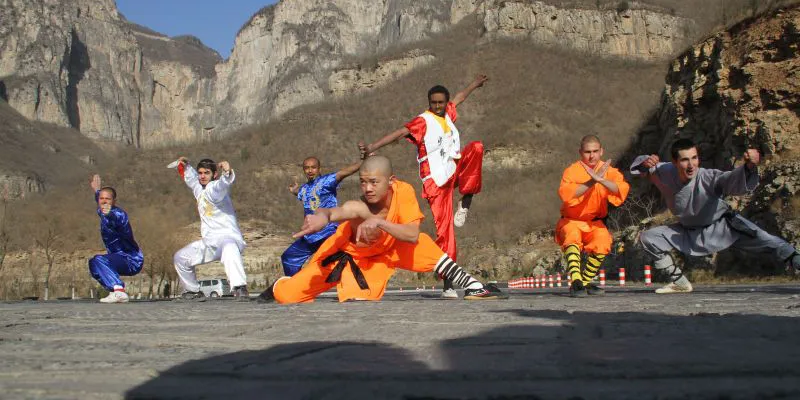
Acknowledged as China’s preeminent and most expansive Kung Fu institution, the Shaolin Temple Tagou Martial Arts School commands a student body exceeding 30,000, making it the world’s largest martial arts academy.
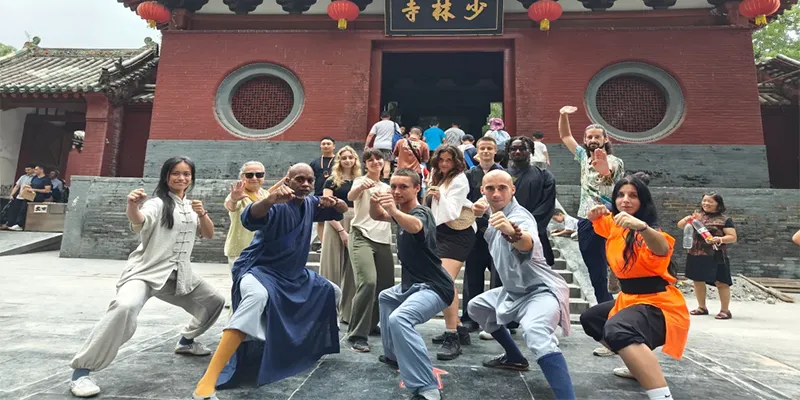
Its curriculum spans all facets of Shaolin Kung Fu, including weaponry (e.g., staffs, swords, spears), Tai Chi, Qigong, Buddhist health practices, Xingyiquan, Baguazhang, Sanda, wrestling, and Western boxing. Supplementary offerings include Mandarin language courses and live martial arts performances.
Instruction is delivered by certified Shaolin Temple monks, globally recognized martial arts experts, and professional coaches. Foreign students train in intimate groups of up to 10, six days weekly, with sessions totaling 6-8 hours daily. The locale’s average annual temperature of 14.2°C (57.6°F) supports sustained moderate- to high-intensity workouts without extreme weather disruptions.
International enrollees reside in three-star hotel-equivalent quarters featuring high-speed internet, air conditioning, and hot water for 12 hours daily. Full board includes daily menu rotations emphasizing nutritious Chinese fare, with Sunday excursions for sampling regional specialties like Henan-style noodles.
YunTai Mountain International Culture and Martial Arts School
Situated in the UNESCO-listed Yuntaishan Global Geopark, YunTai Mountain International School provides expert training in Shaolin Kung Fu, Wushu, Sanda, Tai Chi, Qigong, and beyond. It accommodates learners across all demographics, with a fixed monthly fee of $590 covering tuition, electives, lodging, three meals daily, and unlimited access to scenic attractions.
The faculty comprises Shaolin Temple-certified masters who have dedicated their lives to the art since childhood. Training occurs six days per week, tailored to individual ages and abilities, incorporating premium indoor/outdoor facilities, heavy bags, specialized equipment, calligraphy workshops, and tea ceremonies.
Beyond martial pursuits, the school fosters a communal ethos with amenities including organic meals, a 400-meter running track, table tennis tables, basketball courts, Chinese chess pavilions, and a dedicated tea lounge.
Shaolin Temple Kung Fu Academy
As one of China’s most venerable and sizable Kung Fu academies, founded in 1978 and located at the Shaolin Temple on Songshan Mountain in Dengfeng, Henan Province, this school specializes in authentic Shaolin Kung Fu and armaments (swords, spears, and staffs).
Elective courses include Qigong, Tai Chi, free sparring, boxing, Taekwondo, and meditation. Fees are structured at $100-$200 monthly for long-term students (6+ months) and $200-$300 for short-term (under 6 months).
Elite masters, invited from across China, impart mastery in diverse styles amid the temple’s historic environs. Accommodations feature heated, fully furnished hotel rooms with options for single or double occupancy and no mandatory roommates.
Daily provisions include three Chinese-style meals, with additional supplies available at an on-site market. The academy observes four key festivals: Chinese New Year (late January/early February), Mid-Autumn Festival (September/October), its anniversary (March), and Christmas (December 25).
Wudang Mountain Kung Fu Academy
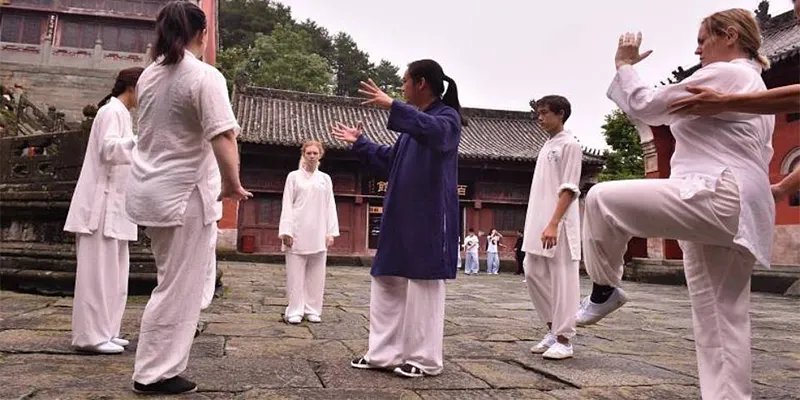
Positioned in Wudang Mountain—the cradle of internal martial arts—Wudang Mountain Kung Fu Academy excels in Tai Chi, Wudang Kung Fu, Xingyi Quan, Bagua Zhang, Qigong, meditation, Liangyi, and Sanda. Employing time-honored methods adapted for global students, classes cap at 10 participants, with schedules of five days weekly and over six hours daily.
Instructors hold Level 9 certification (the pinnacle of China’s Martial Arts Grading System) or equivalent, drawn from authentic Wudang lineages renowned for pedagogical excellence. Comprehensive tuition, starting at $800 monthly, includes Kung Fu instruction, facility access, hotel-grade rooms, three meals, Mandarin lessons, calligraphy, and certification upon completion.
Song Mountain Shaolin Kung Fu School
Proximate to the Shaolin Temple in northern China’s Songshan region, Song Mountain Shaolin Kung Fu School imparts holistic Shaolin Kung Fu, encompassing traditional forms, philosophical tenets, Chinese kickboxing, Qin Na (joint locks), Tai Chi, therapeutic Qigong, Ba Duan Jin, Yi Jin Jing, Wu Qin Xi, meditation, acupressure points, and the legendary 72 Shaolin arts.
The most unique feature of Song Mountain Shaolin Kung Fu School is that students can train with Shaolin monks. The masters employed are not only strong in martial arts, but also have extensive teaching experience and are proficient in different traditional kung fu.
By choosing to join the Shaolin Kung Fu school training, students will not only learn Kung Fu skills, but will also have the unique opportunity to live and study with Shaolin monks.
Kunyu Mountain Shaolin Martial Arts Academy
Kunyu Mountain Shaolin School is located in Kunyu Mountain, the birthplace of Taoism. In addition to traditional Shaolin Kung Fu, the school also teaches Chinese martial arts like Wing Chun, Chi Kung, Tai Chi, Wudang, Xingyi, Bagua, Baji, Mantis boxing, and Sanda.
Monthly costs approximate $900 for short-term and $800 for long-term commitments.
Shaolin components are led by genuine temple monks, with other styles handled by veterans boasting 20+ years of experience. Free cultural electives enrich the program.
Rigorous regimens unfold in an expansive hall equipped with fitness machinery, strength tools, wooden dummies, mats, protective gear, sandbags, gloves, and 24/7 security. Essentials like tableware, bedding, washing machines, and hot showers are provided.
What is the Best Kung Fu School in China?
Selecting the optimal Kung Fu school hinges objectively on yourself. China hosts over 100 esteemed academies, each excelling in heritage, rigor, and immersion. Below are leading options, informed by historical precedence and operational scale.
Shaolin Tagou Martial Arts School
Location: Dengfeng, Henan Province, near the Shaolin Temple.
Styles: Shaolin Kung Fu, Tai Chi, Qi Gong, and performance-oriented Wushu.
Key Features: This is the largest martial arts school in the world, often described as a “kung fu empire.” It houses thousands of students, mostly Chinese children and teenagers, but also trains foreigners in small groups (max 10/group). Training is intense, with 6+ hours daily, 6 days a week. It’s ideal for those seeking rigorous, traditional Shaolin training in a large-scale, immersive environment near the birthplace of Shaolin Kung Fu. The school provides full room and board.
Kunyu Mountain Shaolin Martial Arts Academy
Location: Foot of Kunyu Mountain, Yantai, Shandong Province.
Styles: Traditional Shaolin Kung Fu, Taoist influences, and Chinese culture.
Key Features: Nestled in a serene, environmentally protected area with rich Taoist heritage, this school offers a peaceful retreat for training. It focuses on a holistic approach, combining martial arts with cultural studies. The teaching team is stable, with masters often working there for 5-10+ years. It’s well-suited for those seeking a quieter, culturally immersive experience away from major urban centers.
Wudang Mountain Kung Fu Academy
Location: Wudang Mountain, Hubei Province.
Styles: Internal martial arts like Tai Chi, Baguazhang, Xingyi Quan, and Taoist practices.
Key Features: As a leading school for Wudang Kung Fu, it emphasizes spiritual development, philosophy, and health alongside physical training. Masters are highly qualified (some holding the highest level 9 grading). Training involves 5+ hours daily, 5 days a week, in small groups. Perfect for those interested in the internal, soft styles deeply connected to Taoism .
Shaolin Temple Kung Fu Academy
Location: Entrance of Mount Song Shaolin Temple, Dengfeng, Henan.
Styles: Authentic Shaolin Kung Fu, traditional forms, and applications.
Key Features: Founded in 1978, it claims to be one of the earliest and most famous academies. It is deeply integrated into the Shaolin Temple scenic area, offering proximity to the temple’s history and culture. The training is comprehensive, covering various aspects of Shaolin arts. It’s a strong alternative to Tagou for those seeking a reputable Shaolin school with a long history .
Shaolin Temple Cultural Center
Location: Handan City, Hebei Province.
Styles: Shaolin Kung Fu, Wing Chun, Sanda, Tai Chi, Qi Gong, and Buddhist culture.
Key Features: Founded by a 34th-generation Shaolin monk, this school is particularly tailored for foreign students. It emphasizes cultural understanding alongside martial arts training, including meditation and philosophy. The environment is described as serene and supportive, making it suitable for beginners and those seeking a deep cultural exchange rather than just physical training.
Shaolin YunTai Mountain International Culture and Martial Arts School
Location: Near YunTai Mountains, Henan Province.
Styles: Shaolin Kung Fu, Wushu, Sanda, Tai Chi, and Qi Gong.
Key Features: This school offers a balanced environment—traditional yet close to a modern city. It provides all-inclusive training with optional free Mandarin lessons, calligraphy, and tea ceremony classes. Certified by the Shaolin Temple, it welcomes all ages and skill levels and emphasizes training in small groups for faster progress. Good for those wanting a mix of traditional Kung Fu and modern amenities.
What is the Best Age to Learn Kung Fu?
There is no “best” age to learn Kung Fu. You can start at almost any age. However, the focus and advantages of Kung Fu training will differ depending on whether you are a child, a teenager, or an adult.
Children (Ages 4-7): Best for building fundamentals, discipline, and fun.
This is a fantastic age to introduce Kung Fu. Training is very basic—simple stances, punches, kicks, and games that teach core. The goal is to instill a love for the art, not to create a master.
Benefits:
Motor Skills: Develops coordination, balance, and body awareness.
Discipline and Focus: Learns to follow instructions, respect teachers, and concentrate on tasks.
Confidence and Social Skills: Building self-esteem in a supportive environment and interacting with other children.
Fun: Classes for this age group are often game-based, keeping them engaged and active.
Pre-Teens and Teenagers (Ages 8-17): Best for rapid skill acquisition, physical fitness, and character building.
This is the prime age to start serious training. This is the age when many famous martial artists began their training. They can train with high intensity and dedicate years to achieving mastery.
Benefits:
Physical Prowess: Teens have abundant energy, rapidly developing strength, and great flexibility, allowing them to master complex techniques and forms (taolu).
Cognitive Ability: They can understand deeper philosophical concepts, strategies, and the applications of movements.
Discipline & Stress Relief: Provides a structured, positive outlet for energy and stress, helping navigate the challenges of adolescence.
Building Identity: Fosters confidence, resilience, and a strong work ethic that benefits all areas of life.
For Adults (Ages 18+): Best for stress management, holistic health, self-defense, and personal fulfillment.
It is a common thought that you must start as a child. It is never too late to start learning Kung Fu. Adults may need to be more mindful of warming up to prevent injury and might progress slightly slower in areas like flexibility than a child. However, an adult’s discipline, life experience, and clear personal goals can lead to incredibly rewarding progress.
Benefits:
Health & Fitness: Excellent for strength, cardiovascular health, flexibility, and weight management.
Mental Wellbeing: A powerful tool for reducing stress, improving focus, and practicing mindfulness.
Self-Defense: Adults can directly appreciate and learn practical self-defense applications.
How to Enter a Kung Fu School In China?
If you’re dreaming of training at a Kung Fu school in China, here’s a guide to help you finish the process.
Securing enrollment demands meticulous preparation. Begin with exhaustive research via official sites, prioritizing style, locale, intensity (e.g., 30+ hours weekly), lodging, and fees ($100-$900 monthly).
Apply online, submitting personal data, experience, stay duration, and style preferences. Responses typically arrive within 3-5 business days; some mandate a $100 deposit.
Visa procurement is imperative: U.S. citizens require a student (X2) visa for short-term study under 180 days or a tourist visa for non-study tourism, per the U.S. Department of State. Schools furnish invitation letters and admission notices for submission to Chinese embassies, alongside passports (valid 6+ months), forms, photos, and financial proof. Apply 2-3 months prior to avoid delays.
Arrange flights to hubs like Beijing (PEK), Shanghai (PVG), or Guangzhou (CAN), then domestic transit. Many schools provide free airport/train pickups.
Embrace the immersion: Beyond training, engage in Mandarin, philosophy, calligraphy, and tea rites for holistic growth. Maintain adaptability for maximal benefit.




 WhatsApp