So, you’ve decided to learn Kung Fu training in China.
However, navigating the logistics of training abroad can be daunting. With thousands of schools claiming to be “authentic,” complex visa policies like the X1/X2 distinctions, and the fear of language barriers, many prospective students don’t know where to start.
This post is your comprehensive map for 2025. From choosing between Shaolin and Wudang to packing the right gear for an 8-hour training day, we cover every detail to ensure your kung fu training in China is efficient, safe, and authentic.
Why Kung Fu in China?
China is the birthplace of almost all mainstream kung fu training in China styles, such as Shaolin, Wudang, Tai Chi, Wing Chun, and Emei. Shaolin Temple, Wudang Mountain, Chenjiagou, Foshan, and other places still have a large number of authentic Kung Fu masters and inheritors, which are difficult to find elsewhere.
Chinese martial arts schools and academies offer complete courses from beginner to professional level, with structured courses including morning stance training, afternoon routines, and evening sparring. They have ample teachers, professional facilities, and tuition and living costs are far lower than similar training camps in Europe, America, and Japan.
Furthermore, students can learn about Chinese culture, including Traditional Chinese Medicine, Taoist and Buddhist philosophy, and traditional etiquette. Therefore, for Kung Fu beginners, China remains the most efficient, authentic, and cost-effective destination globally.
Choosing Kung Fu Training School or Temple
Authentic temples like Songshan Shaolin Temple in Henan, Wudang Mountain temples, or Shaolin Temple Yunnan rarely accept long-term foreign students into monk-level training in 2025.
Henan Shaolin Temple is primarily a cultural/tourist site with very limited, non-intensive programs for outsiders. Serious monastic training is reserved for ordained Chinese monks and is almost never granted to foreigners.
Places like Shaolin Temple Yunnan or certain Wudang Daoist temples do offer residential programs led by real monks, emphasizing Qigong, meditation, Chan/Zen philosophy, and traditional forms alongside physical training. These are excellent for students seeking a contemplative, lifestyle approach rather than high-volume physical conditioning, but the training pace is usually slower, and daily routines are strict.
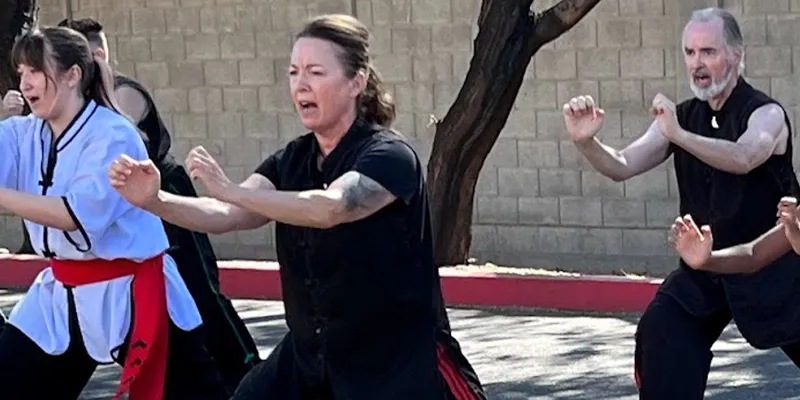
Modern kung fu training academies remain the top choice for 99% of international beginners in 2025, offering structured courses, fluent English-speaking faculty or translators, comprehensive visa support, and training intensity tailored to the fitness level of foreigners.
Some highly rated kung fu academies in 2024-2025 reviews and Reddit/Quora forum discussions include:
- Kunyu Mountain Shaolin Martial Arts Academy (Shandong)—Consistently ranked among the best for foreigners since 2004; traditional Shaolin lineage, beautiful mountain location, small-to-medium size, excellent food, private rooms available, and very high student satisfaction.
- Qufu Shaolin Kung Fu School (Shandong)—Frequently called “the best foreigner experience” in 2024–2025 Reddit AMAs; 34th-generation Shaolin masters, intense but adjustable training, strong community feel.
- Maling Shaolin Kung Fu Academy (Henan)—Small school (often <30 students), only accepts foreigners, highly personalized attention, repeatedly praised for rapid progress and authentic lineage without commercialization.
- Shaolin Tagou Martial Arts School (Dengfeng, Henan)—The largest (30,000+ students), most professional facilities, closest to the actual Shaolin Temple; ideal for those wanting the “mass school” atmosphere seen in documentaries, though less individual attention is given.
- Shen Jiangfei Martial Arts School (Jiangxi, Longhu Mountain)—2025 guides rank it #1 for personalized elite training with deep cultural integration.
All top schools listed above accept complete beginners and separate students by level/age on day one.
Preparing Your Kung Fu Training
Here is a practical guide for foreign students enrolling in Kung Fu training in China.
| Item | Details | Description |
| Visa Application | Visa Type (X1/X2) | Choose your study duration based on the length of stay. Long-term (X1) requires a residence permit upon entry. |
| Required Documents | Passport, acceptance letter, JW201 form, medical examination report, etc. | |
| Application Process | Online form completion, appointment scheduling, document submission, and fingerprinting. | |
| Bag Preparation | Important Documents and Cash | Original and photocopies of passport, acceptance letter, etc.; prepare a small amount of RMB cash. |
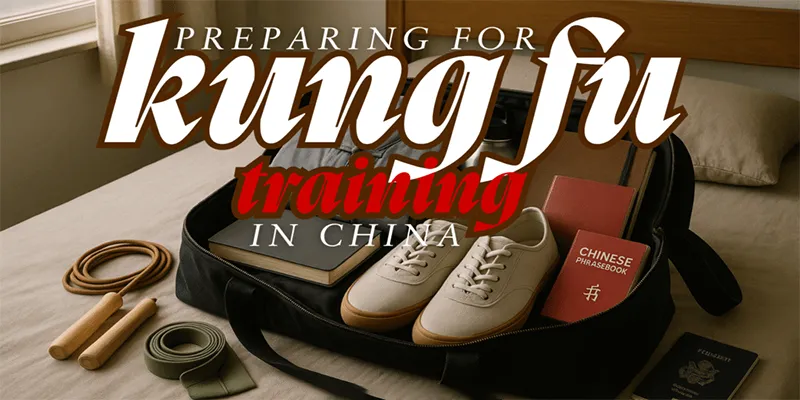
| Living and Study Supplies | Suitable clothing, medications, and personal necessities for training. | |
| Physical Training | Gradual Adaptation | Training intensity will gradually increase, starting with the basics. |
| Cultural Considerations | Training not only provides physical exercise but also includes philosophical and cultural learning. | |
| Cultural Integration | Language and Communication | Actively learn Chinese and communicate frequently with coaches and classmates. |
| Openness and Respect | Respect school rules and cultural differences, and actively participate in cultural activities. |
Visa Application Information
The key to applying to study Kung Fu training in China is obtaining the correct student visa (X visa). There are two types:
X1 Visa: Applicable to long-term courses with a study period exceeding 6 months. After entering China with an X1 visa, you must apply for a residence permit at the local Public Security Bureau’s Entry-Exit Administration Department within 30 days.
X2 Visa: Applicable to short-term courses with a study period not exceeding 6 months.
Application Process:
Online Application and Appointment: Complete the application form and print it out using the “China Visa Online Application” system (COVA). Then, schedule an appointment to submit your materials through the visa application center website.
Prepare Core Documents: These include a passport valid for at least 6 months, the visa application form, a recent color photo with a white background, the original admission notice issued by the Kung Fu training in China, and the “Visa Application Form for Foreign Students Studying in China.”
Submit Application and Fingerprint Collection: Submit your materials in person at the Chinese embassy/consulate or visa application center at your scheduled appointment time. Fingerprints of all ten fingers are usually required.
Receive a visa.
Documents and Finances:
Important Documents: Original copies of your passport, visa, acceptance letter, JW201 form, medical examination record, academic certificates, etc. It is also recommended to prepare multiple photocopies and keep electronic scans.
Payment Tools: Prepare a small amount of RMB cash for initial emergencies. Bring an international credit card.
Living and Study Supplies:
Clothing: Pack comfortable clothing suitable for a lot of physical activity.
Medications: Bring some commonly used over-the-counter medications, such as cold medicine, gastrointestinal medicine, and Band-Aids.
Electronic Devices: Laptop, mobile phone, adapter plug (China’s standard sockets are Type A and Type I, voltage 220V).
Others: Spare sunglasses, sunscreen, travel-sized personal toiletries, etc.
Daily Training Schedule
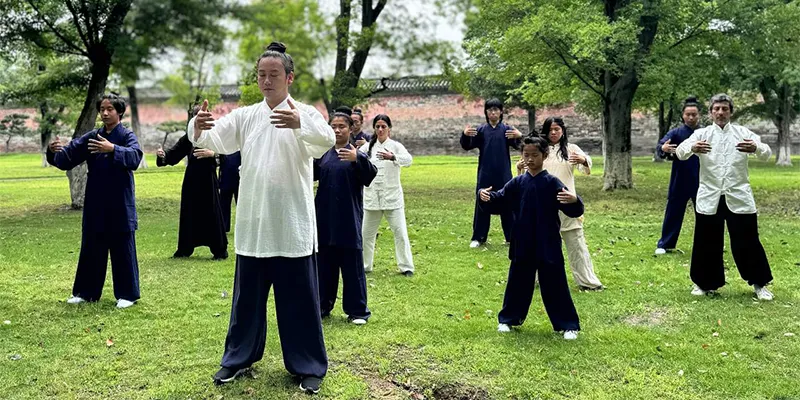
Kung Fu Training in China Mode A (Most common)
05:30 Wake-up bell
05:40–06:40 Morning run (3–8 km) + Standing meditation + Basic warm-up
06:50–07:30 Breakfast
07:40–11:50 Morning training
Content: Strength, endurance, flexibility, routines, sparring
12:00–12:40 Lunch and washing up
12:50–14:30 Afternoon rest
14:40–18:00 Afternoon training
Content: Weapons, Sanda (Chinese kickboxing), sparring, specialized techniques
18:10–18:50 Dinner
19:10–20:30 Theory class, Qigong, stretching, free sparring
21:30 Lights out
Total daily training time: 7–8 hours
6 days of training per week: Saturday is usually only half a day, and Sunday is a complete rest day.
Kung Fu Training in China Mode B (Wudang School)
06:00 Wake up
06:10–07:30 Tai Chi/Qigong/Morning Exercise
07:40–08:20 Breakfast
08:30–11:30 Morning Training
12:00 Lunch
12:30–14:30 Afternoon Rest
15:00–18:00 Afternoon Training
18:30 Dinner
19:00–20:30 Cultural Courses including Calligraphy, Traditional Chinese Medicine Theory, and Taoist Philosophy
22:00 Lights Out
Challenges for Beginners and How to Overcome Them
As a beginner in kung fu, my biggest problem was extremely poor flexibility. When the instructor had us do front splits or high kicks, my legs felt like sticks—I could barely lift them, and my lower back ached.
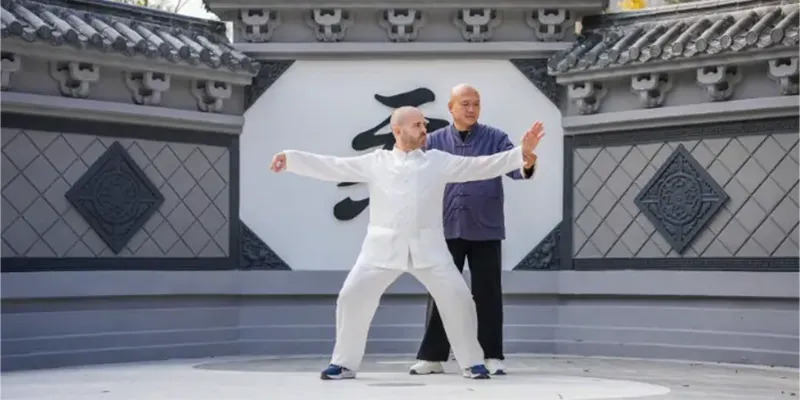
Later, my coach told me to simply stretch for 15-20 minutes daily, focusing on my hips, hamstrings, and lower back. Progress was slow, but after 2-3 months, most people felt a noticeable improvement.
Another very common problem was holding a horse stance. After 30-40 seconds, my thighs would start to burn and tremble; after a minute, I was sweating profusely, and my lower back would start to ache. This was perfectly normal. The instructor then asked us to hold the stance for longer each training session—starting with 3 sets of 30 seconds, increasing by 5-10 seconds each week. After 6-8 weeks, I could hold it for 3-5 minutes without feeling tired.
Almost everyone experiences physical fatigue at some point. The class was only 90 minutes long, but by the last 20 minutes, I was exhausted. My arms felt like lead, and I could barely complete the movements. Kung Fu requires more endurance than most sports. The solution is to do basic aerobic exercise 2-3 times a week outside of class, such as jogging, skipping rope, or burpees. Most beginners will see significant progress after a month of consistent practice.
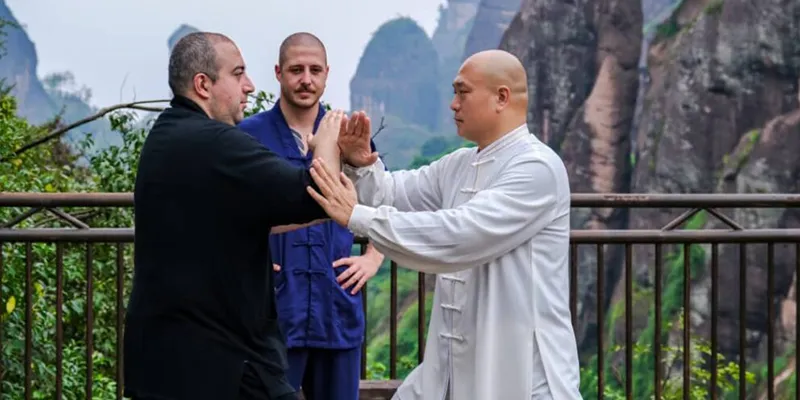
Memorizing the routines at first is very frustrating. The instructor will demonstrate the combination of 30 movements once or twice and then ask us to repeat it. I forgot all three movements after practicing them and felt stupid. This is perfectly normal.
A practical method is to record the instructor’s demonstration with your phone and then practice the routine at home in slow motion 5-10 times, doing 3-5 movements each time. Within a week, these movements will gradually form muscle memory.
For the first few months, muscle soreness and mild pain will persist. I was sore all over after each class, and sometimes I couldn’t even walk up the stairs the next day. This is normal delayed onset muscle soreness (DOMS). After seeing this, the teacher instructed me to do some gentle stretching and walking the next day, and if possible, take a warm bath with Epsom salts. I also advised not to miss more than 3-4 days of training.
Balance problems are very common. When we did single-leg standing or turning kicks, I would wobble like I was drunk and often fell. Almost every beginner encounters this problem. You just need to practice basic balance techniques daily: stand on one leg while brushing your teeth, do slow patting and pushing exercises, and gradually lower your stance. You should see noticeable improvement within 4-6 weeks.
Costs, Duration, and How to Begin
For foreigners wanting to learn Kung Fu in China, the process involves many aspects, including cost, time, and entry methods.
The first step is choosing a reputable martial arts school. Afterward, a tourist visa is required, as many schools assist with visa processing after acceptance and a deposit payment. It’s recommended that students prioritize schools with comprehensive curricula and learn basic Mandarin phrases and common mobile applications like WeChat Pay and VPNs for daily life.

Costs vary depending on the kung fu training in China school and location. Monthly fees typically range from 500 to over 1500 RMB, usually including tuition, accommodation, and meals. A monthly budget, including airfare and other miscellaneous expenses, is generally between 2000 and 2500 RMB.
Training duration is very flexible. Short-term training of 1-3 months can help students build a solid foundation, mastering basic postures, routines, and concepts.
Generally, 6-12 months of practice are needed to master complex routines and applications, and possibly begin some basic weapon training.
For those who aspire to coach-level mastery or delve deeply into a particular style of kung fu, it typically takes several years to learn.
Conclusion
The journey of a thousand miles begins with a single step. Or in this case, a single visa application.
The schools are open, and the masters are waiting, so start your kung fu training in China, reach out to the academies listed above, and prepare for an experience that will make your kung fu journey start now.