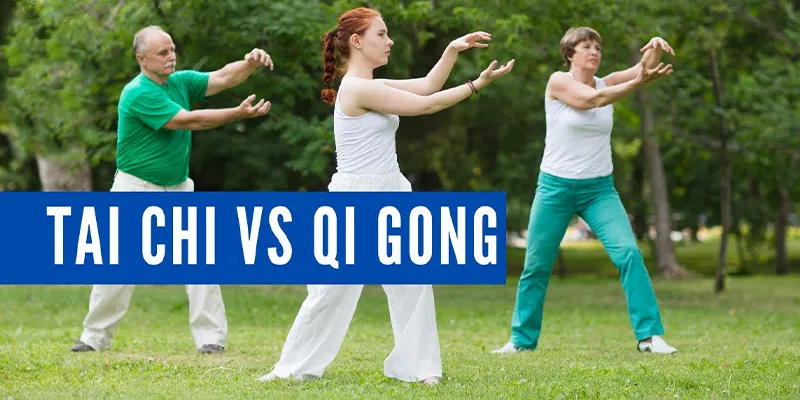
Many people think of Tai Chi as simply Qigong; in fact, they blur the lines between Qigong and Tai Chi.
Tai Chi and Qi gong both harness Qi for health and harmony, but they differ in structure and focus:
Tai Chi is a structured martial art, while Qigong is a simpler, varied exercises centered on balancing Qi.
This article will show the qi gong vs. tai chi difference, their benefits, and guide you to find authentic kung fu instruction near you.
What is Tai Chi?
Tai Chi Chuan, commonly shortened to Tai Chi, translates as “Supreme Ultimate Fist.” This name shows its origins: it is first and foremost an internal martial art.
Tai chi originated centuries ago in China as a martial art for self-defense. Its movements employ yielding, redirecting force, and internal power rather than brute strength.
Although its martial uses are still researched, Tai Chi is now world-famous for its significant health and wellness benefits.
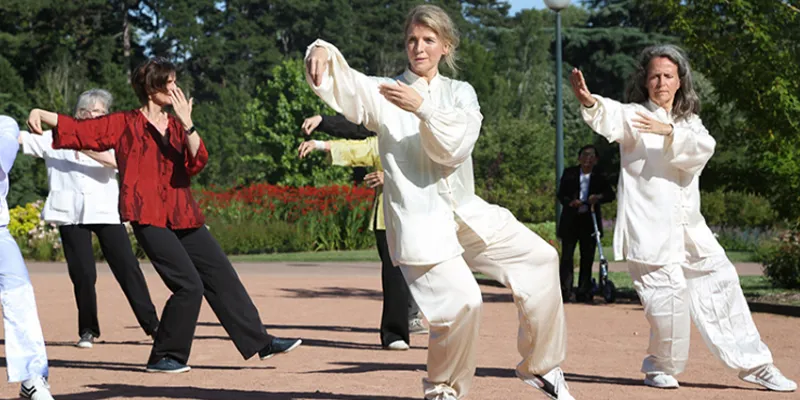
A defining characteristic is its structured forms. The popular Yang-style 24-step and Chen-style tai chi both feature a continuous series of slow, graceful postures. Each movement is precise, requiring specific alignments of the feet, legs, torso, arms, and hands.
Tai Chi integrates rooted stance, whole-body movement, smooth breath regulation, and a calm mind, essentially forming a moving meditation.
What is Tai Chi typically used for?
- Physical Health: Significantly improves balance and coordination and reduces fall risk, especially in older adults. Tai chi enhances flexibility, joint mobility, and muscular strength. It promotes better body awareness and improves cardiovascular health.
- Mental and Emotional Well-being: Tai chi has been proven to reduce stress, anxiety, and depression. It enhances focus, concentration, and mental clarity. Induces deep relaxation and improves sleep quality.
- Chronic Condition Management: Tai chi is widely recommended to help with chronic pain, Parkinson’s disease symptoms, heart health, and immune function.
- Mind-Body Integration: Tai chi also cultivates a deep connection between physical movement, breath, and mental state.
What is Qigong?
Qigong is pronounced “chee-gong.” The term breaks down to “Qi” (vital energy) and “Gong” (skill through steady practice). Thus, Qigong means “cultivating life energy” or “energy work.” It is also sometimes referred to as Chi Kung, Dao Yin, or Neigong.
Qigong is an ancient practice that cultivates and balances Qi for the body, mind, and spirit. Its roots go back millennia, developed with TCM, Daoist meditation, and Buddhist contemplative practices. Unlike Tai Chi’s forms, Qigong is incredibly diverse.
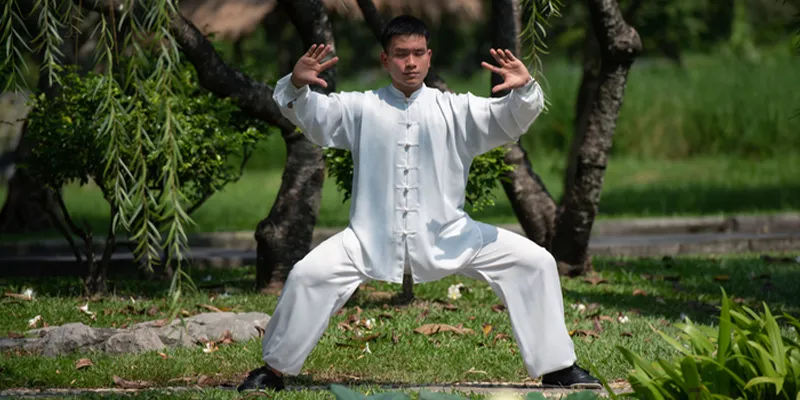
What does Qigong involve?
- Static Postures: Build structure, root, and circulate Qi by holding positions like “Holding the Ball” in Zhan Zhuang.
- Dynamic Movements: Simple, repetitive exercises, often using coordinating breath and movement to guide Qi.
- Meditative Focus and Visualization: Using the mind to guide Qi flow along meridians or to specific organs.
- Self-Massage: Techniques like tapping, rubbing, or acupressure to stimulate Qi flow.
- Sound Healing: Using specific sounds like the Six Healing Sounds to vibrate and influence internal organs and Qi.
Qigong practices range from very simple exercises to complex systems. Its main goals are to maintain health, heal, enhance vitality, develop spiritually, and achieve inner and natural harmony.
Qi Gong vs. Tai Chi: Difference
Both Tai Chi and Qigong aim to cultivate Qi, improve health, and integrate the mind, body, and breath. However, Tai Chi is a martial art that involves complex forms, whereas Qigong involves repetitive movements or stillness for specific health outcomes.
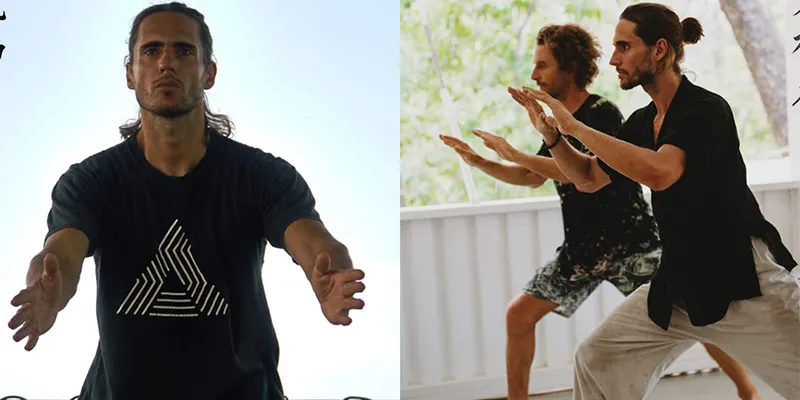
Qi Gong vs. Tai Chi: Structural Composition
Tai Chi is a continuous, flowing sequence; Qigong is often repetitive or static.
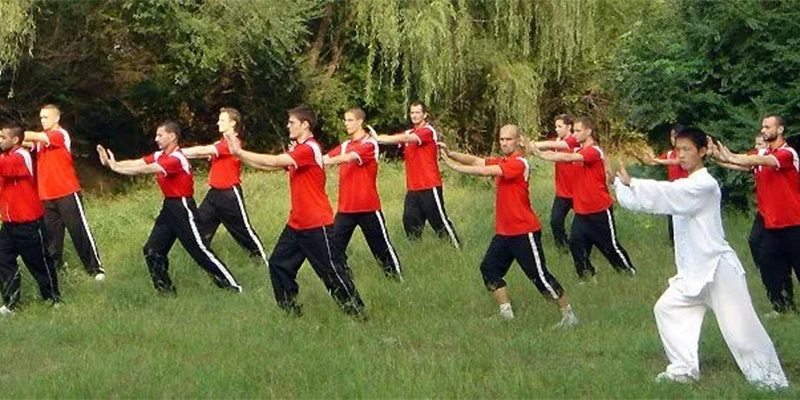
Tai Chi forms consist of linking steps and postures together in a continuous set that can take minutes to perform. Qigong typically isolates specific movements, repeating a single motion multiple times to stimulate a specific meridian or organ system before moving to the next exercise. It may also involve Zhan Zhuang, where no outer movement occurs.
Qi Gong vs. Tai Chi: Primary Purpose
Tai Chi is martial; Qigong is medicinal and restorative.
Tai Chi is an internal martial art. Every movement has a combat application—deflection, striking, or grappling—hidden within the slow motion. The aim is to neutralize external force. Qigong involves health preservation, healing, and spiritual cultivation. Its goal is to purge stagnant energy, tonify organs, and balance the body’s internal systems without concern for combat application.
Qi Gong vs. Tai Chi: Complexity and Learning
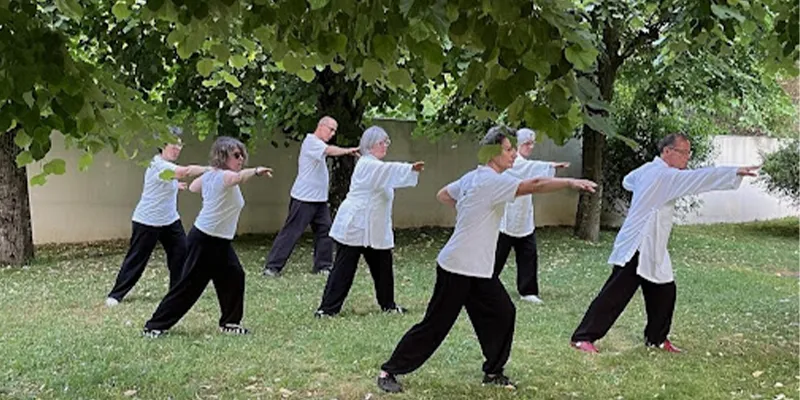
Tai Chi requires long-term study to memorize; Qigong is easy to study immediately.
Tai Chi forms typically require memorizing extended moves, which can take months to years to master, demanding precise posture and coordination. Qigong exercises are generally brief and repetitive, allowing quicker learning and greater flexibility for beginners or those with limited time.
Qi Gong vs. Tai Chi: Space and Time Requirements
Tai Chi often needs more space and time; Qigong is more adaptable to limited settings.
Tai Chi’s expansive movements, such as turns and steps, typically require open areas and longer sessions (30-60 minutes) for full forms. Qigong can be performed in confined spaces, standing or sitting, with sessions as short as 10-15 minutes, making it suitable for daily life.
Qi Gong vs. Tai Chi: Relationship Between Tai Chi and Qigong
Tai Chi incorporates Qigong principles; Qigong stands alone without Tai Chi.
Tai Chi training includes Qigong’s breathing and energy concepts to build foundational skills, enhancing its meditative aspects. Qigong, however, does not require Tai Chi’s forms and can be practiced for health maintenance.
Qi Gong vs. Tai Chi: “Qi” vs. “Chi”
This is purely a romanization difference! “Qi” (in Qigong) and “Chi” (in Tai Chi) represent the exact same concept—the life energy. The spelling ‘Chi’ in ‘Tai Chi’ comes from the older Wade-Giles system, whereas ‘Qi’ (as in ‘Qigong’) reflects the modern Pinyin standard. It’s the same “Qi.”
Qi Gong vs. Tai Chi: Which Is Easier to Learn?
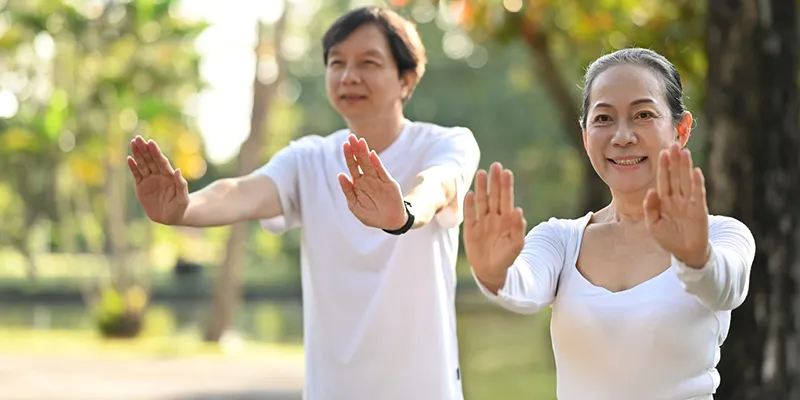
Qigong is easier to learn.
Because qi gong exercises are often short and repetitive. You can learn and immediately practice a basic exercise like “Lifting the Sky” or standing meditation in one session.
No need to memorize long forms. Qigong practices involve minimal leg movement, so they are suitable for seated use or for those with balance issues. Qigong’s primary goal is to focus on breath, sensation, and energy flow.
Learning Tai Chi requires memorizing 20-108 postures, including transitions, weight shifts, and directions. Each pose needs precise body alignment, smooth flow, and stability. Basics take weeks to months; mastery requires years of practice.
However, “easier” doesn’t mean “better.” Choose based on your goals:
Seek immediate stress relief, simple energy exercise, or have physical limitations? Qigong is the easier start.
If you seek meditation, wish to improve your physical coordination and balance, or are interested in martial arts, Tai Chi is an ideal choice for you.
Qigong as the Heart of Tai Chi
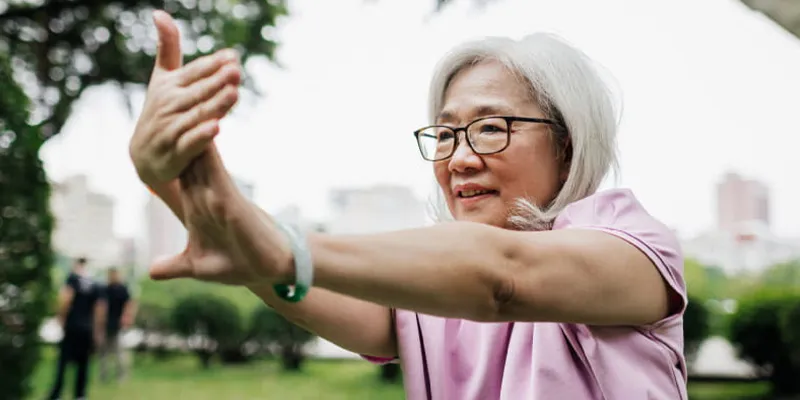
Qigong is not separate from Tai Chi; it is its energetic and foundational core. In fact, Qigong is the energetic foundation of Tai Chi.
Qigong provides the internal energy (Qi) work that defines Tai Chi’s power.
Practices like Zhan Zhuang build the strength, alignment, and breath control essential for Tai Chi.
Simple Qigong develops the ability to feel and consciously direct Qi, which is fundamental to Tai Chi’s internal power.
Advanced Tai Chi using the form to direct Qi with breath, focus, and joint spiraling.
Without Qigong, Tai Chi lacks its true internal strength and therapeutic depth.
Find Authentic Tai Chi or Qigong Classes
Search Engines:
Use Google for “Tai Chi classes near me” or “Qigong instructors in [City].” Check Google Maps for locations, reviews, and websites; prioritize organic results over ads.
Social Media:
Facebook: Search groups like “Tai Chi in [City]” or “Qigong Practitioners [Region]”; review community posts and studio pages.
Meetup: Ideal for local groups; search “Tai Chi” or “Qigong.”
Online Directories:
World Tai Chi and Qigong Day (worldtaichiday.org): Global event map; event hosts often offer ongoing classes.
Qigong Institute Directory (qigonginstitute.org/directory): Lists instructors and resources (mainly US, some international).
Video Platforms:
Search YouTube/Vimeo for local instructors’ videos with links to schools. Avoid solo online learning as a beginner; seek in-person guidance.
FAQ
Qigong vs. Tai Chi: Which is better for weight loss?
Neither Qigong nor Tai Chi is designed for weight loss. However, practicing Tai Chi can burn 200-400 calories per hour. In contrast, Qigong burns only about 100-300 calories per hour. Therefore, Tai Chi is more suitable for weight loss.
What is the biggest difference between Qigong and Tai Chi?
The main difference between Qigong and Tai Chi is their structure: Qigong consists of simple, isolated movements practiced repeatedly for health maintenance. In contrast, Tai Chi is a refined martial art, described as “meditation in motion,” consisting of a series of non-repetitive movements.
Should I start with Qigong or Tai Chi?
For most beginners, starting with Qigong is more efficient. Because Qigong movements are simpler and require less physical exertion, learning Qigong first will make learning Tai Chi easier later. If you prefer a higher level of challenge and have better flexibility, you can directly learn Tai Chi.