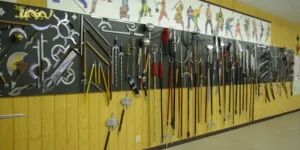
The best martial arts for self defense have quick learning curves, adaptability to street fights, and techniques that work against untrained or larger opponents.
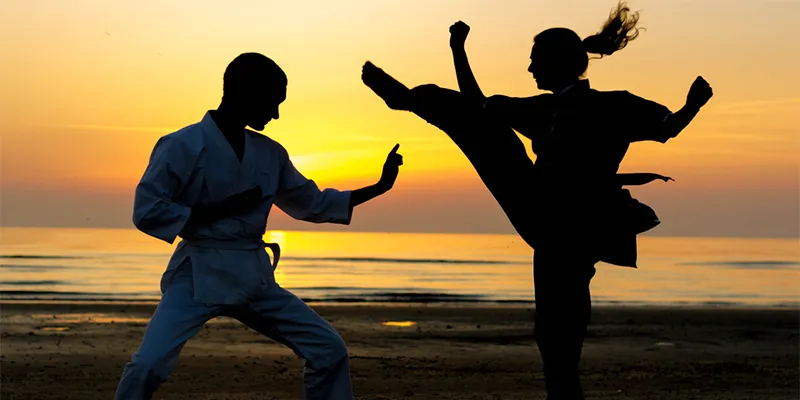
Based on expert opinions and practical applications, I’ve ranked the top five best martial arts for self defense. These martial arts prioritize military training, law enforcement, or competitive fighting.
#1 Krav Maga: Most Effective Self-defense Martial Art
Krav Maga, developed by the Israeli Defense Forces, is designed purely for self-defense in life-threatening situations. It combines boxing, wrestling, judo, and aikido but strips away traditional rules to focus on aggressive, instinctive responses. Techniques include strikes to vulnerable areas (eyes, groin, throat), disarming weapons, and escaping multiple attackers.
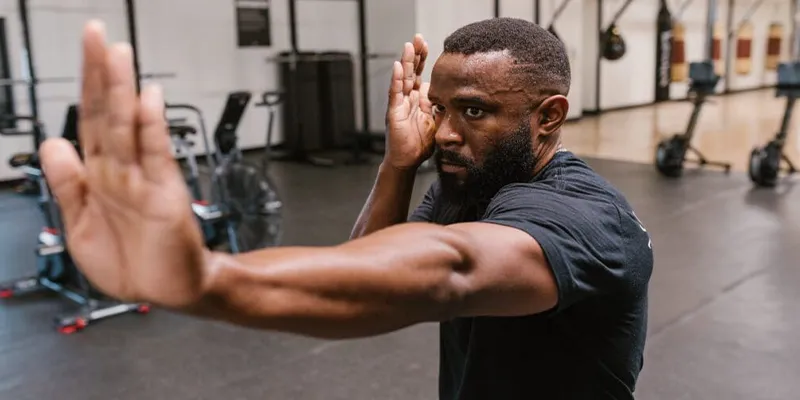
Krav Maga prioritizes efficiency over aesthetics—moves are simple, direct, and meant to end threats quickly. It trains under stress to simulate real adrenaline-fueled encounters, building mental resilience. Unlike sport-oriented arts, it doesn’t assume fair play; it prepares for ambushes, ground fights, or armed assailants.
Example: In 2014, a Krav Maga practitioner in Jerusalem used the system’s knife-defense techniques to neutralize an attacker during a stabbing incident, escaping with minor injuries. Military units worldwide, including the U.S. Special Forces, incorporate Krav Maga for its no-nonsense approach.
#2 Brazilian Jiu-Jitsu (BJJ): Best for Ground Combat
BJJ, originating from Japanese jujutsu and popularized by the Gracie family, focuses on grappling, submissions, and positional control. It’s renowned for enabling smaller individuals to defeat larger ones through leverage and technique rather than brute strength.

Many real fights end up on the ground, where striking arts falter. BJJ teaches how to control an opponent, escape mounts, and apply chokes or joint locks to subdue without causing harm. It’s highly effective against untrained aggressors.
Example: UFC fighter Royce Gracie demonstrated BJJ’s prowess in the early UFC tournaments, submitting much larger opponents like Ken Shamrock using ground techniques. In street scenarios, women trained in BJJ have successfully defended against assaults, as seen in documented cases where victims used armbars to escape holds.
#3 Muay Thai: Best Combat Martial Art
Known as Thai boxing, Muay Thai uses punches, kicks, elbows, and knees for devastating close-range combat. It’s a full-contact striking art honed in Thailand’s competitive rings.
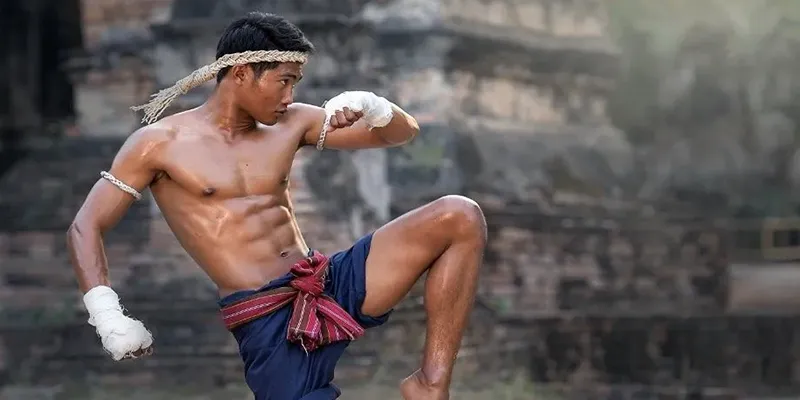
Muay Thai builds powerful, versatile strikes that work in clinches or at a distance, making it adaptable to confined spaces like alleys or bars. The emphasis on conditioning ensures practitioners can absorb and deliver punishment effectively. It’s straightforward to learn basics quickly, focusing on practical offense and defense.
Example: Law enforcement in Thailand integrates Muay Thai for crowd control and arrests. A notable case involved a Muay Thai fighter in Australia who used knee strikes to fend off a group of muggers in 2022, as reported in self-defense forums. Its integration into MMA highlights its real-world striking efficacy.
#4 Boxing: Simple, Effective Punching Power
Boxing is a Western combat sport centered on footwork, head movement, and powerful punches. It’s often called “the sweet science” for its strategic depth.

Boxing excels in stand-up fights against single opponents, teaching evasion, timing, and knockout potential. It’s accessible—basic skills like jabs and hooks can be mastered in months—and builds superior hand speed and endurance. Against untrained attackers, a well-placed punch can end a confrontation instantly.
Example: Mike Tyson, a boxing legend, used his skills in a 1988 street altercation to quickly dispatch an aggressor. Police officers trained in boxing report higher success in subduing suspects without weapons, as it emphasizes control and precision over wild swinging.
#5 Judo: Best Defensive Martial Arts
Judo, meaning “gentle way,” was created by Jigoro Kano and focuses on throws, pins, and submissions to unbalance and immobilize opponents.
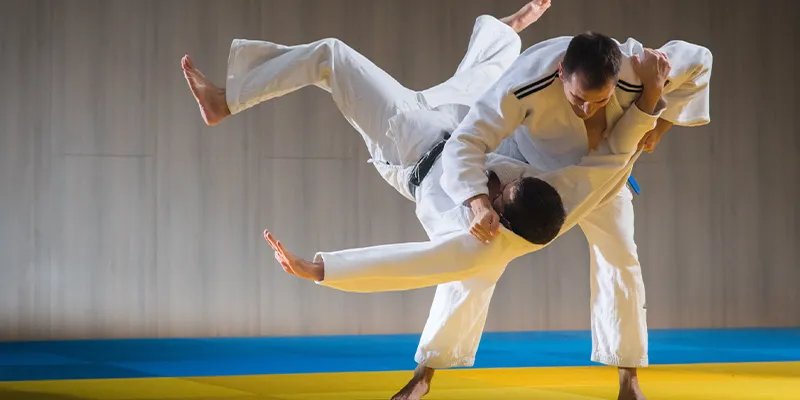
Judo teaches how to use an attacker’s momentum against them, making it perfect for defending against grabs or charges. It’s effective in clinches and transitions to the ground, emphasizing safe falls to avoid injury. For self-defense, it promotes non-violent resolutions through control rather than strikes.
Example: In Olympic competitions, judokas like Teddy Riner have dominated larger foes with ippon throws. Real-world applications include Japanese police using judo for arrests, such as in a 2019 incident where an officer threw and pinned a knife-wielding suspect without harm.
Choose the Best Martial Arts for Self Defense
Step 1: Self-Defense Objectives
Are you afraid of random street attacks, domestic violence, armed attacks, multi-party standoffs, or sexual assault prevention? Different martial arts target different types of violence.
Step 2: Real-World Combat Training
Choose a martial art with a proven track record in military, law enforcement, or documented civilian self-defense cases, such as Israeli kickboxing of the Israel Defense Forces, Brazilian jiu-jitsu in early UFC and challenger competitions, and Muay Thai with thousands of full-contact matches.
Step 3: Your Physical Fitness
Assess your age, injury history, body type, flexibility, and cardiorespiratory function. High-impact striking martial arts require good stamina and joint flexibility; combat requires flexibility and tolerance for close-quarters physical contact.
Smaller or older individuals are generally better suited to Brazilian Jiu-Jitsu, Judo, or wrestling, while taller individuals with longer reach may be better suited to close-quarters combat such as kickboxing.
Step 4: Course Content
A complete self-defense martial arts system should cover striking, close-quarters grappling, throws, ground fighting, and basic weapon defense.
Compare each martial art to violent conflicts: pre-fight preparation, initial burst of power, control/advantage, and disengagement.
Identify weaknesses; for example, Brazilian Jiu-Jitsu often neglects weapons and multi-person attacks; traditional karate often lacks sparring experience. Decide whether cross-training is needed to address these deficiencies.
Step 5: Instructor Qualifications and Quality
Look for instructors with backgrounds in military combat, bodyguard/security work, law enforcement, or full-contact competition.
Visit several martial arts schools, sit in on a few classes, and note whether the training includes resistance training and simulated sparring.
Step 6: Attend Trial Classes
Schedule trial classes at three of your preferred martial arts schools.
Observe how they accommodate beginners, the frequency of full-resistance sparring, and whether the training atmosphere encourages students to let go of their ego and focus on learning.
FAQs
FAQ 1: Is there a single best martial art for self defense?
No, there is no universally best martial art for self defense.
However, if one had to choose the best martial art for self defence, Israeli Krav Maga consistently ranks first. Designed for dealing with non-lethal violence and regularly updated based on data, it covers stand-up striking, close-quarters grappling, ground fighting, dealing with multiple attackers, and defense using weapons/knives/firearms.
FAQ 2: As a smaller or less strong person, what is the best martial art for self defence against a larger attacker?
Brazilian Jiu-Jitsu (BJJ) is often considered the premier choice, as it is specifically designed to allow a smaller person to control and submit a larger, stronger opponent on the ground using joint locks and chokes.
Judo is also excellent, focusing on attacker’s momentum and weight against them with throws and takedowns, quickly neutralizing their advantage.
FAQ 3: What is the best martial art for self defense for women?
Krav Maga is excellent for its rapid, aggressive responses to disable an attacker and create an opportunity to escape.
Brazilian Jiu-Jitsu (BJJ) is highly recommended because it is built around the concept of a weaker person defeating a stronger one through technique, making it invaluable for defending against larger attackers, a common concern.