Sanda martial art, also known as Chinese kickboxing or Sanshou, is one of the most complete and well-regulated combat sports in the world and is arguably one of the most complete standing combat systems in existence.
But why has Sanda not become a foundational discipline in MMA like Brazilian Jiu-Jitsu, Muay Thai, or wrestling? This blog mainly analyzes the primary reasons for its unpopularity in MMA.
What Is Sanda Martial Art?
Sanda martial art is a combat sport developed in the late 20th century by the Chinese military, drawing from traditional Chinese martial arts such as Kung Fu, Shuai Jiao, and Western boxing. It focuses on stand-up combat with a blend of strikes and takedowns. Core techniques are categorized into four main areas: Da, Ti, Shuai, and Chin-Na.
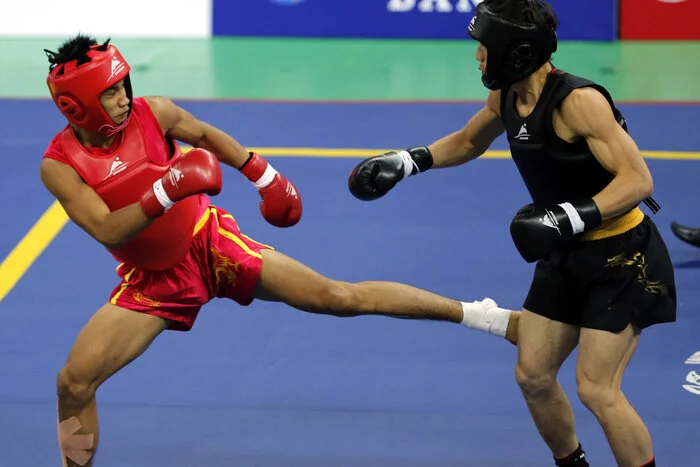
- Da (Striking/Punching): Incorporating boxing-style handwork.
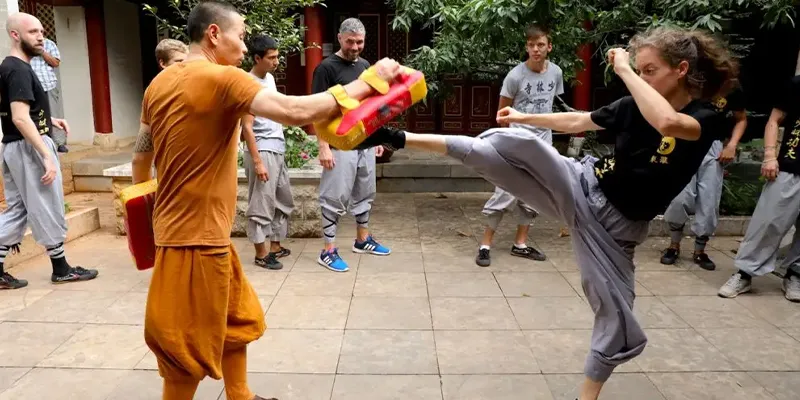
- Ti (Kicking): Utilizing powerful low kicks, lightning-fast side kicks, and roundhouse kicks.
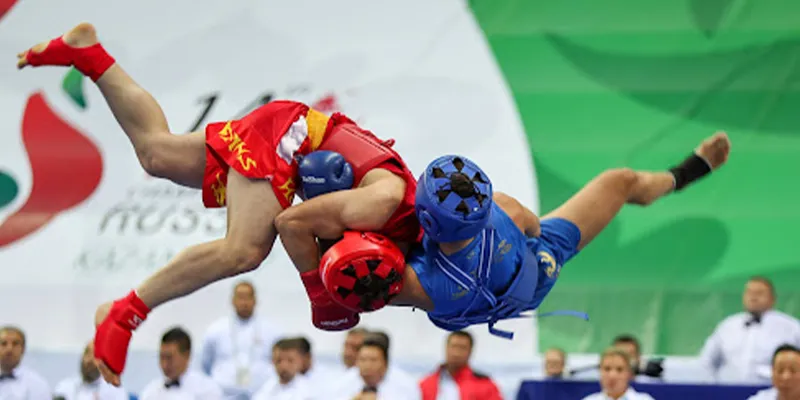
- Shuai (Throwing/Wrestling): This is the soul of Sanda. Unlike Muay Thai, which focuses on the clinch and knees, Sanda prioritizes high-amplitude throws, trips, and “catch-and-trip” counters against kicks.
- Chin Na (Seizing): Although restricted in competitive Sanda, its military version includes joint locks and submission holds, making it a true combat martial art.
The Sanda practitioner is characterized by exceptional footwork, a “hit and move” mentality, and the ability to transition from a strike to a takedown in a fraction of a second.
Critically, Sanda competition prohibits ground fighting. Once a fighter is thrown or taken down, the referee immediately separates competitors and restarts the match standing. This rule is also one of the reasons why Sanda is unpopular in MMA.
Reason 1: Rating Differences
Sanda martial art focuses on taking down an opponent while maintaining a standing position, while MMA emphasizes defeating and submitting the opponent.
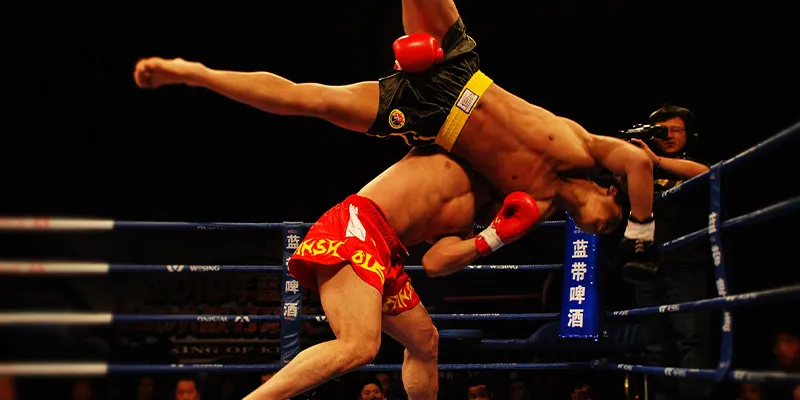
In a Sanda martial arts match, the objective of a takedown is to land the opponent on the floor while the initiator remains standing. Once a fighter goes down, the referee immediately declares the result and restarts the match. Sanda fighters also prepare for the next round after successfully taking down their opponent.
But in MMA, matches frequently devolve into ground grappling. A takedown is merely the beginning of a new phase of combat. A fighter who executes a beautiful Sanda-style trip but fails to follow the opponent to the ground to establish “top control” or “full mount” often loses the tactical advantage.
Reason 2: Sanda Restricts Elbow and Knee Strikes
Most forms of Sanda restrict elbow and knee strikes, but MMA does not.
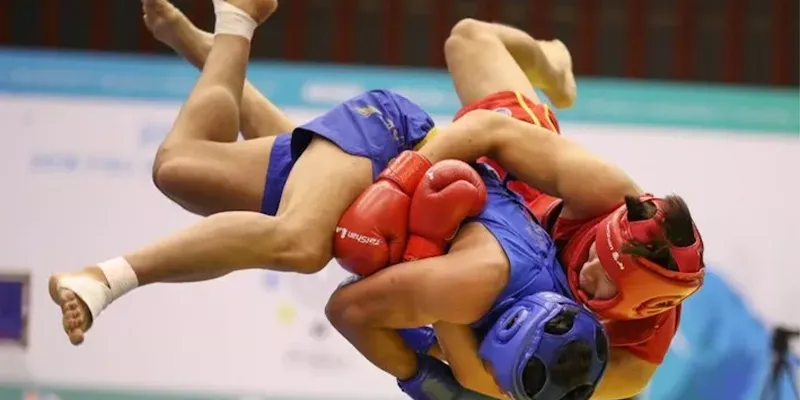
While Sanda is world-class in the “transition clinch,” it does not emphasize the “attrition clinch” found in Muay Thai. In MMA, the clinch is often a place of grinding damage where elbows and knees are used to weaken an opponent against the cage.
Sanda practitioners are often masters of the Shuai (throw), but if they cannot secure the takedown immediately, they risk being “tenderized” by an opponent skilled in Thai-style plum clinching or dirty boxing. But MMA rules allow for a prolonged clinch with devastating strikes.
Reason 3: Geographical Restrictions
Sanda’s popularity is largely confined to China and select Asian regions, resulting in fewer international training opportunities and less visibility compared to globally marketed arts like Muay Thai or BJJ.
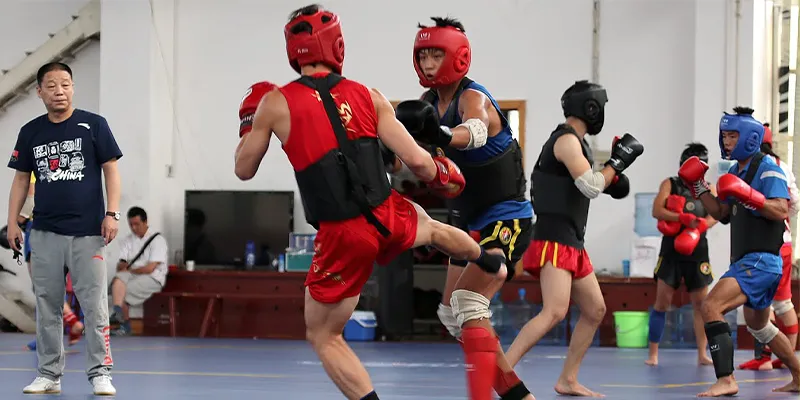
Developed post-Cultural Revolution to modernize Kung Fu for practical use, Sanda was initially a tool for military training and national pride, not global export. MMA, born in the 1990s from Brazilian Vale Tudo and American wrestling, emphasized “no holds barred” testing, exposing traditional arts’ limitations.
In Asia, MMA’s popularity is strong in Japan but weaker in China, where Sanda dominates domestic scenes. Cultural barriers, including language and coaching styles, further isolate Sanda.
Reason 5: Fewer Success Stories and Quality Control Issues
There are very few examples of Sanda fighters achieving good results in UFC events, and Chinese Sanda martial arts schools have quality issues in their training; therefore, it’s very difficult.
Notable Sanda backgrounds in MMA include Weili Zhang (UFC strawweight champion) and Muslim Salikhov, but they often blend styles rather than rely solely on Sanda. Pure Sanda fighters face hurdles, as seen in transitions where ground deficiencies lead to losses.
Many CMA schools prioritize forms over sparring, diluting Sanda’s combative essence. In China, professional Sanda wanes in favor of kickboxing, reducing talent pools. More success stories could elevate it, but current scarcity perpetuates the cycle.
FAQs
Q1: Is Sanda a good foundation martial art?
A1: Yes, Sanda is an excellent foundational martial art, as it provides a base in stand-up striking, takedowns, and throws. Its curriculum is designed for real combat effectiveness, teaching students distance management, timing, and how to seamlessly transition between punches, kicks, and wrestling techniques, which are crucial skills for any well-rounded fighter.
Q2: Is Sanda good as a wrestling art?
A2: Sanda contains highly effective wrestling components for takedowns and throws, but it is not a complete, dedicated wrestling system like Freestyle or Greco-Roman. Its “wrestling” is specifically designed for stand-up engagements, featuring exceptional kick-catches and sweeps, but it does not include ground grappling or submissions, focusing instead on immediately ending the encounter after a throw.
Q3: Is Sanda a legitimate martial art?
A3: Absolutely, Sanda is a fully legitimate and modern combat sport, developed from traditional Chinese martial arts for practical application. It is tested in full-contact competition under standardized rules, practiced by military and police units, and recognized by international sports federations, leaving no doubt about its efficacy and validity as a martial art.
Do you want to learn Sanda Martial Art?