5 Element Chi Kung (Wu Xing Qi Gong) is a practice in traditional Chinese medicine and internal martial arts.
It uses specific postures, movements, breathwork, and mental focus to cultivate and balance the vital energy associated with the five element cycles. The functions of 5 element chi kung is to harmonize the internal organs, emotions, and spirit with the natural order.
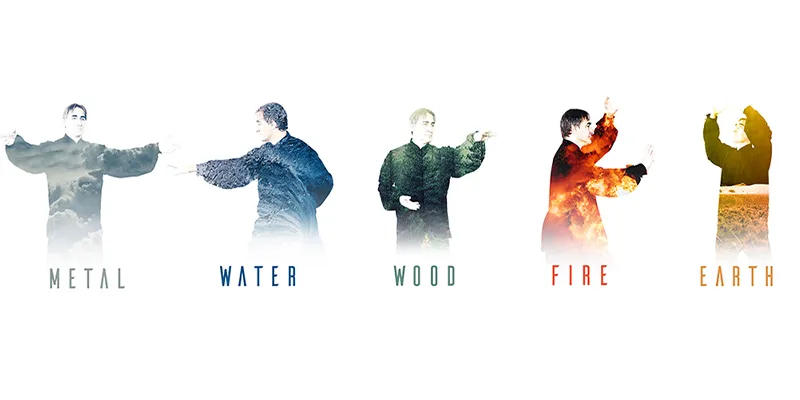
5 element chi kung is based on the ancient theory of the five elements (wood, fire, earth, metal, and water).
5 Element Chi Kung Theory Frame
To understand the function of 5 Element Chi Kung, one must understand the relationships between the elements.
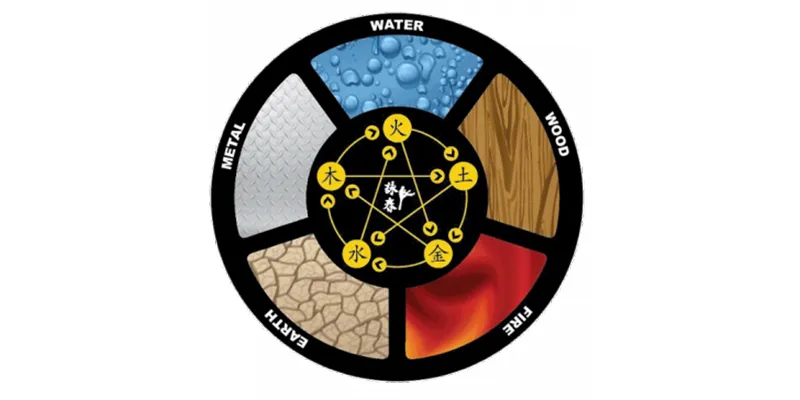
- The Generating Cycle (Sheng): One element nourishes the next (e.g., wood fuels fire). In the body, this represents the support one organ system gives to another.
- The Controlling Cycle (Ke): One element restrains another (e.g., water extinguishes fire). This ensures that no single organ system becomes overactive or dominant.
The primary function of 5 Element Chi Kung is to correct imbalances within these cycles, restoring homeostasis to the mind and body.
Functions of the 5 Element Chi Kung
Each element governs a specific pair of internal organs, tissues, and emotions.
- Wood (Mu)—The Liver and Gallbladder
Primary Function: Regulates the smooth flow of Qi and blood; governs tendons and sinews.
Practice: Wood movements often involve stretching and twisting. These actions release tension in the tendons and open the ribcage, where the liver meridian traverses.
Emotional Transformation: The liver holds anger and frustration. Correct practice transforms this stagnant energy into kindness, benevolence, and flexibility.
- Fire (Huo)—The Heart and Small Intestine
Primary Function: Governs circulation and the spirit. It provides warmth and dynamic energy.
Practice: Fire movements are expansive and rising. They often stimulate the arm meridians (where the heart channel runs) and open the chest area to relieve oppression in the heart.
Emotional Transformation: Imbalanced Fire manifests as anxiety, mania, or cruelty. Balanced Fire manifests as joy, love, and emotional stability.
- Earth (Tu)—The Spleen and Stomach
Primary Function: Digestion and transformation of nutrients into Qi and Blood; governs the muscles.
Practice: Earth movements emphasize grounding, stability, and centering. They often involve low stances and circular movements around the dantian (lower abdomen) to massage the digestive organs.
Emotional Transformation: The spleen suffers from excessive worry and overthinking. Practice transforms this into trust, openness, and groundedness.
- Metal (Jin)—The Lungs and Large Intestine
Primary Function: Respiration and the distribution of Wei Qi (defensive energy/immunity); governs the skin.
Manifestation in Practice: Metal movements focus on expansion and contraction of the thoracic cavity. There is a strong emphasis on deep, rhythmic breathing to maximize oxygen intake and expel toxins.
Emotional Transformation: The lungs store grief and sadness. Through practice, these heavy emotions are released, giving way to courage, righteousness, and integrity.
- Water (Shui)—The Kidneys and Bladder
Primary Function: Stores essential essence and governs growth, reproduction, and the bones. It is the root of vitality.
Practice: Water movements are fluid, soft, and flowing. They often focus on the lower back and knees to strengthen the kidney area.
Emotional Transformation: The kidneys represent deep fear and shock. Balancing water cultivates wisdom, willpower, and a deep sense of calm.
Relationships of 5 Element Chi Kung
The following table summarizes the relationships in 5 Element Chi Kung:
| Element | Organ | Tissue | Negative Emotion | Positive Virtue |
| Wood | Liver / Gallbladder | Tendons | Anger | Kindness |
| Fire | Heart / Small Intestine | Blood Vessels | Anxiety/Hate | Joy/Order |
| Earth | Spleen / Stomach | Muscles | Worry | Trust |
| Metal | Lung / Large Intestine | Skin/Hair | Grief | Courage |
| Water | Kidney / Bladder | Bones | Fear | Wisdom |
How to Practice 5 Element Chi Kung?
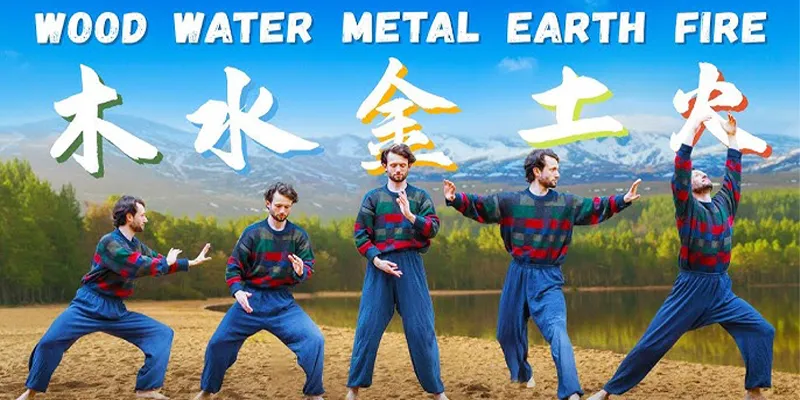
Wood – Regulating the Liver
Wood chi kung practice focuses on extending the limbs and releasing tension in the tendons to promote the smooth flow of qi and blood.
To practice Wood qigong, your movements should mimic the growth of a tree: stretching outward and upward. This often involves twisting the torso gently and extending the arms to open the rib cage, where the liver meridian resides. Your eyes should be wide and focused, as the eyes are connected to the liver.
Stretching must be firm but never painful. Avoid jerky movements. Focus on releasing frustration through the fingertips, but remain mentally calm.
Fire – Regulating the Heart
Fire chi kung practice focuses on opening the chest and stimulating circulation to calm the spirit and regulate heart function.
To practice Fire Qigong, use expansive, rising movements, similar to a bird spreading its wings. The exercises often involve lifting the arms to open the armpits and extending the fingers. The intention is to circulate warmth from the center of the body to the extremities.
Practitioners with high blood pressure should keep arm movements slow and not raise hands above the head for too long. Keep the mind peaceful to avoid “overheating” or anxiety.
Earth (Tu) – Regulating the Spleen
Earth chi kung practice focuses on grounding, stability, and centering the body to aid digestion and muscle strength.
To practice Earth chi kung, the body must feel heavy and rooted, like a mountain. Practice involves low stances (such as the horse stance) and circular hand movements around the abdomen (Dantian). The mind focuses entirely on the center of the body and the feeling of stability connecting your feet to the ground.
When bending knees in a stance, ensure the knees align with the toes to prevent injury. Do not hold your breath; let it sink naturally into the lower abdomen.
Metal (Jin) – Regulating the Lungs
Metal chi kung practice focuses on the rhythmic expansion and contraction of the chest to maximize oxygen intake and strengthen the immune system.
To practice Metal qi gong, movements emphasize opening and closing the rib cage, similar to drawing a bow. There is a strong focus on the breath mechanism: deep inhalation to energize and complete exhalation to purge stagnant air. The movement is precise, upright, and structured.
Keep your shoulders relaxed and down; raising the shoulders creates tension in the chest. Avoid practicing in cold drafts or polluted air, as the lungs are sensitive to the external environment.
Water (Shui) – Regulating the Kidneys
Water qigong practice focuses on soft, fluid movements and spinal flexibility to strengthen the lower back and conserve vital energy.
To practice Water chi kung, the body moves like a flowing river—continuous and soft. Exercises often involve bending at the waist and rotating the hips to stimulate the lower back and the kidneys. The mind should be quiet and introspective, turning inward to cultivate stillness.
Protect your lower back. Always keep a slight bend in the knees when leaning forward; never lock the legs. If you have back pain, reduce the range of motion.
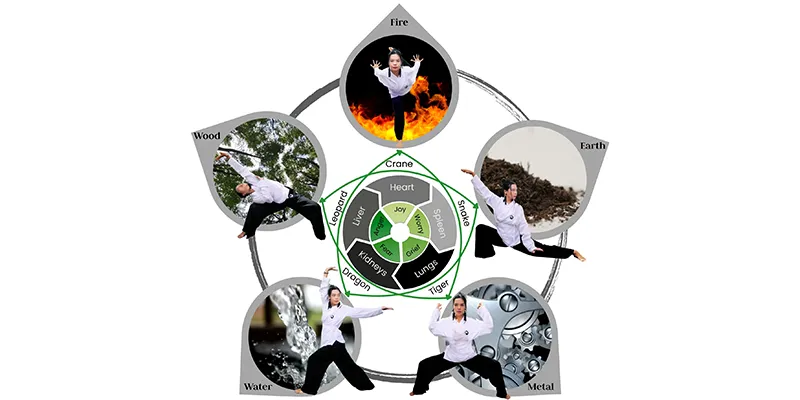
The 5 Elements chi kung are interdependent, following cycles of generation and control. Regular practice, ideally 20-30 minutes daily, allows qi to circulate freely, adapting to seasonal changes—more Wood in spring, Water in winter.