Chen Style Tai Chi: When Explosive Power Fits Practice
A student once asked me, mid-form, why his elbow suddenly snapped forward on a move he'd practiced slowly for weeks. That sudden crack of power is called fajin, and it's the question every newcomer to Chen Style Tai Chi eventually asks: when does the body release force, and when does it simply sink, coil, and wait? The answer isn't philosophical alone — it has real consequences for joints, tendons, and how fast a student actually progresses.
Chen Style Tai Chi is the oldest of the five family lineages, and it carries something the later styles smoothed away — visible bursts of speed and force inside an otherwise slow, circular form. Understanding exactly when that burst belongs, and when it doesn't, separates a safe training path from an injured one.
What Separates Chen Style From the Slower Lineages
Most people who picture Tai Chi in a park are picturing Yang style — even, slow, no sudden movement. Chen style looks different because it keeps the original military roots closer to the surface. Silk-reeling (chansi jin) spirals through every joint, and certain movements end in a stamp, a release, or a strike.
| Aspect | Chen Style Tai Chi | Yang Style |
|---|
| Pace | Mixed — slow coiling with sudden fajin bursts | Uniform, even tempo throughout |
| Stance | Lower, more compact, tighter spirals | Higher, broader, more relaxed |
| Visible intent | Combat application remains obvious | Softened for health and longevity focus |
| Learning curve | Demands more body coordination early | Gentler entry point for most beginners |
| Typical goal | Internal power plus martial structure | Circulation, balance, stress relief |
Neither approach is superior — they serve different training goals. A student who wants Learn Tai Chi purely for calm, low-impact movement may find Yang style's evenness more forgiving on the knees. A student chasing Chen Taijiquan martial applications, however, needs the spiral mechanics that Chen style trains from day one.
Understanding Fajin — Chen Style Tai Chi's Explosive Release
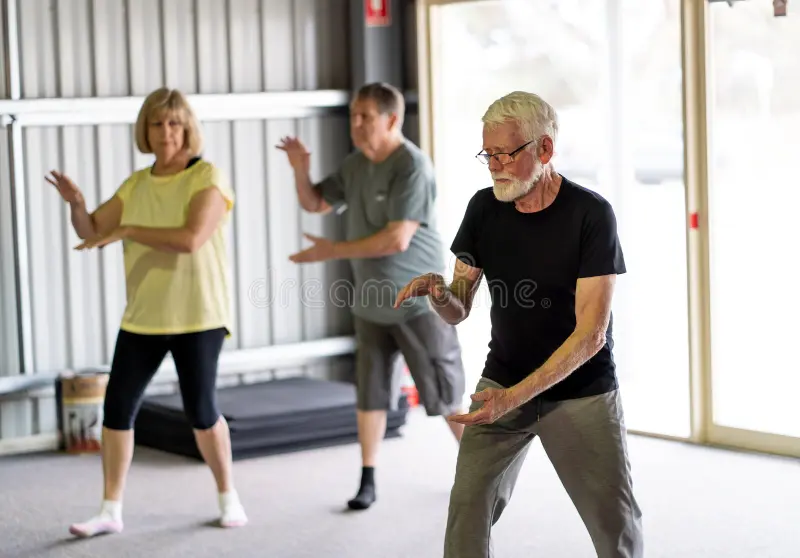
Chen style tai chi fajin isn't a muscular punch. It's a whole-body release — ground force traveling up through the legs, waist, spine, and out through the limb — compressed into a fraction of a second. Think of a coiled spring, not a flexed bicep. The power comes from relaxation and timing, not tension.
This is the piece most beginners misunderstand. They try to generate fajin by tightening the shoulders and arms, which actually blocks the force rather than transmitting it. Real Chen tai chi explosive power depends on three things happening in sequence:
- The foot roots and the ground pushes back — this is where Zhan Zhuang standing practice builds the foundation.
- The waist turns first, acting as the main engine of rotation.
- The arm stays relatively loose until the very last instant, when it "catches" the transmitted force and releases it outward.
Skip step one, and the whole chain collapses. This is why every Chen style curriculum at SJF Kung Fu School begins with long stretches of Zhan Zhuang before a single fajin movement is introduced.
When Explosive Releases Fit — and When They Don't
This is the question I get most from new students, so let's answer it directly, including the limits.
Q: Should a complete beginner practice fajin on day one?
No. A beginner's tendons, ligaments, and nervous-system coordination aren't ready for sudden loading. Attempting fajin before the body understands how to sink weight correctly usually produces tension in the shoulders and strain in the lower back — the opposite of what fajin is supposed to be. The first weeks should focus entirely on slow form, weight transfer, and structural alignment.
Q: How do I know I'm ready to start training explosive releases?
Three signals matter more than calendar time:
- You can hold a low horse stance for several minutes without shoulder tension — this usually comes from consistent learn Zhan Zhuang practice.
- Your waist rotation is independent from your arm movement — the arm follows, it doesn't lead.
- You can perform the slow version of the movement with visibly relaxed hands and wrists, not stiff ones.
If any of these three are missing, add more weeks of slow repetition before introducing speed.
Q: Is fajin ever inappropriate even for advanced students?
Yes. High-repetition fajin drilling on hard concrete floors, or practiced when fatigued, raises injury risk regardless of skill level. It's also not appropriate during recovery from any joint injury — the sudden loading is exactly what reinjures a tendon still healing. Advanced students still rotate fajin-heavy sessions with slow, meditative form work to let the joints recover.
Q: Does explosive power replace slow practice once I've learned it?
No — and this surprises people. Even advanced Chen stylists spend most of their mat time on slow form. The slow version is where structural errors get caught and corrected. Fajin is a brief expression layered on top of a much larger base of patient, controlled movement. At our 200㎡ indoor training center, sessions are structured so slow form always outweighs explosive drilling, even for long-term students.
Is Chen Tai Chi Hard to Learn Compared to Other Styles
Honestly — yes, somewhat, at the start. Chen style tai chi asks the body to coordinate spiraling movement in the hips, waist, and hands simultaneously, which takes most newcomers longer to feel than the simpler, even pacing of Yang style. This is the real answer behind Chen Tai Chi vs Yang style debates: Chen rewards patience with more layers, but the entry slope is steeper.
Common mistakes we see in the first month:
- Rushing into fast sets before the slow form is internalized — this builds bad habits that are hard to unlearn later.
- Over-tensing the shoulders during attempted fajin, which blocks power transmission entirely.
- Ignoring the waist and generating movement from the arms alone — the single most common structural error.
- Training on hard, inflexible flooring without proper footwear, raising knee strain risk.
- Skipping standing practice — students who bypass Zhan Zhuang usually plateau sooner.
None of these mistakes are permanent. They're corrected through direct, hands-on instruction — the reason in-person training with a qualified instructor matters more in Chen style than in gentler lineages.
Chen Taijiquan Martial Applications in Practice
Every posture in the Chen form has a combat meaning underneath the choreography. A "deflect downward" movement is a joint lock in disguise. A sudden low stamp is a sweep or takedown setup. This is where Chen style overlaps naturally with other disciplines in our curriculum — students often pair Tai Chi with Qin Na joint-control training or San Da sparring once their fajin mechanics mature, because the body mechanics transfer directly.
Andrew Williams, who trained with his son for 30 days covering Tai Chi, Zhan Zhuang, and Dao Fa, described it as a change that reached him "physically, mentally, and spiritually" — which reflects how Chen style training is rarely just about the punch. The martial layer sits on top of a much deeper cultivation of breath, structure, and patience.
Choosing a Training Length That Matches Your Goal
How much time does it actually take before fajin starts to feel natural rather than forced? There's no single number, but here's a practical guide based on common entry points at our school:
- One week — enough to learn correct stance, basic silk-reeling, and the concept of relaxed power. Good for a first taste. See the One Week Kung Fu Course for this entry point.
- One month — enough repetition to begin feeling the waist-driven rotation clearly, as covered in the one month Kung Fu Course. Klaes Risbjerg Simonsen from Denmark trained 30 days in Tai Chi, Zhan Zhuang, and Broadsword and reported real physical and spiritual growth in that window.
- Three months or longer — this is typically where fajin starts to feel reliable rather than occasional. Hayley Noel from the UK completed 120 days of Tai Chi, Zhan Zhuang, Sword, and Broadsword training and described it as an experience her whole family worried about beforehand but came to treasure.
- Long term — for students aiming at full martial application depth, pairing Tai Chi with Qin Na and San Da, a Long Term Kung Fu Course allows that layered progression.
A Decision Checklist Before You Start
Before committing to a Chen style program, it helps to ask:
- Am I prioritizing health and calm, or martial application and power? Chen suits the latter more directly.
- Do I have any current joint injuries? If yes, start with slow form only and postpone fajin training.
- Can I commit to several weeks minimum? Chen style's layered coordination rewards sustained practice over scattered sessions.
- Am I training indoors, on proper mats? Our 200㎡ indoor training center allows consistent practice regardless of weather, which matters for joint safety.
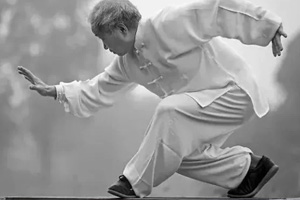
Master Shen Jiangfei, an 11th-generation inheritor of Chen-style Tai Chi and descendant of Liuhe Quan, has guided over 3,000 students through this exact progression — from first stance to full fajin application — inside our training hall near the Shaolin Temple. Pamela Paes Ezawa from Brazil, after a 7-day course, spoke of the training environment's authenticity and the welcome she received from the community there.
Chen style asks more of a beginner's coordination than some other paths, but it also returns more — a direct line to centuries of combat logic still breathing inside a slow, circular form. Pairing it with Qi Gong or a broader Kung Fu Training Course rounds out the cultivation side alongside the martial one.
If you're weighing whether Chen style fits your goals and your body's current condition, reach out to us with your training background — we're glad to recommend a program length and focus that matches where you actually are, not where a brochure assumes you'll be.




 WhatsApp