What is Bing Qi?
Bing Qi is the definitive Chinese term for weaponry and armaments. Within Chinese Kung Fu and Shaolin Wushu traditions, Bing Qi represents the structural and physical extension of the martial artist’s body. Rather than being viewed simply as external tools of destruction, traditional weapons are treated as instruments of bio-mechanical mastery and internal energy projection. In the global martial arts and corporate team-building sectors, Bing Qi training is highly regarded as the ultimate method for developing refined spatial coordination, focus, and upper-body structural power.
Types of Bing Qi in Kung Fu
Traditional Chinese weaponry is incredibly diverse, famously summarized by the Eighteen Arms of Wushu. These weapons are generally categorized into four primary groups based on their length and mechanical properties.
Long Weapons exceed the practitioner's standing height, requiring two-handed operation to control distance. Key examples include the Staff, considered the mother of all weapons, and the Spear, known as the king of long weapons.
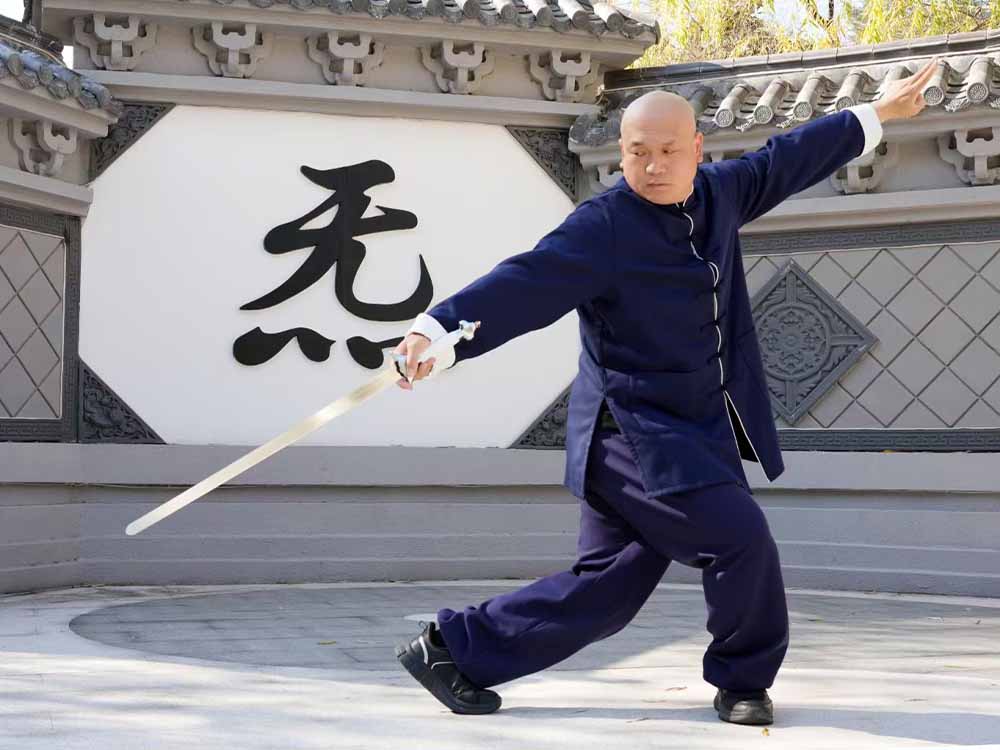
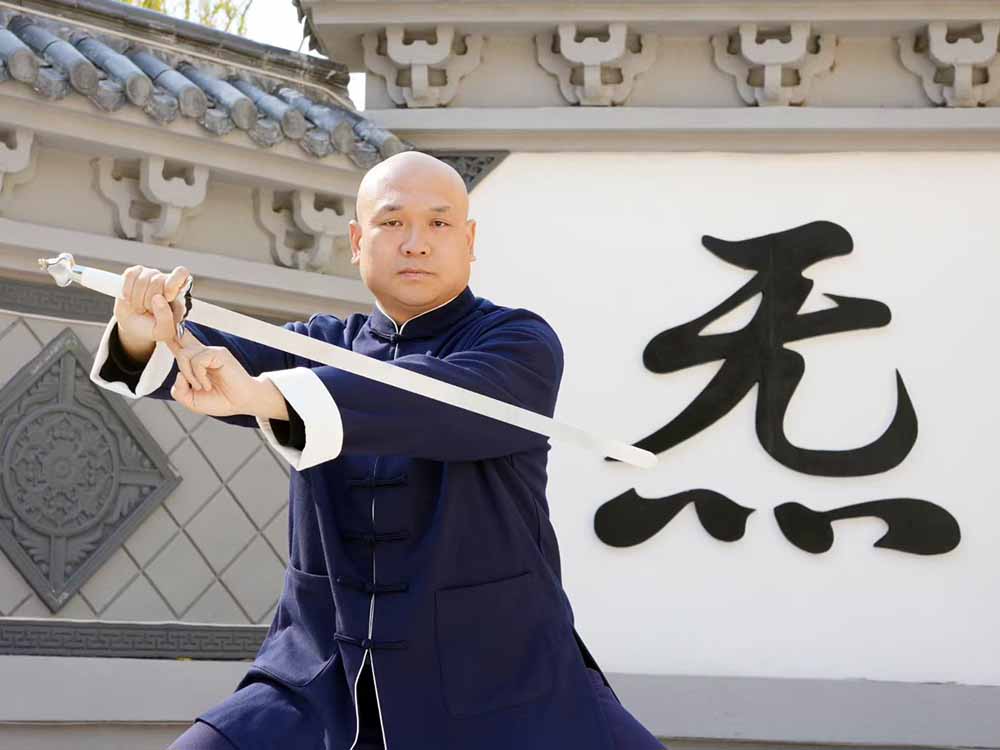
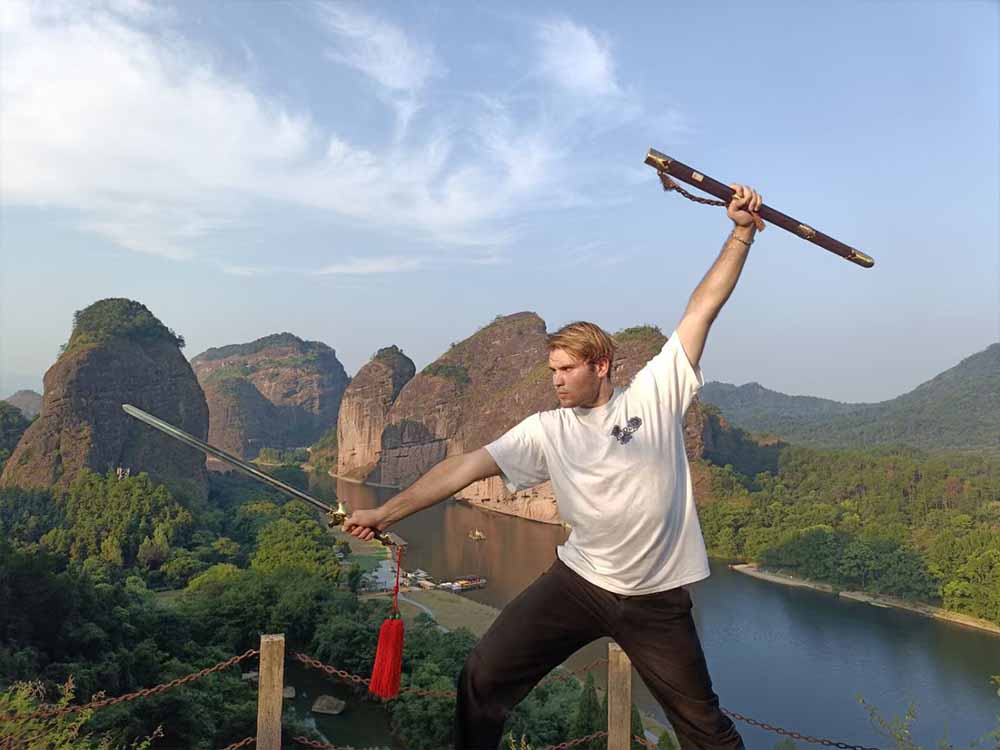
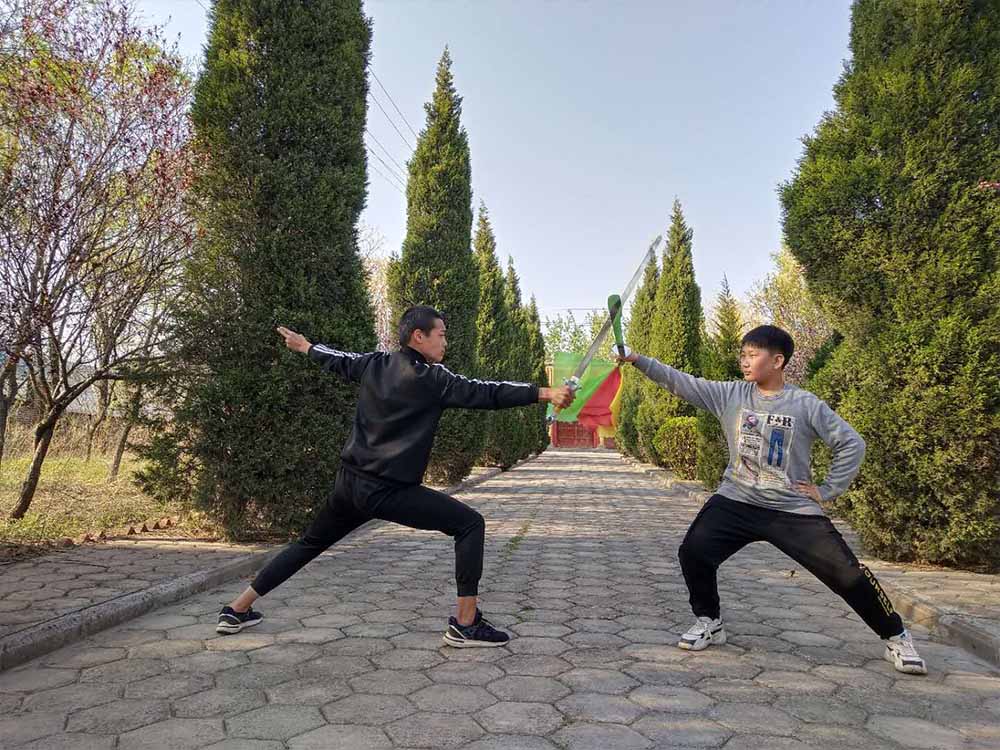
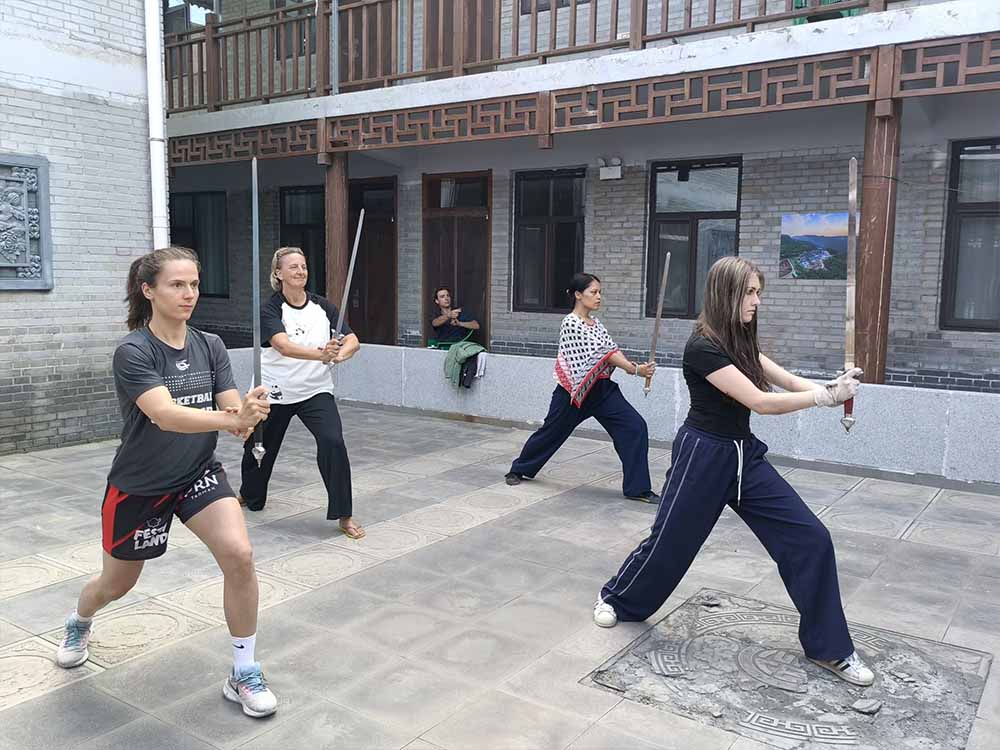
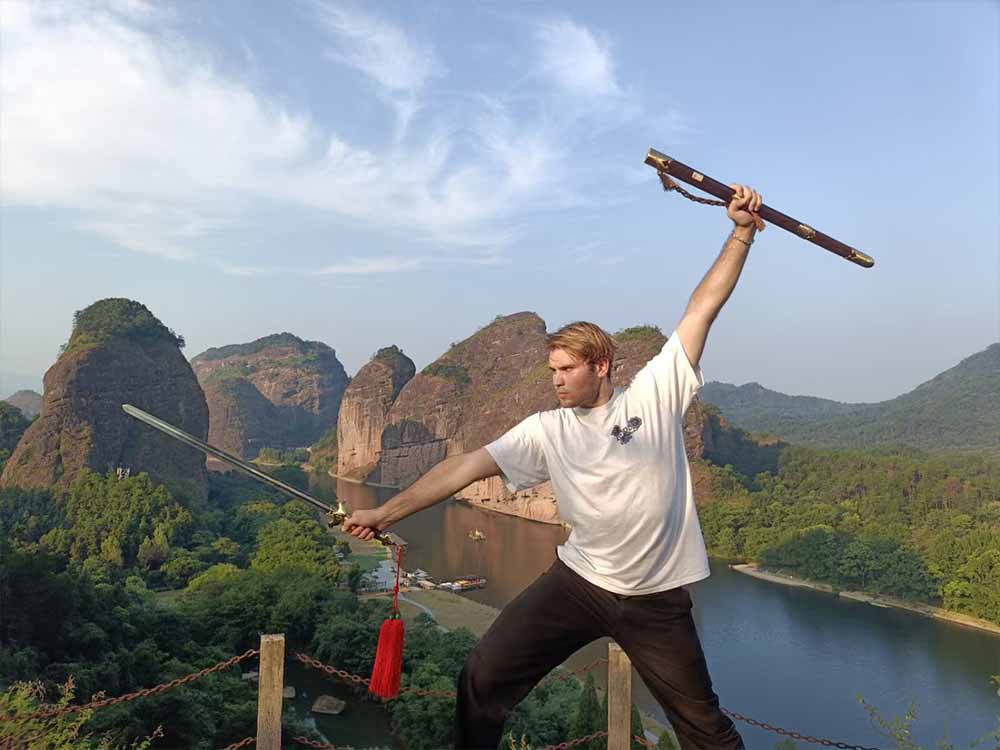
Short Weapons are compact weapons meant for close-range combat, typically matching the length of the practitioner’s arm. The most famous are the single-edged Broadsword, representing courage and powerful slicing mechanics, and the double-edged Straight Sword, representing elegance and precise piercing accuracy.
Flexible Weapons use chain-based or jointed designs that rely on centrifugal force and rotational momentum. Examples include the Nine-Section Chain Whip and the Three-Section Staff, which are highly unpredictable and difficult to master.
Double Weapons are dual-wielded short weapons that require simultaneous, independent coordination of both arms, such as Double Broadswords or Twin Hook Swords.
Features of Bing Qi
Authentic Chinese martial arts weapons possess distinct engineering and philosophical features that separate them from Western medieval weaponry.
A primary feature is the extension of barehand mechanics. Every weapon form is structurally linked to an underlying barehand style. The weapon does not change the style; it amplifies the body mechanics, footwork, and energy projection already present in the martial artist's empty-hand forms.
It is also defined by harmonious balance. Chinese blades and poles are designed with precise weight distribution, featuring specialized guards, counterweights, and flexible shafts, such as wax wood for spears and staffs, that absorb and snap back to deliver explosive kinetic energy.
Furthermore, traditional Bing Qi balances dual combat and aesthetic design. Traditional weapons combine battlefield functionality with fluid artistic expression. Silk tassels on swords and red horsehair on spears serve practical combat functions, such as distracting the opponent and absorbing blood, while emphasizing the line of movement during practice.
History of Bing Qi
The historical evolution of Bing Qi spans thousands of years, tracking the shift from bronze and iron-age military battlefields to institutionalized monastic training centers like the Shaolin Temple.
During the Han and Tang Dynasties, weapons like the straight sword transitioned from frontline military armaments into symbols of aristocratic status, scholarship, and refined self-cultivation.
In the Ming and Qing Dynasties, as firearms began to dominate the battlefield, traditional cold weapons were preserved within secretive civil martial arts societies and village militias. Masters refined weapon routines to preserve physical conditioning, combat strategy, and internal energy cultivation.
In the modern era, traditional Chinese weapons have been standardized into contemporary Wushu sport categories and heritage-preservation programs, celebrated worldwide for their historical significance and athletic complexity.
How does Bing Qi Work?
The physics and bio-mechanics of Bing Qi operate on the principle of extending the body's kinetic chain beyond the fingertips.
From a physiological standpoint, practicing with a heavy iron blade or a flexible long staff forces the structural core, shoulder girdles, and hips to lock together to maintain balance. Power is generated from the feet, routed through the waist, and delivered through the tip of the weapon, multiplying rotational torque and striking force.
From an energetic perspective, the weapon acts as a conduit for Qi and Yi. A practitioner must project their awareness into the very tip of the blade or staff, ensuring that the weapon is not felt as a heavy external weight, but rather as an organic, fluid limb of the body.
Why Learning Bing Qi?
Incorporating weapon training into a traditional martial arts regimen or physical conditioning program offers profound benefits that empty-hand training alone cannot achieve.
It provides accelerated core and grip strength. Managing the leverage and momentum of a long or short weapon rapidly conditions the forearms, wrists, deep abdominal stabilizers, and shoulder complex.
It develops elite spatial awareness. Moving an external object at high speeds around the body sharpens peripheral vision, reaction time, and deep neurological coordination.
It causes natural postural correction and rooting. Because any structural misalignment will cause a practitioner to lose control of a heavy weapon, Bing Qi forces perfect spinal alignment and deep, stable footwork.
Finally, it yields deep cultural enrichment. Mastering traditional weapons connects the practitioner to classical history, philosophy, and ancient strategic martial arts lineages.
How to Master Bing Qi?
Mastering traditional Chinese weapons demands a systematic, safety-first progression that respects the weight and mechanics of the chosen instrument.
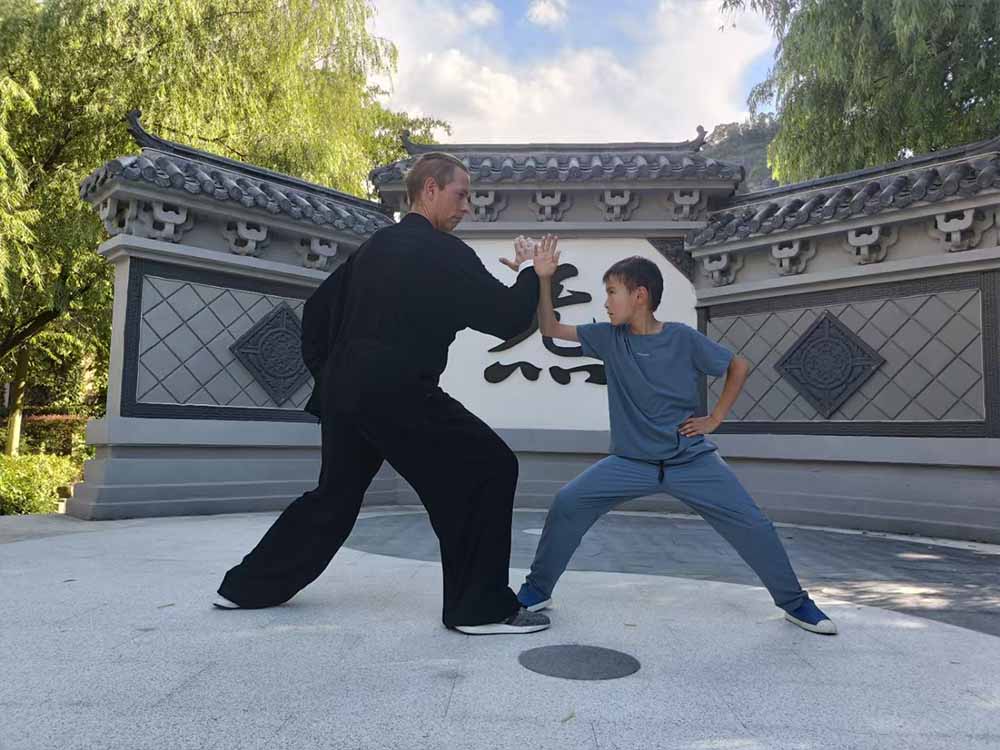
The first phase is to build the barehand foundation. Never pick up a weapon without establishing basic empty-hand stances, core stability, and footwork. Your body must understand how to move and balance its own weight before attempting to manage external leverage.
The second phase is to master the foundational long staff. Begin your weapon journey with the simple wooden staff. As the foundation of all long weapons, the staff teaches basic two-handed lever mechanics, thrusting, sweeping, and body-weapon alignment without the risk of sharp edges.
The third phase requires a transition to short weapons. Once long-lever mechanics are understood, move to short weapons. Select the Broadsword to develop robust, continuous chopping power and defensive wrapping motions, or the Straight Sword to train precision, wrist flexibility, and tracking.
The final phase is to refine through repetitive form drilling. Practice traditional weapon routines slowly and consistently. Focus on eliminating any wobbling or loss of balance, ensuring that your eyes, footwork, and weapon tip move together as a single, unified unit.












 WhatsApp