Long-Term Advanced Training Program
Professional & Comprehensive Double System Development
Target Audience
Martial arts major preparation, career development path, enthusiasts seeking high-level mastery. Perfectly adapted for foreign youths, overseas Chinese, absolute beginners, and advanced deep-cultivation practitioners.
Instruction Language
Full immersion Chinese-English bilingual instruction throughout the entire program.
Teaching Mode
Small group teaching with personalized, customized progression schedules tailored to individual needs.
Training Cycle
Rolling admissions all year round, focusing primarily on long-term, systematic refinement.
Training Venues
Jincheng enclosed indoor martial arts academy and exclusive courtyard training fields.
Core Systems
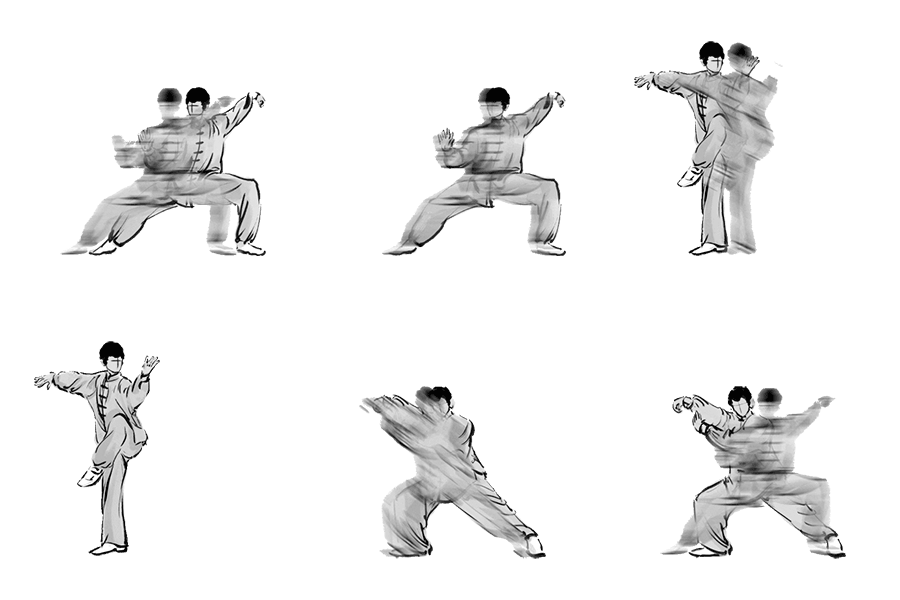
Chen-style 74-form Tai Chi Old Frame Routine 1 (internal power) + Chen-style Tai Chi Routine 2 Pao Chui (rigid explosion) + Shaolin Liuhe Quan (close-quarters combat application).
Core Preliminary Course Explanation
This curriculum is an exclusive high-level martial arts refinement project designed for advanced pursuits. It is completely distinct from short-term amateur fitness or beginner courses under 6 months, which lack deep mastery and do not adapt to professional development. This long-term program prioritizes professionalized training standards, high-level martial arts cultivation, and professional capability shaping. By employing a complete three-stage logical progression of "Routine 1 nurturing softness, Routine 2 dominating rigidity, and Liuhe for practical combat," it bridges the entire technical gap of traditional martial arts: relaxation, energy accumulation, force generation, and actual combat. Tai Chi Routine 1 cultivates relaxed, sinking, silk-reeling flexibility, regulates breathing, nurtures Qi, and corrects body posture; Tai Chi Routine 2 Pao Chui specializes in springing/shaking force, rigid foot stomping, leaping, and explosive offensive/defensive power; Shaolin Liuhe Quan provides practical implementation of close-quarters blocking, grappling, confrontation, and self-defense combat. The three systems complement and integrate with each other, aligning with professional athlete training modes. It is specifically built for students aspiring to pursue professional paths or orthodox high-level martial arts, enabling a major transformation from a hobbyist to a professional practitioner.
Long-Term Three-Stage & Six-Phase Planning
The curriculum has been heavily upgraded into a high-level six-phase system: Tai Chi Foundation → Pao Chui Force Generation → Liuhe Combat → Three-Fist Integration → Energy Conversion → Mental & Character Mastery. In the first two months, Tai Chi Routine 1 relaxation is used to build the foundation, entirely resolving physical stiffness and loose force generation. The mid-term focuses heavily on Chen-style Routine 2 Pao Chui, training traditional martial arts springing, explosive, and whole-body coordinated power to eliminate the common limitation of ordinary students who "only understand softness but not rigidity, or only know routines but lack explosive force foundations." The later stages dive deep into Liuhe Quan combat applications, ultimately achieving a state where softness neutralizes force, rigidity explodes power, and techniques subdue opponents—far exceeding the effects of ordinary short-term or single-style training. Coaches will customize a personalized training plan with tailored system ratios for each student based on training duration and physical foundations.
Long-Term 3-Stage & 6-Phase Dual-Cultivation Advanced System
Dual Tai Chi System + Liuhe Practical Combat
Month 1: Tai Chi Routine 1 Relaxation & Foundation Phase
Long-Term Exclusive · Distinct from Beginner Classes
Curriculum & Practice:
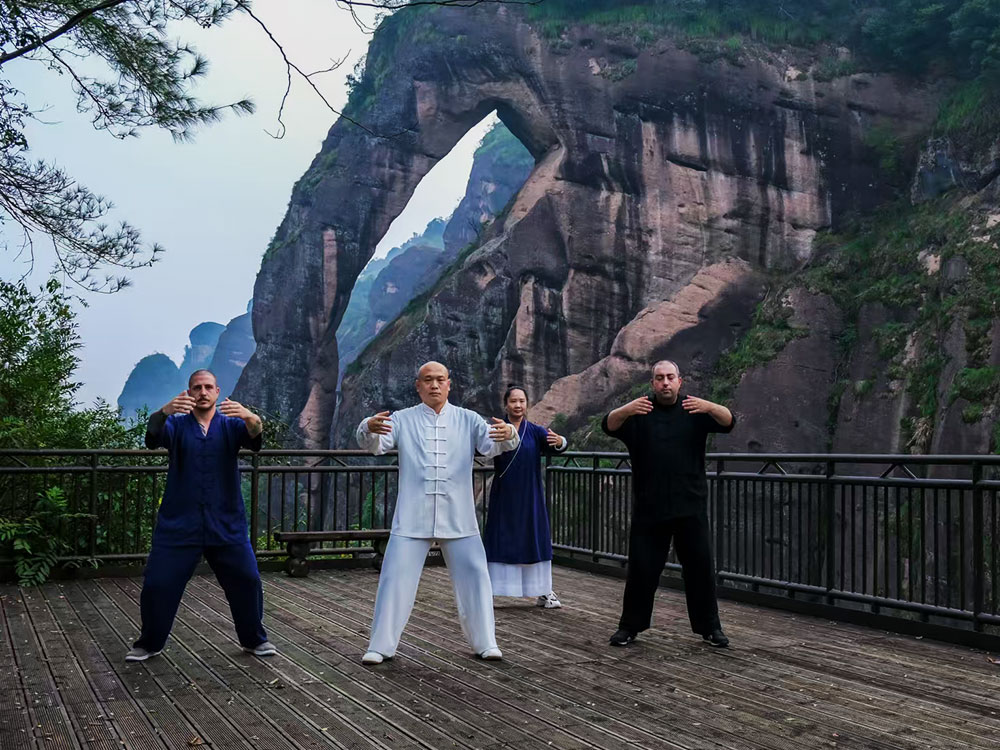
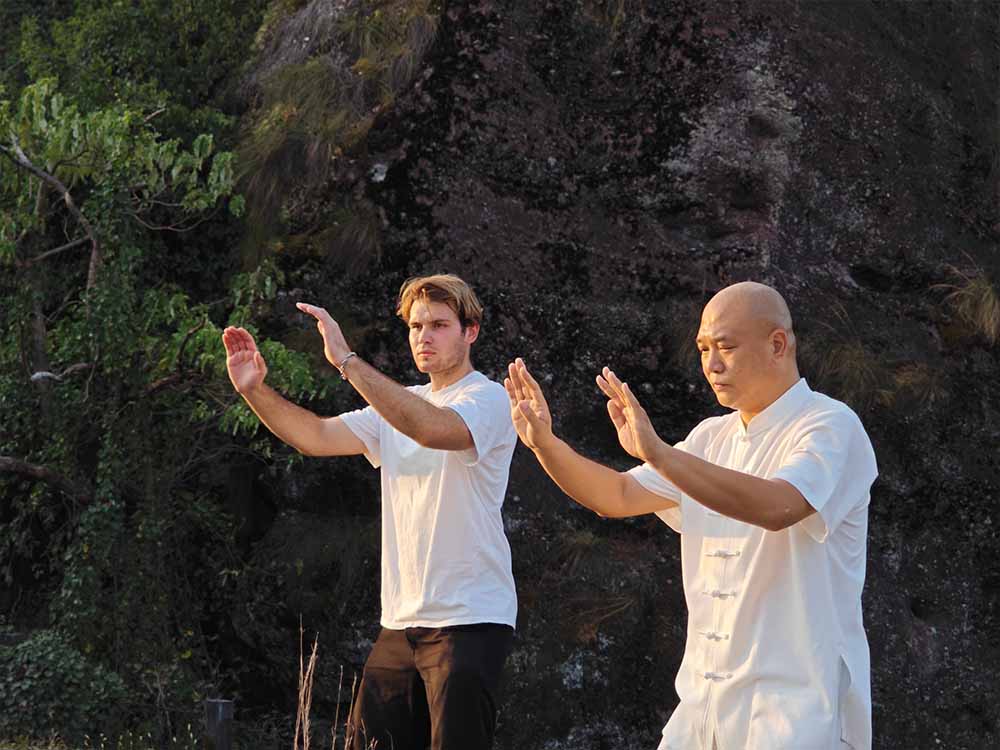
Four-season adaptive warm-ups, Tai Chi Wuji stance, and Hunyuan stance foundation. The focus is strictly on relaxing the shoulders, sinking the hips, loosening the waist, and cultivating silk-reeling energy (Chan Si Jin) to correct posture and unblock meridian energy (Qi and blood). We provide detailed instruction on Tai Chi Routine 1 mental principles and the basic theory of Liuhe internal/external integration. By using Tai Chi relaxation to resolve physical stiffness and rigid force generation, we lay the groundwork for future Pao Chui explosive power and Liuhe combat force. Students will learn the foundational segments of Tai Chi Routine 1 combined with Liuhe basic footwork and stance training.
Goals & Outcomes:
Repeated polishing of Tai Chi Routine 1 basic moves, breath synchronization, and relaxation/sinking texture training. Specialized training in Liuhe stances, flexibility, and shoulder-hip coordination establishes the physical perception of "Tai Chi soft energy accumulation." This resolves the common issue of loose force generation among ordinary students and builds a solid foundation for the subsequent Pao Chui rigid explosive force. The month concludes with a dual-system basic assessment and review.
Month 2: Tai Chi Routine 1 Full Set Standardization + Liuhe Foundation Phase
Long-Term Exclusive · Distinct from Beginner Classes
Curriculum & Practice:
Complete learning of the full 74-style Chen-style Tai Chi Routine 1. Move-by-move standardization, unified commands, and silk-reeling relaxation are used to polish a rounded and coherent internal martial arts framework. Simultaneously, students will complete the full 24-style Shaolin Liuhe Quan external routine to solidify the foundation on both fronts. This builds a physical framework of "internal softness and external rigidity," distinguishing our students from those with single-style capabilities.
Goals & Outcomes:
Continuous and coherent practice of the full Tai Chi Routine 1, unifying form and Qi, and precipitating the foundation of relaxed energy accumulation. We focus on polishing and speeding up the full Liuhe Quan routine with standardized formatting to complete the dual-routine basic assessment. A major focus is cultivating a martial arts posture that is "relaxed but not slack, tight but not stiff," perfectly paving the way for Routine 2 Pao Chui force generation.
Month 3: Tai Chi Routine 2 Pao Chui Introduction + Liuhe Combat Breakdown Phase
Curriculum & Practice:
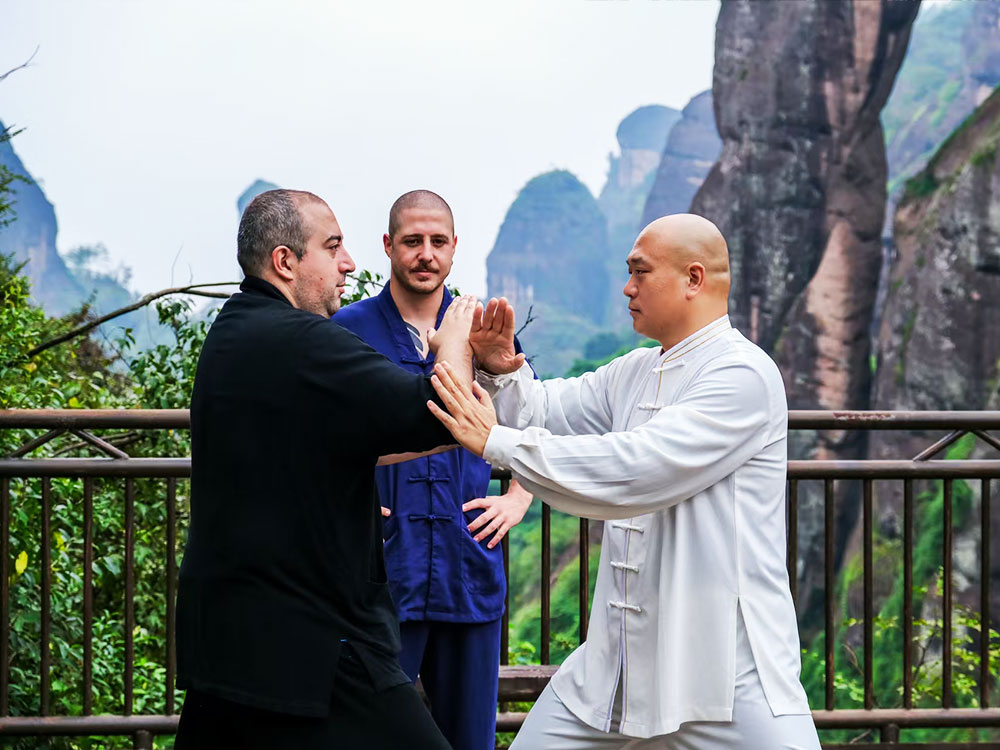
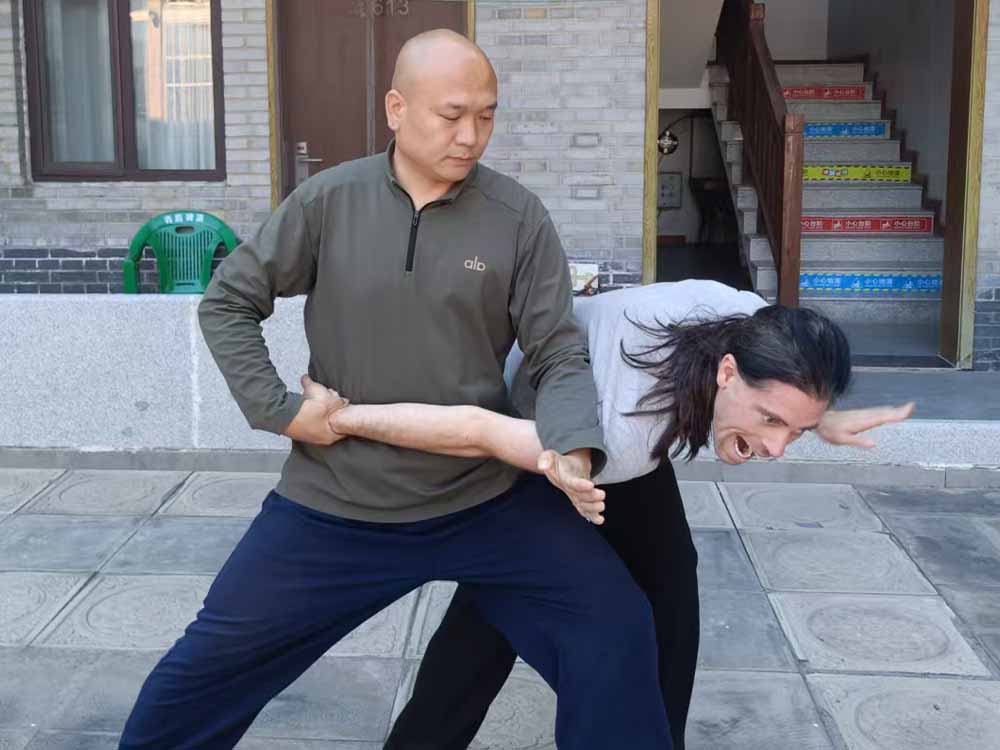
Initiating the long-term exclusive core course: Introduction to Chen-style Tai Chi Routine 2 Pao Chui (Cannon Fist). We provide detailed instruction on the core logic of foot stomping, springing/shaking (Tan Dou), whole-body coordinated power (Zheng Jin), and explosive force generation. Students will learn the foundational segments and core explosive moves of Pao Chui. Simultaneously, we deepen the move-by-move offensive and defensive breakdown of Liuhe Quan, mastering practical techniques like blocking, grappling, and close-quarters combat to achieve the preliminary integration of "Routine 1 energy accumulation, Routine 2 force generation, and Liuhe practical application."
Goals & Outcomes:
Targeted training for Pao Chui rigid explosive power and whole-body coordination, entirely eliminating common faults of disconnected force and localized exertion. We optimize Pao Chui force quality relying on the relaxation and sinking foundation of Tai Chi Routine 1. Conducting basic two-person offensive and defensive sparring combined with Liuhe Quan enables students to accumulate power with softness, explode with rigidity, and defend with techniques. This breaks through the exact shortcomings of standard 6-month students who lack explosive force foundations.
Month 4: Pao Chui Whole-Body Power Refinement + Dual-Fist Energy Conversion Phase
Curriculum & Practice:
Complete mastery of the full Chen-style Routine 2 Pao Chui. Fine-tuning the texture of springing/shaking, foot stomping, leaping, and rigid force generation to overcome the high-level difficulties of Pao Chui force exertion. Students undergo advanced training in the two-way conversion ability between "Routine 1 soft energy" and "Routine 2 rigid energy." Simultaneously, we upgrade Liuhe Quan combo attacks, counterattacks, and adaptable practical combat techniques.
Goals & Outcomes:
High-intensity specialized training for Pao Chui whole-body power strengthens the core competencies of traditional martial arts. We conduct simulated virtual/real energy conversion and two-person randomized offensive and defensive sparring. By using Tai Chi to regulate the mind, Pao Chui to accumulate power, and Liuhe to subdue the opponent, students polish on-the-spot explosive power and combat stability, ultimately achieving intermediate-level proficiency and actual combat capability.
Program Structure, Guidelines & Target Audience
Training Schedule:
Daily daytime systematic three-system training (a scientific ratio of Tai Chi Routine 1 relaxation + Tai Chi Routine 2 force generation + Liuhe practical combat), with no evening classes.
Weekend Arrangements:
Fixed weekends off (no official training on Saturdays and Sundays). Weekends offer an independent choice: 1. Review and refine the three martial arts styles. 2. Acupuncture and wellness therapy for sports strain. 3. Short-distance independent travel (requires prior reporting).
Enrollment & Progression:
Rolling admission all year round. The program progresses month by month, combining toughness and softness, and cultivating all-around deep skills.
Target Audience:
This long-term class is a professionalized advanced specialized course. Distinct from the 6-month amateur interest foundation class, its training intensity, system depth, proficiency standards, and combat capabilities strictly align with professional martial arts advanced study requirements. It is perfectly adapted for career martial artists, professional exam preparation, and those pursuing high-level martial arts.
Core Features of the Long-Term Refinement Program
1. Long-Term One-on-One Cultivation, Preventing Performance Regression
Continuous move-by-move error correction, force refinement, and posture shaping over a long period distinguish this program from short-term intensive training models that rush through routines. It continuously corrects issues such as movement distortion, misaligned force delivery, and uncoordinated limbs that arise during long-term practice. Day after day, it solidifies the orthodox standard form, cultivates muscle memory, and thoroughly consolidates the foundations of martial arts, ensuring a stable foundation that does not easily decline or regress.
2. Three-Dimensional Progression: Routine + Combat + Mental Technique
Our exclusive three-dimensional advanced progression model completely breaks the limitations of single martial arts training to construct a complete traditional kung fu capability system: Chen-style Tai Chi Routine 1 (soft energy, health preservation, relaxation, and breath regulation) + Chen-style Tai Chi Routine 2 Pao Chui (rigid energy, explosive force, springing/shaking, and whole-body power) + Shaolin Liuhe Quan (techniques, attack/defense, close-quarters combat, and subduing opponents). Integrating softness and rigidity, cultivation and combat, stillness and movement, it shapes the body, regulates Qi and blood, and anchors character. Simultaneously, it cultivates the core whole-body coordinated power of traditional kung fu, enabling students to master advanced explosive techniques and practical self-defense combat capabilities. It stands as a complete, high-level system for systematic deep cultivation.
3. Seasonal Climate-Adaptive Training, Scientific & Long-Term Cultivation
Tailored long-term training plans are customized according to the seasonal climate variations in Jincheng: Spring focuses on wind protection and solidifying stances while regulating breath; Summer employs off-peak training to prevent heat stroke and protect tendons; Autumn removes dampness and nourishes joints while strengthening force delivery; Winter emphasizes warming up to consolidate foundations and deepen skill roots. This scientific approach adapts perfectly to long-term, high-intensity training rhythms, combining practice with restoration, avoiding sports strain, and achieving long-term, steady improvement.
4. Phased Growth Assessments, Fully Traceable Track Record
Long-term students undergo comprehensive martial arts assessments every month. Their growth trajectories are meticulously recorded across five major dimensions: the relaxed and sinking force of Tai Chi Routine 1, the whole-body explosive power of Routine 2 Pao Chui, Liuhe practical combat application, posture and stance stability, and mental technique energy conversion.
Orthodox Bilingual Martial Arts Manuals for the Three Core Systems
Core Definition of Liuhe (Six Harmonies): Internal Three Harmonies [Mind & Intention, Intention & Qi, Qi & Strength]; External Three Harmonies [Hand & Foot, Elbow & Knee, Shoulder & Hip]. The integration of internal and external elements along with whole-body coordination forms the core practical essence of Liuhe Quan, which is cultivated deeply as a long-term priority.
1. Shaolin Liuhe Quan (Complete Set of 24 Forms)
1. Ready Posture
2. Salute With Fists
3. Empty Stance Block and Strike
4. Left Bow Stance Straight Punch
5. Right Bow Stance Straight Punch
6. Face Palm Strike
7. Left Spring Kick Counter
8. Right Spring Kick Counter
9. Horse Stance Palm Chop
10. Cross Stance Elbow Press
11. Step Forward Elbow Thrust
12. Turn Back Palm Lift
13. Bow Stance Ear Strike
14. Knee Lift Palm Chop
15. Crouch Stance Palm Pierce
16. Stand Palm Lift
17. Parallel Stance Hammer Punch
18. Step Around Block Palm
19. Lean Elbow Strike
20. Jump Double Palm Push
21. Turn Kneel Stance Punch
22. Whirlwind Kick
23. Land Wrist Capture
24. Six Harmony Closing Posture
2. Chen-Style Tai Chi Old Frame Routine 1 (Complete Set of 74 Forms)
1. Ready Posture
2. Buddha's Warrior Attendant Pounds Mortar
3. Lazily Tying Coat
4. Six Sealings and Four Closings
5. Single Whip
6. Buddha's Warrior Attendant Pounds Mortar
7. White Crane Spreads Wings
8. Brush Knee and Twist Step (Left/Right)
9. Oblique Advance
10. Twist Step
11. Cover Hand and Elbow Punch
12. Buddha's Warrior Attendant Pounds Mortar
13. Turning Body Punch
14. Green Dragon Comes Out of Water
15. Double Push Hands
16. Punch Under Elbow
17. Step Back and Thread Arms (Left/Right)
18. White Crane Spreads Wings
19. Oblique Advance
20. Flash Through Back
21. Cover Hand and Elbow Punch
22. Six Sealings and Four Closings
23. Single Whip
24. Cloud Hands (Three Cycles)
25. Single Whip
26. High Pat on Horse
27. Right Heel Kick
28. Left Heel Kick
29. Strike Both Ears
30. Turn and Left Heel Kick
31. Lower Body and Stand Alone (Left)
32. Lower Body and Stand Alone (Right)
33. Fair Lady Works Shuttles (Left/Right)
34. Needle Under Sea
35. Flash Through Back
36. Turn, Block and Punch
37. Right Heel Kick
38. Cover Hand and Elbow Punch
39. Small Capture and Strike
40. Embrace Head and Push Mountain
41. Six Sealings and Four Closings
42. Single Whip
43. Forward Trick
44. Backward Trick
45. Parting Wild Horse's Mane (Left/Right)
46. Six Sealings and Four Closings
47. Single Whip
48. Jade Maiden Works Shuttles (4 Directions)
49. Single Whip
50. Cloud Hands (Three Cycles)
51. Single Whip
52. Falling Split
53. Golden Rooster Stands Alone (Left)
54. Golden Rooster Stands Alone (Right)
55. Step Back and Thread Arms (Left/Right)
56. Head-on Cannon Punch
57. Buddha's Warrior Attendant Pounds Mortar
58. Turning Body Punch
59. Chop Hand
60. Flip and Swing Sleeves
61. Cover Hand and Elbow Punch
62. Flying Step Curved Elbow
63. Forward Cloud Hands
64. Punch Under Elbow
65. Step Back and Thread Arms (Left/Right)
66. White Crane Spreads Wings
67. Oblique Advance
68. Flash Through Back
69. Cover Hand and Elbow Punch
70. Six Sealings and Four Closings
71. Single Whip
72. Cloud Hands (Three Cycles)
73. Single Whip
74. Closing Posture
3. Chen-Style Tai Chi Old Frame Routine 2: Pao Chui (Complete Set of 50 Forms)
Core Features of Routine 2 Pao Chui: Dominated by rigid force, with softness hidden within rigidity. It prioritizes foot stomping for power, springing/shaking whole-body power, swift leaping, and dynamic shifts. It focuses heavily on explosive force, whole-body coordinated power, and practical force delivery training. This effectively offsets the soft and health-oriented characteristics of Routine 1, serving as a core system for long-term practitioners to consolidate solid kung fu capability.
1. Ready Posture
2. Buddha's Warrior Attendant Pounds Mortar
3. Lazily Tying Coat
4. Six Sealings and Four Closings
5. Single Whip
6. Block and Elbow Strike
7. Heart-protecting Punch
8. Twist Step Oblique Advance
9. Well Rail Hanging Upside Down
10. Wind Sweeps Plum Blossom
11. Buddha's Warrior Attendant Pounds Mortar
12. Turning Body Punch
13. Chop Hand
14. Flip and Swing Sleeves
15. Cover Hand and Elbow Punch
16. Flying Step Curved Elbow
17. Riding Dragon Backwards
18. Cover Hand and Elbow Punch
19. Internal Transformation Repeat
20. Wild Beast Turns Over
21. Splitting Frame
22. Rolling Thunder
23. Mysterious Pearl Falling
24. Step Back and Thread Arms
25. White Crane Spreads Wings
26. Oblique Advance
27. Flash Through Back
28. Cover Hand and Elbow Punch
29. Six Sealings and Four Closings
30. Single Whip
31. Cloud Hands
32. High Pat on Horse
33. Linked Cannon Punches
34. Small Capture and Strike
35. Embrace Head and Push Mountain
36. Six Sealings and Four Closings
37. Single Whip
38. Forward Trick
39. Backward Trick
40. Parting Wild Horse's Mane
41. Six Sealings and Four Closings
42. Single Whip
43. Jade Maiden Works Shuttles
44. Single Whip
45. Cloud Hands
46. Falling Split
47. Golden Rooster Stands Alone
48. Step Back and Thread Arms
49. Head-on Cannon Punch
50. Closing Posture
Trainee Admission Requirements Exclusive for Long-Term Intensive Training
Age Requirement: 8 to 65 years old. Enrollment is open to both youth and adults. Minor trainees can be provided with dedicated chaperonage and management, fully adapted to long-term boarding and intensive training.
Physical Requirement: Free from severe cardiopulmonary diseases, severe lumbar spine injuries, coagulation disorders, or other contraindications for exercise and acupuncture. Trainees with mild chronic conditions such as high blood pressure, diabetes, and rheumatism must register upon admission so that coaches can dynamically adjust training intensity.
Language Requirement: The entire program is conducted in bilingual Chinese and English, covering all lectures, instructional explanations, and daily communication. No prior knowledge of Chinese is required, making it fully suitable for foreign nationals and overseas Chinese long-term trainees.
Skill Foundation: Open to all levels, including absolute beginners, intermediate, and advanced practitioners. Long-term training progress is tailored one-on-one, eliminating the pressure of a uniform schedule and allowing for gradual, steady, and deep development.
Discipline Requirement: Strictly abide by the camp's daily routine and schedule. Weekend outings require prior reporting and timely return to the camp. Unauthorized carrying of weapons or martial arts equipment outside the camp is strictly prohibited. Trainees must honor martial arts etiquette and strictly observe camp rules and regulations.
Required Items to Bring Adapted for Four Seasons and Long-Term Stay
Wearable Gear and Equipment: Quick-drying martial arts uniforms suitable for all four seasons, windproof and warm outerwear, anti-slip soft martial arts shoes, and breathable knee and wrist guards. Wearing sharp accessories such as necklaces, earrings, and bracelets is prohibited. Trainees with myopia must wear anti-slip sports glasses to meet year-round, long-term training needs.
Personal Living Supplies
A complete set of toiletries, skincare and protective products for all four seasons such as sunscreen and mosquito repellent for summer, anti-freezing and moisturizing creams for winter, and windproof and anti-dryness products for spring and autumn. Trainees should also bring personal standing medications for chronic conditions, a vacuum flask, and a high-capacity power bank.
Credentials Identification and Finances
Passport, original valid visa, overseas medical insurance policy, personal bank cards, a reasonable amount of foreign currency cash, and luggage storage organizers.
Specific Adaptation Guidelines for Year-Round Long-Term Training
Spring Adaptations: During windy weather, reduce airborne jumping movements, extend the duration of stance training to fortify the foundation, and strengthen breath regulation to protect the lungs against wind and stabilize the root.
Summer Adaptations: Postpone afternoon training to start after 15:30 to avoid peak midday sun exposure and scorching heat. Shorten the duration of continuous high-intensity training, and increase breath-regulation, stretching, and heat-prevention or cooling intervals to prevent physical exhaustion and strain.
Autumn Adaptations: Due to large temperature differences between day and night, emphasize hot compresses and stretching for the waist, hips, and knee joints before and after training. Focus on dispelling dampness and protecting joints, enhancing the sinking and consolidation of internal power, and solidifying combat foundations.
Winter Adaptations: Delay morning training to start at 9:00, and extend warmup sessions to prevent muscle and bone stiffness or strain caused by low temperatures. Focus primarily on strengthening the core, consolidating foundations, and internalizing mental cultivation methods.
Tuition Includes
Instructional Services: 6 months of full one-on-one bilingual Chinese-English private coaching; monthly dual-system phase evaluations plus a final advanced graduation examination; a full set of bilingual Chinese-English paper-based manuals for Chen-style 74-form Tai Chi and Shaolin Liuhe Quan, along with lifetime access to high-definition split-screen instructional videos; access to dedicated indoor and outdoor training venues and public protective gear; a dual-system advanced graduation certificate; and 12 months of free online English Q&A guidance after graduation.
Accommodation and Dining Services: Single occupancy standard room with a private bathroom, 24-hour hot water and air conditioning, regular linen and bedding changes; daily martial arts nutritional meals designed for physical replenishment; customized allergen-free menus for foreign trainees; free camp laundry facilities, camp-wide Wi-Fi, and routine camp cleaning and disinfection services.
Logistics: Year-round daily exercise protection, free use of external traditional injury remedies and medicines, and point-to-point free shuttle service at Jincheng High-Speed Railway Station or Airport for arrival and departure.
Tuition Excludes
Major Round-Trip Transportation: Airfare, high-speed rail, long-distance bus, self-driving fuel, and toll fees from the trainee's place of origin to and from Jincheng, as well as luggage check-in fees.
Personal Spending Outside Camp: Entrance tickets to tourist attractions around Jincheng during approved weekend outings, outside dining, taxi fares, souvenirs, entertainment, and other personal self-funded expenses.
Value-Added Wellness Projects: Deep therapeutic treatments exceeding the standard 2 sessions per week, such as extra acupuncture, moxibustion, bone setting, meridian massage, and traditional herbal decoction conditioning.
Credentials and Insurance Fees: Visa processing, entry and exit documentation, overseas travel insurance, and fees for replacing lost documents.
Out-of-Pocket Medical Expenses: Out-of-pocket medical expenditures outside medical insurance incurred due to the recurrence of personal pre-existing old injuries, sudden illnesses, injuries sustained outside training, or acupuncture allergies.
Additional Upgrade Fees: Personalized value-added services such as customized premium meal add-ons or exclusive private cleaning and laundry services.
Non-Compliance Compensation Fees: Penalties and compensation for property damage caused by leaving the camp without authorization, returning past the deadline, damaging camp equipment, or violating camp discipline.










 WhatsApp