What is San Da?
San Da, also known as Sanshou, is the official full-contact combat sport developed from traditional Chinese martial arts. Translating directly to "free fighting" or "free striking," San Da combines rapid kickboxing with unique wrestling, takedowns, and throwing techniques. Rather than focusing on choreographed forms, San Da is entirely live and adaptive. In the modern combat sports and defensive fitness industries, it is recognized as a highly functional, battle-tested system for real-world self-defense and elite physical conditioning.
Types of San Da in Kung Fu
While the core striking and wrestling mechanics remain consistent, San Da manifests across distinct formats based on its application.
Competitive Sport San Da is the standardized athletic version seen in global Wushu championships. Fighters compete on a raised platform called a Lei Tai using gloves, headgear, and chest protectors. Scoring heavily favors clean strikes, high-amplitude throws, and pushing an opponent off the platform.
Military and Police San Da integrates close-quarters combat applications used by law enforcement. This style strips away sports rules, integrating throat strikes, groin kicks, joint locks, and weapon-disarming tactics.
Traditional Sanshou is the unregulated, historical root practiced within specific Kung Fu schools. It focuses on applying the specific combat theories of individual styles—like Shaolin or Taiji—in live, unscripted sparring.
Features of San Da
San Da stands out in the martial arts landscape due to its unique technical identity and ruleset.
A primary feature is the trinity of combat. It perfectly blends three distinct ranges—punching, kicking, and wrestling—into a single, fluid style. There is no stall in action when fighters clinch; they must execute a throw immediately or be separated.
It is also defined by dominant takedown mechanics. Unlike Western kickboxing or Muay Thai, San Da heavily features leg catches, sweeps, and hip throws. A practitioner can catch an opponent’s kick and instantly dump them onto the floor.
Another key feature is fast-paced mobility. San Da fighters utilize highly agile, bounce-based footwork inspired by traditional Kung Fu and Western boxing, allowing them to close distances rapidly and escape counter-attacks.
Finally, it relies on a Lei Tai ruleset strategy. Fighting on an un-roped, raised platform changes the psychological dynamic. Pushing or throwing an opponent off the Lei Tai yields massive points, making ring control and spatial positioning critical.
History of San Da
The evolution of San Da marks the transition of traditional Chinese combat into a modern, scientifically optimized sport.
Historically, challenges in China were settled on the Lei Tai—a raised wooden platform with no ropes or rails, where fights often resulted in severe injury or death. In the early 20th century, the Central Guoshu Institute in Nanjing sought to modernize these traditional fighting styles, hosting full-contact tournaments to evaluate the actual combat effectiveness of various Kung Fu lineages.
In the late 1970s, the Chinese National Sports Commission officially commissioned martial arts masters and military trainers to develop a standardized, safe, yet highly realistic full-contact sport. They stripped away theatrical movements from traditional Kung Fu, kept the most effective strikes and throws, and established modern sport San Da. Today, it is featured globally in the World Wushu Championships and serves as a major feeder system for international mixed martial arts.
How does San Da Work?
San Da operates on the principle of seamless transitional combat, utilizing kinetic energy and leverage to dominate an opponent.
From a physiological and bio-mechanical standpoint, power is generated from the ground up. Strikes utilize kinetic chaining, shifting weight rapidly through the hips and core. The wrestling aspect relies entirely on timing and leverage. Instead of shooting for deep double-leg takedowns like Olympic wrestlers, San Da fighters leverage an opponent's own momentum—such as using a leg-catch sweep while the opponent is off-balance during a kick.
From a neurological perspective, San Da trains the brain to process chaotic visual data under extreme stress. By prioritizing live sparring over static forms, it sharpens peripheral vision, quickens defensive reaction times, and conditions the nervous system to remain calm while managing incoming strikes.
Why Learning San Da?
Training in San Da provides a high-yield athletic and defensive skill set that conventional workouts cannot replicate.
It delivers elite functional fitness. The combination of explosive striking and high-intensity wrestling builds exceptional cardiovascular endurance, core stability, and functional full-body power.
It provides highly realistic self-defense. Because it trains all ranges of standing combat, practitioners develop the ability to strike effectively, defend against incoming takedowns, and escape dangerous physical confrontations quickly.
The practice yields exceptional agility and balance. The constant threat of being swept or thrown forces a practitioner to develop an unshakeable sense of balance, core grounding, and fast footwork.
Furthermore, it builds immense mental toughness. Facing a live, resisting opponent in controlled sparring builds immense self-confidence, emotional regulation, and psychological resilience under pressure.
How to Master San Da
Mastering San Da requires a dedicated, structured progression that prioritizes safety, fundamental mechanics, and live application.
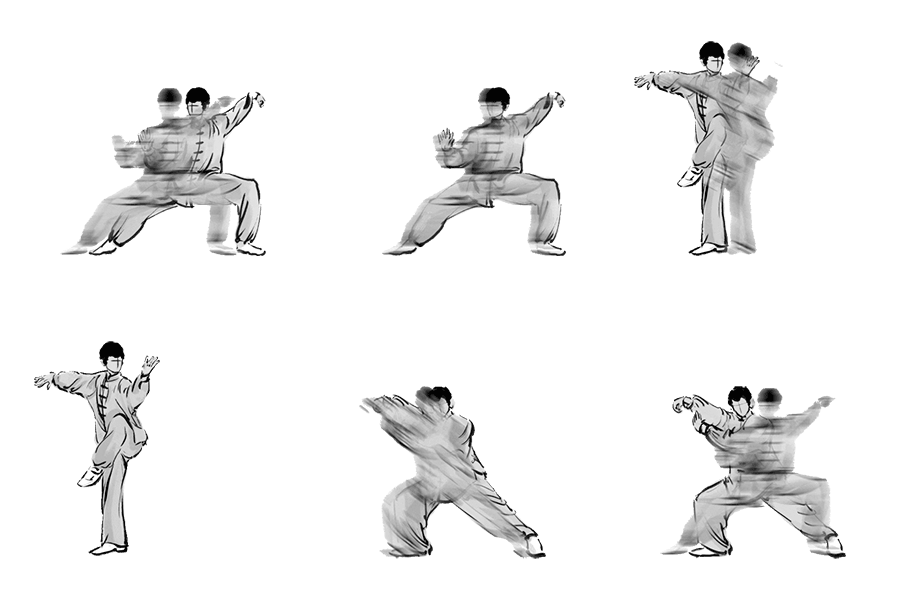
The first phase is to build striking and footwork fundamentals. Begin by mastering basic stance alignment, mobility drills, jab-cross combinations, and roundhouse kicks. Focus on keeping a tight guard while maintaining a light, agile bounce on your feet to manage distance.
The second phase is to learn safe breakfalls and catch techniques. Before throwing anyone, you must learn how to be thrown safely. Practice traditional breakfalls to protect your spine and head. Concurrently, drill leg-catching mechanics against incoming kicks.
The third phase requires integrating transitional takedowns. Train the connection between striking and wrestling. Practice hidden entries, such as throwing a punch combination to blind your opponent before instantly closing the distance to execute a hip throw or trip.
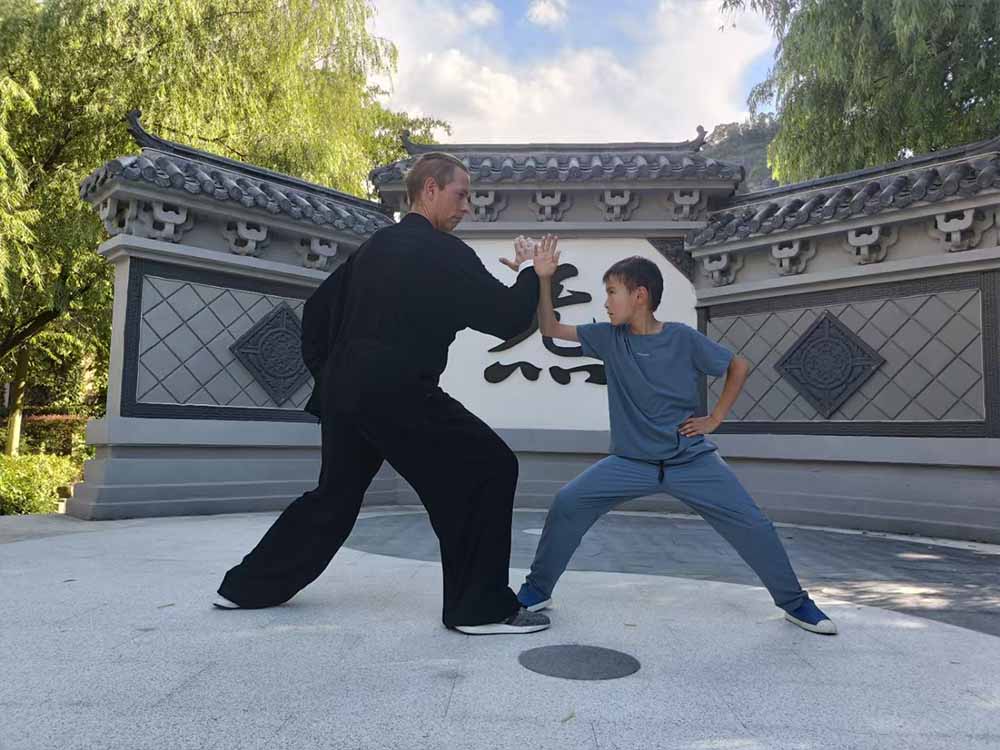
The final phase is to progress to conditioned sparring. Move from static pad work to live, situational sparring with protective gear. Start with low-intensity drills—such as one partner only kicking and the other only catching—before graduating to full-contact Lei Tai simulation.
















 WhatsApp