Choose Traditional Chinese Kung Fu for Your Goals
You already know you want to study Traditional Chinese Kung Fu. The harder question is which branch answers what you actually want: knees that bend without complaint at sixty, a quieter mind, a working defense, or a close look at a living culture. At SJF Kung Fu School, this is the first conversation we have with anyone who writes to us, and this guide follows the same order of thinking. By the end you will have one ranked goal, a shortlist of two practices, and a way to test your choice in a real class.
What to Settle Before You Pick a Style
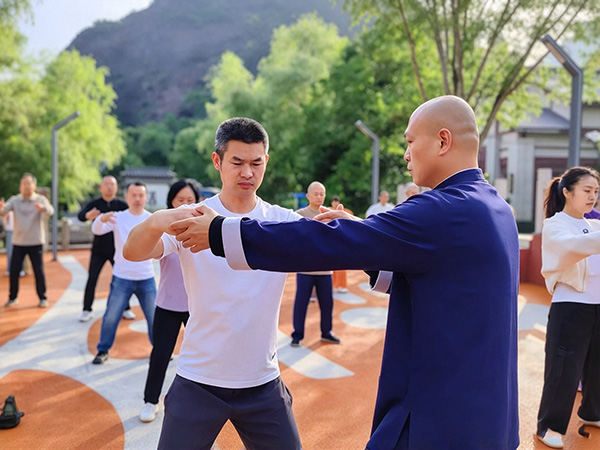
Three things block your progress. Two others can wait until you are in the room with a teacher.
A ranked goal (blocks progress). "I want to learn kung fu" makes every style look equally good. "I want to move without lower back stiffness" or "I want to understand how a fist is thrown from the legs" narrows the field at once. Write one sentence, then a second goal below it.
Your physical baseline (blocks progress). Note old injuries, tight hips, sore shoulders. A stiff beginner is not barred from anything. The real question is how low you will stand and how long you will hold, and a teacher can only adjust that if he knows.
Time you can truly give (blocks progress). A week, a month, or several months decides how deep you can go. It does not decide whether you can start.
Preferred weapon (can wait). Sword or broadsword preferences usually change after a few weeks of basics.
Exact style names (can wait). The vocabulary becomes clear once you have felt the movements.
Why Wu De, Body Mechanics, and Lineage Come Before Technique
Traditional Chinese Kung Fu was never a menu of techniques. It rests on Wu De, the martial virtues of humility, respect, restraint and perseverance. Those virtues decide how a teacher shares the art and how a student receives it. A school that ignores them may still teach movements, but the movements arrive without their purpose.
Beneath every style sit the same mechanics: feet rooted, hips loose, waist leading the arms, shoulders dropped. What the old masters call internal energy begins here, as breath, intention and structure moving together. In Shaolin tradition this union of body and attention is tied to Chan (Zen), where a still mind is trained alongside a strong body.
Lineage matters because these corrections pass from person to person. Master Shen Jiangfei is a descendant of Liuhe Quan and the 11th generation inheritor of Chen style Tai Chi, the oldest of the five family styles. When you learn from someone in a line like this, you receive the small adjustments that never appear in books. The limit is simple: a lineage can show you the path, but no teacher can practice for you.
Match Self Defense, Mobility, Conditioning, Forms, Weapons, and Cultural Study to Training
Use this table to find the row closest to your primary goal. Then read the last column before you commit, because every path has a limit.
| Your goal | Training that fits | What the work feels like | Limit to know |
|---|
| Self defense | San Da, Qin Na techniques, Ge Dou training | Partner drills, distance and timing, strikes, joint control, repeated pressure | Self defense martial arts need repeated practice. A short course builds foundations, not street readiness. |
| Mobility | Learn Tai Chi in China, Qi Gong | Slow, continuous weight shifts, spiraling joints, coordinated breathing | Range of motion improves gradually. It is practice, not medical treatment. |
| Conditioning | Zhan Zhuang plus stance work | Holding postures while the legs tremble, steady breathing, patience | It builds leg strength and calm, not running style cardio. Build hold time in small steps. |
| Forms | Shaolin Quan, Chen style forms | Sequences, rhythm, accurate angles, repetition with correction | Memorizing a form is not understanding it. Expect the real learning in the repetition. |
| Weapons | Chinese Weapon training such as sword and broadsword | Longer reach, wrist and timing control, extending the body line | Weapons reward basic body control. Skip the basics and the blade wobbles. |
| Cultural study | Meditation, Qi Gong, daily life at the school | Sitting practice, a set daily rhythm, stories from the teacher, the surroundings | Culture is absorbed through time. Reading alone does not replace it. |
Pick one primary row and one supporting row. Klaes Risbjerg Simonsen from Denmark, for instance, spent 30 days on Tai Chi, Zhan Zhuang and Broadsword. That is a calm internal base with one weapon on top. He had wanted a focused experience rather than a touristy resort, and he felt he was in the right place from day one.
Five Steps to Narrow Your Choice
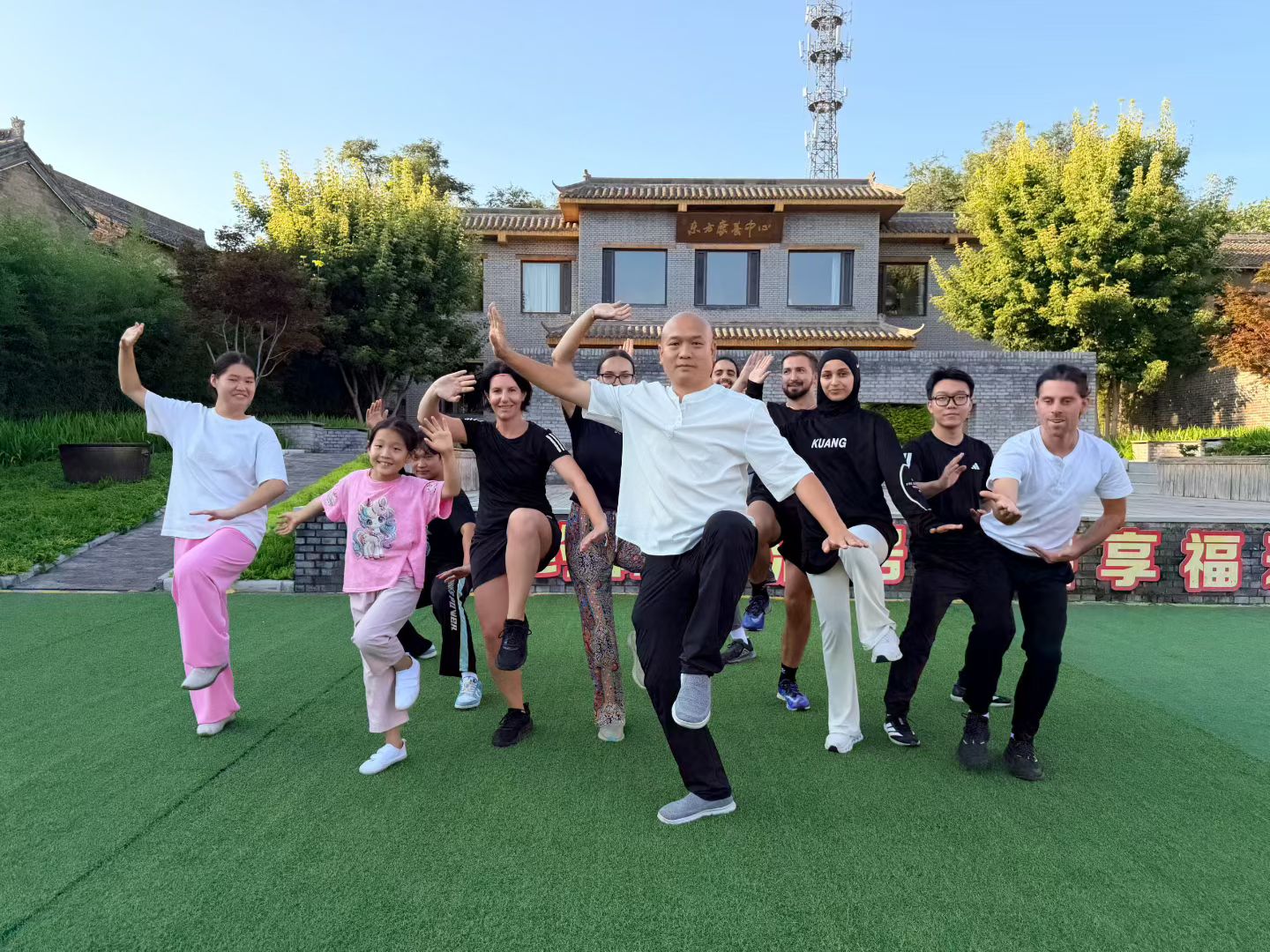
Rank your goals.
Choose the matching row, then cut to two practices.
Add one balancing practice. Pair something hard with something soft: San Da with Qi Gong, or a long form with sitting meditation. This works because fast training without calm leaves you tense, and calm without effort leaves you untested. It does not apply if you only have a few days, in which case focus on one.
Choose your length of stay. The next section explains how this changes what you can expect.
Ask the school three questions. Who will teach me directly? How are corrections given to each student? What does an ordinary training day look like? Clear, specific answers are a good sign.
How Length of Stay Changes What You Learn
Time reshapes the procedure, so it deserves its own decision. A week gives you posture, the first pieces of a form, and the rhythm of a training day. A month lets a practice settle into your body. Longer stays let you add weapons or deeper internal work.
One week. Pamela Paes Ezawa from Brazil completed a 7 day Chen style Tai Chi course. She valued the traditional training setting, the training focused accommodation and the welcoming Shifu. Othmane Echaouki and his wife from France, on their own 7 day course, thanked Shifu for taking such good care of every student. A week suits anyone who is still testing a goal. If you are unsure, the One Week Kung Fu Course is a low commitment way to feel the training before choosing more.
One month. Andrew Williams from the USA trained Tai Chi, Zhan Zhuang and Dao Fa with his son for 30 days and called it life changing. Austin Erkl from the USA admitted he did not love the training at first. After adjusting, he had a great time and left with lifelong memories. The lesson: the first week can feel uncomfortable even when the choice is right.
Three months and beyond. Hayley Noel from the UK trained for 120 days in Tai Chi, Zhan Zhuang, Sword and Broadsword. Her family had worried when she flew out, then wrote to Master Shen that she loved it and had an awesome time. For this depth, consider the Three-Month Course or Long Term Kung Fu Training. The limit is personal: long stays suit people who can step away from home life for months.
Signals to Watch in a Real Class
This is your completion check. Whatever you choose, these observations tell you whether the training matches your goal.
The teacher corrects individuals by hand or by example, not only by demonstrating from the front.
Basics such as stances, turning the waist and breathing come back every day, even for experienced students.
You are told why a movement is done, not only how.
Training goes on regardless of weather. Our 200㎡ indoor training center, with mats, wooden dummies and traditional weapons, exists for this reason.
The teacher adjusts the work to your body. Klaes praised Shifu for exactly this.
If you see none of these after two weeks, return to step two rather than abandoning the whole idea. Sharp joint pain is different from muscle fatigue. Report it to your teacher at once.
Mistakes that send people back to step one
Sampling everything. We teach nine styles. That range is a reason to choose with care, not to try each in a week.
Treating training as a holiday. Time off between sessions helps, but a retreat works best when the daily schedule is respected.
Expecting flexibility to arrive early. It comes slowly, and rushing it injures hips and knees.
Check Your Choice, Then Take the Next Step
You have finished when you can answer yes to each of these:
I can state my primary goal in one sentence.
I have chosen one primary and one supporting practice.
I know how much time I can honestly give.
I have a list of three questions for the teacher.
Everything past this point is refinement, and it is best done in conversation. If you are a genuine seeker of Traditional Chinese Kung Fu, we would be glad to hear from you. Tell us your goal, your background and your available time through the contact options on the school website. Master Shen and our team will reply with suggestions for where to begin. If a month feels right, you can view the 30 Day Kung Fu Course and book a consultation with us.



 WhatsApp