How Tai Chi Unites Movement Breath and Focus
How can a slow martial art strengthen the body while also calming the mind? The answer lies in coordination. Tai Chi is not simply a sequence of graceful positions. Each form asks the practitioner to organize posture, shifting weight, controlled breathing, and steady attention into one connected action.
For a beginner, the movements may look gentle. Yet the training asks for patience and honest self observation. A lifted shoulder, a collapsed knee, rushed breath, or wandering mind can break the connection between the feet, waist, hands, and intention. When these elements begin to work together, the form becomes more than exercise. It becomes a traditional method of body training, martial awareness, and quiet self cultivation.
At SJF Kung Fu School, students study within the living traditions of Chinese martial arts. Master Shen Jiangfei is a descendant of Liuhe Quan and the 11th generation inheritor of Chen style Tai Chi, the oldest of the five primary family styles. His teaching places equal value on correct body mechanics, martial purpose, respect, and calm attention.
Movement begins with a rooted and relaxed body
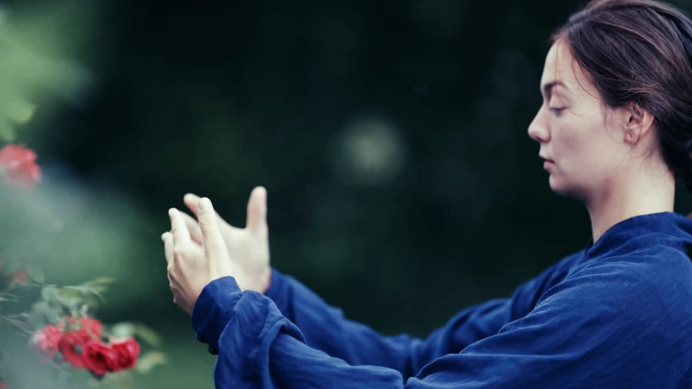
The first lesson is simple to describe but demanding to practice: stand with structure without becoming stiff. The head rises naturally, the shoulders settle, the chest remains relaxed, the spine lengthens, and the knees soften enough to receive the weight of the body. This alignment allows force from the ground to travel through the legs and waist before expressing through the arms.
Conclusion: Beginners should first seek stable alignment rather than a low stance or large range of motion. This is suitable for anyone starting home practice, a short course, or a regular class because it reduces unnecessary tension and makes feedback easier to understand. It does not mean that every posture must look identical; height, mobility, age, and previous injuries may require an adjusted stance under qualified instruction.
In traditional martial arts, relaxation does not mean collapse. The body needs enough tone to hold shape, but not so much that the joints lock. A relaxed shoulder can transmit movement from the waist. A raised shoulder often makes the arm move alone. A stable knee can support a turn. A knee that falls inward can make the lower body feel strained and disconnected.
What rooted posture changes in practice
- Feet: They receive and release weight. If the feet grip the floor tightly, turning becomes forced rather than smooth.
- Knees: They guide the direction of the legs. If they twist away from the toes during a shift, the practitioner loses stable support.
- Waist: It coordinates the upper and lower body. If the waist is fixed, the hands tend to reach without whole body power.
- Shoulders and elbows: They keep the arms connected to the torso. If the shoulders lift, breathing becomes shallow and the neck tightens.
- Head and eyes: They establish direction. If the head drops or turns late, the body often loses balance during the transition.
A useful starting test is modest: hold a comfortable stance for several natural breaths, then shift a small amount of weight without raising the shoulders or changing the head level. If balance disappears immediately, make the shift smaller. Large movements are not automatically better. Clear connection is the goal.
How posture, slow weight shifting, controlled breathing, and attention work together
A form is built from linked principles, not separate exercises. Posture gives the body a reliable frame. Weight shifting creates direction and balance. Breathing prevents unnecessary strain. Attention notices whether the body and mind remain connected. When one part is neglected, the others are affected.
| Training element |
What it affects in practice |
What happens when it is wrong |
Beginner correction |
| Posture |
Joint alignment, balance, and the path of force from foot to hand. |
A collapsed chest, raised shoulders, or locked knees makes movement feel separate and heavy. |
Stand taller without pushing the chest forward; soften the knees and let the shoulders settle. |
| Slow weight shifting |
Balance, timing, leg strength, and awareness of empty and full legs. |
Rushing transfers weight before the body is ready, causing wobbling, leaning, or knee discomfort. |
Move only as far as control remains; pause briefly when the weight is centered. |
| Controlled breathing |
Rhythm, relaxation, and the ability to sustain practice without strain. |
Holding the breath creates tension in the chest, jaw, and shoulders; forced deep breathing can cause dizziness. |
Use quiet natural breaths and let the movement set an unhurried rhythm. |
| Attention |
Accuracy, emotional steadiness, and awareness of the body’s changing balance. |
When the mind races ahead, hands move before the waist and feet, making the form mechanical. |
Choose one point of attention, such as the feet or lower abdomen, for several repetitions. |
Conclusion: Learn the four elements together from the beginning, even if the form is short. This approach fits students who want a deeper foundation instead of memorizing many movements quickly. It does not require trying to control every detail at once. A beginner should select one correction per practice period, then return to it patiently.
For example, consider a slow forward press. Before the hands move, the rear leg lightly drives the body forward. The waist turns or settles in the intended direction. The front foot receives the transfer. The arms follow the body instead of reaching ahead. The breath remains unforced. Attention stays with the changing pressure under the feet. This is why experienced teachers often ask students to slow down: slowness makes hidden habits visible.
Breath should support the form instead of controlling it
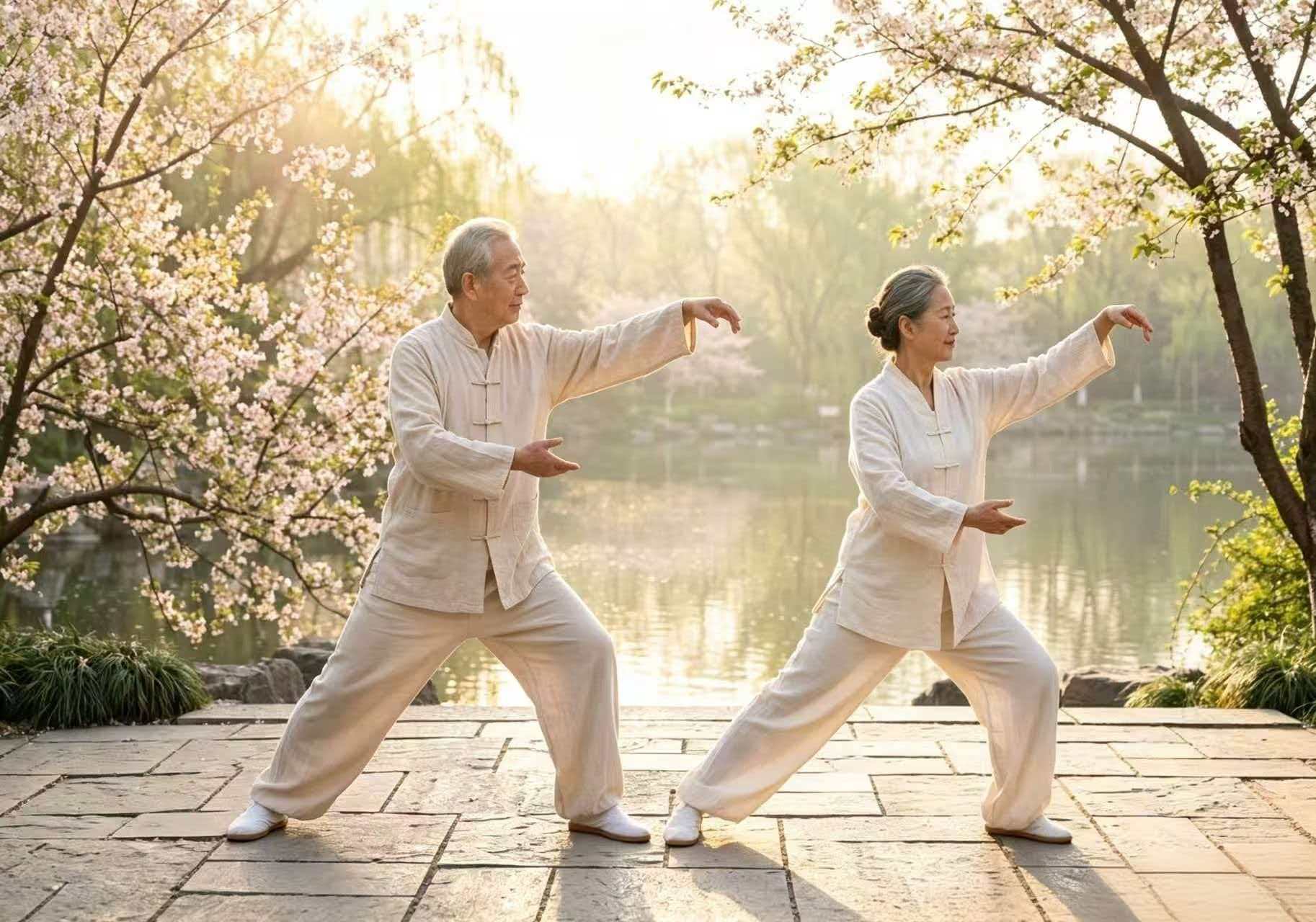
Many beginners ask when to inhale and exhale. There is no need to make breathing complicated during the first stage. The best starting point is quiet nasal breathing, with an easy rhythm that does not interrupt movement. In many movements, opening or receiving actions may naturally accompany an inhale, while settling, pressing, or issuing actions may naturally accompany an exhale. But the breath should not be forced to fit a rigid count.
Conclusion: Let breathing remain natural before trying formal breathing patterns. This fits new students, people returning to exercise, and anyone who feels tense while learning a sequence. It does not apply when a qualified instructor gives a specific breathing method for a particular practice, such as standing meditation or an established internal training drill.
Forced breathing often creates three problems. First, students lift the chest in an attempt to take a larger breath. Second, they hurry the movement to finish the inhale or exhale on time. Third, they become so occupied with counting that they stop noticing their feet and posture. A calm breath is useful because it reveals tension. If the breath becomes tight during a simple movement, the body may be working harder than necessary.
At SJF Kung Fu School, training can also include Qi Gong, which helps students study breath, posture, and calm intent through simpler repeated methods. This is especially helpful for a beginner who finds a long form difficult to remember. A shorter drill can show the same relationship between settled structure and a quiet mind.
Attention turns repetition into meaningful practice
Attention in this art is neither blankness nor intense staring. It is a relaxed awareness of what is happening now: where the weight is, whether the shoulders have risen, whether the waist leads the hands, and whether the breath remains easy. This quality of mind is closely connected with Wu De, the martial virtue of discipline, respect, restraint, and sincerity.
A useful practice method is to give each repetition a single purpose. One repetition may be for keeping the head level. Another may be for feeling the rear foot press into the ground. A third may be for releasing the jaw and shoulders. When the mind has one clear task, the movement becomes less vague.
A practical four step awareness procedure
- Settle before moving. Stand quietly for several natural breaths. Feel both feet on the floor and notice which side carries more weight.
- Choose one physical point. Begin with the knees, waist, or shoulders. Do not try to correct the whole body at once.
- Perform one slow section. Move at a speed that allows you to notice when the weight leaves one leg and enters the other.
- Pause and review. Ask whether your breath stayed easy and whether the arms followed the body. Repeat with a smaller range if control was lost.
Conclusion: Short, attentive practice is more useful than repeating a form carelessly. This suits home practice when time is limited and supports students who are still learning the order of movements. It does not replace instruction when pain, persistent imbalance, or uncertainty about alignment continues.
Standing practice can sharpen this awareness without requiring many movements. In Zhan Zhuang, students learn to stand with steady legs, a relaxed upper body, and quiet attention. The stillness may appear simple, but it teaches the same lessons that later appear during stepping, turning, and issuing force.
Common mistakes that separate body, breath, and mind
Most early mistakes are ordinary. They do not mean a student lacks ability. They simply show where careful training should begin.
- Moving the hands first: This often happens when students copy the outer shape. Start movement from the feet and waist, then allow the arms to follow.
- Taking oversized steps: A long step can pull the torso forward and make the rear leg inactive. Use a shorter step until weight can transfer without leaning.
- Locking the knees: Locked knees interrupt the springlike quality of the legs. Keep a slight natural bend without sinking too low.
- Holding the breath: This usually appears during difficult transitions. Reduce the speed and range of the movement, then return to quiet breathing.
- Looking only at the hands: The eyes may follow direction, but staring at the hands can pull the head and chest forward. Keep the gaze soft and the neck long.
- Chasing relaxation by becoming loose: True relaxation retains structure. Keep the spine supported and the joints aligned while releasing excess tension.
- Collecting forms too quickly: More sequences do not automatically create better skill. Repeat a small section until the body can remain balanced and attentive.
These corrections matter for martial application as well as health practice. When the feet, waist, and hands act in the right order, a push, pull, redirect, or step can use the whole body. When the parts act separately, even a beautiful posture may lack clear purpose.
Choosing the right starting path for your practice
Different training formats suit different needs. A person who wants to understand basic principles may benefit from a short period of guided study. Someone seeking deeper change in posture and habits may need more time. The right choice depends on availability, physical condition, and how much correction the student needs.
| Starting situation |
Recommended focus |
Why it fits |
Limit to remember |
| New student practicing at home |
Posture, natural breath, and one short movement section. |
It builds awareness without overloading memory. |
Video study cannot always reveal alignment errors. |
| Student with prior martial arts experience |
Weight shifting, waist coordination, and relaxed power. |
It helps replace arm led habits with whole body movement. |
Existing athletic habits may take time to soften. |
| Visitor seeking direct instruction in China |
Daily correction, forms, standing work, and cultural study. |
Regular feedback makes small errors easier to identify. |
Progress still depends on patient repetition after the visit. |
| Student seeking quiet mind training |
Standing meditation, slow form practice, and seated reflection. |
These methods connect breath and attention with physical stillness. |
They are not a substitute for medical or mental health care. |
SJF Kung Fu School offers flexible study periods from one week to long term training, with no minimum enrollment for regular classes. The school has a 200 square meter indoor training center for year round practice, along with traditional weapons, wooden dummies, training mats, and a meditation hall. For students who wish to Learn Tai Chi through direct practice, these conditions allow training to continue regardless of weather.
The school is located near the Shaolin Temple, with more than 30 cultural and historical attractions nearby. This setting can help visitors see martial arts as part of a wider Chinese tradition rather than as a set of isolated exercises. Form practice, meditation, traditional weapons, Shaolin methods, and quiet reflection all point toward the same question: can the body act with steadiness while the mind remains clear?
What authentic instruction can reveal over time
The outer form is only the visible beginning. Through consistent Chen style practice, students may gradually notice how the feet influence the waist, how the waist influences the hands, and how a calm breath changes the quality of every transition. This understanding cannot be rushed. It develops through correction, repetition, and humility.
Master Shen Jiangfei has taught more than 3,000 students worldwide. Their experiences show why different people value different parts of training. Andrew Williams from the United States spent 30 days studying Tai Chi, Zhan Zhuang, and Dao Fa with his son, describing the experience as strengthening him physically, mentally, and spiritually. Klaes Risbjerg Simonsen from Denmark completed 30 days of Tai Chi, Zhan Zhuang, and Broadsword study and appreciated training adapted to his specific needs. Their experiences are personal, not promises of identical results, but they show the value of sustained attention and qualified guidance.
Students who also wish to explore stillness can study Meditation alongside physical training. Stillness helps reveal the habits that movement can hide: a clenched jaw, restless thought, shallow breath, or uneven stance. In this way, quiet practice and martial practice support one another.
If you are sincerely seeking traditional Chinese martial arts study, SJF Kung Fu School welcomes you to contact us and discuss a respectful training path suited to your available time and experience.




 WhatsApp