How to Choose a Kung Fu Academy China for Your Goals
Choosing to train in China is a significant commitment of your time, resources, and spirit. The greatest risk is not the travel, but investing in a program that is misaligned with your personal goals. Many schools offer a wide range of styles, but not every path is suitable for every student. At the SJF Kung Fu School, we believe the first step is understanding your own objectives. This clarity ensures your time here becomes a period of meaningful growth, not frustration. With over 3,000 students from around the world having trained with us, we have seen firsthand how critical the right fit is for a rewarding experience.
My name is Shen Jiangfei. As the founder of this school and the 11th-generation inheritor of Chen-style Tai Chi, I have dedicated my life to the martial arts. My purpose is to guide students on their own path, helping them find the discipline that resonates with their mind, body, and spirit.
Matching Your Goals to the Right Martial Arts Style
Before you look at schedules or fees, you must first define what you hope to achieve. Chinese martial arts are not a monolithic practice; they are a diverse collection of systems, each with a different focus and philosophy. Identifying your primary motivation is the key to selecting a style that will serve you well for years to come.
This table outlines common training goals and the styles best suited to achieve them. Use it as a starting point to focus your search.
| Your Primary Goal |
Recommended Martial Arts Styles |
Why It's a Good Fit |
| Practical Self-Defense & Sparring |
San Da (Chinese Kickboxing), Qin Na (Joint Locking), Ge Dou (Combat) |
These systems are focused on direct application. San Da training builds conditioning, striking, and grappling for a sport context, while Qin Na and Ge Dou provide skills for controlling an opponent in real-world scenarios. |
| Physical Conditioning & Discipline |
Shaolin Quan, Chinese Weapon Training |
Traditional Shaolin Quan is renowned for its rigorous physical demands, building strength, flexibility, and endurance through forms and drills. Weapon training adds another layer of coordination and body control. |
| Internal Balance & Health |
Tai Chi, Qi Gong, Zhan Zhuang (Standing Post) |
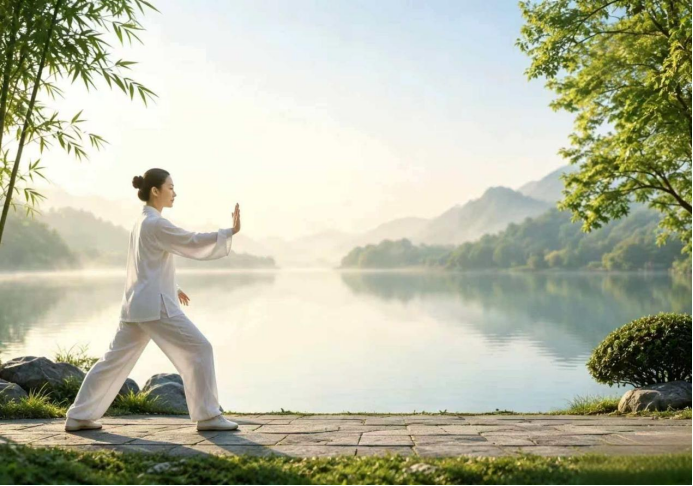
These internal arts cultivate body awareness, balance, and the flow of energy (Qi). They are excellent for stress reduction, improving posture, and developing a deep mind-body connection. Many students come to learn Tai Chi in China for this very reason. |
| Spiritual Growth & Mindfulness |
Meditation, Tai Chi, Qi Gong |
While most martial arts have a meditative aspect, disciplines like seated Meditation directly train the mind for stillness and focus. The slow, deliberate movements of Tai Chi and Qi Gong are often described as moving meditation. |
When a Training Style Is NOT the Right Fit
Just as important as knowing what to choose is knowing what to avoid. A mismatch between your expectations and a style's core principles is the most common source of disappointment for international students. Be honest about your goals to avoid dedicating yourself to a practice that will not fulfill you.
- Shaolin Quan is a poor fit if... your primary interest is gentle, low-impact exercise or purely internal cultivation. The foundation of Shaolin training is physically demanding, involving intense stretching, stamina drills, and powerful movements. It requires a willingness to push your physical limits.
- Tai Chi is a poor fit if... you seek immediate results in competitive, full-contact sparring. While a powerful martial art, the combat applications of Tai Chi take years of dedicated practice to master. Its initial focus is on slow, precise movements to build internal structure, not on quick fighting techniques.
- San Da is a poor fit if... you are primarily seeking deep cultural immersion, ancient philosophy, and traditional forms (Taolu). San Da is a modern combat sport. While it has Chinese martial arts roots, its training is pragmatic and sport-oriented, with less emphasis on history or ceremony.
- Qi Gong is a poor fit if... your main goal is to learn complex, acrobatic movements or weapon forms. Qi Gong focuses on simple, repetitive exercises synchronized with breathing to cultivate internal energy. Its value lies in subtlety and internal feeling, not external display.
- A Mixed Program is a poor fit if... you have a very short training period (e.g., one or two weeks) and want to develop a foundational skill. Spreading your limited time across multiple complex arts can lead to a superficial understanding of each, rather than a solid base in one.
The Value of Lineage and an Authentic Environment
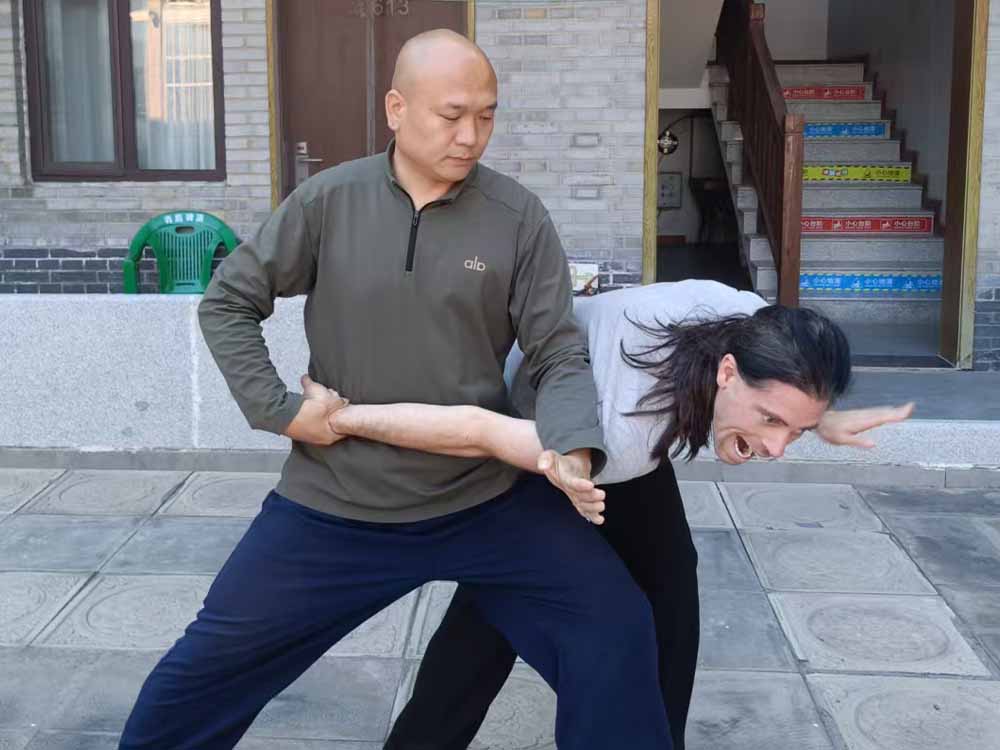
Once you have a style in mind, the next step is to find a qualified teacher. In Chinese martial arts, lineage is not about prestige; it is about preservation. A teacher connected to a direct lineage, like my own as a descendant of Liuhe Quan and inheritor of Chen-style Tai Chi, is a guardian of the art's complete system—its principles, techniques, and philosophy.
This ensures you are learning the art as it was intended, not a simplified or modernized version. Klaes Risbjerg Simonsen from Denmark came to our school specifically because he wanted an experience that was not a tourist resort. He sought a highly qualified Shifu who could adapt the training to his needs. After 30 days of Tai Chi, Zhan Zhuang, and Broadsword, he felt he had grown both physically and spiritually, confirming he was in the right place from day one.
An authentic environment extends beyond the teacher. It includes:
- Dedicated Facilities: Our 200㎡ indoor training center allows for consistent, focused practice year-round, regardless of the weather.
- A Supportive Community: Training alongside dedicated students from across the globe creates an atmosphere of mutual respect and encouragement. Pamela Paes Ezawa from Brazil highlighted the welcoming Shifu and community as a key part of her positive experience during her 7-day course.
- Cultural Context: Being located near the Shaolin Temple and over 30 other historical sites provides a constant reminder of the deep cultural roots of these arts.
A Checklist for Choosing Your Kung Fu Program
Finding the right Kung Fu academy China requires careful consideration. Many students, like Andrew Williams from the USA, describe their training as a "life-changing experience." He spent 30 days here with his son and found it strengthened him physically, mentally, and spiritually. To help you find a similar fit, use this checklist when evaluating your options.
- [ ] Instructor's Lineage and Experience: Does the head instructor have a verifiable lineage in the styles they teach? How many years have they been teaching international students? (Our head instructor, Master Shen Jiangfei, is the 11th-generation inheritor of Chen-style Tai Chi with over 20 years of experience).
- [ ] Program Flexibility: Does the school offer programs that fit your schedule? Look for options ranging from short, intensive courses to long-term study. Hayley Noel from the UK completed a 120-day course, while Othmane Echaouki from France found a 7-day course perfect for his needs.
- [ ] Training Focus: Is the curriculum balanced? Does it include forms, application, conditioning, and theory? Or does it focus only on one aspect?
- [ ] Student Testimonials: Can you find reviews from past students? Look for detailed accounts, not just generic praise. Austin Erkl from the USA gave an honest review, admitting it was an adjustment at first but that he ultimately had a great time and made "lifelong memories." This kind of feedback is invaluable.
- [ ] Living Conditions: Are the accommodation and food suitable for supporting rigorous training? A focused environment free from distractions is essential for progress.
- [ ] Communication: Is the school responsive and clear in its communication? This is a good indicator of their professionalism and care for students.
Your journey into Chinese martial arts should be one of discovery and personal development. By aligning your goals with the right style and choosing a school with a genuine commitment to traditional teaching, you set yourself up for a truly rewarding experience.
If you are ready to explore your path in traditional Chinese martial arts, we welcome you to view our programs and contact us to discuss which one is right for you. We are here to help you take the next step.



 WhatsApp