How to Choose a Kung Fu Camp for China Training
Before paying a deposit for a Kung Fu Camp, look beyond photographs, travel promises, and short course descriptions. A residential school becomes part of your daily life: where you train, eat, rest, study, and reflect. The right choice should give you clear teaching guidance, safe living arrangements, and a meaningful connection to Chinese martial arts. At SJF Kung Fu School, international students come to train with purpose, whether they stay for one week or several months.
China training is not only about learning forms. It is also about learning patience, discipline, respect, body awareness, and Wu De, the moral conduct expected of a martial artist. A beginner may arrive hoping to improve fitness. A long-term student may seek deeper Tai Chi practice, weapons work, meditation, or practical fighting skills. Both need a school that can explain what it teaches, who teaches it, and how daily training is arranged.
Start by Choosing the Purpose of Your Training
Choose a school after defining what you want to study and how much time you can give to practice. This sounds simple, but it prevents a common mistake: selecting a program based on scenery or a short promotional video while the curriculum does not match your goals.
A one-week stay can offer a focused introduction to stance work, basic movements, stretching, breathing, and cultural study. It suits travelers, families, and first-time visitors who want disciplined instruction without a long absence from work or university. A longer stay suits students who want time for correction, repetition, and gradual physical conditioning.
- Choose a short stay if you want to experience daily martial arts practice, learn foundations, and understand whether residential training suits you. It may not be enough time to build deep technical skill.
- Choose a one-month stay if you want regular correction and time to develop better posture, flexibility, coordination, and training habits. See the one month Kung Fu Course for a program length that allows students to settle into a more consistent rhythm.
- Choose three months or longer if you want sustained work on forms, weapons, internal practice, or fighting methods. Long stays require realistic expectations about physical fatigue, homesickness, and personal discipline.
The subject matters as much as the duration. A student interested in stillness, breathing, and structure may prefer Chen style Tai Chi, Qi Gong, Zhan Zhuang, and meditation. A student seeking practical distance control and partner work may be better suited to San Da, Qin Na, or Ge Dou. Someone drawn to classical movement may choose Shaolin Quan or Chinese Weapon training.
Ask the school to explain how it adjusts lessons for beginners and experienced practitioners. A beginner needs clear body mechanics before speed. An experienced martial artist may need help changing habits from another style. No serious school should treat every student as though they have the same body, background, or reason for coming.
A sourcing checklist for verifying instructor lineage, daily training hours, class size, and on-site accommodation before booking
Request direct answers in writing before you book. This protects your time, your budget, and your expectations. A camp may have a beautiful setting, but the teaching method and living routine determine what your stay will actually feel like.
| What to verify |
Why it matters |
Risk if you do not ask |
What to request |
| Instructor lineage and teaching background |
Traditional Chinese martial arts are passed through teacher-student relationships. Lineage helps students understand the source of a method and the instructor’s training heritage. |
You may not know whether the named teacher will teach you or whether the course follows a clear system. |
Ask for the instructor’s name, style background, role in daily classes, and whether senior instructors lead some sessions. |
| Daily training hours |
Training time affects physical preparation, recovery, meals, study time, and how much instruction can be covered. |
You may expect intensive practice but find a schedule designed mainly for sightseeing, or the reverse. |
Request a sample weekday schedule showing training blocks, rest periods, meals, cultural visits, and free time. |
| Class size |
Smaller groups can allow more correction in stance alignment, form details, breathing, and partner drills. |
You may receive less individual feedback than expected, especially if you are new to martial arts. |
Ask about the expected number of students during your dates and how beginners are grouped. |
| On-site accommodation |
Residential training programs require a living space that supports rest, hygiene, meals, and reliable access to the training area. |
Unclear accommodation arrangements can create unnecessary stress and reduce recovery between sessions. |
Ask where students sleep, whether accommodation is on the school grounds, what meals are provided, and how far you travel to train. |
Instructor lineage deserves particular attention. At SJF Kung Fu School, Master Shen Jiangfei is a descendant of Liuhe Quan and the 11th-generation inheritor of Chen-style Tai Chi, the oldest of the five principal Tai Chi family styles. This does not mean every student will become advanced in a short visit. It does mean that students can identify the teaching source and understand the heritage behind the material.
For a student focused on internal training, ask how standing practice, movement practice, breath awareness, and relaxation are taught together. Zhan Zhuang is not merely standing still. Done properly, it asks the student to observe alignment, weight distribution, tension, and mental rest. It is demanding in a quiet way. You can review the school’s Zhan Zhuang training approach before deciding whether it suits your goals.
Compare the Curriculum With the Martial Tradition You Want to Study
Select a program with a defined teaching path, not a long list of styles with no explanation. A school may offer several subjects, but students should know whether they will study one discipline in depth or sample several methods during the week.
SJF Kung Fu School teaches nine distinct areas: Shaolin Quan, San Da, Qin Na, Tai Chi, Qi Gong, Zhan Zhuang, Ge Dou, Chinese Weapon, and Meditation. The value of this range is not that every visitor must study all nine. Its value is that a student can choose a focus that fits their condition and aims.
| Training focus |
Best suited to |
What to ask before booking |
Where it may not fit |
| Chen style Tai Chi |
Students seeking structure, rooted movement, coordinated breathing, and calm concentration. |
Ask whether beginners start with stance, stepping, silk reeling concepts, and basic form sections. |
It may not suit someone seeking only high-contact sparring. |
| Shaolin Quan |
Students interested in traditional forms, flexibility, coordination, and dynamic movement. |
Ask how the school scales movements for different fitness levels. |
It may be demanding for students returning from a recent injury. |
| San Da training |
Students who want striking, footwork, distance awareness, and controlled partner practice. |
Ask how contact level, protective equipment, and partner matching are managed. |
It is not the first choice for a visitor who wants only quiet internal practice. |
| Chinese Weapon training |
Students drawn to staff, sword, broadsword, or other classical weapons. |
Ask whether weapons work requires prior form training and how safety is taught. |
It may not be suitable as the only subject for a first-time student with limited training time. |
| Meditation practice |
Students seeking steadier attention, recovery, and a deeper relationship with martial discipline. |
Ask whether meditation is taught as part of the daily routine or as a separate class. |
It does not replace physical conditioning or technical practice. |
Traditional teaching has a simple principle: first establish the body, then refine the movement, then calm the mind. A low stance without alignment becomes strain. Fast movement without balance becomes careless. Breathing exercises without relaxed attention become empty routine. Look for teachers who can explain why a movement is practiced, not only how it looks.
If your main interest is forms and martial culture, explore Shaolin Quan as a starting point. If you want controlled combat practice, review the structure of San Da training. The right choice depends on your purpose, not on which subject appears most impressive in a video.
Assess the Training Environment Beyond the Practice Hall
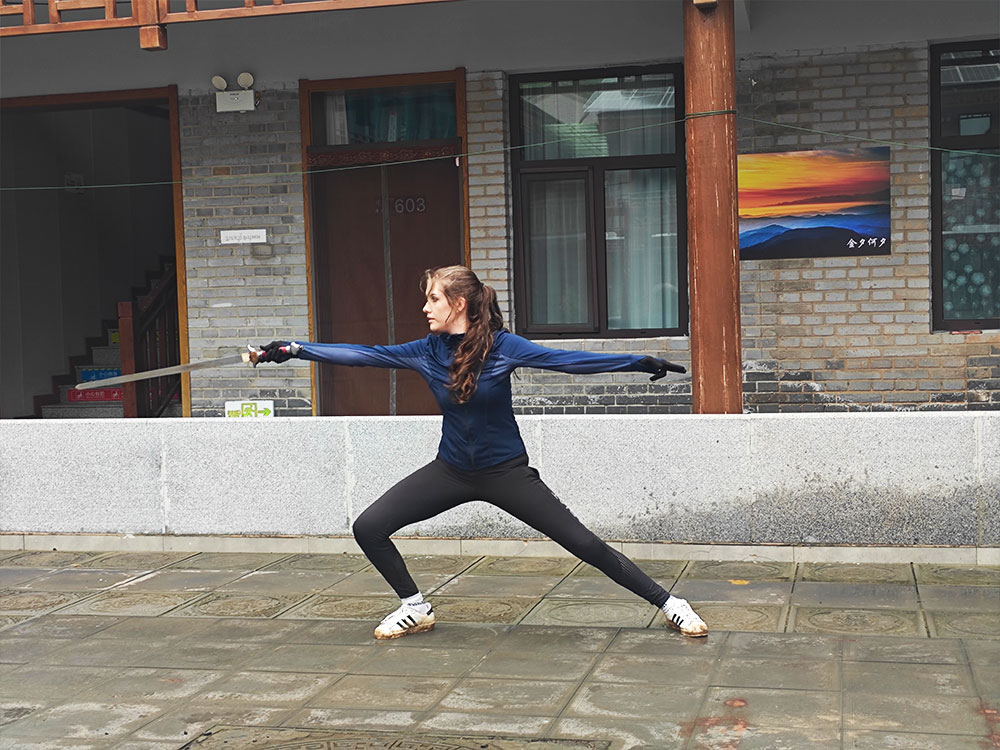
Choose a place where the environment supports regular practice and recovery. Martial study is shaped by the hours between classes as well as the lesson itself. Sleeping well, eating consistently, stretching carefully, and having space to reflect can make a meaningful difference during a residential stay.
SJF Kung Fu School has a 200㎡ indoor training center, allowing year-round practice regardless of weather. This matters most for visitors planning a fixed travel date, especially when outdoor conditions may limit training. An indoor hall does not replace outdoor practice or cultural visits, but it offers a reliable place for forms, drills, weapons work, stretching, and standing practice.
The school is located near the Shaolin Temple, with more than 30 nearby cultural and historical attractions. For students interested in Shaolin history, Buddhist thought, local temples, and the relationship between martial practice and Chinese culture, location can add context to the training. Still, cultural visits should support the study rather than replace it. If your purpose is intensive practice, ask how sightseeing is scheduled and whether it is optional.
- Choose a training-centered setting if you want a stable daily rhythm with fewer distractions. This fits students coming for one month or longer.
- Choose a mixed study and cultural schedule if you have limited time and want both practice and local visits. This fits many one-week participants.
- Ask about recovery arrangements if you are over 40, returning to exercise, or managing a previous injury. More training is not always better when the body needs gradual adaptation.
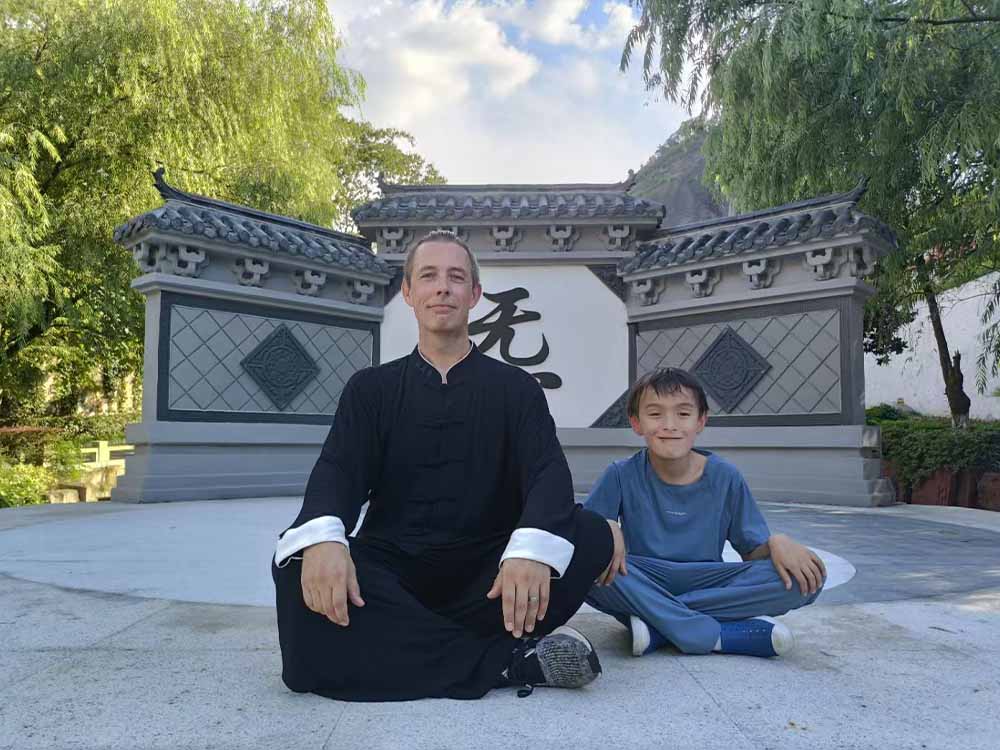
There is also a human side to residential training. Andrew Williams from the United States spent 30 days studying Tai Chi, Zhan Zhuang, and Dao Fa with his son. He described the experience as life-changing for them physically, mentally, and spiritually, and planned to return the following year. His experience does not guarantee the same result for every visitor. It does show why a father-and-son training stay can be more than a holiday when the schedule allows time for shared effort and reflection.
Use Student Cases to Ask Better Questions
Read student stories as evidence of individual experience, then use them to form practical questions. Testimonials are most useful when they show what a person studied, how long they stayed, and what they valued.
For example, Hayley Noel from the United Kingdom completed a 120-day course covering Tai Chi, Zhan Zhuang, Sword, and Broadsword. Her family later shared that they had worried before she flew to China, but were grateful that she enjoyed her time and felt well supported. This case is useful for a prospective long-term student because it suggests several questions: How will a school communicate with family members? What support is available during a lengthy stay? How is a training plan adjusted as the student progresses?
Klaes Risbjerg Simonsen from Denmark completed 30 days of Tai Chi, Zhan Zhuang, and Broadsword training. He wanted a focused experience and praised Master Shen’s ability to adapt training to his needs. A reader should not assume every day will be easy or that personal development happens on demand. Instead, ask whether instructors observe each student’s condition, offer corrections, and explain how the program changes as skills develop.
Pamela Paes Ezawa from Brazil completed a seven-day Chen-style Tai Chi course and valued the traditional training setting, Taoist heartland location, accommodation arranged for training life, and welcoming school community. Her case is particularly relevant to short-stay visitors. A week can be meaningful when the program is focused, but it should be approached as an introduction and a foundation rather than a final achievement.
Prepare Your Questions Before You Contact a School
Send a clear enquiry that explains your training goal, dates, physical condition, and preferred subjects. A thoughtful enquiry helps the school advise whether a short course, longer program, or different training focus fits you best.
- State your available dates and the number of weeks or months you can stay.
- Describe your martial arts background honestly, including whether you are a complete beginner.
- List your preferred subjects, such as Tai Chi practice, Shaolin Kung Fu training, weapons, Qi Gong, or meditation.
- Share any injuries, mobility limits, or health matters that may affect training.
- Ask for a sample schedule, accommodation details, meal information, and the expected class arrangement.
- Ask who will teach your sessions and how corrections are provided.
- Confirm what is included before arranging travel or making a payment.
Do not be embarrassed to ask basic questions. Martial arts begins with humility. A good student listens carefully, but a wise student also prepares carefully. The aim is not to find the hardest program or the most dramatic setting. The aim is to find a school where your effort has direction.
At SJF Kung Fu School, Master Shen Jiangfei and the teaching team welcome students who come with respect for Chinese martial arts, a willingness to train steadily, and interest in cultural exchange. Whether your first step is standing quietly in Zhan Zhuang or learning the opening movement of a form, each practice begins with attention to the present moment.
View Kung Fu Camp programs and contact SJF Kung Fu School to discuss a training period that fits your goals.




 WhatsApp