Kungfu Camp China Schools That Verify Master Credentials
Before paying a deposit to a martial arts school in China, a student should verify more than photographs, attractive course pages, or general promises. The real question is whether the instructor can explain who taught them, what tradition they represent, where training takes place, and how their school operates day to day. For international students considering a Chinese Kung Fu School, these checks protect both their time and their purpose for coming to China.
A serious Kungfu Camp China experience is not simply a holiday activity. It may involve early training, unfamiliar physical demands, shared meals, traditional routines, and respectful contact with Chinese martial culture. For a beginner, this can be the first encounter with horse stance, breathing practice, and disciplined repetition. For an experienced practitioner, it may be an opportunity to examine body structure, martial intent, and the relationship between stillness and movement.
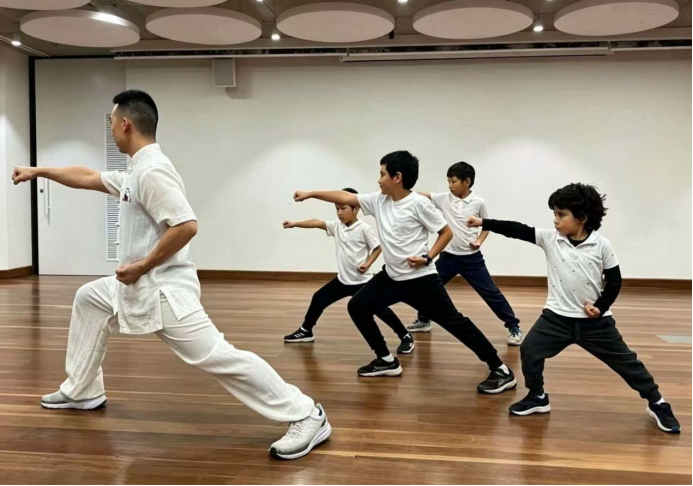
At SJF Kung Fu School, training is guided by Master Shen Jiangfei, a descendant of Liuhe Quan and an 11th-generation inheritor of Chen-style Tai Chi. These details matter because lineage is not a decorative title. In traditional practice, it shows a line of teaching, correction, responsibility, and martial values passed from teacher to student.
Why Master Credentials Matter Before You Choose a School
Traditional martial arts are taught through people, not only through written programs. A form can be copied from a video, but timing, posture, intent, breathing, distance, and correction require a teacher who understands the material through long practice. That is why a school’s instructor background deserves the same attention as accommodation, course length, or location.
The clearest conclusion is this: choose a school that can explain its teaching inheritance in plain language and connect that inheritance to the actual classes you will attend. This approach fits students seeking Shaolin Quan, Chen-style Tai Chi, Qi Gong, weapon work, or standing practice. It is less important for a brief sightseeing activity where martial instruction is not the main purpose.
Master Shen Jiangfei teaches from two named traditions: Liuhe Quan and Chen-style Tai Chi. Chen-style Tai Chi is the original and oldest of the five primary family styles. This background gives students a useful reference point when discussing body mechanics. In Chen training, a student may begin by learning how the feet receive weight, how the knees align, how the waist directs movement, and how relaxed structure produces connected power.
Such instruction does not promise instant skill. A seven-day visitor may gain a clearer feeling for stance, balance, and breath, while a longer-term trainee has more time to refine those principles under correction. The suitable duration depends on your aim. A short visit can establish foundations; it does not replace sustained practice.
Wu De gives credentials their meaning
In Chinese martial culture, Wu De, or martial virtue, concerns conduct as much as technique. Respect for teachers, restraint in using skills, patience in training, and care for fellow students are all part of the discipline. When speaking with a school, listen for how it describes responsibility, correction, and student safety. A teacher with a real tradition should be able to explain not only what they teach, but why it is taught in a particular order.
- Lineage information matters because it identifies the source of the teaching and helps students understand the style’s roots.
- Teaching method matters because a named lineage alone does not show whether beginners receive useful correction.
- Martial virtue matters because demanding training works best in an atmosphere of mutual respect.
- Practice environment matters because forms, partner work, meditation, and weapons each require suitable space and supervision.
Credential Verification Before Paying a Deposit
Credential verification should happen before money is transferred and before flights are booked. The practical aim is not to interrogate a school. It is to establish a clear and respectful understanding of who teaches, where you will train, and what the school can document.
Ask for answers in writing where possible. A school that communicates clearly before arrival is easier to plan with when questions arise about class schedules, training focus, or suitable course length. The following checks are useful for adults travelling from the USA, Europe, Australia, and other overseas locations.
| Verification item |
What to request |
Why it matters |
Best suited for |
| Instructor lineage |
A clear explanation of the teacher’s style, teacher relationship, and training inheritance |
It helps distinguish a defined teaching tradition from general martial arts branding |
Students seeking Tai Chi, Shaolin Quan, Liuhe Quan, or internal practice |
| School registration |
Confirmation that the school is registered and operates as a training provider |
It gives international visitors a clearer basis for communication and planning |
Any student arranging travel from abroad |
| Instructor qualifications |
A description of the instructor’s qualifications and teaching role |
It clarifies who will lead classes rather than relying only on promotional material |
Beginners and parents arranging youth training |
| On-site training proof |
Current photos or videos of the training area, equipment, and normal class activity |
It confirms that the training setting matches the school’s description |
Students planning intensive or long-term study |
| Course structure |
A written outline of training subjects and course duration |
It helps you select a program that fits your available time and physical preparation |
Short-term and returning students |
For SJF Kung Fu School, a meaningful verification point is that Master Shen is identified as both a Liuhe Quan descendant and an 11th-generation Chen-style Tai Chi inheritor. The school is also a registered Kung Fu school with certified Shaolin Kung Fu instructors. These facts should be discussed alongside your personal goals, rather than treated as a substitute for asking questions about your class plan.
On-site training claims should also be specific. SJF Kung Fu School has a 200 square metre indoor training center with training mats, wooden dummies, traditional weapons, and a meditation hall. This is especially relevant for students whose travel dates fall during periods of uncertain weather. Indoor space supports year-round practice, but it does not mean every class is held indoors or that every training session has the same focus.
How to Compare Training Claims With Your Personal Purpose
The best school for one student may not suit another. Someone looking for Chen-style Tai Chi may need standing practice, slow form correction, and attention to the waist and lower body. Someone preparing for practical combat training may need partner drills and conditioning. A visitor drawn to Zen practice may value meditation, calm routines, and time near cultural sites.
First decide what you want to study. Then ask the school how that subject is taught during your chosen course. A clear answer should name the training content, not merely repeat the style name.
| Your purpose |
Useful questions to ask |
Appropriate course direction |
Limit to understand |
| Tai Chi foundations |
Will the course include stance, form, breathing, and correction? |
Learn Tai Chi in China through guided Chen-style practice |
A short course introduces principles but needs continued practice at home |
| Short intensive visit |
What can a beginner realistically study in one week? |
One Week Kung Fu Course for a focused introduction |
One week is not enough for full technical mastery |
| Combat focused study |
Are partner drills, conditioning, and safety guidance included? |
San Da training for students seeking striking practice |
Training should match current fitness and prior experience |
| Longer cultural study |
How does the daily routine develop over several months? |
Three-Month Kung Fu Course for deeper repetition and correction |
Longer study requires realistic preparation for daily discipline |
For example, Andrew Williams from the USA trained for 30 days with his son in Tai Chi, Zhan Zhuang, and Dao Fa. He described the experience as life-changing for him physically, mentally, and spiritually, and planned to return the following year. This is a useful example of a family choosing a month-long period for several connected subjects. It should not be read as a guaranteed result for every student, because each person arrives with different health, expectations, and training habits.
Similarly, Hayley Noel from the UK completed 120 days of Tai Chi, Zhan Zhuang, Sword, and Broadsword study. Her family later shared their gratitude after seeing how much she valued her time in China. Her case shows what a longer stay can make possible: repeated practice, adaptation to daily routine, and gradual familiarity with weapons and standing work. It does not mean that four months is necessary for every visitor.

Questions That Reveal Whether On-Site Training Is Real
On-site training is more than a building. It is the rhythm of instruction: warm-up, stance work, forms, partner practice where appropriate, rest, reflection, and correction. When reviewing a camp, ask questions that help you picture an ordinary training day rather than only a special event.
- Ask who teaches your class. Request the name and role of the instructor who will supervise your main subject.
- Ask where sessions take place. Confirm whether there is an indoor training area and what equipment is available for your selected practice.
- Ask what beginners do first. A useful answer may mention stance, flexibility, coordination, basic movement, or breathing before complex routines.
- Ask how students are grouped. This matters when participants have mixed experience, age, or physical capacity.
- Ask what cultural activities are nearby. Location can support your understanding of local history, temples, and Chinese traditions outside class.
- Ask what is included in the daily training plan. Confirm subjects such as Tai Chi, Qi Gong, meditation, weapons, or partner work before you book.
SJF Kung Fu School is located near the Shaolin Temple, with more than 30 cultural and historical attractions nearby. This setting may suit students who want their training to sit beside visits to places connected with Chinese history and Buddhist culture. It does not replace regular practice. Cultural visits are most meaningful when a student also gives attention to the quiet work of posture, breath, and awareness.
For standing practice, Zhan Zhuang can be a valuable starting point. The posture may look simple, yet it asks the student to observe tension, alignment, and mental restlessness. It suits students who want to improve body awareness and patience. It is not a quick fitness routine, and people with existing physical concerns should explain their limits to the instructor before training.
Common Mistakes When Verifying a China Martial Arts School
Many students focus only on visual impressions. A beautiful location or an impressive group photograph can be meaningful, but neither explains the teacher relationship, normal lesson structure, or the environment available after arrival. A careful student combines cultural interest with practical questions.
- Choosing only by location: A famous area can enrich a visit, but it does not explain what you will study each day. Ask for the course content.
- Assuming every program suits every level: Beginners and experienced practitioners need different starting points. Describe your background honestly.
- Ignoring instructor identity: Confirm who teaches the main classes, especially for Tai Chi, weapons, and partner practice.
- Expecting rapid mastery: Martial arts develop through repeated correction. A short stay can be meaningful without producing finished skill.
- Leaving questions until arrival: Ask about training space, course duration, and daily routine before paying a deposit.
- Treating lineage as a marketing phrase: Ask how the instructor’s tradition appears in actual teaching methods, forms, and principles.
Klaes Risbjerg Simonsen from Denmark completed 30 days of Tai Chi, Zhan Zhuang, and Broadsword training at SJF Kung Fu School. He sought a focused experience and reported that Master Shen adapted training to his needs. This case suggests a useful question for prospective students: “How will the program be adjusted to my previous experience and physical condition?” The answer should remain realistic. Individual attention does not remove the need for personal effort and steady practice.
Choose a School With Clarity and Respect
A well-chosen training school gives a student room to study more than movement. Through Shaolin Quan, Tai Chi, Qi Gong, meditation, and traditional weapons, students can encounter ideas that have shaped Chinese martial practice for generations: calm attention before action, stable structure before force, and respect before display.
Verification is part of that respect. Ask about lineage. Confirm school registration. Request evidence of the training site. Understand who will guide you. Then select a course that matches the time you can genuinely give to practice.
SJF Kung Fu School welcomes students for programs ranging from one-week intensive study to long-term training. Whether you come to explore Chen-style Tai Chi, standing practice, combat skills, or meditation, arrive with an open mind and a willingness to learn through repetition.
View the one month Kung Fu Course and contact SJF Kung Fu School to discuss your training background and preferred study focus.




 WhatsApp