Learn Kung Fu in China With Daily Classes
Before choosing a residential school, many students focus on location, photos, or the name of a style. Those details matter, but the greater question is simpler: what will you actually do each day? To Learn Kung Fu in China well, you need a school that can explain its daily structure clearly, including practice time, teacher guidance, recovery, cultural study, and personal responsibility.
A serious training environment is not defined by noise or spectacle. It is shaped by repetition, attention to posture, respect for fellow students, and the willingness to return to a movement until the body understands it. At SJF Kung Fu School, students can study traditional Chinese martial arts through short courses and longer residential programs, with training suited to beginners as well as experienced practitioners.
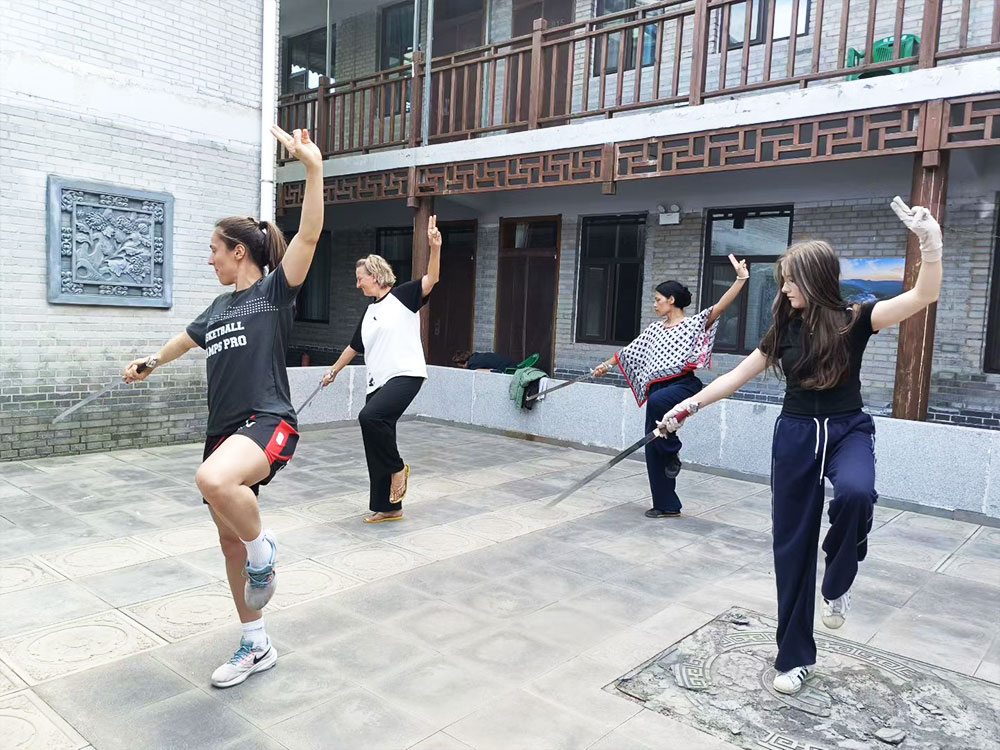
For overseas students from the United States, Europe, Australia, and elsewhere, a daily class schedule also provides something less visible: rhythm. Regular practice gives the mind fewer places to hide. A stance reveals patience. A form reveals coordination. Quiet standing reveals whether the breath is settled or hurried. These are not quick achievements. They are lessons built through consistent days.
Start With the Training Purpose Rather Than the School Name
The best school for you depends on what you hope to carry home after your stay. Some students want a short cultural experience. Others want a disciplined period of physical training. Some arrive with an interest in internal practice, while others want striking, applications, weapons, or forms.
Choose your purpose before comparing programs. This gives you a practical way to ask questions and prevents you from selecting a course based only on an attractive description.
| Primary aim | Training focus to request | Best program situation | Limit to understand |
|---|
| First experience of Chinese martial arts | Basic stance work, forms, stretching, cultural guidance, and supervised practice | Students with one week or limited holiday time | A short stay can introduce principles but cannot replace steady long-term repetition |
| Internal training and health practice | Chen style Tai Chi, breathing, standing, body alignment, and meditation | Adults seeking focused daily study at a measured pace | Internal methods require patience and should not be treated as a fast fitness product |
| Practical martial study | Footwork, distance, partner drills, conditioning, and controlled applications | Students with previous martial arts experience or a clear interest in combat practice | Partner work must be matched to ability, physical condition, and instructor supervision |
| Extended personal discipline | Daily forms, strength work, mobility, standing, weapons, and reflection | Students considering a one month or longer residential stay | Longer training asks for rest, adaptation, and a realistic approach to progress |
If your interest is still broad, begin with the school’s available disciplines rather than trying to study everything at once. SJF Kung Fu School teaches nine distinct areas, including Shaolin Quan, Tai Chi, Qi Gong, Zhan Zhuang, San Da, Qin Na, Ge Dou, Chinese Weapon, and Meditation. A beginner does not need to master all of them. A better first step is to identify one primary direction and one supporting practice.
For example, a student drawn to slower movement and body mechanics may pair Learn Tai Chi in China with standing practice. A student who wants more active partner training may ask about San Da training and how it is balanced with mobility and recovery work.
Verify Daily Class Hours Before You Apply
Do not rely on the phrase “daily training” alone. It can mean many things. Before applying, ask for a written explanation of actual daily class hours, instructor led sessions, self practice time, meals, rest periods, and the weekly schedule. This is not a demand for a rigid timetable. It is a way to understand the training culture you are entering.
The point is not to seek the longest day. A useful schedule has a purpose. Instructor guidance helps correct structure before errors become habits. Independent repetition gives the body time to absorb instruction. Rest supports concentration, joint health, and the ability to train again tomorrow.
| What to verify | Why it matters | Question to ask before applying | What the answer should clarify |
|---|
| Daily class hours | A residential Kung Fu school may describe its program broadly, while students need to know how much time is set aside for planned practice each day. | “How many scheduled training hours are there on a normal weekday?” | Whether the answer refers to formal class time, personal practice, or both. |
| Instructor led sessions | Teacher correction is where posture, timing, breathing, and technique can be adjusted safely and directly. | “Which parts of the day are taught by an instructor?” | How forms, partner drills, weapons, or internal exercises are supervised. |
| Training to rest ratios | More activity is not always better. Students need time to eat, recover, review notes, wash clothing, and settle into a sustainable rhythm. | “How is training balanced with meals and recovery?” | Where breaks occur and whether the schedule changes for individual condition or weather. |
| Class size and adaptation | A new student and an experienced practitioner may need different corrections even when sharing the same class. | “How do instructors adjust training for different levels?” | Whether students receive guidance based on experience, fitness, and training aims. |
| Weekend structure | Some students assume every day follows the same pattern, then find their expectations do not match the school routine. | “What happens on weekends or cultural visit days?” | Whether those days include training, rest, sightseeing, or optional practice. |
A clear reply to these questions is valuable because it lets you make an informed commitment. It also shows respect for the school’s teaching methods. You are not asking for entertainment every hour; you are asking how the school arranges serious study.
At SJF Kung Fu School, the 200㎡ indoor training center supports year-round practice regardless of weather. This matters for students planning daily Kung Fu classes during seasons when outdoor conditions may change. Indoor mats, wooden dummies, traditional weapons, and a meditation hall also allow different parts of training to have an appropriate place.
Look for Teaching That Connects Form, Function, and Character
Traditional martial arts are more than a catalogue of techniques. A punch without alignment loses force. A low stance without relaxed breathing becomes empty strain. A weapon form without attention to distance becomes a sequence of shapes. Daily study should connect what the student sees with what the body can gradually understand.
When reviewing a school, ask how it teaches these three connected layers:
Form: posture, foot placement, coordination, transitions, and the sequence of movements.
Function: the martial reason for a movement, including distance, direction, balance, timing, and partner awareness.
Character: respect, restraint, discipline, humility, and care for training partners.
This approach suits students who want more than a short demonstration of Chinese culture. It may not suit someone seeking only an unstructured holiday activity. Martial training asks for attention. In return, it can make ordinary actions clearer: standing in line, carrying a bag, breathing under pressure, and meeting difficulty without unnecessary tension.
Master Shen Jiangfei, Head Instructor and Founder, is a descendant of Liuhe Quan and the 11th-generation inheritor of Chen-style Tai Chi, described as the original and oldest of the five primary family styles of Tai Chi. This lineage matters because it places movement within a living teaching relationship. Students can ask not only “what does this posture look like?” but also “why does the body organize this way?”
For students considering Chen style Tai Chi, look for instruction that includes weight shifting, waist movement, rooting, relaxation, and coordinated intent. The limit is that these details cannot be fully understood from observation alone. They require repeated correction and quiet self-practice.

Use Student Stories as Evidence of Fit Rather Than Promises
Testimonials are most useful when they help you compare your own situation with a real student’s situation. They should not be treated as guarantees. Age, prior experience, physical condition, available time, and personal goals all affect what a student receives from training.
Consider these examples from SJF Kung Fu School:
Andrew Williams from the United States trained for 30 days with his son, studying Tai Chi, Zhan Zhuang, and Dao Fa. He described the time as life-changing physically, mentally, and spiritually, and planned to return the following year. This example may help a parent and adult child considering shared training. It does not mean every family will have the same experience or choose the same subjects.
Hayley Noel from the United Kingdom completed a 120-day program covering Tai Chi, Zhan Zhuang, Sword, and Broadsword. Her family wrote that she loved her time in China and that they were grateful for her experience. Her case suits students assessing a longer stay, but a four-month commitment requires careful planning for health, visas, work, and family responsibilities.
Othmane Echaouki and his wife from France attended a seven-day Chen style Tai Chi course and thanked Master Shen for taking good care of the students. Their experience is relevant for couples seeking a shorter shared program, while also showing that one week is best viewed as a focused introduction rather than final mastery.
Klaes Risbjerg Simonsen from Denmark completed 30 days of Tai Chi, Zhan Zhuang, and Broadsword. He valued focused training and said the Shifu adapted the work to his needs. This is useful evidence for intermediate students who need training adjusted to their present level.
These accounts show why it is wise to ask a school for examples that resemble your own plan. If you are a beginner, ask how beginners begin. If you are bringing a child or spouse, ask how shared training is arranged. If you plan to train for months, ask what daily discipline looks like after the first enthusiasm has settled.
Compare Course Length With the Depth of Practice You Want
Course length changes the kind of learning that is possible. A short stay can introduce forms, stance work, meditation, and cultural surroundings. A longer stay allows more time for correction, physical adaptation, and deeper familiarity with the school’s daily rhythm.
Choose one week if you want a concentrated introduction, have limited travel time, or want to test whether residential practice suits you. Review the One Week Kung Fu Course when you need a defined short-term option.
Choose one month if you want repeated daily practice and enough time to move beyond the first adjustment period. This often suits beginners who want a serious start and intermediate students who want to refine a particular discipline.
Choose three months or longer if you have a clear training purpose and can make space for a sustained routine. Longer study can support regular correction in forms, conditioning, weapons, standing practice, and meditation.
No regular class requires a minimum enrollment at SJF Kung Fu School. Group bookings require at least two students. This can be useful for a solo student who does not want to postpone training while waiting for a group to form, or for two friends who want to arrange a shared period of study.
Ask Questions That Reveal Daily Training Life
Before submitting an application, send questions that invite practical answers. A thoughtful school should be able to explain how students live, train, recover, and learn within the rhythm of the day.
Which disciplines would you recommend for my current experience and goals?
What does a normal training day include from morning until evening?
How many instructor led sessions are included in the usual schedule?
Where do students train when weather changes?
How are beginners introduced to stance work, forms, and partner exercises?
Can I combine Tai Chi, Qi Gong, meditation, or weapon training in a suitable way?
What should I prepare physically before arriving?
How do cultural visits near the Shaolin Temple fit around study and rest?
The school is located near the Shaolin Temple, with more than 30 cultural and historical attractions nearby. These places can add context to a stay in China, but they should support training rather than distract from it. A temple visit, a quiet walk, or time in the meditation hall can help a student reflect on why discipline has long been valued in Chinese martial arts.
Daily practice is not only about doing more. It is about learning to do what is before you with care: a stance held correctly, a breath released slowly, a form repeated with less tension, and a training partner treated with respect. This is the steady ground from which skill can grow.
When you are ready to discuss dates and training aims, view the one month Kung Fu Course and contact SJF Kung Fu School for respectful guidance on your study plan.



 WhatsApp