What Is Taichi
Taichi, also known as Tai Chi Chuan, is a traditional Chinese martial art that combines slow, flowing movements with deep breathing and mental focus. At SJF Kung Fu School, we teach Taichi as a complete system for developing body, mind, and spirit. Our school is led by Master Shen Jiangfei, who grew up in a martial arts family and has dedicated decades to preserving authentic teachings. Unlike commercial schools that simplify or water down the art, we maintain the full traditional forms and philosophies passed down through generations. Our international students from Germany, the UK, the United States, and many other countries have experienced the depth of our training firsthand. Balance is not just physical; it is a way of life. Physical balance is important, but so is emotional balance, mental balance, and work-life balance. Taichi is a practice of balance. It teaches you to find your center in every sense. When you are centered, you are stable, grounded, and resilient. The practice of Taichi offers a path to restoring equilibrium in a world that constantly pulls us off balance.
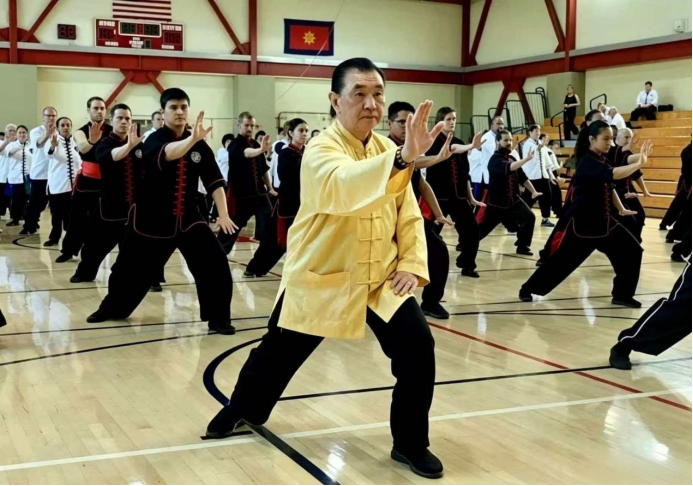
Physical Balance -- The Body's Foundation
Balance declines with age and inactivity. If you do not use your balance, you lose it. Taichi is one of the most effective ways to maintain and improve balance. It is supported by decades of research and is recommended by health organizations worldwide for fall prevention and overall stability in older adults.
Weight shifting is a core training element. Taichi constantly shifts your weight from one leg to the other. This trains your body to maintain stability in changing circumstances. You become more stable on your feet as your nervous system adapts to these continuous, controlled changes in position and weight distribution.
Single-leg stances build stability. Many Taichi postures involve standing on one leg for extended periods. This builds strength in your standing leg and trains your balance reflexes. Over time, you will notice that you can stand on one leg with greater ease and confidence than ever before.
Your reaction time improves. Balance requires rapid reactions. When you start to lose your balance, your body must respond quickly. Taichi trains these reflexes. Your responses become faster and more automatic, significantly reducing your risk of falls in daily activities.
Proprioception -- Your Body's Internal GPS
Proprioception is your sense of body position. It tells you where your body is in space. This sense declines with age and lack of use. Taichi trains proprioception by making you aware of your body position throughout every movement and transition between postures.
You learn to feel your feet on the ground. Taichi practice often focuses on the connection between your feet and the ground. You feel pressure, weight distribution, and shifts. This connection is the foundation of balance and becomes more refined with consistent practice.
You develop awareness of your joints. You become aware of the position of your ankles, knees, hips, and spine. This awareness helps you maintain proper alignment and avoid injury, both during training and in your everyday movements.
Your proprioception improves with practice. Like any skill, proprioception can be trained. The more you practice, the more sensitive you become. This sensitivity supports better balance and more efficient movement in all activities.
Core Strength and Stability
Your core supports all movement. The muscles of your abdomen, back, and pelvis are your core. A strong core is essential for good balance. Taichi strengthens your core through constant engagement, especially during slow, controlled movements and held stances.
Core strength protects your spine. A strong core stabilizes your spine and protects it from injury. Taichi movements require core engagement, which builds this stability over time and helps prevent back pain and spinal issues that commonly arise from sedentary lifestyles.
Your Dantian is your physical center. In Taichi, you focus on your Dantian, the area just below your navel. This is your center of gravity. By focusing on your Dantian, you anchor your balance and develop a stable foundation for all your movements.
Core strength supports all your activities. The core strength you build in Taichi supports everything you do: walking, lifting, sitting, and standing. You move more efficiently and with less fatigue as your body learns to recruit these stabilizing muscles automatically.
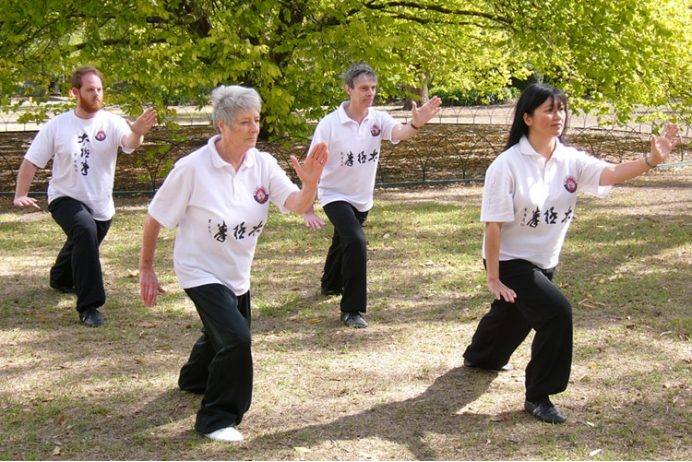
Emotional Balance -- Staying Centered Under Pressure
Emotions affect your physical stability. When you are anxious or angry, your body becomes tense. This tension affects your posture and balance. Taichi teaches you to calm your emotions and restore physical balance by bringing your awareness to your breath and body.
Your breath helps regulate your emotions. When your emotions are strong, your breath changes. Taichi teaches you to use your breath to calm your nervous system. This helps you regain emotional balance quickly and effectively, even in stressful situations.
You learn to pause before reacting. When something triggers an emotional response, Taichi gives you tools to pause. You can step back, take a breath, and choose your response rather than reacting automatically. This pause is a powerful skill that transforms how you navigate challenges.
Your emotional balance improves with practice. Over time, emotional balance becomes more natural. You are less easily triggered. You recover more quickly from emotional ups and downs. Life becomes calmer and more manageable as you develop this inner stability.
Mental Balance -- Clarity and Perspective
Mental clutter affects your stability. When your mind is full of worries, plans, and distractions, you are not fully present. This mental clutter affects your decision-making and your well-being. Taichi clears mental clutter by directing your attention to the present moment and the physical sensations of movement.
Focus trains your attention. Taichi requires focused attention. This trains your ability to concentrate. You become better at focusing on one thing at a time, which improves your mental balance and reduces the scattered thinking that leads to stress.
Perspective comes from stillness. When you step away from your thoughts and observe them, you gain perspective. You see your problems more clearly and find better solutions. Taichi gives you this stillness through its meditative quality and rhythmic flow.
Mental clarity supports better decisions. A clear mind makes better decisions. Taichi clears the fog and helps you think more clearly. You make better choices in your personal and professional life, guided by calm reflection rather than reactive impulse.
Work-Life Balance
Modern life demands balance. Many people struggle to balance work, family, and personal needs. Taichi teaches you to find balance in your life. It reminds you that balance is not a destination, but a practice that requires ongoing attention and adjustment.
Boundaries are a form of balance. Taichi teaches you to protect your energy. You learn to say no to what drains you and yes to what nourishes you. This is essential for work-life balance and for maintaining your overall well-being.
Rest is part of the practice. Taichi includes moments of rest and stillness. This teaches you the value of rest in daily life. You need rest to perform well. Rest is not lazy; it is essential for recovery and sustained performance.
You bring balance to all areas of life. The balance you develop in Taichi is not confined to practice. It carries over into your relationships, your work, and your personal life. You become a more balanced person in every aspect of your daily experience.
The Philosophy of Yin and Yang
Balance is the principle of Yin and Yang. In Chinese philosophy, all things have complementary opposites. Light and dark, fast and slow, hard and soft. Health and harmony depend on balance between these forces, neither dominating the other.
Taichi embodies Yin and Yang in movement. The slow and the fast, the soft and the hard, the stillness and the movement. Taichi balances these opposites in a continuous flow. This is why it is so effective for health and why it appeals to practitioners seeking harmony.
Balance is not a fixed point. Balance is not static. It is a dynamic equilibrium that is constantly adjusting. Life is the same. You adapt to changing circumstances and maintain your center, adjusting continuously as conditions shift.
Balance supports harmony in all things. When you are balanced, you are in harmony with yourself, with others, and with your environment. Taichi trains you to find this harmony in every moment, bringing peace and stability to all areas of your life.
Step Into a More Balanced You
Balance is not something you find once and keep forever. It is something you practice, every day, in every moment. At SJF Kung Fu School, we teach you how. Through authentic Taichi training with Master Shen Jiangfei, you will learn to stabilize your body, calm your mind, and bring equilibrium to your daily life. Choose from programs lasting one week, one month, three months, six months, or longer. You can also combine Taichi with Qigong, Zhan Zhuang, San Da, Qin Na, or Shaolin Quan to deepen your practice. Our breathtaking mountain setting provides the ideal environment for this work. Contact us today to find the program that fits your goals. Your journey to lasting balance starts here. 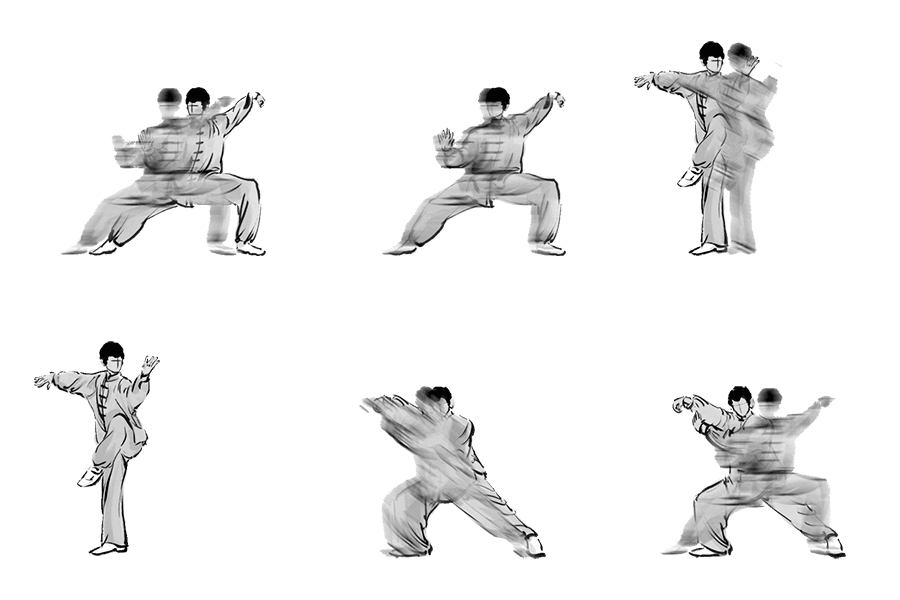




 WhatsApp