Verify a Chinese Kung Fu Center Teaching Lineage
Before paying membership fees or booking a residential course, a student should ask one question with care: who taught the instructor, and how does that teaching appear in daily practice? A Chinese Kung Fu Center may present beautiful forms, historic symbols, or impressive photographs, but lineage is best understood through clear names, active teaching, and respectful training conduct.
At SJF Kung Fu School, students can ask directly about the teaching background of Master Shen Jiangfei, the Head Instructor and Founder. He is a descendant of Liuhe Quan and the 11th-generation inheritor of Chen-style Tai Chi, the original and oldest of the five primary family styles of Tai Chi. These are specific statements that can be discussed, not vague labels placed on a brochure.
Traditional Chinese martial arts are more than a collection of movements. They include body alignment, breathing, discipline, partner awareness, martial virtue, and the quiet habit of returning to practice each day. For a beginner from the United States, Europe, Australia, or elsewhere, checking lineage does not require becoming a historian. It requires asking sensible questions and observing whether the answers are supported by the way a school teaches.
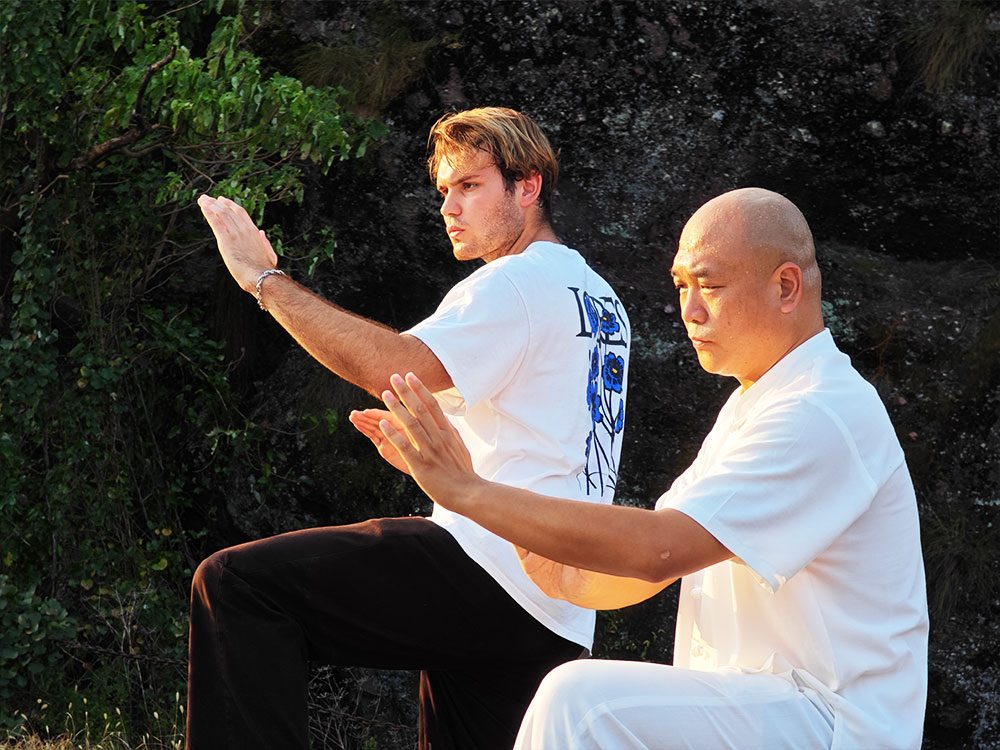
Start with named teachers, styles, and a clear teaching relationship
Conclusion: Choose a school that can name its instructor’s martial background, the styles taught, and the connection between lineage and present-day classes. This fits students who want traditional study rather than a general fitness activity. It does not mean that a long list of historical names alone proves that every lesson will suit your level.
A meaningful lineage discussion begins with plain details. Ask the instructor which system they studied, who transmitted it, what role they hold in that system, and which parts they teach personally. A respectful teacher should be able to answer without turning the conversation into ceremony or pressure.
For example, Chen-style Tai Chi is not simply slow movement. Its practice may include standing work, spiraling body mechanics, footwork, forms, partner sensitivity, and attention to the relationship between relaxation and structure. Liuhe Quan also carries its own methods and martial ideas. When an instructor identifies a style, ask what students will actually practice from that tradition.
Ask for the style name. A useful answer identifies a recognized practice such as Chen-style Tai Chi, Liuhe Quan, Shaolin Quan, San Da, Qin Na, or Chinese weapon training.
Ask who taught the instructor. A named teacher or family transmission gives you a starting point for understanding the school’s background.
Ask what is taught today. The answer should connect historical training to lessons you can attend, such as forms, standing practice, partner drills, meditation, or weapons work.
Ask who leads your sessions. This matters for short courses, group bookings, and long stays. It clarifies whether the instructor you researched will actually guide your training.
At SJF Kung Fu School, the course scope includes nine distinct areas: Shaolin Quan, San Da, Qin Na, Tai Chi, Qi Gong, Zhan Zhuang, Ge Dou, Chinese Weapon, and Meditation. A student interested in slower internal training can review the school’s Learn Tai Chi program, while someone seeking traditional striking forms can explore Shaolin Quan classes. The useful point is not to select the most impressive-sounding style. Select the practice that matches your purpose.
Separate documented lineage and active teaching from unsupported claims
Conclusion: Give greater weight to information that can be connected to a named instructor, a stated lineage, and visible teaching activity. This approach fits anyone comparing programs before sending a deposit or traveling to China. Its limit is simple: no document can replace your own assessment of communication, safety, and training atmosphere.
Many martial arts terms carry cultural weight. Words such as “traditional,” “Shaolin,” “internal,” or “master” may describe sincere study, but they do not explain how instruction is passed on. A careful student should distinguish between a stated teaching record and a broad claim that offers no names, no curriculum, and no chance to observe the work.
| What to review | Useful evidence | Why it matters | What it does not prove alone |
|---|
| Lineage statement | Named system, named teacher relationship, and stated generation where applicable | Shows where the instructor places their training within a living tradition | It does not show how clearly the instructor teaches beginners |
| Teaching history | Named instructor role, course subjects, and real student experiences | Shows that knowledge is being taught, not only described | It does not guarantee the same result for every student |
| Class observation | Clear corrections, appropriate pacing, and explanation of purpose | Shows how lineage becomes practical instruction | One class may not show the full program |
| Training environment | Space for forms, partner drills, standing work, and quiet practice | Helps you judge whether the school can support the training you seek | A good facility does not replace skilled teaching |
Master Shen Jiangfei’s stated background is specific: Liuhe Quan descendant and 11th-generation Chen-style Tai Chi inheritor. The school also identifies him as Head Instructor and Founder, with more than 20 years of experience. This matters because a student can ask focused questions: Which Chen-style principles are taught in standing practice? How is Tai Chi body structure corrected? When is a student ready to begin weapons work?
Look for the same clarity in your own inquiry. If you are interested in Zhan Zhuang practice, ask whether the school teaches posture, alignment, breathing, duration, and the purpose of stillness. If you are considering combat-oriented study, ask how San Da, Qin Na, or Ge Dou are introduced according to experience and physical condition.
This is not a demand for theatrical demonstrations. It is a request for a clear relationship between words and practice. In Chinese martial culture, Wu De, or martial virtue, includes humility, discipline, respect, and responsibility. A teacher’s willingness to explain boundaries is often more meaningful than dramatic promises.
Observe whether lineage appears in corrections, training methods, and conduct
Conclusion: Attend or ask to observe a class whenever possible, because teaching quality is visible in how an instructor corrects bodies, manages effort, and treats students. This is especially useful for first-time visitors and parents assessing a program for a young adult. It does not apply in the same way to remote inquiries, where you should request a detailed explanation of the planned curriculum instead.
Forms are often the first thing a visitor sees. Yet the deeper question is how the form is taught. Does the instructor explain where the feet bear weight? Is the waist coordinated with the hands? Are shoulders released rather than raised? Is the student shown how posture relates to balance, power, and calm attention?
In Chen-style Tai Chi, body mechanics can be studied through careful shifts of weight, rooted standing, coordinated turning, and calm breathing. In Shaolin Quan, students may work with stances, structure, rhythm, and spirit. In traditional Chinese weapons practice, the tool should not become decoration; the instructor should explain distance, handling, and control according to the student’s stage of training.
Use this class observation checklist
Watch the warm-up. Look for preparation that relates to the day’s training rather than random exertion.
Notice individual correction. A teacher should be able to see differences in mobility, coordination, and experience.
Ask about progression. Find out what a beginner studies first and what changes during a longer stay.
Observe partner work carefully. For Qin Na, San Da, or Ge Dou, check whether drills are introduced with control and clear instruction.
Listen to the explanation. The best answer connects movement with purpose, whether that purpose is health, combat skill, concentration, or cultural study.
Assess the atmosphere. Respectful focus is suitable for serious practice; intimidation and exaggerated promises are not necessary for disciplined training.
SJF Kung Fu School has a 200㎡ indoor training center with training mats, wooden dummies, traditional weapons, and a meditation hall. This is relevant for students who plan to train through changing weather or wish to combine physical study with quiet practice. It does not mean every student needs every training method. A short-term visitor may focus on Tai Chi and standing work, while a returning student may add sword or broadsword training after discussing readiness with the instructor.

Match the evidence to the length and purpose of your stay
Conclusion: Ask for a course discussion that matches your available time, training aim, and present condition. This fits students planning anything from a one-week visit to extended study. The limit is that a short course can introduce principles and establish habits, but it cannot replace the repetition gained through months of consistent practice.
Training length changes the questions you should ask. A one-week intensive course may suit a visitor who wants an introduction to traditional methods, cultural context, and daily training rhythm. A one-month course gives more time to revisit corrections and establish a practice routine. Three-month, six-month, and long-term arrangements suit students who want repeated coaching and gradual development.
| Study situation | Useful questions to ask | Suitable program direction | Practical limit |
|---|
| First visit to China | Which fundamentals can I practice independently after leaving? | One Week Kung Fu Course | Time is limited for deep correction |
| Focused personal practice | Can Tai Chi, standing work, and weapon basics be planned around my needs? | one month Kung Fu Course | Progress still depends on daily effort and prior condition |
| Extended martial arts study | How will the curriculum develop after the first foundations? | Three-Month Kung Fu Course | Longer study requires realistic time and health planning |
Real student accounts can help you assess whether a school has experience with different lengths of study. Andrew Williams from the United States trained for 30 days in Tai Chi, Zhan Zhuang, and Dao Fa with his son. He described the experience as life-changing for him physically, mentally, and spiritually, and planned to return the following year. This is one student’s account, not a promise of a particular outcome, but it shows the kind of multi-subject study possible in a month.
Hayley Noel from the United Kingdom completed a 120-day course including Tai Chi, Zhan Zhuang, Sword, and Broadsword. Her family wrote that they had been worried before her trip to China but were grateful that she had enjoyed her time so much. For prospective students traveling alone, this case suggests a useful inquiry: ask how the school supports a training-focused daily routine and communication with family. Do not assume that another student’s schedule or experience will be identical to yours.
Ask direct questions before you confirm enrollment
Conclusion: A short written inquiry is the best final check before enrollment. It helps the school understand your goals and helps you determine whether the instruction fits your expectations. This is useful for individual students and group bookings. Regular classes have no minimum enrollment, while group bookings require at least two students.
Use the questions below in an email or consultation request. They are designed to invite clear answers without treating traditional study as a simple product comparison.
Which instructor will guide my main training sessions?
What lineage and styles will be relevant to the course I am considering?
What will a beginner practice during the first days?
Can my program include Chen-style Tai Chi, Liuhe Quan training, Shaolin Quan classes, or Zhan Zhuang practice?
How are physical limitations, prior martial arts experience, and personal goals considered?
What training spaces and equipment will be available for my selected subjects?
For a group booking, how many students are required and how should the group’s aims be discussed?
What nearby cultural visits may complement training near the Shaolin Temple?
A school that teaches traditional arts should welcome thoughtful questions. The answer may be simple: a one-week visitor should begin with basic posture and forms; a longer student may add standing work, meditation, or weapon practice over time. Clear limits are a sign of care. No responsible instructor should claim that lineage alone removes the need for patience, repetition, or personal responsibility.
Master Shen has trained more than 3,000 students worldwide, and the school offers programs from one-week intensive study to long-term training. Those facts can help you identify the school’s scope, but your final choice should rest on a direct conversation about your own purpose. Some students seek better structure and health through Tai Chi. Others want practical martial study, meditation, or cultural immersion near the Shaolin Temple. Each aim deserves a suitable plan.
Ready to discuss your background and training goals? View the one month Kung Fu Course and submit your questions to SJF Kung Fu School for respectful course guidance.



 WhatsApp