Are Top Kung Fu Schools Worth a Trial Visit?
Why a School's Website Is Not Enough
Choosing where to learn martial arts in China is a significant decision. A school’s website, photos, and videos offer a glimpse into their world, but they cannot convey the feeling of the training hall, the energy of the instructor, or the spirit of the community. Enrolling based on digital marketing alone is a risk; you might arrive to find the teaching style, intensity, or environment is a poor match for your personal goals. The reality of daily training can be very different from a well-edited promotional video.
Finding the best Kung Fu school is not about finding the one with the most polished website, but the one that aligns with your spirit and objectives. As a student, you are investing more than just money; you are investing your time, your body, and your will. An in-person visit or a trial class is the only reliable way to verify that a school's philosophy and practice are right for you. It allows you to move beyond marketing claims and assess the core of the instruction firsthand. For instance, many of our students, like Pamela Paes Ezawa from Brazil, specifically chose our school for the traditional training environment and welcoming community—qualities that can only be truly felt, not just read about.
How to Evaluate a Kung Fu School with a Live Trial Class
A trial class is your most powerful evaluation tool. It allows you to become an active observer and participant, gathering information that isn't available anywhere else. Instead of just "trying out" a class, use a structured observation method to assess the key factors that determine the quality of training. This approach helps you make an informed decision based on direct experience.
Use the following checklist to guide your observation. Pay attention not just to what is being taught, but how it is being taught and the environment in which the training takes place.
Live Trial Class Observation Checklist
| Category |
What to Look For |
Why It Matters |
| The Instructor (Shifu) |
- Clarity of instruction and demonstration.
- Provides individual corrections and feedback.
- Passion for the art and for teaching.
- Adapts training for different skill levels within the class.
|
A great master is not just a skilled practitioner but also a skilled teacher. As Klaes from Denmark noted, a qualified Shifu adapts the training to a student's specific needs, which is critical for both physical and spiritual growth. |
| Safety & Environment |
- Clean, well-maintained training space.
- Proper warm-ups and cool-downs are conducted.
- Students treat each other and the space with respect.
- Emphasis on controlled technique over reckless force.
|
A safe environment is non-negotiable. It shows the school prioritizes student well-being and fosters a culture of mutual respect, which is essential for long-term practice. This is a concern for students and their families, as Hayley Noel's family from the UK expressed. |
| The Students |
- Are students focused and engaged?
- Do senior students help junior students?
- Is there a sense of camaraderie and support?
- What is the general fitness and skill level of the students?
|
The other students are your future training partners. A positive, supportive community enhances the learning experience and provides motivation. As Othmane from France mentioned, feeling well-cared for among fellow students creates the best conditions for learning. |
| The Training Itself |
- Balance between basics (stances, conditioning) and techniques.
- Explanation of the application and philosophy behind movements.
- Intensity level: Is it challenging but not overwhelming?
- Variety of training (forms, applications, conditioning, etc.).
|
The curriculum should be structured and progressive. It should build a strong foundation while keeping you engaged. Look for a depth that goes beyond just physical movements, connecting to the principles of the art. |
Lineage and Instruction: The Core of Your Training
The quality of any martial arts school is a direct reflection of its head instructor. When you learn a traditional Chinese art, you are receiving more than a set of physical techniques; you are connecting to a lineage of knowledge passed down through generations. This transmission is the heart of the practice. At SJF Kung Fu School, I, Shen Jiangfei, carry the responsibility of being a descendant of Liuhe Quan and the 11th-generation inheritor of Chen-style Learn Tai Chi in China. This is not a title, but a commitment to preserving the art in its pure form.

An instructor's lineage provides a direct link to the source of the art, ensuring the principles, philosophy, and techniques have not been diluted. When evaluating a school, ask about the master's background:
- Who did they learn from? A clear line of teachers shows a connection to an established system.
- What is their specific lineage? For example, in Tai Chi, knowing if it's Chen, Yang, Wu, or another style is fundamental. Our school focuses on Chen-style, the original and oldest of the five primary family styles.
- How long have they been teaching? Experience matters. Having taught over 3,000 students from around the world has given me deep insight into how to guide individuals from diverse backgrounds.
A verifiable lineage and experienced, certified instructors are strong indicators that you will receive high-quality, structured training. This was a key factor for students like Andrew Williams from the USA, who sought a life-changing experience for himself and his son and found it through dedicated training in Tai Chi and Zhan Zhuang.
Assessing the Training Environment and Community
The physical space and the people you train with are just as important as the instruction itself. A dedicated training environment supports focus and discipline. Our 200㎡ indoor training center ensures that practice can continue year-round, regardless of weather, providing a consistent and stable foundation for your development. This is a practical advantage that allows for uninterrupted progress.
Beyond the physical facilities, observe the school's culture. Is it a competitive gym or a supportive community? At our school, we foster an environment where students encourage one another. It's a place where you can feel at home, even if you are thousands of miles away from your own. Austin Erkl from the USA, who completed a 30-day course, praised the master for caring for his students and the lifelong memories he made. This sense of community is a recurring theme among our students.
Consider these aspects of the environment:
- Facilities: Are the facilities purpose-built for training? Look for essentials like training mats, wooden dummies, traditional weapons, and quiet spaces for Meditation.
- Accommodation: If you are traveling for training, is the accommodation conducive to rest and recovery? Students have noted our training-focused accommodation helps maintain focus.
- Location: The surroundings can greatly influence your experience. Being located near the Shaolin Temple and over 30 other cultural sites provides a unique opportunity for cultural immersion outside of training hours.
A Checklist for Your Pre-Visit Questions
Before you book a flight or even a trial class, preparing a list of questions will help you clarify if a school is a potential fit. A professional school will be happy to answer them. This initial communication is also a test of their responsiveness and willingness to help.
Here are some essential questions to ask:
- Curriculum & Styles: What specific styles of Kung Fu do you teach? (Our SJF Kung Fu School offers 9 styles, including Shaolin Quan, San Da, and Qin Na). Can a training program be customized to my interests and goals?
- Class Structure: What does a typical training day or week look like? How many hours per day are dedicated to training?
- Student Body: What is the typical student-to-instructor ratio? What is the mix of beginners versus advanced students?
- Program Flexibility: Do you offer short-term programs like a One Week Kung Fu Course as well as long-term training? What is the process for extending a stay?
- Logistics: What is included in the fees (training, accommodation, food)? What do I need to bring? Do you assist with visa invitation letters for longer stays?
- School Philosophy: What is the main focus of your school—health, self-defense, competition, or spiritual development? A clear philosophy ensures your goals will be supported.
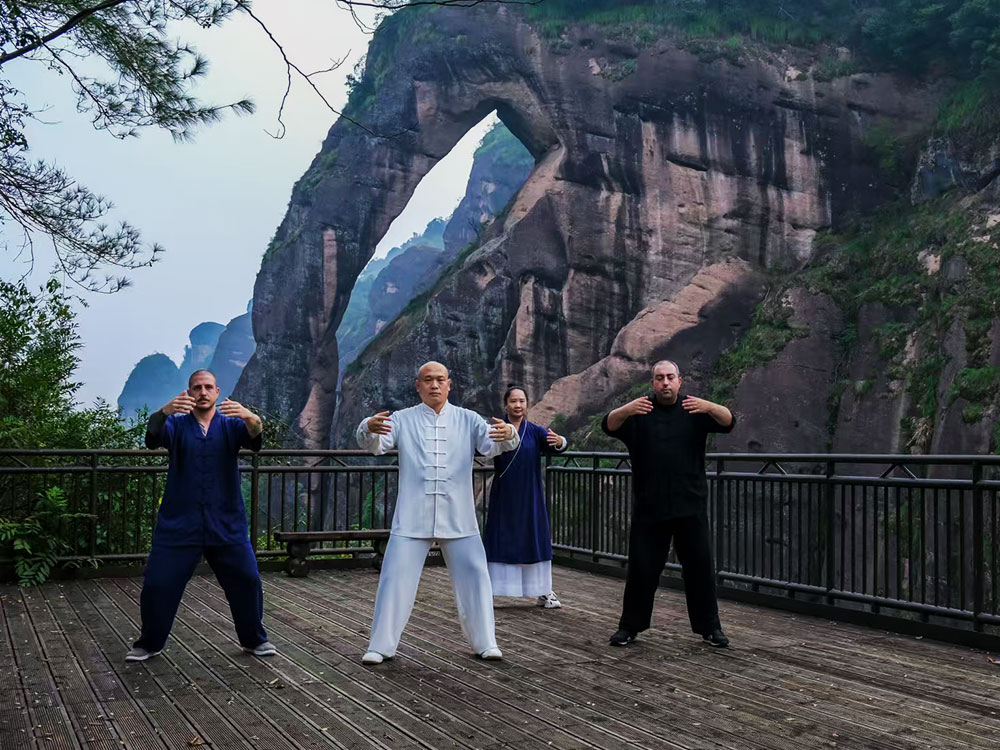
A trial visit is an investment in making the right choice. It transforms an abstract idea of a school into a tangible experience, allowing you to connect with the master, the students, and the energy of the place. It is the final, essential step in finding a school where you can truly grow.
To discuss your personal training goals and learn more about our programs, we welcome you to contact us for a direct consultation.


 WhatsApp