S J F   K U N G F U   S C H O O L

SJF KUNGFU SCHOOL

SJF Kung Fu School provides short-term and long-term authentic Chinese Kung Fu training to international students around the world.

Information

Apply Now

SJF Kung Fu School · Visa Guide

Foreigners Learning Martial Arts in China

Visa Guide & Essential Information

In recent years, China has gradually eased its policies for foreigners visiting for short‑term tourism, study, exchanges, and visits, making it much more convenient to come to China for martial arts training.

Are you planning to learn Kung Fu or train at a martial arts school in China? Understanding your nationality and training schedule is essential to effectively plan your trip. At SJF Kung Fu School, we can discuss your training arrangements, explain what support documents we can provide, and point you to official sources for visa consultations.

This guide covers four scenarios: training up to 30 days, training between 30 and 180 days, extending your stay after entry, and planning a 6‑month or 1‑year course.

visa-guide
Ministry of Foreign Affairs

Government of the People’s Republic of China

mfa.gov.cn
Visa Application Service Center

Official visa application portal

visaforchina.cn
National Immigration Administration

NIA — entry & exit administration

nia.gov.cn
Part 1

Martial Arts Training Up to 30 Days

For individuals wishing to experience Kung Fu in China within a limited timeframe, several options are available depending on your nationality, passport type, and intended activities.

Unilateral Visa‑Free Countries (Full List of 50 Countries)

China implements a unilateral visa‑free policy for ordinary passport holders from the following 50 countries, allowing entry for tourism, business, visiting relatives and friends, exchange visits, and transit for a stay not exceeding 30 days:

Europe (35)

France, Germany, Italy, Netherlands, Spain, Switzerland, Ireland, Hungary, Austria, Belgium, Luxembourg, Poland, Slovenia, Portugal, Greece, Cyprus, Slovakia, Norway, Finland, Denmark, Iceland, Andorra, Monaco, Liechtenstein, Bulgaria, Romania, Croatia, Montenegro, North Macedonia, Malta, Estonia, Latvia, Russia, Sweden, United Kingdom.

Oceania (2)

Australia, New Zealand.

Asia (7)

Brunei, South Korea, Japan, Saudi Arabia, Oman, Kuwait, Bahrain.

Americas (6)

Brazil, Argentina, Chile, Peru, Uruguay, Canada.

Policy Validity Period: The visa‑free policy for Brunei has no set expiration date; for Russia, it is effective until December 31, 2027; and for the remaining 48 countries, it is effective until December 31, 2026 (subject to future adjustments or extensions). Before traveling, please confirm the latest list via the official websites of China’s Ministry of Foreign Affairs (mfa.gov.cn) or the National Immigration Administration (nia.gov.cn).

Calculation of Stay Period: The 30‑day stay period starts from 00:00 on the day following entry and consists of 30 natural calendar days.

Eligible citizens under this policy can enter China directly with their passport if their training duration is within 30 days.

Mutual Visa‑Exemption Agreement Countries

China has mutual visa‑exemption agreements with the following countries. Citizens of these countries traveling to China for short‑term visits can do so without a visa. Most agreements specify a single stay limit not exceeding 30 days. The precise allowable stay and cumulative limits depend on bilateral agreements and the border control stamp at entry. Please verify with the relevant Chinese Embassy or Consulate in your region prior to departure.

Key Countries Include: San Marino, Seychelles, Mauritius, Bahamas, Fiji, Grenada, Ecuador, Tonga, Serbia, Barbados, United Arab Emirates, Bosnia and Herzegovina, Belarus, Qatar, Armenia, Suriname, Maldives, Dominica, Albania, Kazakhstan, Singapore, Thailand, Antigua and Barbuda, Georgia, Solomon Islands, Samoa, Uzbekistan, Azerbaijan, Malaysia.

Note: Ecuador operates under a non‑fully reciprocal mutual exemption arrangement. Specific document and stay requirements should be confirmed with the relevant Chinese Embassy or Consulate.

Students from Non‑Visa‑Exempt Countries

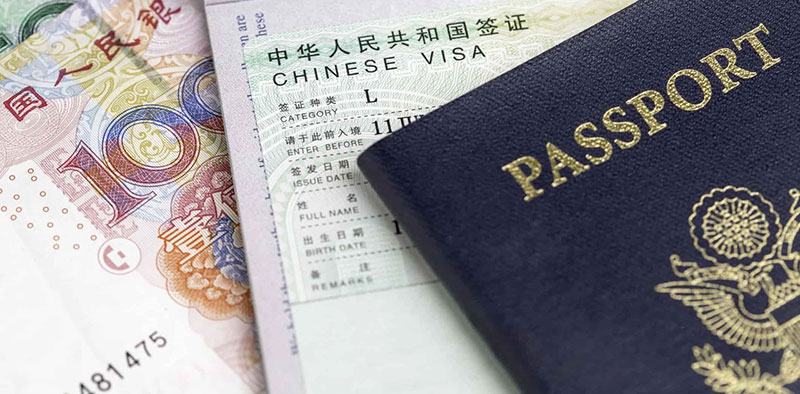
If your passport is not listed in the categories above, you must apply for an appropriate visa prior to departure. Martial arts training in China typically corresponds to an F Visa (Exchange/Visit Visa).

At SJF Kung Fu School, we can discuss your training plan and determine what invitation letters or supporting documents we can provide. For detailed visa categories and document requirements, please visit the Chinese Visa Application Service Center (visaforchina.cn) and confirm with the Chinese Embassy or Consulate serving your area.

Part 2

Training Duration Between 30 and 180 Days

For individuals planning to train for more than 30 days, entry arrangements should be carefully planned prior to booking your trip.

Option 1: Apply for an F Visa Before Travel

Apply for an F Visa through the appropriate Chinese Embassy or Consulate. The core document required is an invitation letter issued by an inviting entity in China. This letter must include:

  • Personal information of the invitee: Full name, gender, date of birth, passport number, etc.
  • Details of the visit: Purpose of visit, arrival and departure dates, locations to be visited, source of funding.
  • Inviting entity information: Name, phone number, address, official seal, and the signature of the legal representative or inviter.

Option 2: Apply for an Extension or Stay Permit After Entry

If you wish to extend your stay after studying in China for a period, the application path depends on whether you entered with a visa or under a visa‑free policy. The approval criteria and maximum limits differ significantly:

  • For Students Entering with a Visa (Visa Extension): Apply for a visa extension at the local exit‑entry administration authority of the public security bureau before your authorized stay expires. Under current regulations, an extension is valid only for the current entry, and the cumulative extended stay cannot exceed the original duration of stay specified on the visa. For example: If your visa allows a 60‑day stay at entry, the total stay after extension cannot exceed 60 days; if it specifies 30 days, the total stay cannot exceed 30 days.
  • For Students Entering Visa‑Free (Stay Permit): Foreigners who enter under a visa‑free policy and need to remain in China for legitimate and justified reasons must apply for a Stay Permit (停留证件) rather than a visa extension. Approval and the duration granted are decided on a case‑by‑case basis by the immigration authority based on your circumstances, supporting documents, and applicable rules. Approval is not guaranteed, and the original visa‑free period is not automatically applied as a limit.

Applications are reviewed individually based on circumstances, supporting documents, and applicable regulations; approval is not guaranteed. Official guidance can be found at the National Immigration Administration website (nia.gov.cn).

Part 3

Practical Options If You Need Additional Time in China

Option 1: Apply for a Stay Permit or Extension

Eligible visa‑free visitors may be issued a Stay Permit by the local exit‑entry administration; visa holders may also qualify for a visa extension depending on the terms of their original visa. Authorities will evaluate individual circumstances and documentation. It should not be automatically assumed that an additional 30 days will be granted, nor should it be assumed that identical extension rules apply to all visitors.

Option 2: Traveling to Hong Kong and Re‑entering Mainland China

In certain cases, traveling from Mainland China to Hong Kong and returning may reset a new visa‑free stay period. However, this is not a foolproof method and is not recommended as a standard plan. You must satisfy entry requirements for both Hong Kong and Mainland China. Nationality, passport type, prior stay history, and intended activities will all influence border decisions. Re‑entry is not guaranteed. You should never rely on this approach without verifying eligibility in advance or use it as a basis for scheduling your travel. Always check requirements beforehand and prepare a contingency plan.

Part 4

Long‑Term Martial Arts Training (6 Months or 1 Year)

For students intending to study Kung Fu in China for 6 months or a full year, entry arrangements must be meticulously prepared before departure.

Critical Requirement

The initial duration of stay on your F Visa should ideally be applied for up to 180 days. While an F Visa extension can extend your stay by up to 180 days, the extension period cannot exceed the initial stay duration indicated on your visa. If your initial visa grants only a 30‑day or 60‑day stay, subsequent extensions cannot legally cover a 6‑month or 1‑year study period.

Practical Steps

When applying for an F Visa, ensure that your invitation letter and application explicitly support a 180‑day training plan. After arriving in China, apply for an extension of up to 180 days at the local exit‑entry authority before your initial 180‑day limit expires, presenting a certification letter from your host institution. Upon approval, your total combined stay can approach one year. Stays exceeding one year generally require re‑applying for a visa from outside Mainland China.

What is a TE Invitation Letter?

A TE Invitation Letter is a specific official invitation letter required by certain Chinese visa procedures, issued by a Chinese inviting institution through the local Foreign Affairs Office.

Not all nationalities require a TE Invitation Letter. Before preparing documents or paying any fees, always confirm with the Chinese Embassy or Consulate handling your application whether a TE letter is mandatory for you.

Required documents vary by case but typically include:

  • Valid passport and personal details
  • Intended arrival and departure dates
  • Description of the training program
  • Proof of employment (if applicable)
  • Certificate of non‑criminal record/police clearance (if applicable)
  • Any additional documents requested by relevant authorities

Can SJF Kung Fu School assist with a TE Invitation Letter?

We can discuss your training program and clarify what invitation letters or supporting documents SJF Kung Fu School can provide. If your situation requires a TE Invitation Letter, we will discuss the feasibility, requirements, fees, and payment terms before initiating the process. Please note that an invitation letter does not guarantee visa approval; final decisions rest solely with the Chinese authorities.

Can you stay for six months or a year?

This depends on whether your entry arrangements are approved. Certain visa categories permit extensions, but approval durations and conditions vary. Visa validity is not equal to the maximum allowable duration of stay. If you plan to train for 6 months or a year, contact a Chinese Embassy or Consulate with your detailed training itinerary to confirm the required visa category, extension possibilities, and specific document requirements. Avoid making long‑term plans based solely on visa‑free entry or assumed extensions.

Final

Preparing for Your Kung Fu Training in China

Studying Kung Fu in China is a rewarding opportunity to build skills and immerse yourself in traditional Chinese martial arts culture. Proper planning ensures you avoid unnecessary travel costs and entry complications.

Visa policies are subject to change, and all visa approvals, stay permits, and extensions remain subject to the regulations and discretion of Chinese authorities.

When a visa is required, it is recommended to start preparations approximately two months prior to your planned departure date. The school needs time to issue and mail your invitation documents, and you will need time to complete your application, schedule appointments, and address any requests for supplementary materials.

FAQ

Frequently Asked Questions

Can foreigners travel to China to learn Kung Fu?
Yes. However, the entry route depends on your nationality, duration of stay, and the primary purpose of your trip. If structured training is your main purpose, you should apply for an F Visa. Visa‑free entry is generally appropriate only if short‑term Kung Fu training is an incidental experience within a genuine tourism trip.
Can I learn Kung Fu visa‑free in China for 30 days?
If your travel is primarily for tourism and the martial arts experience is an incidental activity, and you meet the criteria for a visa‑free country, it is practical and feasible. However, your declared entry purpose must align with your actual itinerary; if training is your primary objective, you should not rely on visa‑free status.
If my visa‑free stay allowance is 30 days, can I stay for 60 days?
No, you cannot automatically extend your stay. You may apply for a Stay Permit or an extension, but approval is not guaranteed, and the granted duration will not exceed the period allowed upon your initial entry.
Can I travel to Hong Kong and return to Mainland China?
Potentially yes, but you must satisfy entry requirements for both Hong Kong and Mainland China simultaneously. Re‑entry is not guaranteed, and this should not be treated as a reliable or guaranteed solution.
Does a TE Invitation Letter guarantee visa approval?
No. It is a supporting document, and final authority rests entirely with Chinese diplomatic missions and immigration officials.
How far in advance should I apply for a visa if needed?
It is best to start the process about two months before your planned departure. Chinese Visa Application Service Centers generally recommend submitting applications one month in advance, but no earlier than three months prior, as visa entry validity is typically three months. A two‑month window provides a safe buffer for the school to issue documents and for you to handle application steps and potential document requests.
WhatsApp