Compare Kung Fu Retreats in China by Daily Training Load
Beyond the Brochure: What Defines a Meaningful Kung Fu Retreat?
Many prospective students believe all martial arts programs in China offer a similar path. They see photos of temples, training halls, and disciplined students, and assume the experience will be the same everywhere. The reality is quite different. The choice you make is not just between schools, but between philosophies: a cultural tour with some martial arts practice, or a deep, immersive training experience that changes you from the inside out.
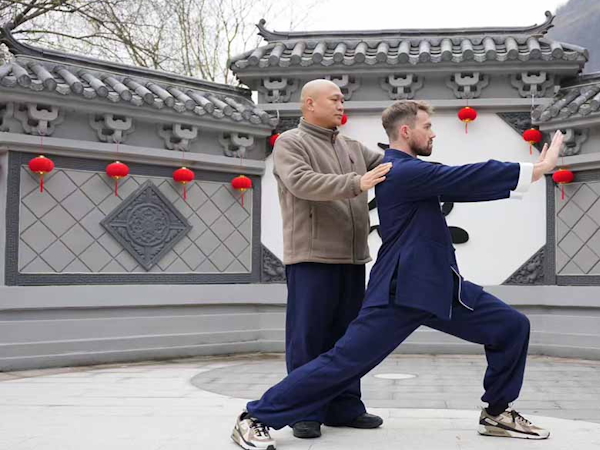
A true Kung Fu retreat in China is measured not by the number of tourist sites you visit, but by the quality and quantity of time you spend with a master. It is defined by the lineage of the teachings and the dedication of the community. At our SJF Kung Fu School, we believe the path to skill is paved with focused, consistent practice under a qualified Shifu. My life's work is built upon this principle, as an 11th-generation inheritor of Chen-style Tai Chi and a descendant of Liuhe Quan. The goal is not to show you Kung Fu, but to help you embody it.
When you compare retreats, the most telling metric is often the daily training load. How many hours each day are you actively learning, practicing, and receiving correction from an instructor? This single factor often separates a superficial experience from a transformative one. It reflects the school's core purpose: tourism or transmission of knowledge.
Calculating True Value: A Cost-Per-Training-Hour Analysis
A program's listed price can be misleading. A lower upfront cost might conceal fewer training hours, turning your dedicated study trip into an expensive holiday. To understand the real investment in your skills, it is helpful to analyze the cost per coached training hour. This requires looking past the total fee and breaking down what your time and money are actually for.
Let's compare two hypothetical one-week programs to illustrate this principle. We are not quoting exact fees here, but demonstrating a method for you to evaluate any program you consider.
Deconstructing a Retreat's Cost
To make a fair comparison, you must account for all included and excluded costs relative to the hours of direct instruction.
Confirmed Costs (Usually Included): Tuition for training, accommodation (lodging), and meals provided by the school.
Estimated Costs (Variable): Your airfare, visa fees, and personal spending money for souvenirs or extra snacks.
Value-Added Inclusions: Cultural excursions, translation services, and access to facilities like our 200㎡ indoor training center, which ensures your practice is never interrupted by weather.
The Critical Variable: The total number of coached training hours.
Here is a sample breakdown comparing a "tourist-focused" retreat with an "immersion-focused" one:
| Metric | Retreat A (Tourist-Focused) | Retreat B (Immersion-Focused) |
|---|
| Total Program Fee (7 Days) | $1000 | $900 |
| Training Days | 5 (2 days are full-day excursions) | 6 (1 rest/local culture day) |
| Daily Training Hours | 4 hours | 6 hours |
| Total Coached Hours | 5 days x 4 hours = 20 hours | 6 days x 6 hours = 36 hours |
| Effective Cost Per Training Hour | $1000 / 20 hours = $50/hour | $900 / 36 hours = $25/hour |
| Focus | Sightseeing with light training. | Deep training with cultural immersion. |
As you can see, the program that appeared more expensive initially (Retreat A) offers significantly less training value. For a student whose primary goal is to learn martial arts, Retreat B provides nearly double the instruction for a lower effective cost. This is the difference between being a spectator and a practitioner.

Matching Training Intensity to Your Personal Goals
The right amount of training depends entirely on what you hope to achieve. There is no single "best" schedule, only the one that is best for you. Before choosing a program, it is important to be honest about your intentions. We have trained over 3,000 students from around the world, and we find they generally fall into one of three categories.
A Buyer's Decision Checklist: Which Student Are You?
The Curious Explorer (1-2 Weeks):
Your goal is a rich cultural experience combined with an introduction to Chinese martial arts. You want to feel the energy of China, learn some foundational movements, and return home with new perspectives. A program with 4-5 hours of daily training, like our One Week Kung Fu Course, provides a perfect balance of discipline and discovery. Pamela Paes Ezawa from Brazil found her 7-day Chen-style Tai Chi course to be a wonderful immersion into a traditional training environment and the welcoming Shifu community.
The Dedicated Student (1-6 Months):
Your objective is tangible skill development. You want to build muscle memory, understand a system deeply, and see measurable progress. For you, a higher training load of 6+ hours per day is essential. This consistent effort is what transforms theory into ability. Andrew Williams from the USA, who spent 30 days here with his son, called his training in Tai Chi and Zhan Zhuang a "life-changing experience" that strengthened him physically and mentally. Similarly, Hayley Noel from the UK completed a 120-day course and had, in her family's words, "an awesome time," demonstrating the power of long-term commitment.
The Specialist (Variable Duration):
You may already have a martial arts background or a specific interest in an internal art like Tai Chi or Qi Gong. Your priority is not just hours, but the quality and lineage of the instruction. You are seeking a master who can transmit the subtle principles of an art. Othmane Echaouki and his wife came from France for a 7-day Chen-style Tai Chi course specifically to learn from a qualified source, later telling us, "It made us feel we were in the best conditions." This path is about finding the right teacher to guide your focused study.
Common Mistakes When Choosing a Kung Fu Program in China
Over the years, we have seen many students arrive after having less-than-ideal experiences elsewhere. Many common mistakes can be avoided by asking the right questions and looking beyond the surface-level marketing.
1. Focusing Only on the All-Inclusive Price.As our analysis showed, the sticker price is not the whole story. A cheap program with little training is not a good value. A true investment is one that maximizes your learning. Ask for a detailed daily schedule to see how much time is dedicated to instruction versus travel or unsupervised free time.
2. Choosing a "Resort" Over a School.Some places are designed to feel like a vacation resort that happens to offer Kung Fu. This can be comfortable, but it often lacks the discipline and focus required for deep learning. Klaes Risbjerg Simonsen from Denmark chose SJF precisely because he wanted an "authentic and focused experience — not a touristy resort." From his first day, he felt he was in the right place to grow physically and spiritually, praising the Shifu for adapting the training to his specific needs.

3. Underestimating the Adjustment Period.Training in China is a physical, mental, and cultural adjustment. It can be challenging. Some students expect it to be easy from day one and become discouraged. Austin Erkl from the USA was honest about his 30-day experience: "I didn't love it at first, but after adjusting, he had a great time." He grew to appreciate the accommodation, the food, and the master who "cares for his students." Be prepared for a challenge; this is where the most significant growth happens.
4. Ignoring the Importance of Community.You are not just joining a class; you are joining a community. A supportive environment with a caring Shifu and fellow students can make all the difference, especially during a long-term stay. This shared purpose helps you stay motivated and makes the experience more rewarding. The bonds formed during hard training often last a lifetime.
Choosing the right program is the first step in a much larger personal endeavor. By focusing on the value of your training time and the quality of instruction, you can ensure your time in China is one of profound growth and accomplishment.
If you are ready to begin your training, we invite you to explore our programs and contact us to discuss your goals.



 WhatsApp