Compare Kung Fu Summer Camp Schedules Before Booking
Choosing Your Path: Why the Camp Schedule Matters More Than You Think
Selecting a training program in China is a significant decision. The greatest risk isn't choosing the wrong school, but choosing the wrong schedule—one that mismatches your personal goals for skill acquisition and cultural immersion. A schedule that looks good on paper might offer more downtime than training, or it may lack the structure needed for deep learning. For a truly formative experience, you must look beyond the pickup times and activity lists to understand how the daily structure supports your development as a martial artist.
At our [Chinese Kung Fu School](https://sjfkungfuschool.com/), we have guided over 3,000 students from around the world since 2009. We have seen firsthand how a well-designed schedule can be the difference between a simple holiday and a life-changing experience. The right timetable provides a balance of rigorous physical practice, internal cultivation, and cultural absorption. It respects the body's need for rest and the mind's need for reflection. This guide will help you compare different camp formats to make an informed choice that aligns with your aspirations.
Comparing Camp Formats: Immersion vs. Introduction
Not all programs are structured for the same outcome. Some are introductory experiences, while others are designed for deep, focused study. Understanding the differences in training time and content is the first step in aligning a camp with your or your child's developmental goals. Here is a breakdown of common formats and what to expect from each.
| Camp Format |
Primary Focus |
Typical Daily Structure |
Best Suited For |
| Half-Day / Introductory |
Basic techniques and cultural fun. |
2-3 hours of focused training, often in the morning. The rest of the day includes light activities, cultural excursions, or free time. Focus is on foundational stances, basic forms, and fun applications. |
Beginners, families with young children, or those wanting to combine a short martial arts experience with tourism. A good "taster" for Chinese martial arts. |
| Full-Day / Immersive |
Skill development and physical conditioning. |
4-6 hours of structured training per day, split into morning and afternoon sessions. Includes form work, conditioning, application drills (like San Da), and internal arts (like Qi Gong). |
Serious students of all levels who want to make measurable progress in a short time. This is the standard for most dedicated martial arts schools. |
| Extended / Full Immersion |
Deep study, internal arts, and martial philosophy. |
6+ hours of training, including early morning Qi Gong or meditation, intensive daytime sessions, and often an evening session for review, theory, or meditation. The entire day is structured around the life of a martial artist. |
Dedicated practitioners, those preparing for competitions, or individuals seeking a profound physical, mental, and spiritual transformation. Often part of longer programs like our one month Kung Fu Course. |
As you can see, the "best" format depends entirely on your objectives. An introductory schedule may be frustrating for a student eager to progress quickly, while a full-immersion schedule could be overwhelming for a casual learner.
A Checklist for Evaluating a Daily Training Schedule
Once you have identified the right format, the next step is to examine the content of the daily schedule. A quality program is more than just a list of classes; it is a carefully constructed system for building skill, strength, and understanding. Use this checklist to evaluate the substance of any prospective training plan.
-
Balance of Internal and External Arts: Does the schedule include both hard, physical styles like Shaolin Quan and internal, meditative practices like Tai Chi, Qi Gong, or Zhan Zhuang? Proper development requires both. External training builds the body, while internal training cultivates energy and focus.
-
Dedicated Time for Applications: Learning forms is only one part of martial arts. Does the schedule include specific time for practicing applications, such as sparring (San Da), joint locks (Qin Na), or weapons? Without this, your knowledge remains theoretical.
-
Structured Rest and Recovery: Overtraining is a real danger. A good schedule incorporates adequate breaks between sessions and a full night's rest. This is when the body repairs itself and learning is consolidated.
-
Cultural and Philosophical Components: Is there time set aside for learning about martial ethics (Wu De), Chinese philosophy, or related cultural practices? This context is what separates martial arts from simple fighting. Our school is located near 30+ cultural and historical attractions, which we integrate into our longer programs.
-
Access to Qualified Instruction: The schedule should facilitate personal feedback. At SJF Kung Fu School, all classes are led by Certified Shaolin Kung Fu Instructors under my direct supervision. This ensures the transmission of authentic knowledge.
-
Adaptability: Can the training be adapted to your specific needs and level? Klaes Risbjerg Simonsen from Denmark, who completed a 30-day course with us, praised how the Shifu "was highly qualified and quick to see my specific needs and adapt the training." This personalized approach is a hallmark of a great school.
The Importance of Lineage and Environment
The schedule is the "what," but the instructor and the environment are the "how" and "why." The effectiveness of any training plan is magnified by the quality of the teaching and the focus of the training environment. I am Master Shen Jiangfei, a descendant of Liuhe Quan and the 11th-generation inheritor of Chen-style Tai Chi. This lineage is not just a title; it is a direct line of transmission, ensuring the methods you learn are authentic and have been tested for centuries.
A dedicated training environment is also essential. Our 200㎡ indoor training center allows for consistent, focused practice year-round, regardless of the weather. This commitment to providing a professional space is crucial for student progress. Pamela Paes Ezawa from Brazil highlighted this after her 7-day course, noting her love for the "authentic, traditional training environment" and the "training-focused accommodation." When the entire environment is built around learning, your progress accelerates.
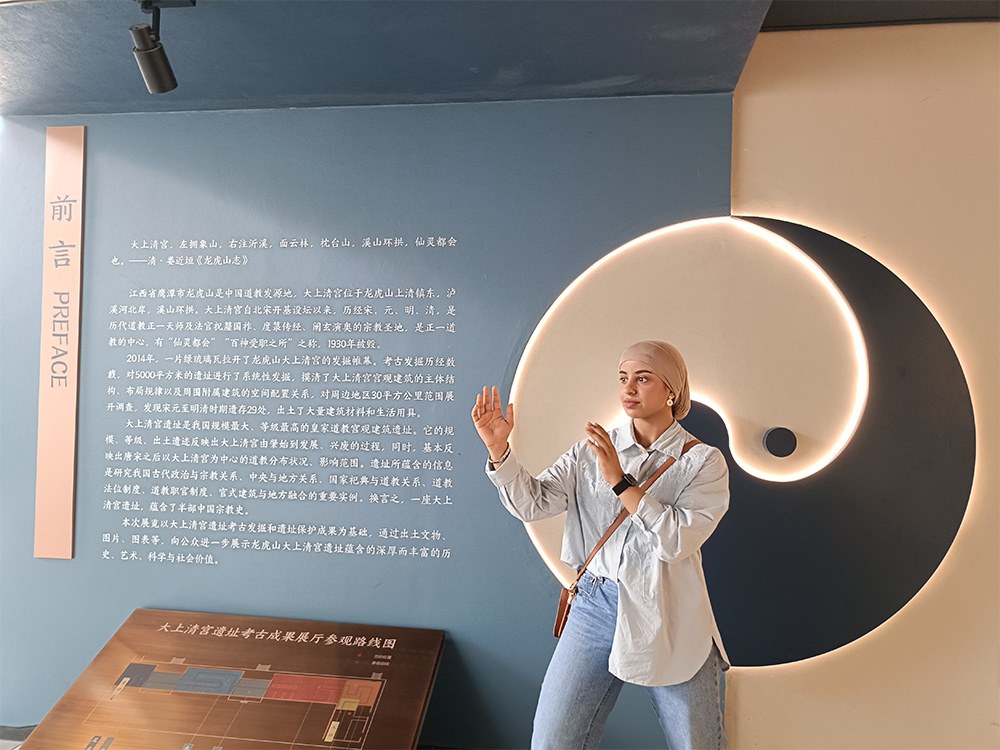
This is why students like Klaes from Denmark choose us. He specifically wanted an "authentic and focused experience — not a touristy resort." From his first day, he knew he was in the right place to grow physically and spiritually.
Adapting to an Immersive Schedule: Real Student Stories
Committing to an immersive schedule, especially far from home, can be an adjustment. It requires discipline and an open mind. However, the rewards are immense.
For some, the adjustment period is part of the process. Austin Erkl from the USA, who completed a 30-day course, was honest in his feedback: "I'm not going to lie, the first week was not great for me... After that first week though, I had a great time." He grew to appreciate the structure, the food, and the community, concluding, "The master is a great guy that cares for his students. I made some lifelong memories here." His experience shows that persistence through the initial challenge leads to great rewards.
For others, the experience is immediately transformative. Andrew Williams from the USA described his 30 days of training with his son as a "life-changing experience that strengthened him physically, mentally, and spiritually." He plans to return, demonstrating the lasting impact of dedicated training. This is a common sentiment. Othmane Echaouki from France, after a 7-day course with his wife, thanked us for making them "feel we were in the best conditions."
Parents often worry about sending their children so far away. Hayley Noel from the UK came for a 120-day course. Her family wrote to me afterward: “We were really worried when she flew out that way to China, but she loved it so much. She has had an awesome time, and we are so grateful to you.” Hayley's experience, and her family's peace of mind, show that a supportive and well-structured environment makes all the difference.
These stories from students who have completed our programs highlight a common theme: a structured, immersive schedule, led by a caring master in a dedicated environment, provides the foundation for profound personal growth.
To find a program that truly fits your martial arts and cultural goals, please contact us to discuss your training options.



 WhatsApp