Compare Qi Gong Training Sites in China
Choose the Training Setting Before You Commit to a Program
Before confirming Qi Gong Training China, many overseas learners focus on the name of a practice and overlook the setting in which it will be taught. That can lead to a poor match: a learner seeking quiet standing practice may arrive at a combat-focused school, while someone hoping to connect Qi Gong with martial movement may choose a retreat with little physical training.
The better question is simple: what do you want your daily practice to develop? Some people want regulated breathing, posture, and stillness. Others want Qi Gong as part of a wider martial arts education that includes forms, conditioning, weapons, meditation, or partner work. A third group wants a cultural stay with gentle daily movement and time for reflection.
At SJF Kung Fu School, Qi Gong is offered within a traditional martial arts training environment near the Shaolin Temple. This suits learners who want to study breath, alignment, attention, and internal discipline alongside related practices such as Tai Chi, standing meditation, and Shaolin-based training. It may not be the best match for someone who wants a silent retreat with no martial arts context.
School name: SJF Kung Fu School. The school accepts individual learners without a minimum enrollment requirement for regular classes. Group bookings require at least two students. This distinction matters for solo travelers who do not want to wait until a group is formed before planning their stay.
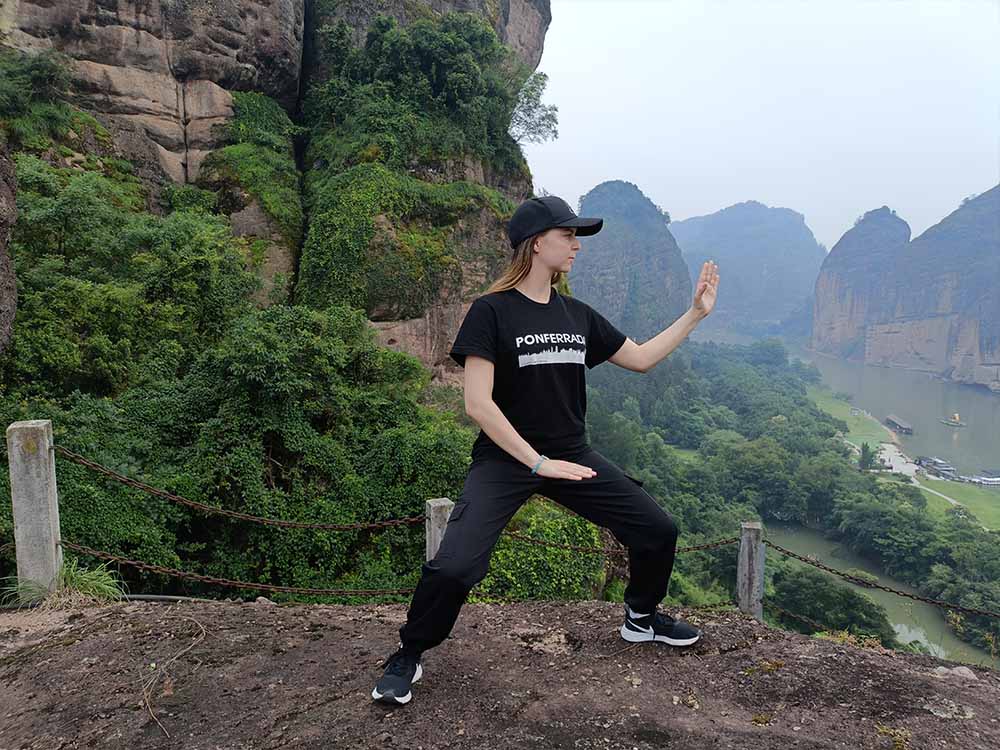
Start with your real purpose
Choose a martial arts school if you want Qi Gong connected to movement quality, stance work, forms, self-defense practice, or traditional weapons. This fits learners who enjoy structured physical training. It does not suit those who need a low-activity wellness retreat.
Choose a mountain or temple-area program if setting, heritage, walking, and contemplative practice are central to your decision. This fits learners who value place as part of study. It may not fit those who need a highly individualized technical syllabus.
Choose a retreat-style program if your priority is rest, gentle movement, and quiet reflection. This fits short stays and beginners who prefer a slower rhythm. It may offer less exposure to martial body mechanics or long-form practice.
A useful inquiry should therefore state your intended training length, prior experience, physical limitations, and whether you want Qi Gong alone or combined with other arts. These details allow a school to discuss fit without making promises that do not match your actual needs.
Location Comparison: Wudang, Shaolin, and Retreat-Style Programs
No single destination is right for every learner. Wudang, Shaolin-area schools, and retreat-style centers each offer a different frame for practice. The comparison below is designed for international students who have already decided to study in China and need to decide which type of setting deserves an inquiry.
| Program location type | Typical training focus | Setting and daily feeling | International-student fit | Best for | Consider another option when |
|---|
| Wudang-area programs | Often associated with Taoist cultural study, Tai Chi, Qi Gong, slow forms, and meditation. | Mountain-oriented surroundings and a contemplative cultural atmosphere. | Suitable for learners who want slow practice and an interest in Taoist thought to shape their stay. | Students whose first goal is calm movement, breathing practice, and reflective study. | You also want regular exposure to Shaolin-based forms, combat training, or a broader martial arts schedule. |
| Shaolin-area programs | Qi Gong may be studied alongside Shaolin Quan, stance training, conditioning, weapons, Tai Chi, and meditation. | A martial arts setting near Shaolin cultural sites, where training can be linked to local history and practice traditions. | Suitable for beginners and experienced martial artists who want clear physical structure and varied training options. | Learners who see Qi Gong as part of Wu De, body mechanics, discipline, and martial study. | You want only gentle wellness sessions or require a retreat with minimal physical training. |
| Retreat-style programs | Gentle Qi Gong, breathing, meditation, rest, and personal reflection. | Usually quieter and less focused on formal martial arts progression. | Suitable for visitors who want a softer pace, especially during a short stay. | People seeking rest and a simple daily practice rather than a martial curriculum. | You want correction in stances, forms, weapons, or partner-based martial skills. |
Clear recommendation: choose a Shaolin-area school if your aim is to understand Qi Gong through the body as well as the breath. The reason is that standing, stepping, coordination, and form work can give daily context to relaxation and structure. This is particularly suitable for learners who want to pair Qi Gong with Zhan Zhuang, Tai Chi, or Shaolin Quan. It does not mean that a Shaolin-area program is automatically better; a retreat setting may be more appropriate for a person seeking rest rather than training intensity.
Location alone should not decide your choice. Ask what is actually taught, who teaches it, whether practice can be adapted to your condition, and how much of the day is devoted to class rather than sightseeing. A mountain view can be meaningful, but it is not a substitute for careful instruction.
What SJF Kung Fu School Can Support—and What You Should Confirm
SJF Kung Fu School is a registered Kung Fu school offering short-term and long-term study for international learners. Its available disciplines include Shaolin Quan, San Da, Qin Na, Tai Chi, Qi Gong, Zhan Zhuang, Ge Dou, Chinese Weapon training, and Meditation. This range is useful when a learner does not want Qi Gong isolated from its related martial traditions.
Master Shen Jiangfei, Head Instructor and Founder, is a descendant of Liuhe Quan and the 11th-generation inheritor of Chen-style Tai Chi. Chen-style Tai Chi is identified as the original and oldest of the five primary family styles of Tai Chi. For learners considering internal practice, this stated lineage gives a meaningful basis for asking how Chen-style principles, standing work, breath, and movement are presented during training.
The school has a 200㎡ indoor training center with training mats, wooden dummies, traditional weapons, and a meditation hall. For a visitor planning a fixed travel date, indoor space has practical value: training can continue regardless of weather. This is especially relevant for a one-week or one-month stay when each scheduled day matters. It does not remove the need to ask about the expected daily schedule, rest periods, or the balance between indoor practice and visits to nearby sites.
Match the program length to your learning question
| Training length | Good use of the time | Who it fits | Limit to remember |
|---|
| One week | Experience basic posture, breathing, simple Qi Gong routines, standing practice, and the school environment. | First-time visitors or travelers adding training to a wider China visit. | A week can introduce methods, but it is a short period for refining habits. |
| One month | Build a steadier practice rhythm and combine Qi Gong with Tai Chi, Zhan Zhuang, or a weapon form where appropriate. | Beginners wanting daily repetition and returning martial artists seeking focused study. | Progress depends on health, prior movement habits, attendance, and the learner’s attention outside class. |
| Three months or longer | Spend more time on fundamentals, corrections, forms, and the relation between stillness and movement. | Learners able to make training a central part of their stay. | Longer enrollment is not necessary for every goal; it should match available time and physical readiness. |
For a short stay, the One Week Kung Fu Course can be a sensible starting point for someone who wants to experience the teaching environment before considering longer training. For students planning a more settled practice period, a one month Kung Fu Course gives more time for repetition and correction. Neither program should be treated as a medical service or a guaranteed outcome; Qi Gong practice should be approached within each learner’s physical limits.

Use Lineage, Teaching Scope, and Student Evidence Carefully
When comparing sites, it is reasonable to ask about lineage, but lineage should not become a decorative label. Its value lies in whether it helps you understand what is being taught: body alignment, methods of relaxation, traditional forms, martial ethics, and the relationship between teacher and student.
Wu De, often described as martial virtue, gives useful direction here. A serious training environment should encourage humility, respect, patience, self-control, and responsibility for one’s conduct. These qualities matter in Qi Gong because the practice asks for sustained attention. The goal is not dramatic sensation. It is learning to stand, breathe, move, and listen with greater care.
SJF Kung Fu School has trained more than 3,000 students worldwide. That number does not guarantee that one school suits every person, but it shows that the school has experience receiving international learners across short and extended programs.
Specific student accounts also offer a more grounded view than broad promotional claims. Andrew Williams from the United States trained Tai Chi, Zhan Zhuang, and Dao Fa with his son for 30 days. He described the period as life-changing in physical, mental, and spiritual terms and planned to return the following year. His experience is relevant for a parent or adult child considering a shared month of disciplined practice. It should not be read as a promise that every family will have the same result.
For a shorter example, Pamela Paes Ezawa from Brazil completed a seven-day Chen-style Tai Chi course and appreciated the traditional training environment, the training-focused accommodation, and the welcoming community. Her case is useful for a learner wondering whether one week can still feel focused and meaningful. Its limit is obvious: a seven-day stay offers only a beginning, not mastery.
Klaes Risbjerg Simonsen from Denmark completed 30 days of Tai Chi, Zhan Zhuang, and Broadsword training. He valued focused instruction and said Master Shen adapted training to his specific needs. This is a helpful case for an experienced learner who wants a combination of internal work and weapons practice. Before booking, however, every student should still explain their prior experience and intended emphasis rather than assume the same combination will be appropriate.
Ask These Questions Before Sending Your Inquiry
A good inquiry creates a better conversation. Rather than asking only for dates, provide enough information for the school to discuss whether the program type fits your purpose.
State your primary aim. For example: “I want daily Qi Gong and standing practice, with Tai Chi as a secondary subject.” This helps distinguish a wellness-focused request from a martial training request.
Give your available dates and realistic length of stay. Say whether you are considering one week, one month, or a longer period. Flexible programs are available from one-week intensive courses to long-term study.
Describe prior practice honestly. Mention Tai Chi, yoga, martial arts, sports injuries, or long gaps in exercise. This is more useful than simply calling yourself beginner or advanced.
Clarify the training balance you want. Do you prefer Qi Gong and meditation, or would you like standing work, forms, Learn Tai Chi, weapons, or Shaolin Quan included?
Ask about the daily rhythm. Confirm how classes, personal practice, meals, accommodation, rest, and cultural visits relate to your intended stay.
Ask about group arrangements if relevant. Regular classes have no minimum enrollment, while group bookings require at least two students. A couple, parent-and-child pair, or two friends should state that they are applying together.
A practical selection checklist
Does the site teach the type of Qi Gong I actually want: stillness, movement, martial conditioning, or gentle relaxation?
Can I explain why I chose Wudang, Shaolin, or a retreat setting in one clear sentence?
Is the instructor’s stated background relevant to my intended practice?
Do I want a dedicated Qi Gong stay, or a mixed program with Tai Chi, Zhan Zhuang, Meditation, or Shaolin Quan?
Is my proposed duration realistic for my work, travel, budget, recovery needs, and level of fitness?
Have I asked what remains to be agreed before I make travel arrangements?
Final selection guidance: select the setting that supports your daily conduct, not just your first impression. Wudang may suit a learner drawn toward Taoist cultural study. A retreat may suit a person who needs quiet and gentle practice. A Shaolin-area school such as SJF Kung Fu School may suit someone who wants Qi Gong within a fuller martial arts life of stance, form, ethics, meditation, and cultural study near the Shaolin Temple.
Request course advice from SJF Kung Fu School with your dates, experience, and preferred balance of Qi Gong, Tai Chi, and martial arts practice.



 WhatsApp