Find Shaolin Quan Training With Qualified Instructors
What to Risk When Choosing Your Shaolin Quan Instructor
Choosing where to learn Shaolin Quan is a significant decision. The greatest risk isn't just financial; it's the potential waste of your time, effort, and dedication on instruction that lacks depth and a true connection to the art's origins. Many programs use the "Shaolin" name as a marketing tool, offering what amounts to martial arts-themed fitness classes. This leaves students with flashy but hollow movements, disconnected from the internal principles and combat applications that define genuine Shaolin Kung Fu.
An unvetted instructor might teach forms without explaining the underlying mechanics, philosophy, or martial purpose. You could spend months practicing a sequence without ever understanding its power generation, breathing techniques, or how it translates to self-defense. This is the difference between imitation and embodiment. To ensure your commitment leads to real skill, you must learn to distinguish a lineage-based Shaolin Quan training program from a superficial fitness routine. At our Chinese Kung Fu School, we have seen over 3,000 students make this choice, and the results depend entirely on the quality of instruction they find.
Lineage-Led Instruction vs. General Martial Arts Fitness
The term "Shaolin" is powerful, but its use varies widely. A true Shaolin Kung Fu academy provides instruction rooted in a verifiable teaching lineage, which is fundamentally different from a modern gym offering martial arts classes. Understanding these differences is the first step in finding a qualified Shaolin Quan instructor. The signals are clear if you know what to look for.
Here is a direct comparison to help you evaluate potential schools:
| Distinguishing Factor |
Lineage-Led Instruction (Traditional School) |
General Martial Arts Fitness (Modern Gym) |
| Instructor Background |
Holds a verifiable lineage, often as a generational inheritor. For example, our head instructor, Master Shen Jiangfei, is an 11th-generation inheritor of Chen-style Tai Chi and a descendant of Liuhe Quan. |
Holds a black belt or instructor certificate from a modern organization. Their focus is often on sport or competition rules rather than historical transmission. |
| Curriculum Focus |
Integrates forms, application (combat), internal energy (Qi Gong), philosophy, and body conditioning into a unified system. Styles like San Da (combat) and Qin Na (joint locks) are taught alongside forms. |
Focuses primarily on forms (Taolu) for performance or fitness. Application and internal components are often simplified, optional, or absent. |
| Training Goal |
Cultivation of mind, body, and spirit. The goal is lifelong development, practical self-defense skills, and a deep understanding of the art's cultural and philosophical roots. |
Physical fitness, stress relief, and recreational competition. The training is often structured around short-term fitness goals. |
| Student Experience |
An immersive experience where the student becomes part of a community and tradition. As Pamela Paes Ezawa from Brazil noted after her course, the welcoming Shifu and community were as important as the training itself. |
A customer-client relationship. Students attend classes, learn techniques, and leave. The experience is transactional. |
When you seek a certified Shaolin master, you are looking for more than a coach. You are looking for a conduit to a tradition that has been tested and refined over centuries.
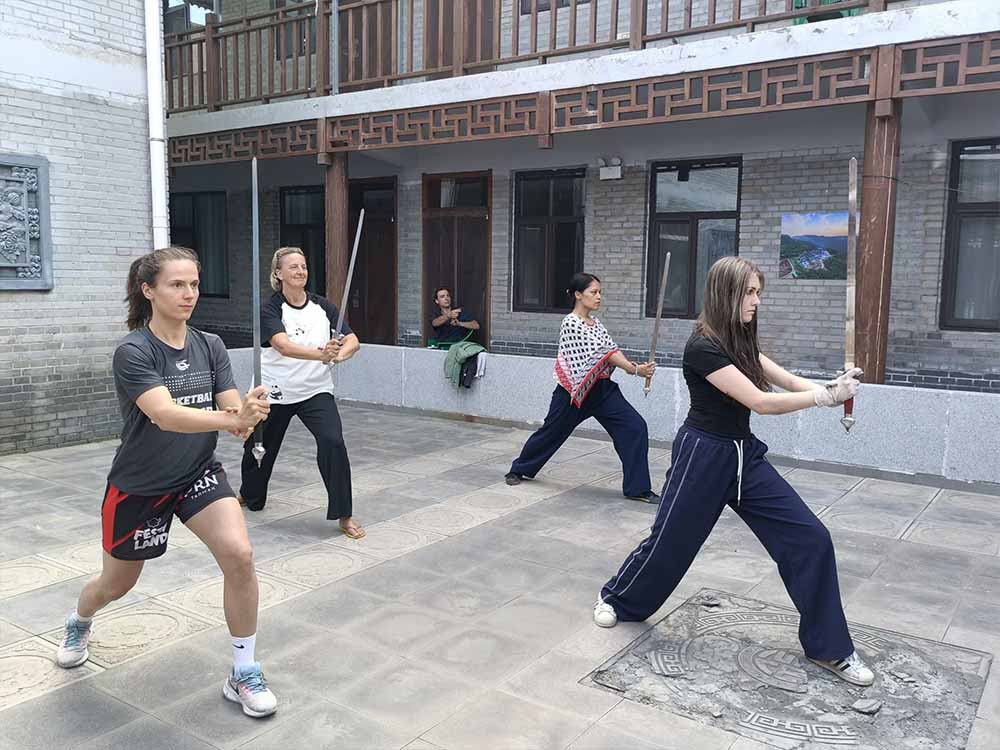
A Checklist for Evaluating a Shaolin Forms Training Program
Before committing to a school, use this checklist to assess the quality and depth of its Shaolin forms training. A reputable program will be transparent about these details, providing clear evidence of its qualifications and teaching methodology.
-
Is the Instructor's Lineage Clear and Verifiable?
A qualified teacher can trace their knowledge to its source. They should be able to name their masters and explain their specific martial arts lineage. This is a mark of respect for the tradition and a guarantee that the knowledge being passed down has not been diluted. Our school is founded on this principle, with Master Shen Jiangfei carrying on the direct teachings of Liuhe Quan and Chen-style Tai Chi.
-
Does the Curriculum Go Beyond Forms?
Shaolin Quan is not just a collection of movements. A complete curriculum must include the three pillars: forms (Quan), combat application (like San Da or Ge Dou), and internal cultivation (like Qi Gong and Zhan Zhuang). If a school only teaches forms, you are only learning one-third of the art. Our programs integrate nine distinct styles to ensure a well-rounded martial education.
-
Is the Training Adapted to Individual Needs?
A great master doesn't use a one-size-fits-all approach. They assess each student's body type, goals, and learning pace. Klaes Risbjerg Simonsen from Denmark chose our school because he wanted a focused experience, and he praised how the Shifu adapted the training to his specific needs, helping him grow both physically and spiritually.
-
Are There Proven Results from International Students?
A school's experience with students from around the world speaks volumes. Look for testimonials that provide specific details. For instance, Andrew Williams from the USA described his 30-day training with his son as a "life-changing experience." Hayley Noel from the UK spent 120 days with us, and her family was grateful for the supportive environment we provided. These real-world cases demonstrate a school's ability to care for and effectively teach international students.
-
Is There a Dedicated Space for Year-Round Practice?
Consistent training is key to progress. A school with a dedicated indoor facility shows a serious commitment to its students' development. Our 200㎡ indoor training center ensures that practice continues without interruption, regardless of weather, allowing for focused and disciplined training every day.
Structuring Your Training: What to Expect from Short-Term and Long-Term Programs
The duration of your stay directly impacts your learning objectives. Whether you have one week or one year, a well-structured program can provide immense value. It's important to have realistic expectations for each timeframe.
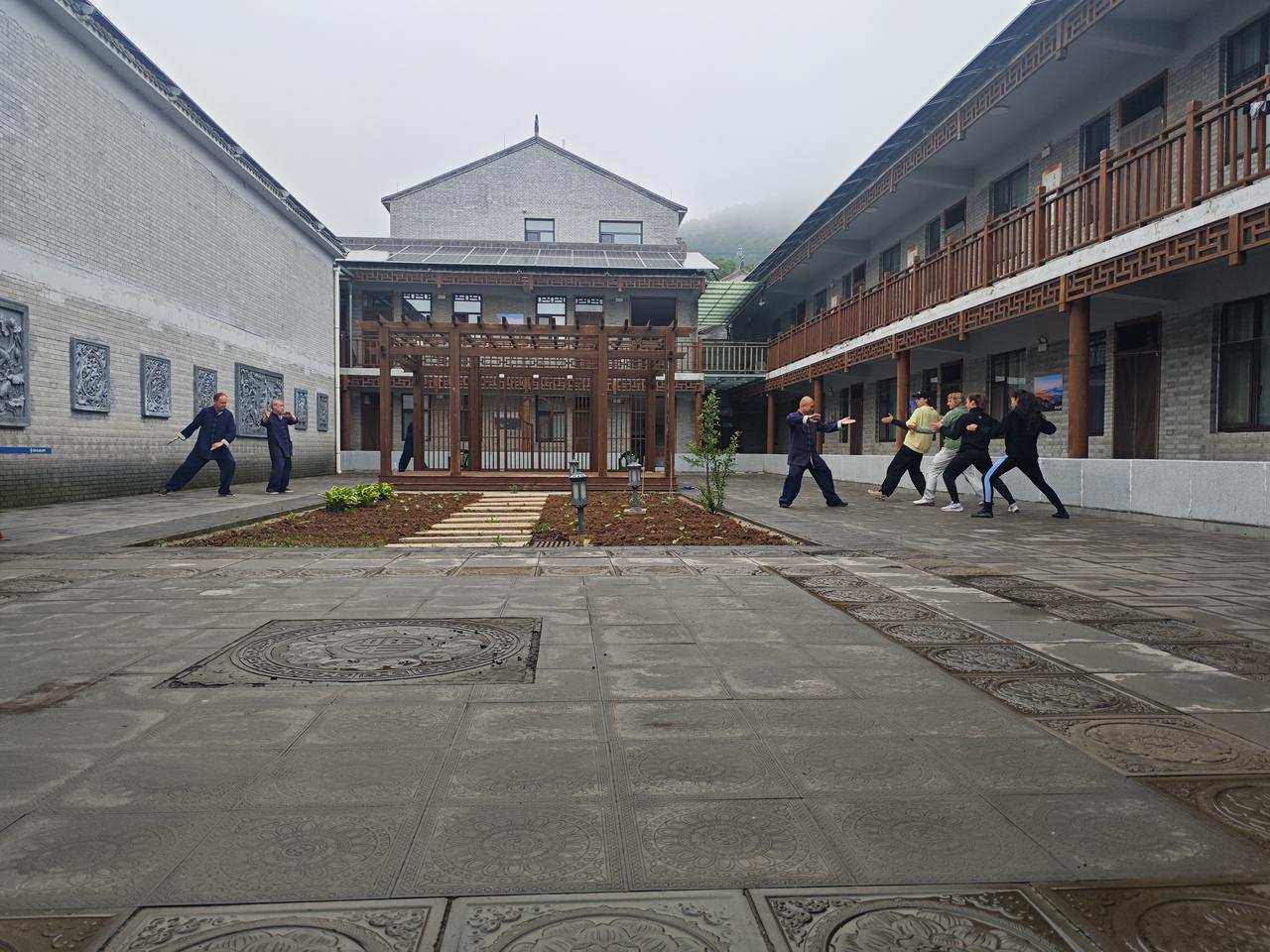
Short-Term Intensive Courses (1 to 4 Weeks)
A short-term course is an excellent cultural and martial immersion. It is not designed to make you a master but to build a strong foundation and give you the tools to continue practicing at home.
- Focus: Foundational stances, basic strikes and kicks, one or two simple Shaolin Quan forms, and an introduction to Qi Gong for energy cultivation.
- What You'll Gain: Improved body awareness, coordination, and a fundamental understanding of Shaolin principles. Othmane Echaouki from France, who completed a 7-day course, felt he and his wife were "in the best conditions" to learn, highlighting the supportive environment for beginners.
- Ideal For: Those exploring Kung Fu for the first time, individuals on a tight schedule, or experienced martial artists wanting to experience training in China. A one month Kung Fu Course provides a solid base. Austin Erkl from the USA found that after adjusting to the initial challenge of his 30-day course, he made "lifelong memories."
Medium to Long-Term Training (3 Months to a Year or More)
Extended training allows for deeper integration of skills, philosophy, and internal energy. This is where significant transformation occurs, moving from learning techniques to embodying the art.
- Focus: Mastery of multiple forms, advanced combat applications, proficiency in traditional Chinese weapons, and deep practice of internal arts like Zhan Zhuang and Meditation.
- What You'll Gain: Substantial increases in strength, flexibility, and internal energy. You will develop a nuanced understanding of martial theory and its application. After her 120-day course, Hayley Noel's family noted how much she loved the experience, and she plans to return to continue her development.
- Ideal For: Serious students dedicated to achieving a high level of skill, those considering becoming an instructor, or individuals seeking a profound personal transformation.
No matter the duration, a qualified instructor will ensure your time is spent efficiently, building skills layer by layer. The journey begins with a single step, whether it's for one week or one year.
Our flexible programs, from the One Week Kung Fu Course to long-term study, are designed to meet you where you are and guide you toward your goals. We have helped over 3,000 students from beginners to advanced practitioners find their path.
If you are ready to begin your training with a certified Shaolin master in a supportive and traditional environment, we welcome you to connect with us.
View our available Kung Fu courses to find the program that fits your goals.



 WhatsApp