How to Choose a First Kung Fu Weapon for Practice?
The Purpose of a Weapon in Kung Fu Practice
Many new students believe that Chinese weapons training is an advanced discipline, reserved for those who have mastered empty-hand forms. While mastery takes years, the beginning of weapon work can start much earlier. A weapon is not merely a tool for combat; it is an extension of the body, a partner in developing strength, coordination, and a deeper understanding of movement. At SJF Kung Fu School, we see weapons as teachers. They correct your posture, demand precision, and build functional strength in ways that empty-hand practice alone cannot.
Engaging with a weapon forces you to manage an external object, refining your balance, footwork, and power generation. The weight of a broadsword teaches you to use your waist, not just your arm. The length of a staff demands spatial awareness and fluid transitions. This is why selecting the right first weapon is a critical decision. The correct tool will accelerate your progress and build a strong foundation. An incorrect one can lead to frustration, poor habits, and even injury. This guide provides a practical method for making that first, important choice.
Matching Your First Weapon to Your Body and Environment
Choosing a weapon is a personal decision that should be based on your physical attributes, your available training space, and your personal goals. A weapon that feels awkward or is impractical for your practice area will only hinder your development. Before you commit to a staff, sword, or spear, use the following criteria to assess which is the best fit for your current condition. This systematic approach ensures the weapon serves you, not the other way around.
Use this checklist to guide your selection:
Weapon Length vs. Your Height: The dimensions of a weapon must be proportional to your body for proper handling and technique.
Staff (Gun): The ideal starting length for a staff is from the floor to your eyebrow height. A staff that is too long will be difficult to control, especially during rotations and spins. One that is too short will not provide the proper reach or leverage for foundational techniques.
Straight Sword (Jian): Hold the sword handle in your hand with the arm hanging straight down your side. The tip of the sword should point towards your earlobe. If it is much higher or lower, the balance will be off for your frame.
Broadsword (Dao): Using the same method as the straight sword, the tip of the broadsword should be around your shoulder height. Its wider blade and different balance point make this length ideal for the chopping and slicing motions characteristic of the weapon.
Weapon Weight vs. Your Strength: A weapon should be heavy enough to build strength but light enough to maintain correct form.
Beginners: Always start with a lighter training weapon, often made of wood or flexible materials. Your priority is to learn the correct mechanics of movement. A heavy weapon will cause you to compensate with improper muscle groups, building bad habits.
Test: You should be able to hold the weapon at arm's length for at least 10-15 seconds without significant strain or shaking. If you cannot, it is too heavy for you at this stage. Remember, the goal is to train, not to strain.
Grip Demands vs. Hand and Wrist Strength: Different weapons require different grips, which stress the hands, wrists, and forearms in unique ways.
Staff: Requires two hands and constant sliding adjustments. It is excellent for developing grip endurance and coordinated power from both sides of the body.
Broadsword: Typically a single-hand weapon. It demands significant wrist and forearm strength to control the blade's momentum and execute powerful cuts.
Straight Sword: A lighter, single-hand weapon that relies on finesse, finger dexterity, and subtle wrist movements. It is less forgiving of brute force and requires a more relaxed, sensitive grip.
Practice Space Availability: The most important practical consideration.
Limited Space (e.g., an apartment room): A short staff or a straight sword (Jian) is most suitable. Their movements are generally more contained.
Moderate Space (e.g., a garage or backyard): A full-length staff or a broadsword (Dao) becomes practical. These weapons require more room for swings and rotations. Our 200㎡ indoor training center allows students to practice year-round with any weapon, regardless of weather.
Large Open Space: The spear (Qiang) requires the most space due to its length and thrusting techniques. It is often impractical for beginners without access to a dedicated training hall or large outdoor area.
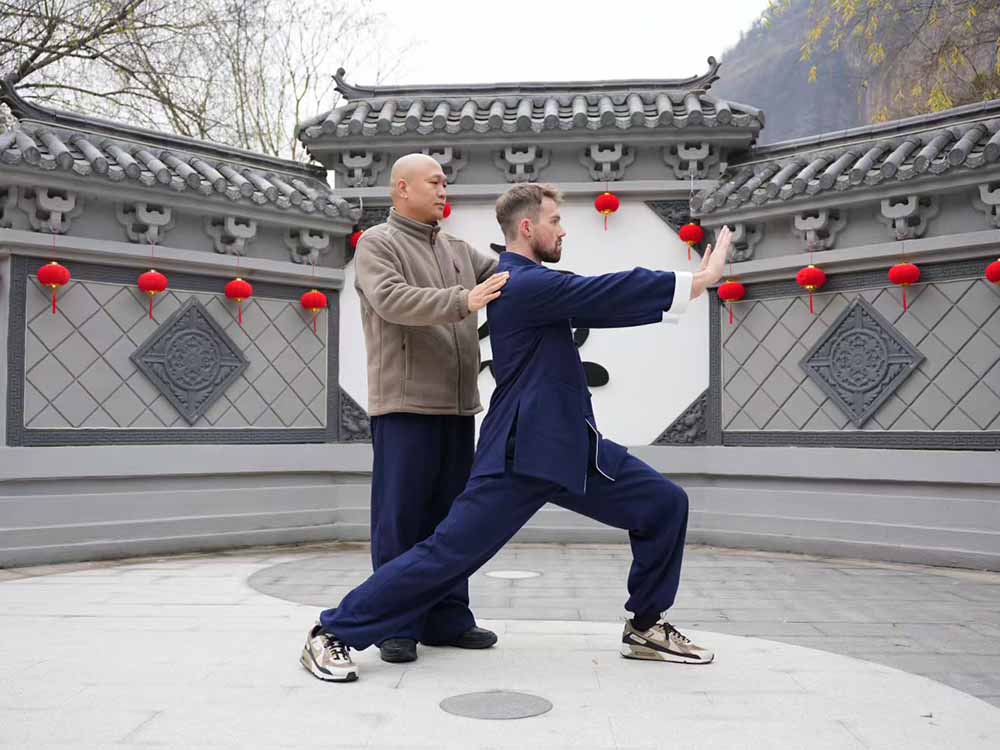
An Overview of Foundational Kung Fu Weapons
While Chinese martial arts feature a vast arsenal of weapons, beginners traditionally start with one of four: the staff, broadsword, straight sword, or spear. Each is considered a "foundational" weapon because the principles learned with it are transferable to many others. My own training in Liuhe Quan and Chen-style Tai Chi has shown me how these foundational tools build the essential body mechanics for all martial arts.
The Staff (Gun) – "The Grandfather of All Weapons"
The staff is almost universally recommended as the first weapon for a new student. It is simple in design, symmetrical, and lacks a cutting edge, making it relatively safe for practice. The staff teaches fundamental principles that apply to all other weapons.
Skills Developed: Power generation from the legs and waist, spatial awareness, hand-eye coordination, and fluid body movement. The constant sliding of the hands builds grip strength and dexterity.
Best For: Absolute beginners. Its simplicity allows students to focus entirely on body mechanics without the complexity of a blade. It builds a strong, versatile foundation.
Considerations: Requires a moderate amount of space for full-range swings and spins.
The Broadsword (Dao) – "The Marshal of All Weapons"
The broadsword is a single-edged cutting weapon known for its aggressive, powerful movements. It is heavier than the straight sword and relies on strong, flowing motions. Training with the Dao builds courage and a decisive spirit.
Skills Developed: Wrist and forearm strength, power generation for cutting and chopping, and brave, forward-moving footwork. It teaches how to blend offense and defense seamlessly.
Best For: Students who want to develop physical power and a more martial, external expression of their Kung Fu.
Real-World Example: Hayley Noel from the UK spent 120 days with us training in Tai Chi, Zhan Zhuang, Sword, and Broadsword. Her family was initially worried but was overjoyed by her progress and the experience she had. She found the broadsword training particularly empowering and plans to return.
The Straight Sword (Jian) – "The Gentleman of All Weapons"
The Jian is a double-edged straight sword that embodies precision, grace, and strategy. Unlike the broadsword's raw power, the Jian relies on finesse, accuracy, and deflecting movements. It is considered a more "internal" weapon, connecting closely with the practitioner's spirit and intention.
Skills Developed: Fine motor control, wrist flexibility, pinpoint accuracy, and a calm, focused mind. It is an excellent tool for understanding the application of Qi in a weapon.
Best For: Students with a background in arts like Tai Chi or those who are more interested in precision and internal development than brute force.
Considerations: The techniques are subtle and can be more difficult for a pure beginner to grasp without a solid empty-hand foundation.
Common Mistakes to Avoid in Early Weapons Training
Starting your journey with traditional Chinese weapons is an exciting step, but it comes with common pitfalls. As an instructor who has trained over 3,000 students, I have seen the same initial errors repeatedly. Avoiding them will save you time and help you build a correct and safe practice.
Here are the most frequent mistakes and how to prevent them:
Treating the Weapon as a Foreign Object: Many beginners swing the weapon using only their arm strength. This is inefficient and leads to fatigue and injury.
The Fix: Understand that the weapon is an extension of your body. Power must originate from the ground, travel through your legs and waist, and be channeled through the arm into the weapon. Focus on your stance and footwork first.
Choosing a Weapon That is Too Heavy or "Cool": A heavy, ornate weapon may look impressive, but it is a poor training tool. It forces bad habits as you struggle to control it.
Neglecting Empty-Hand Basics: Weapons training is not separate from your empty-hand Kung Fu. Strong stances, flexible footwork, and a connected core are prerequisites.
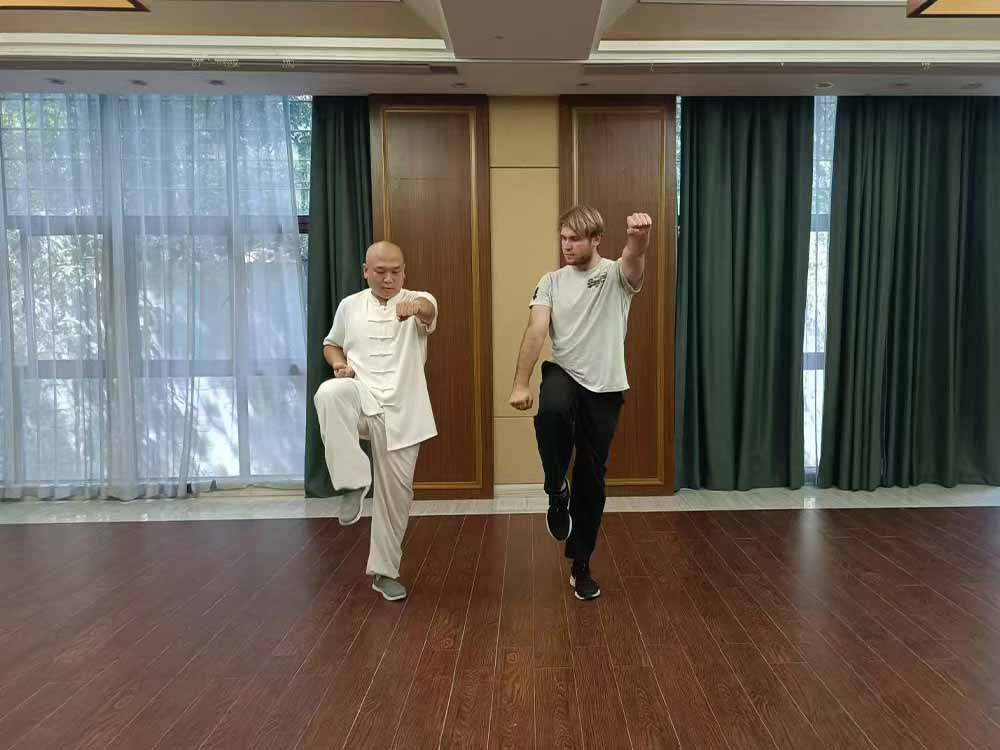
Practicing Without a Qualified Instructor: Videos can show you movements, but they cannot correct your form. A qualified Shifu provides essential feedback on posture, intent, and energy.
The Fix: Seek guidance from a certified instructor. As a descendant of Liuhe Quan and the 11th-generation inheritor of Chen-style Tai Chi, I emphasize the importance of direct transmission. For example, Klaes Simonsen from Denmark chose our school specifically because he wanted an authentic, focused experience with a highly qualified Shifu who could adapt the training to his needs, not a generic tourist program. This direct feedback is irreplaceable.
Your first weapon is a partner in your growth. By choosing it wisely and practicing with the right principles, you open a new dimension in your martial arts development. It is a path that builds not only a strong body but also a disciplined and focused mind.
If you are ready to begin your practice, our flexible programs, from a One Week Kung Fu Course to long-term study, provide a structured environment to learn correctly from the start. Contact us to discuss how we can help you on your path.



 WhatsApp