How to Choose a One-Week Kung Fu Program
What a Seven-Day Stay Can Give You, and What It Cannot
The regret we hear about most is not a bad teacher. It is a missing detail: nobody asked how many hours of coached practice each day actually contained, or who would meet the student at the station. A One Week Kung Fu program is short enough that every unclear detail costs a visible share of your time. Before you pay a deposit, you want those details written down.
Seven days will not make anyone a master. In the old schools, the first year was spent on standing, stepping and listening to the body. A week is better understood as a doorway. You learn how your posture feels when it is corrected by someone who has spent decades on it. You taste the daily rhythm of training, rest, tea and silence. You find out whether this path suits you.
That is why the choice matters. If the week is organized well, you leave with a few correct foundations and a clear sense of what to practice at home. If it is organized loosely, you leave with photographs.
Lineage and Training Setting: Why They Matter in a Short Program
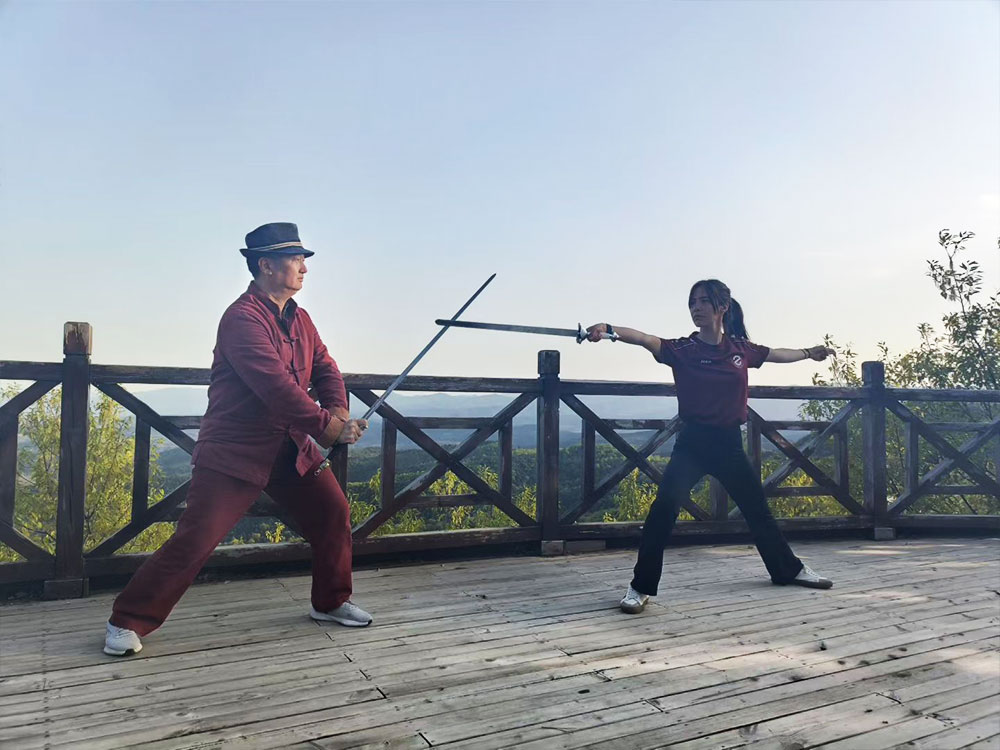
In a short stay, the teacher's depth matters more than the length of the brochure. Master Shen Jiangfei, founder and head instructor of SJF Kung Fu School, is a descendant of Liuhe Quan and the 11th-generation inheritor of Chen-style Tai Chi, the original and oldest of the five primary family styles. He has trained more than 3,000 students from around the world. A teacher with this background can see in a few minutes where your weight sits, where your breath is held and which habit you need to drop first.
Kung fu has always been taught with Wu De, martial virtue: humility, respect, restraint. A week spent with a teacher who lives by it feels different from a week of drills. You bow when you enter the hall. You listen before you move. Those small habits are part of the transmission.
The setting supports this. Our school sits near the Shaolin Temple, with more than 30 cultural and historical sites within reach. The training center has 200㎡ of indoor space with mats, wooden dummies, traditional weapons and a meditation hall, so rain or heat does not cancel a lesson. Pamela Paes Ezawa from Brazil, who completed a 7-day Chen-style course, named the traditional training environment and the Taoist heartland location among the things she valued most.
What suits a first week? Most visitors find that a few focused subjects work better than a sampler of everything. Tai Chi teaches soft, rooted movement and body mechanics. Zhan Zhuang, or standing meditation, builds leg strength and calm attention, and it can be repeated at home with no equipment. The limit: if you want sparring or heavy conditioning, say so when you inquire. A seven-day plan built around internal practice will not cover them well.
A Booking Checklist: Coached Hours, Class Size, Accommodation, Transfers and Beginner Placement
Use this table when you compare any short program, ours included. The final column shows what we can confirm from our own records and what you should ask us to put in writing for your dates. We do not quote a fixed hours figure or transfer terms in this guide, because they should be agreed per booking.
| Item to verify | Why it matters in seven days | A clear answer sounds like | What to confirm with SJF Kung Fu School |
|---|
| Daily coached hours | "Training time" can include rest, meals and self-practice. Only instructor-led time counts as teaching. | A written daily timetable that separates coached sessions from free practice. | Ask for the timetable for your dates, and which sessions are led by the Shifu himself. |
| Class size | Posture correction needs the teacher's eyes on you. A large group dilutes it. | A real number of students per session, and how groups are split by level. | Regular classes have no minimum enrollment, and group bookings start at 2 students. Ask how many will train alongside you. |
| Accommodation | Rest affects how much you absorb from early-morning practice. | Room type, sharing arrangement, meals and distance to the hall. | Past students, including Pamela and Austin, commented on the training-focused accommodation and food. Ask for the room details for your week. |
| Transfers | First-time visitors often arrive tired and cannot read local signs. | A named pickup point, a contact number and a fallback if your flight is late. | Ask how pickup works from your arrival station or airport, and get it in writing. |
| Beginner placement | Some programs run beginners in a separate show class. Others place them in the regular curriculum. | A plain statement of whether you train with the regular group or apart from it. | Tell us your experience level. Ask what a beginner does on day one and how the week builds. |
If any answer stays vague after two messages, treat that as information. A teacher with a clear method can usually describe a day in a few lines.
What Returning and Past Students Have Told Us
We keep to what students actually wrote, not a universal promise. Othmane Echaouki and his wife from France took a 7-day Chen-style Tai Chi course and thanked the Shifu for caring for every student: "It made us feel we were in the best conditions." Pamela from Brazil, mentioned above, also praised the welcoming Shifu and community.
Austin Erkl from the USA stayed 30 days for Tai Chi and Sword. He admitted he did not love it at first. After adjusting, he had a great time and wrote: "The master is a great guy that cares for his students." Klaes Risbjerg Simonsen from Denmark came for 30 days of Tai Chi, Zhan Zhuang and Broadsword because he wanted a focused experience, not a touristy resort. He said he felt he was in the right place from the first day, and that the training was adapted to his needs.
Notice what these stories share. Nobody describes a miracle. They describe care, structure and a teacher who pays attention. That is what to look for in any program you shortlist. Austin's experience is also a useful reminder: the first days may feel awkward, because the body resists new alignment.
Common Mistakes When Comparing Weekly Programs
- Counting the length of the day instead of the coached hours. A long schedule tells you little. Ask which blocks are taught and which are free.
- Choosing by the number of styles. Seven days across six styles gives you six first impressions. Two styles taught carefully usually leave more behind. This does not apply if you only want a sampler to decide what to study later.
- Skipping the arrival details. Pickup and the first evening shape your mood on day one. Settle them before you buy flights.
- Assuming beginners and experienced students train alike. If you have trained elsewhere, say what and for how long, so the teacher can place you correctly.
- Booking dates tight against your flights. Allow a rest day on each end. Jet lag works against stance training.
- Expecting certificates or rank from a week. A short stay builds foundations. It does not confer a grade, and no honest teacher would suggest otherwise.
From Inquiry to Arrival: Five Steps Before You Pay a Deposit
- Write down your goal. One sentence is enough: "Learn Chen-style Tai Chi basics" or "Experience daily kung fu life with my partner."
- Send your dates, level and any injuries. Knees and lower back matter in stance work, so mention them early.
- Request the written timetable. Compare it against the table above, line by line.
- Confirm accommodation and pickup. Ask for names, times and a contact number you can reach on arrival.
- Agree what is included and what is not. Settle meals, laundry, excursions and any extra lessons before payment, not after.
A worked example: two friends from the UK want a first taste of kung fu. They write that they are complete beginners, have six free days and one has a sore knee. A good reply gives a daily plan weighted to Zhan Zhuang and gentle Tai Chi, confirms a pickup, and names who teaches which session. A poor reply sends a price list.
When One Week Is Not Enough
Some people leave after seven days hungry for more. That is a fair sign, and there is a clear next step. A Three-Month Course gives time for Shaolin forms, weapons and deeper internal work. Hayley Noel from the UK completed 120 days of Tai Chi, Zhan Zhuang, Sword and Broadsword. Her family wrote that they had been worried when she flew out, but that she loved it and had an awesome time. Andrew Williams from the USA trained 30 days with his son and called it life-changing, and plans to return.
If you already know you want hard styles, Shaolin Quan is the foundation of our external training. Be realistic, though: one week gives you the first sequence and the discipline behind it, not mastery. Think of the first week as planting. The growing happens with practice at home and, if you wish, a longer return.
Send Us Your Dates and Questions
If you are shortlisting, we are glad to answer the five checklist questions for your specific week. Message SJF Kung Fu School through our website with your dates, experience and goals. Ask for the timetable, class size and pickup plan in writing. We would rather you arrive well informed than surprised.
Not sure a week is right? See the 30 Day Kung Fu Course and compare the two. Genuine seekers of traditional Chinese martial arts are always welcome in our training hall.



 WhatsApp