Kung Fu For Beginners: 20-Minute Home Routine
Start with Control, Not Speed
Many people begin Kung Fu For Beginners with the same question: “What should I practise first when I only have 20 minutes at home?” The answer is not a long list of kicks or a difficult form. Begin by building body awareness: stable feet, relaxed shoulders, clear breathing, and simple movements repeated with care.
Traditional Chinese martial arts train more than the arms and legs. A stance teaches rooting. A straight punch teaches alignment. Quiet standing teaches patience. These foundations appear in many systems, including Shaolin Quan, Tai Chi, San Da, and Liuhe Quan.
This home routine is designed for adults and young learners with no previous martial arts experience. You need a clear floor space of roughly two large steps in every direction, comfortable clothing, water, and a timer. Train barefoot only if your floor is clean, warm, and non-slip; otherwise, use flat indoor shoes with stable soles.
The intended result is modest but meaningful. At the end of each session, you should be able to hold a basic stance without pain, step forward and back without crossing your feet, throw controlled straight punches, and finish calmer than when you began. This is a good starting point for a beginner kung fu routine. It is not a replacement for in-person correction, sparring instruction, or injury assessment.

Prepare your training area and body
- Choose a level surface: Uneven floors make knee and ankle alignment harder to feel.
- Keep one chair nearby: Use it for balance during mobility work if needed, not for leaning during stance holds.
- Set a timer: The value of the session comes from its repeatable order. Do not keep adding exercises until the practice becomes difficult to maintain.
- Stop for sharp pain: Mild muscle effort is expected. Sharp, sudden, or worsening joint pain is not a training signal to push through.
- Leave weapons and high kicks aside: Early practice should establish balance and control before adding tools or complex kicking drills.
At SJF Kung Fu School, students can study nine disciplines, including Shaolin Quan, Tai Chi, Qi Gong, Zhan Zhuang, San Da, Qin Na, Ge Dou, Chinese Weapon practice, and Meditation. At home, however, fewer movements produce better learning. A simple base gives later study somewhere to stand.
Use This Repeatable 20-Minute Sequence for Mobility, Stances, Footwork, Strikes, and Recovery
Follow the sequence below in the same order for at least two weeks. Mobility comes first because stiff ankles, hips, and shoulders often lead beginners to force a stance. Stance holds come before footwork because stepping is safer when you can first organize your balance. Strikes follow footwork so that the body learns to move as one unit rather than reaching with the arms alone.
| Time |
Training block |
Exact action |
Success checkpoint |
Common failure and recovery |
| 0:00-4:00 |
Mobility and breathing |
March slowly in place for 60 seconds. Then make 10 ankle circles each way, 10 hip circles each way, 10 shoulder rolls backward, and 10 gentle torso turns. Breathe through the nose where comfortable. |
Your breathing is steady and both feet feel connected to the floor. |
Do not swing or rush. If a joint feels restricted, reduce the circle size and keep moving without forcing range. |
| 4:00-8:00 |
Horse stance and bow stance |
Hold a comfortable horse stance for 20 seconds, rest 20 seconds, and repeat three times. Then place one foot forward in a short bow stance, bend the front knee slightly, and hold 20 seconds each side for two rounds. |
Knees point in the same direction as toes; spine stays tall; weight feels even and controlled. |
If knees collapse inward, narrow the stance and reduce depth. A lower stance is not automatically a better stance. |
| 8:00-11:00 |
Forward and backward footwork |
From a short fighting stance, step forward with the lead foot, then bring the rear foot forward without touching it to the lead foot. Step back in the reverse order. Complete 10 slow trips forward and back. |
Your feet keep their original left-right relationship, and you can stop at any point without falling. |
Crossing the feet removes your base. Make each step shorter until you can maintain shoulder-width balance. |
| 11:00-15:00 |
Straight punches and basic guard |
Raise relaxed fists near cheek level. Punch straight ahead with the lead hand for 10 repetitions, then the rear hand for 10. Complete two rounds with a slow return to guard after every punch. |
Shoulders stay down, wrist remains straight, and the non-punching hand returns to guard. |
Do not lock the elbow or twist the knee. Shorten the punch if your shoulder rises toward your ear. |
| 15:00-17:00 |
Step-and-punch coordination |
Take one small step forward and throw one lead straight punch. Step back and reset. Perform five repetitions per side, slowly enough to keep the feet organized. |
The step ends before the punch finishes, and you can freeze in balance after each repetition. |
If the punch pulls your chest forward, pause after the step before adding the strike. |
| 17:00-20:00 |
Recovery standing |
Stand with feet under the hips, knees softly bent, hands resting by the sides or in front of the lower abdomen. Take six unhurried breaths, then walk slowly for one minute. |
Your breath settles and legs feel worked but not unstable. |
Do not drop suddenly to the floor after stance work. Gentle standing and walking allow the body to settle. |
This sequence takes exactly 20 minutes when the timer is followed. If you only have 10 minutes, do not rush through every block. Complete mobility, one stance, footwork, and recovery instead. Leave strikes for the next session. The order matters more than doing every drill at high volume.
For learners who enjoy the quiet portion of the routine, Zhan Zhuang offers a standing-practice method that develops stillness, posture, and patient attention. Begin with short holds. Extended standing should come only after basic knee, hip, and foot alignment feels stable.
Check Your Form Before Increasing Repetitions
A home routine works when it is measurable. Do not judge progress by sweat alone. Use three checks at the end of the session: balance, breath, and repeatability. If one of these is missing, keep the same workload rather than adding more rounds.
A simple completion check
- Balance: Hold your final bow stance for 20 seconds on each side without grabbing furniture or shifting your feet.
- Breath: You can take six calm breaths during recovery without gasping or feeling dizzy.
- Alignment: Your knees track over your toes in the horse stance, and your wrists stay straight while punching.
- Consistency: You can repeat the same routine two or three times in one week without joint pain that worsens after training.
If you pass these checks for two weeks, progress only one variable. Add five seconds to each stance hold, add two step-and-punch repetitions per side, or make the footwork slightly smoother. Do not increase stance depth, repetitions, and speed in the same week. That combination often hides poor mechanics behind effort.
Common beginner mistakes and practical corrections
- Trying to copy a low stance: Deep positions can look impressive, but a stance that causes knee discomfort is too low for your present mobility. Raise the hips and keep the feet grounded.
- Punching with shoulder tension: A tight shoulder shortens the punch and tires the neck. Exhale softly as the fist extends, then let the shoulder settle before the next repetition.
- Training only one side: People naturally prefer one lead leg and one punching hand. Practise both sides equally, even if one side feels less coordinated.
- Adding kicks too early: High or fast kicking requires more balance than beginners expect. First show control in stances and footwork; then learn kicking under instruction.
- Skipping recovery: Finishing abruptly can leave the legs tight and the mind rushed. The final three minutes are part of the practice, not spare time.
Martial virtue, often called Wu De, begins in small choices. A learner shows respect for the art by training within safe limits, correcting poor habits without frustration, and returning the next day with a clear mind. The first victory is not over another person. It is over careless repetition.
Set a Weekly Practice Frequency You Can Maintain
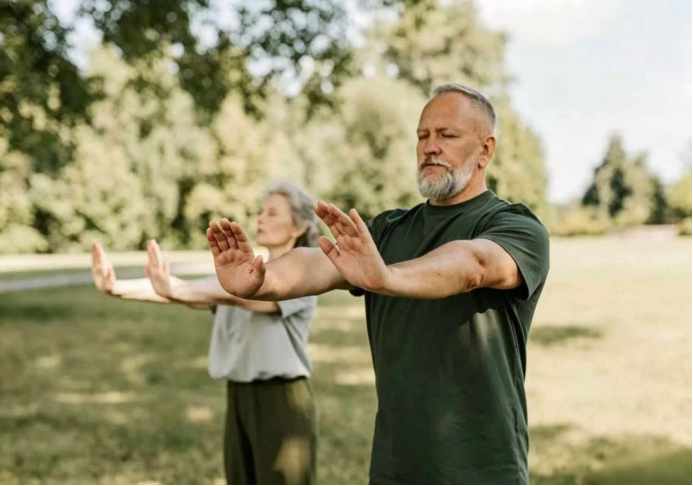
How often should beginners train kung fu? For this routine, begin with three sessions per week on non-consecutive days if your legs are new to stance training. This gives the thighs, calves, and hips time to adapt. After two steady weeks, move to four or five sessions weekly if you recover well and the quality of your stance remains consistent.
| Training situation |
Recommended frequency |
Best focus |
When not to increase |
| Complete beginner with limited exercise history |
3 sessions per week |
Mobility, short stance holds, calm footwork |
If soreness changes the way you walk or knees remain painful |
| Active adult with good general fitness |
4 sessions per week |
Controlled step-and-punch work after stance quality is stable |
If speed begins to replace balance |
| Learner building a daily habit |
5 short sessions per week |
Keep two sessions lighter, with mobility and recovery standing |
If you dread practice or cannot maintain clear technique |
Daily kung fu practice does not need to mean daily hard training. A lighter day may include mobility, quiet standing, and breathing only. This approach supports continuity without treating fatigue as failure. Qi Gong can also complement a lighter day because it links posture, breath, and measured movement; explore Qi Gong when you are ready to add this aspect of Chinese training.
Know When Home Practice Should Lead to Guided Training
Home practice is useful for establishing rhythm, but it cannot show you every detail. A trained instructor can see whether your knees turn inward, whether your hips rotate during a punch, or whether tension is collecting in your neck. Guided study also gives context to the movements: why a stance is shaped a certain way, how distance affects a strike, and when stillness is more useful than force.
SJF Kung Fu School is a registered Kung Fu School with certified Shaolin Kung Fu instructors. Master Shen Jiangfei is a descendant of Liuhe Quan and the 11th-generation inheritor of Chen-style Tai Chi. His teaching includes structured practice for international students, from short courses to longer study. The school also has a 200㎡ indoor training center for year-round practice.
Real training develops at different speeds. Andrew Williams from the USA spent 30 days studying Tai Chi, Zhan Zhuang, and Dao Fa with his son, describing the experience as life-changing for physical, mental, and spiritual strength. His example is personal, not a promise of the same outcome for every student. It does show what can happen when short daily practice becomes focused study with instruction.
When your 20-minute routine feels steady, a one month Kung Fu Course can provide direct correction, a fuller training schedule, and a closer understanding of traditional martial practice.
View the one month Kung Fu Course and request training guidance from SJF Kung Fu School.



 WhatsApp