Liuhe Quan Class: What Beginners Should Expect
What Happens in a First Liuhe Quan Class?
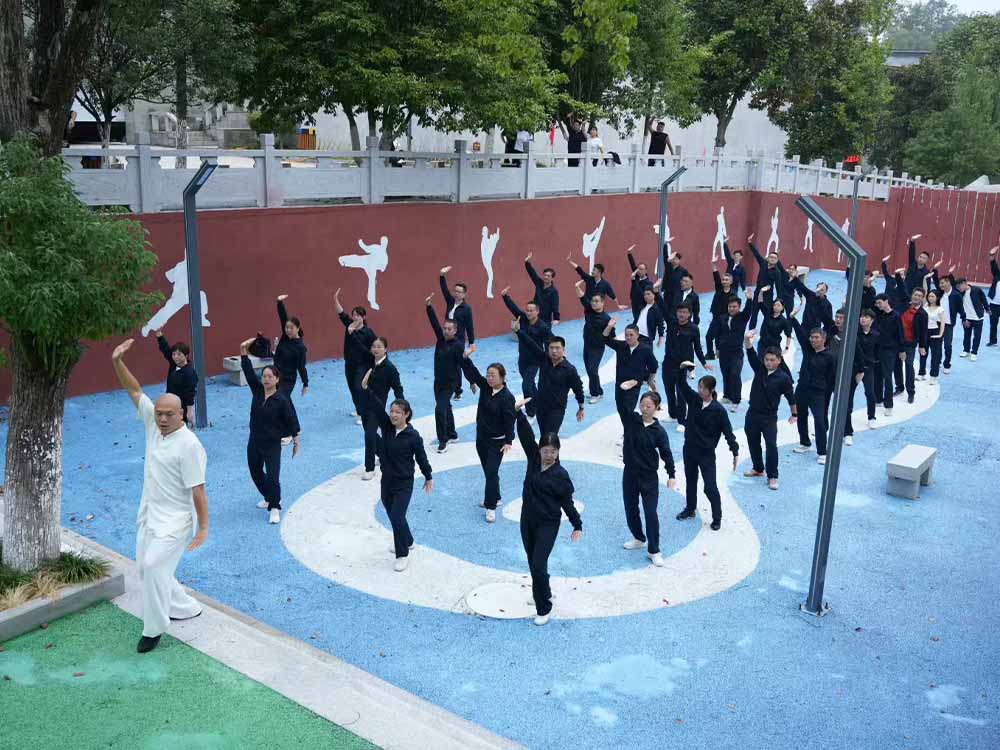
Will your body be ready, and what will you actually do in the first hour? Most newcomers picture either fast fighting or slow, gentle motion. Neither picture is quite right. Master Shen Jiangfei, a descendant of Liuhe Quan and the 11th-generation inheritor of Chen-style Tai Chi, teaches a first Liuhe Quan Class as a study of structure before speed. You learn how to stand, how to turn, and how to move the whole body as one piece.
The exact order depends on the teacher and on who is in the room. As a general pattern for traditional beginner training, a first session looks like this:
- Standing and breathing. You settle your posture and slow your breathing, so the mind stops racing ahead of the body.
- Joint loosening. Ankles, knees, hips, spine, shoulders and wrists are opened gently, with no forced stretching.
- Stepping and weight transfer. You shift weight from one leg to the other without leaning or bobbing.
- One short movement. The teacher breaks a single action into parts and shows how the hips and shoulders connect.
- Slow repetition with correction. You repeat the movement many times while the teacher adjusts your alignment by hand and by voice.
Expect to leave tired in the legs and a little humbled. That is a normal first day. It does not mean you are doing it wrong.
Which "Liuhe" Are You Actually Looking At?
The word Liuhe means "six harmonies," and several martial systems carry it in their names. Their forms, training methods and goals are not the same. A search for Liuhe will often mix them together, along with unrelated businesses that share the word. Before you commit to a class, ask three plain questions:
- Which lineage does the teacher come from, and who taught them?
- Does the class teach standing practice and body mechanics, or only a set of choreographed routines?
- How is a beginner's progress judged: by memorised forms, or by the quality of structure and movement?
At SJF Kung Fu School, Master Shen teaches from his own transmission as a Liuhe Quan descendant. That is the version of the art described in this article. If you have seen another Liuhe-named style elsewhere, treat it as a separate art until the teacher tells you otherwise.
Why Does Liuhe Quan Feel Slow at First?
The "six harmonies" are usually taught as three external and three internal pairings. Externally, shoulder joins hip, elbow joins knee, and hand joins foot. Internally, heart joins intent, intent joins breath, and breath joins strength. A beginner cannot feel all six at once. So the first weeks go to the external three. You learn to move the arm because the hip moved, not instead of it.
This is why the pace looks unhurried. Rush the pairing and you build a habit of arm-only movement that takes months to undo. Traditional teachers also speak of Wu De, the martial virtues of humility, respect, patience and restraint. In a first class these are practical. You bow, you listen, you repeat without complaint, and the teacher decides when you are ready for the next step.
Beginner Readiness Boundaries: Conditioning, Contact, Pacing and When to Pause
You do not need to be an athlete, but you should know where the limits are. The table below describes typical expectations for a beginner starting traditional internal-style training. Your teacher sets the real boundaries after seeing you move.
| Area | What to expect at the start | You are likely fine if | Modify or pause if |
|---|
| Conditioning | Long periods in low or half-low stances. Legs fatigue before the lungs do. | You can walk 30 minutes and rise from a chair without using your hands. | Knee pain appears during a stance. Stand higher and shorten the hold. |
| Mobility | Hips, ankles and spine are opened gradually. Deep splits are not required. | You can sit on a low stool and turn your torso comfortably. | Your lower back pinches when you turn. The teacher should reduce the range. |
| Contact level | Solo practice first. Partner work, if any, is slow and controlled, and no one tries to hurt anyone. | You are comfortable being touched for posture correction. | You have a recent injury or a medical condition. Tell the teacher before any partner drill. |
| Pacing | Few movements, repeated many times. Progress is measured in quality, not quantity. | You can tolerate repetition without needing constant novelty. | You feel pressure to keep up. Slow down, because speed is not the goal. |
| Breath and energy | Breathing stays natural and quiet. You do not force it. | You can breathe through the nose during gentle effort. | You feel dizzy or lightheaded. Stop, sit, and drink water. |
Stop completely, and see a doctor, if you feel sharp joint pain, chest pain, numbness or fainting. Aching muscles the next day are normal. Sharp or lingering joint pain is a signal to stop, not to push through. If you have a heart, joint or spinal condition, check with your physician first. Then give the teacher the full details so the practice can be adjusted.
Standing practice such as Zhan Zhuang is the usual way to build leg endurance and body awareness before anything dynamic. It looks easy and is not. Starting with short holds of a few minutes and building up works better than testing your limit on day one.
Does Previous Martial Arts Experience Help or Get in the Way?
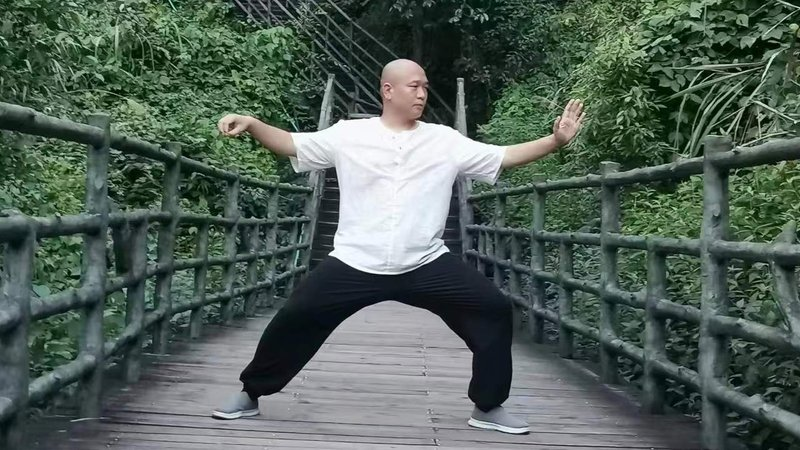
Both, depending on the habit. Coordination, balance and body awareness carry over well. Muscular tension, tight shoulders and the instinct to hit with the arm alone do not. Picture a former kickboxer joining a first Liuhe Quan Class. This is an illustrative scenario, not a student case. He is strong and quick, yet his shoulders lift every time he extends an arm. Slow practice shows the habit at once. The corrective work is about unlearning, and it can feel slower than being a complete beginner.
If your background is competitive fighting and you want to keep that edge, practising San Da alongside internal training is a reasonable balance. The two train different qualities, and neither replaces the other.
Several of our students have told us the early weeks were harder than they expected. Austin Erkl from the USA completed a 30-day Tai Chi and Sword course. He admitted he did not love it at first, but once he adjusted he had a great time. He said the master "is a great guy that cares for his students." That kind of adjustment period is common, and a good teacher expects it.
How Long Before It Starts to Feel Familiar?
Short answer: a week gives you orientation, and familiarity takes longer. These are realistic expectations drawn from the way our students have trained, not a promise of results. Our recorded cases come from Tai Chi courses rather than Liuhe Quan, but the pacing carries over.
- About one week. Pamela Paes Ezawa from Brazil completed a 7-day Chen-style Tai Chi course and valued the training-focused setting and the welcoming Shifu. A week is enough to learn how the practice feels and whether you want more. The One Week Kung Fu Course is built for that kind of first contact.
- About one month. Klaes Risbjerg Simonsen from Denmark trained for 30 days. He wanted a focused experience, not a touristy resort, and said he grew both physically and spiritually. He also praised the Shifu for adapting the training to his needs. Andrew Williams from the USA trained for 30 days with his son and called it life-changing.
- Several months. Hayley Noel from the UK trained for 120 days. Her family wrote that she loved it and had an awesome time. Long stays give structure time to settle into the body.
Breath and mind work help the early weeks go more smoothly. Gentle Qi Gong and short sessions of Meditation teach you to slow down, which makes the slow pace of Liuhe Quan easier to accept.
Common Mistakes Beginners Make
- Chasing power. Pushing with the arms feels strong, but it breaks the hip-to-shoulder connection.
- Holding stances through pain. Muscle burn is fine. Joint pain is not.
- Comparing yourself to others. Someone who looks smooth may have trained for years. Measure yourself against last week.
- Skipping rest. Tendons adapt more slowly than muscles. Rest days are part of the training.
- Expecting sparring. A beginner class focuses on structure, not fighting. Contact comes later, if at all.
- Not telling the teacher about injuries. One sentence at the start can prevent weeks of setback.
What Does Training Life Look Like Around the Class?
The class is one part of the day. SJF Kung Fu School sits near the Shaolin Temple, with more than 30 cultural and historical sites within reach. Practice happens in a 200㎡ indoor training center, so rain or cold does not cancel a session. Students eat, rest and train in the same quiet setting, which is much of what visitors remember. Pamela described the training-focused accommodation and the welcoming Shifu and community. Austin praised the food and the master.
There is a slower lesson here too. Traditional teaching depends on daily contact with a teacher who corrects small things, and a place where nothing competes for your attention. That quiet attention is hard to reproduce through videos or occasional weekend classes.
Still Unsure? Here Is a Practical Next Step
If you are not sure which row of the readiness table describes you, tell us your age, fitness level, any injuries and how long you can stay. Master Shen and the team will suggest a realistic starting point, whether that is a short course or a longer stay. There is no obligation, and we welcome sincere questions about the art and its culture.
You can view the one month Kung Fu Course to see how a 30-day stay is structured, or contact SJF Kung Fu School through our website to book a consultation. If you are curious about Liuhe Quan, a first conversation is a good place to begin.



 WhatsApp