Long-Term Kung Fu Training: Budget for a Year in China
Decide Whether a Year of Training Fits Before You Commit
A year in China can change the rhythm of martial arts practice. Daily repetition gives the body time to settle into stance work, breathing, structure, footwork, forms, and quiet reflection. Yet before choosing Long Term Kung Fu training, a student should build a full annual budget rather than comparing tuition alone.
At SJF Kung Fu School, students can train from one week through extended programs, which makes it possible to begin with a shorter stay and then assess whether a longer period suits their body, goals, and finances. Regular classes have no minimum enrollment requirement. Group bookings require at least two students.
For a one-year stay, the financial question is broader than the school fee. Housing, meals, visa-related costs, flights, medical insurance, training clothing, local transport, and personal spending can shape the total amount required. A sound plan gives each category its own line, assigns responsibility for payment, and leaves room for costs that may change during the year.
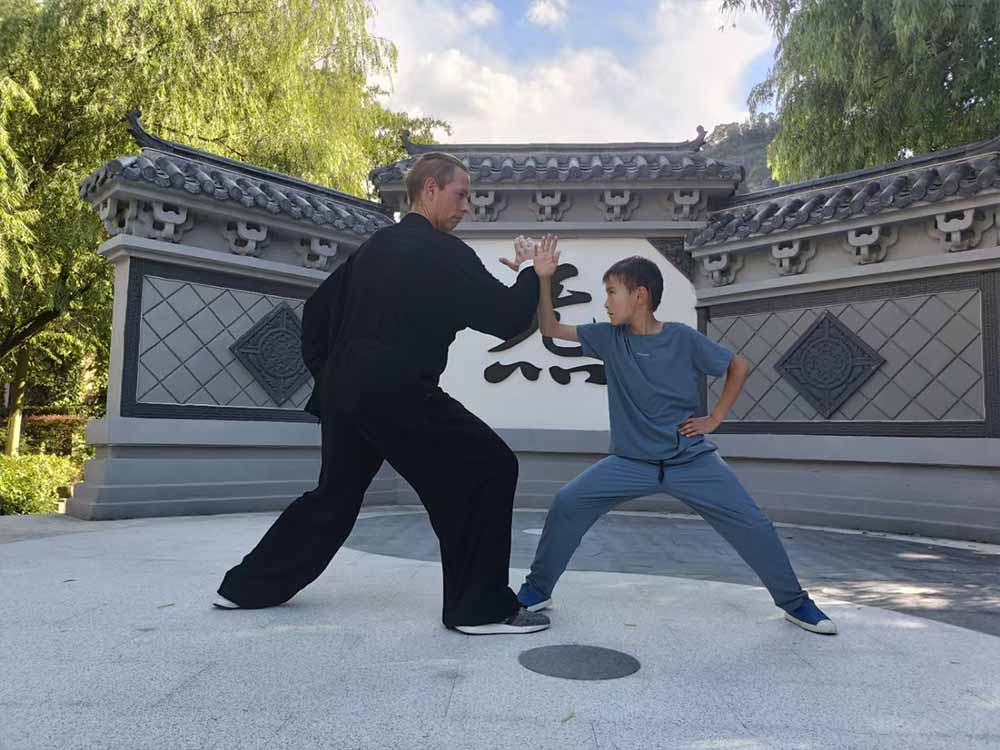
This matters because traditional martial arts ask for patience. Chen-style Tai Chi, Zhan Zhuang standing practice, Shaolin Quan, weapons work, and meditation develop through steady attention rather than a rushed timetable. Financial preparation protects that attention. When living expenses are planned in advance, students can focus more fully on practice and cultural study.
Assess Whether SJF Kung Fu School Matches a One-Year Training Plan
SJF Kung Fu School is suited to international students seeking a structured period of traditional Chinese martial arts training near the Shaolin Temple. The school offers nine training areas: Shaolin Quan, San Da, Qin Na, Tai Chi, Qi Gong, Zhan Zhuang, Ge Dou, Chinese Weapon practice, and Meditation. A year-long student should not assume that every subject will be studied at the same intensity. The useful first step is to identify one primary discipline and one or two supporting practices.
For example, a student whose main purpose is health, balance, and internal body mechanics may place Tai Chi and Zhan Zhuang at the center of the plan, with Qi Gong and meditation as supporting work. Those interested in practical martial skills may combine Shaolin Quan with San Da training, Qin Na, or Ge Dou. A weapons student may add Dao Fa, sword, broadsword, or other Chinese Weapon practice after establishing safe stance and coordination.
| Training focus |
Suitable annual emphasis |
Why it can fit a longer stay |
Limit to discuss before enrollment |
| Tai Chi and Zhan Zhuang |
Body alignment, forms, standing, breathing, calm attention |
Slow repetition allows students to observe structural changes over time. |
It may not suit someone seeking only high-contact combat practice. |
| Shaolin Quan and San Da |
Forms, conditioning, footwork, striking, practical application |
Frequent practice gives time to improve coordination and endurance. |
Training load should suit the student’s current fitness and recovery needs. |
| Chinese Weapon practice |
Weapon basics, form work, timing, distance, discipline |
Longer study supports safer handling and deeper form retention. |
Weapon selection and teaching sequence should be confirmed with the instructor. |
| Qi Gong and Meditation |
Breathing, quiet sitting, awareness, recovery support |
These practices can give rhythm to a demanding physical schedule. |
They are not a replacement for medical care or insurance planning. |
Master Shen Jiangfei is a descendant of Liuhe Quan and the 11th-generation inheritor of Chen-style Tai Chi, the original and oldest of the five primary family styles of Tai Chi. This lineage is relevant for students who want instruction rooted in transmitted methods rather than a fitness-only class format. The school is registered, and its Shaolin Kung Fu instructors are certified.
The school also has a 200㎡ indoor training center, allowing year-round practice when outdoor conditions are unsuitable. This is a practical point for annual planning: a one-year commitment needs a training setting that can support regular work across changing seasons.
A One-Year Total-Cost Model for Training in China
The most useful annual budget separates every major expense. Do not place tuition, accommodation, and personal costs into one vague figure. Ask what is included in the school quote, what is paid directly by the student, when each amount is due, and whether the amount applies to the full twelve-month period.
SJF Kung Fu School provides programs ranging from one-week intensive courses to extended training. However, a student should request a current written quote for the intended duration and should not treat a short-course figure as an annual rate. The table below is a planning model rather than a published price list. It helps students compare quotations on equal terms without inventing costs that have not been confirmed.
| Cost category |
What to include in your annual calculation |
Question to ask before payment |
Planning limit |
| Tuition |
Training instruction for the agreed period, chosen disciplines, and any stated school services |
What exact dates, subjects, and instruction are included in the written quote? |
Do not assume a twelve-month rate from a one-week or one-month course. |
| Housing |
Accommodation charge, deposits if applicable, utilities, laundry, and any room changes |
Is accommodation included, separate, or arranged independently? |
Confirm the room type and payment schedule rather than relying on a general description. |
| Meals |
Daily meals, snacks, dietary adjustments, eating outside school arrangements, and drinking water |
Which meals are included, and can dietary needs be accommodated? |
Personal food choices can change the monthly amount. |
| Visa renewals |
Visa application, renewal or extension fees, document preparation, travel required for visa matters, and photographs |
Which visa route is appropriate for the planned study period, and who is responsible for each step? |
Visa rules and fees may change; verify them with the relevant official authority. |
| International flights |
Outbound flight, return flight, baggage, rebooking risk, airport transfers, and possible transit costs |
Will you buy a flexible return ticket or set a fixed departure date? |
Airfare varies by departure city, season, and booking date. |
| Insurance |
Medical cover, emergency support, training-related exclusions, personal belongings, and trip interruption cover |
Does the policy cover martial arts training and care in China? |
Never assume a standard travel policy covers every training activity. |
| Discretionary spending |
Local transport, phone data, clothing, training shoes, toiletries, cultural visits, gifts, and leisure activities |
What weekly personal allowance can you sustain for twelve months? |
This category is individual and should include a contingency reserve. |
Use this formula after collecting current figures:
Annual total = tuition + housing + meals + visa renewals + flights + insurance + discretionary spending + contingency reserve.
A practical comparison method is to create two columns: “confirmed in writing” and “estimated by me.” Tuition may be confirmed by the school quote, while flights, insurance, and personal spending are usually student-specific. Keep these categories separate. A lower tuition quote can still produce a higher annual total if accommodation, food, or visa support are handled differently.
For a student arriving from the United States, the United Kingdom, the Netherlands, Austria, Libya, or the Philippines, flight routes and insurance terms may differ greatly. The lesson is simple: compare total annual responsibility, not just the first payment requested.
Build a Training Plan That Respects Body, Mind, and Budget
A year should have structure, but it should also leave room for adjustment. A beginner may need the first months to develop basic stance, flexibility, safe kicking mechanics, and regular sleep. An experienced martial artist may need time to release habits from a previous system before adopting a new method. Neither situation is a failure. Traditional practice asks the student to observe carefully.
One workable planning approach is to divide the year into four stages:
- Months 1 to 3: Establish the base. Choose core practices, learn the school routine, assess recovery, and record every actual expense. A Three-Month Kung Fu Course can be a useful reference point for students who want to test their readiness before making a longer commitment.
- Months 4 to 6: Deepen the primary discipline. Keep one central focus, such as Tai Chi, Shaolin Quan, or San Da, rather than changing subjects too often. Review the first three months of spending against the annual budget.
- Months 7 to 9: Add supporting study carefully. A student established in basic movement may add Zhan Zhuang, Qi Gong, Meditation, or a selected weapon form where appropriate.
- Months 10 to 12: Consolidate and prepare departure. Review forms, principles, notes, and future practice plans. Reserve funds for final accommodation costs, transport, luggage, and the return flight.
This staged approach fits students who want steady development and clearer financial control. It may not fit a visitor with a fixed short holiday, a person who cannot commit to long-term visa planning, or someone who needs immediate certainty about every personal expense before arrival. In those cases, a shorter course can provide a more suitable first step.
Wu De, often described as martial virtue, is not limited to courtesy in the training hall. It also includes responsibility: arriving prepared, respecting one’s health, managing money honestly, and treating teachers and fellow students with care. Budgeting can therefore be part of martial discipline. It is a way to protect the time needed for practice.
Use Real Student Experiences as Questions, Not Promises
Past students can help a prospective student identify what to ask, but one person’s result should never be treated as a promise for everyone. Andrew Williams from the United States trained for 30 days with his son in Tai Chi, Zhan Zhuang, and Dao Fa. He described the experience as life-changing physically, mentally, and spiritually, and said he planned to return the following year. His case suggests a useful question for a year-long applicant: can family members train together while following a realistic shared budget?
Hayley Noel from the United Kingdom completed a 120-day course involving Tai Chi, Zhan Zhuang, Sword, and Broadsword. Her family expressed gratitude for her positive experience and her plan to return. Her example is relevant to families assessing longer overseas stays: ask about accommodation arrangements, communication plans, training scope, and the support needed for a student living abroad.
Klaes Risbjerg Simonsen from Denmark completed 30 days of Tai Chi, Zhan Zhuang, and Broadsword. He valued focused instruction and said Master Shen adapted the training to his needs. This points to another important inquiry: explain your present level, prior injuries, main objective, and desired disciplines before accepting a long-term quote.
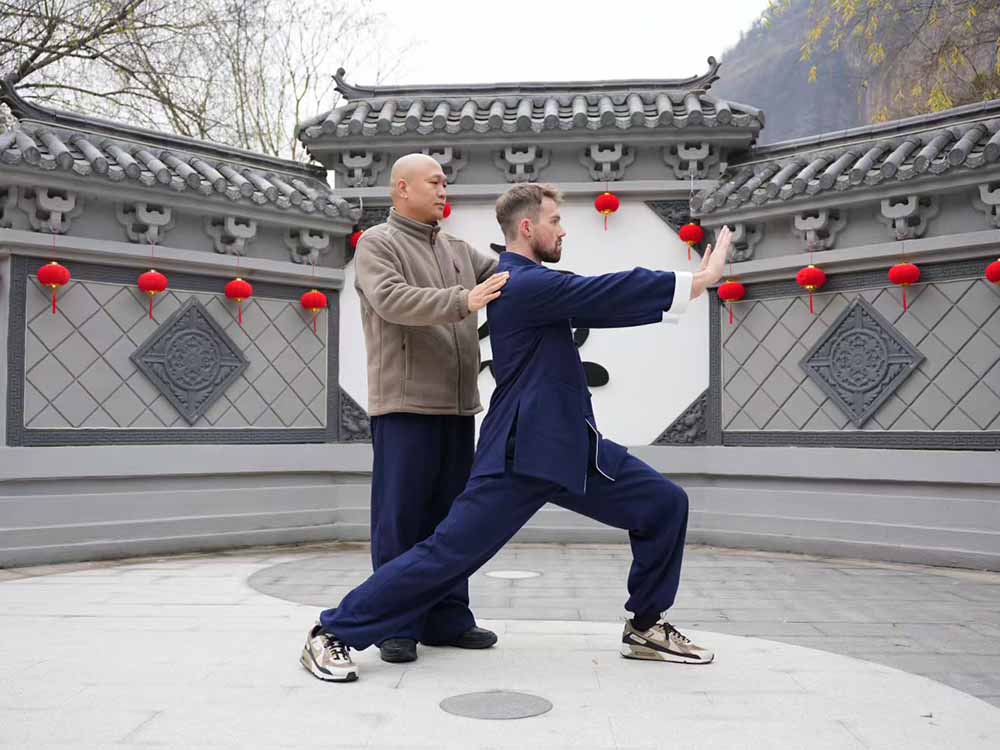
Students interested in Chen-style practice can also review the school’s Learn Tai Chi in China program. It is especially relevant for applicants who want a year of standing work, form study, breath control, and body mechanics alongside cultural study near the Shaolin Temple.
Questions to Resolve Before Accepting an Annual Quote
A written inquiry should be specific. Vague questions often produce vague answers, which makes annual budgeting difficult. Use the following checklist when contacting a school:
- State your preferred arrival and departure dates, including whether they cover a full twelve months.
- Name your primary training goal: Tai Chi, Shaolin Quan, San Da, weapons, Qi Gong, Meditation, or a balanced program.
- Ask for tuition and accommodation to be shown as separate figures if they are not already separated.
- Ask which meals, if any, are included and whether dietary requirements can be discussed.
- Ask what documents the school can provide for your visa application and what remains your responsibility.
- Confirm whether training continues indoors during unsuitable weather conditions.
- Explain relevant health conditions, injuries, age considerations, and prior martial arts experience.
- Ask how a change in planned duration would affect the agreed fee or accommodation arrangement.
- Set a personal contingency reserve for medical, travel, visa, or family-related changes.
- Request that all financial terms be confirmed in writing before booking flights.
The right annual plan is not simply the longest one. It is the one where training purpose, living arrangements, visa planning, and financial resources support each other. A student who can maintain steady practice for twelve months has more space to understand the quiet lessons inside repetition: the rooted feet, relaxed shoulders, clear attention, and respect shared in daily training.
Request details for a Long Term Kung Fu Course and ask SJF Kung Fu School for a written quote based on your intended dates, training focus, and accommodation needs.



 WhatsApp