One Month Kung Fu: What You Can Realistically Learn
Can you really learn Kung Fu in thirty days?
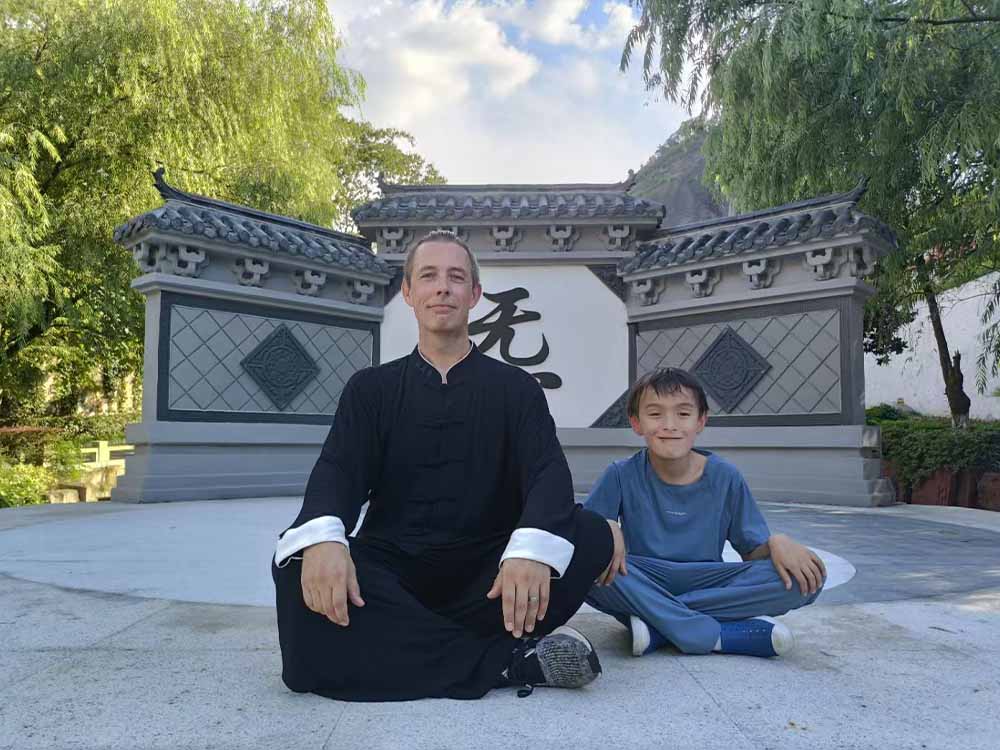
You can learn a foundation, a few movements done correctly, and the habits that let you keep practising at home. You cannot master a style. After more than twenty years of teaching, I see One Month Kung Fu as long enough to change how you stand, breathe and move, and short enough that every day matters. At SJF Kung Fu School, we are guided by what I inherited as a Liuhe Quan descendant and the 11th-generation inheritor of Chen-style Tai Chi. That inheritance teaches patience first and results second.
The old teachers called the quality behind the skill Wu De, martial virtue. It means humility, respect and perseverance. In a month, Wu De is not a lecture. It shows up in how you bow to your teacher, how you keep standing when your legs shake, and how you treat the training partner beside you. Technique comes more slowly than character does, and that is the right order.
What does a thirty-day month usually look like, week by week?
Every student arrives with a different body and a different goal, so this is a reasonable shape rather than a fixed timetable. Your Shifu adjusts it to you.
- Week one: structure. You learn how to stand, shift weight and breathe. Expect tired legs and a few surprises about your own posture. This is the week most newcomers find hardest.
- Week two: the first movements. You begin the opening sections of a form, or a short routine in the style you chose. Memory comes before quality.
- Week three: refinement. The Shifu stops correcting the sequence and starts correcting the details: where your weight sits, how the waist leads the arms, when to relax.
- Week four: consolidation. You repeat what you have learned until it is steadier. You also leave with a plan for practising alone, which is the part that decides whether the month lasts.
Limit: if you arrive injured, jet-lagged or very stiff, week one will absorb more time, and your form will be shorter at the end. That is normal, and it is better than rushing.
Standing practice such as Zhan Zhuang runs under all of this. It looks like doing nothing. In practice you are building rooting, patience and the ability to feel your own alignment, which every later skill depends on.
Beginner versus experienced: what does One Month Kung Fu actually change?
This is the question most trip pages avoid. The table below separates realistic thirty-day gains by starting level. These are typical patterns from teaching, not guarantees, and individual results vary with age, health, sleep and effort.
| Area | Complete beginner | Student with prior martial arts experience |
|---|
| Stance | Learns the basic stances and the idea of sinking weight. Legs shake and tire at first; by week four the stance is steadier, though not deep or long-lasting. | Alignment habits are corrected, especially knees, hips and weight distribution. The gain is refinement and a different feeling of rootedness. |
| Flexibility | Modest, useful gains in hips, hamstrings and shoulders. Do not expect splits or high kicks. | Small range gains unless flexibility was neglected. The real benefit is controlling the range you already have. |
| Forms | One short form, or the opening sections of a longer one. The sequence is learned; the details are still rough. | A full new form or a weapon routine is possible. Style-specific qualities, such as the spiralling movement of Chen-style Tai Chi, take longer than a month to show. |
| Conditioning | Soreness in the first one to two weeks, then better endurance, posture and breathing. | Conditioning mostly holds or improves slightly. The training load differs from what you were used to, which can feel humbling. |
What a month cannot deliver
- Fluent, fast, fully applied Kung Fu. Application grows from years of repetition.
- A deep understanding of internal energy. You will taste it in standing and slow movement, but taste is not mastery.
- A permanent change in flexibility without continued practice at home.
Two students who trained with us for thirty days show how varied the experience is. Austin Erkl from the USA took Tai Chi and Sword. He admitted he did not love it at first, but once he adjusted he had a great time and left with memories he said he would cherish. Klaes Risbjerg Simonsen from Denmark trained Tai Chi, Zhan Zhuang and Broadsword. He wanted a focused experience rather than a touristy one, and he praised how the Shifu adapted the training to his needs.
Which style should fill the month?
Should I pick one style or several?
For most first-timers, pick one main style and one supporting practice. Too many styles in thirty days leaves you with fragments of each. Andrew Williams from the USA spent his thirty days on Tai Chi, Zhan Zhuang and Dao Fa (broadsword) with his son. The three fit together: standing builds the root, Tai Chi teaches the movement, and the blade gives it a purpose.
| Your goal | Style to consider | Limit |
|---|
| Calm, posture, slow body awareness | Qi Gong with Tai Chi | Not a fitness-intensity programme |
| Athletic, dynamic movement | Shaolin Quan | Demands a higher baseline of fitness and recovery |
| Practical combat awareness | San Da or Qin Na | A month gives you the basics and good habits, not fighting competence |
Common questions about fitness, age and the training setting
Do I need to be flexible or fit before I come?
No. A reasonable level of health is enough, and regular walking or light exercise for a few weeks beforehand will make week one gentler. If you have a knee, back or heart condition, speak with your doctor first and tell us before you arrive, so the training can be adjusted.
Can a parent and child train together?
Andrew Williams did exactly that. He called the thirty days a life-changing experience that strengthened him physically, mentally and spiritually, and he plans to return next year. Age and suitability still depend on the individual child, so ask us about your specific case.
Does the setting matter for what you learn?
It matters more than most people expect. We are located near the Shaolin Temple, with more than thirty cultural and historical sites within reach, so rest days can be spent walking through places that explain why the practice exists. Pamela Paes Ezawa from Brazil, who trained for seven days, singled out the traditional training environment and the Taoist heartland location. Our 200㎡ indoor training hall also means rain or heat does not cancel a session.
Is one month the right length, or should I choose another?
If you only want to taste the practice, a One Week Kung Fu Course will show you how it feels, but it will not leave you with a form you can practise alone. If you want depth, such as multiple forms or serious weapon work, a Three-Month Course fits better. Hayley Noel from the UK trained for 120 days in Tai Chi, Zhan Zhuang, Sword and Broadsword. Her family, who were nervous when she flew out, wrote to me that she had an awesome time. Thirty days sits between the two: enough to build a base, not enough to finish it.
Mistakes that waste a month of training
- Expecting visible results by day five. The first week mostly reorganises your body. Progress shows later.
- Choosing too many styles. You leave with fragments, not a form you can keep.
- Skipping rest days. Tendons adapt more slowly than muscles. Rest is part of the training.
- Not practising after you leave. A form not repeated within a few weeks fades quickly. Decide your home practice time before you fly out.
- Treating it as a holiday with exercise. Klaes chose us because he did not want a touristy resort. Decide at the start what kind of month you want.
Questions still open, and the next step
Some answers depend on you, not on us. These are the variables that change the plan:
- Your prior experience, if any, and what styles you have trained.
- Injuries or health concerns that affect stance and joint work.
- Whether your priority is movement, calm, fitness or practical application.
- Your intended dates and whether you are coming alone or with family or a friend.
Regular classes have no minimum enrollment, so one student can train. Group bookings need at least two students. Tell us these four things and we can say honestly what a month can and cannot give you.
If you are ready for a conversation, read about our 30 Day Kung Fu Course and send an enquiry through the form on that page. A few lines about your background and goals are enough. Whether you are a beginner or an experienced martial artist, you are welcome to train with us at SJF Kung Fu School.



 WhatsApp