Plan Long-Term Kung Fu Training Around Skill Milestones
The Risk of Unstructured Training Commitments
Committing to months or even years of study abroad is a significant decision. The greatest risk isn't the cost or the distance; it's investing your time in a program without a transparent structure for advancement. Many schools offer an experience, but a true martial artist seeks a path to proficiency. Without clear milestones, training can become repetitive without purpose, leading to stagnation and a feeling that your dedication is not yielding tangible results. A genuine path of study, like our Long Term Kung Fu Course, is built on a foundation of progressive skill acquisition, where each stage logically builds upon the last.
The difference between a training vacation and a life-changing period of development lies in the curriculum's ability to guide a student from foundational mechanics to advanced application. Before you commit, you must be able to see the road ahead. This ensures your extended stay is one of continuous growth, not just prolonged practice.
A Progression Map for Extended Study
A well-designed curriculum provides a clear map of your development. It shows how foundational skills (Jibengong), forms, conditioning, partner work, and weapons are sequenced to create a complete martial artist. While every student's pace is unique, the structure should be clear. Below is an example of a typical progression for a dedicated student at SJF Kung Fu School.
This path is designed to build a strong body, a calm mind, and a deep understanding of martial principles.
Months 1–3: Building the Foundation
- Conditioning: The primary focus is on building stamina, flexibility, and strength. This includes running, stretching, and strength exercises that prepare the body for the demands of daily practice.
- Foundational Skills (Jibengong): You will learn and relentlessly drill the fundamental stances, kicks, punches, and blocks that are the building blocks of all advanced techniques.
- First Forms: Introduction to basic, foundational forms such as Wu Bu Quan (Five Stance Fist) or Lian Huan Quan (Continuous Fist) to teach coordination, balance, and flow.
- Internal Arts Introduction: You will begin practicing Zhan Zhuang (standing post) to cultivate internal energy and root, along with introductory Qi Gong sets like Ba Duan Jin to harmonize breath and movement.
Months 4–6: Integration and Application
- Intermediate Forms: You will progress to more complex Shaolin Quan forms that require greater memory, coordination, and physical expression.
- Basic Weaponry: Introduction to the first traditional Chinese weapon, typically the Gun (staff). You will learn basic handling, drills, and the first staff form. The staff is considered the "father of all weapons" and builds essential body mechanics.
- Partner Drills: You will begin simple two-person drills to develop timing, distance, and sensitivity. This includes basic applications from your forms and an introduction to Qin Na (joint lock) principles.
- Deeper Internal Practice: Your Zhan Zhuang and Qi Gong practice will deepen, focusing on longer holding times and more subtle internal feelings. Meditation is introduced to cultivate mental clarity and focus.
Months 7–12: Specialization and Combat Application
- Advanced Forms: You tackle more physically and mentally demanding forms, potentially including animal styles or more intricate sequences.
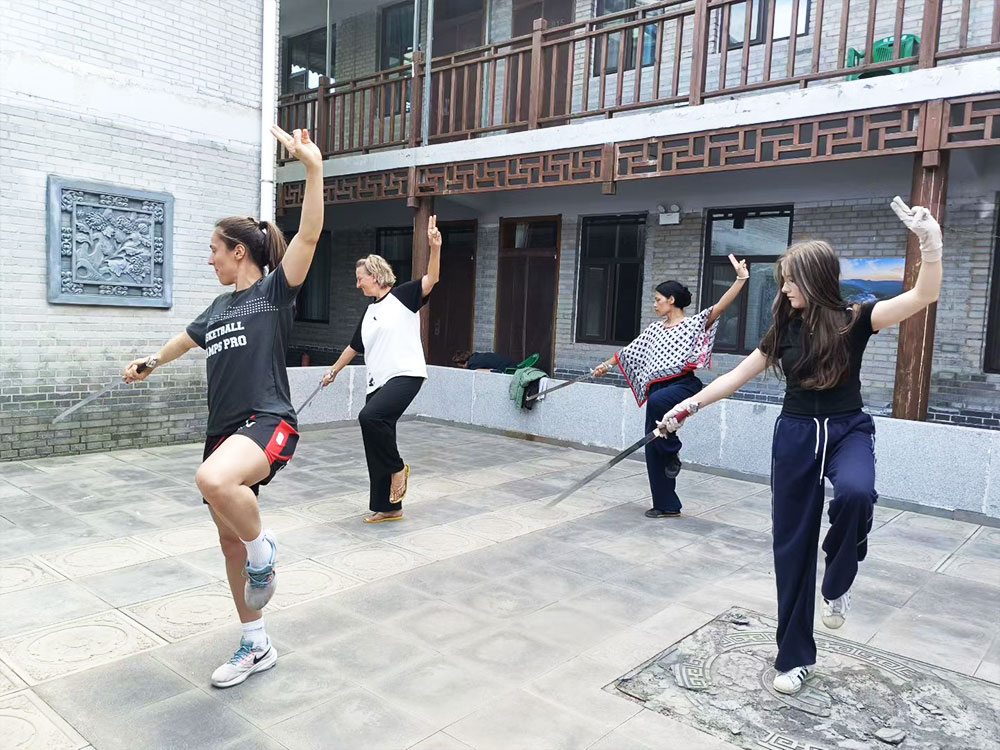
- Second Weapon: After building a strong foundation with the staff, you may begin a second weapon, such as the Dao (broadsword), which teaches different mechanics and applications.
- Introduction to San Da: You will start learning the fundamentals of San Da (Chinese kickboxing), including pad work, footwork, and basic sparring drills to test your techniques in a dynamic environment.
- Specialization: Students with a solid foundation can begin to specialize. You might choose to focus more deeply on Shaolin combat, dedicate more time to the internal arts of Tai Chi, or pursue proficiency with a specific weapon.
Verifying the Lineage and Expertise of Your Shifu
In traditional Chinese martial arts, lineage is not about prestige; it is about preservation. An instructor with a direct, verifiable lineage ensures that the art you learn is complete—a system of combat, philosophy, and self-cultivation passed down through generations. It is the difference between learning a collection of movements and inheriting a complete system.
As the founder of SJF Kung Fu School, my own training is rooted in this principle. I am a descendant of Liuhe Quan and the 11th-generation inheritor of Chen-style Tai Chi, the original family style from which all other major Tai Chi branches originate. This background allows our school to offer instruction that is not just technically correct but also rich in historical and philosophical context. When choosing a school for an extended stay, verifying the head instructor's qualifications and the school's registration is a non-negotiable step for any serious student.
Klaes Risbjerg Simonsen from Denmark, who completed a 30-day course with us, specifically sought an experience that was not a tourist resort. He noted, "From the first day, I felt I was in the right place." He praised the fact that the Shifu was highly qualified and, importantly, adapted the training to his specific needs—a hallmark of a teacher with deep, systemic knowledge rather than a rigid, one-size-fits-all approach.

A Checklist for Choosing Your Long-Term Training School
To ensure your significant investment of time and resources is well-placed, use this checklist to evaluate potential schools. A strong "yes" to these questions indicates a program designed for deep learning, not just a surface-level experience.
-
Does the school present a clear curriculum for long-term students?
Ask to see a progression map similar to the one above. If the plan for a six-month student is simply "more basics," the curriculum lacks depth. The school should be able to articulate how skills in forms, weapons, and applications are layered over time.
-
Is the head instructor's martial arts lineage verifiable?
Look for specific generational ties to established systems, like Chen-style Tai Chi or recognized Shaolin lineages. This ensures the teachings are authentic and complete.
-
Are the training facilities suitable for dedicated, year-round practice?
Weather should not be an obstacle to your training. A facility like our 200㎡ indoor training center ensures that your practice schedule remains consistent through rain, snow, or intense summer heat.
-
Does the curriculum offer a breadth of styles for future specialization?
A school offering multiple disciplines, such as our nine distinct styles including Shaolin Quan, San Da, Qin Na, and Tai Chi, provides the opportunity to find the art that best suits your body and temperament as you advance.
-
What is the training environment and community like?
Seek out a place focused on training, not tourism. Pamela Paes Ezawa from Brazil, after her course, highlighted her love for the "traditional training environment, the Taoist heartland location... and the welcoming Shifu and community." This atmosphere is essential for focused study.
-
Can the school demonstrate a successful track record with international students?
A history of training students from around the world, like the 3,000+ students we have welcomed, proves the school has the experience to handle the cultural, linguistic, and personal needs of a diverse student body.
Real Student Transformations from Extended Study
The true measure of a school is the growth of its students. Over the years, we have witnessed profound transformations in those who commit to an extended period of study. These are not just stories of learning forms, but of forging a stronger self.
For many, the experience is deeply personal and multifaceted. Andrew Williams from the USA spent 30 days here with his son, training Tai Chi and Zhan Zhuang. He described it as a "life-changing experience that strengthened him physically, mentally, and spiritually," and he plans to return. This integration of mind, body, and spirit is the core purpose of traditional martial arts practice.
The path is not always easy, which makes the outcome more rewarding. Austin Erkl from the USA was honest about his 30-day course: "I didn't love it at first," he admitted, but after adjusting, "I had a great time... The master is a great guy that cares for his students. I made some lifelong memories here." This adjustment period is a normal part of deep immersion, and overcoming it is a significant part of the growth process.
This journey also builds immense confidence and reassures loved ones back home. Hayley Noel from the UK stayed for 120 days. Her family wrote to us, "We were really worried when she flew out that way to China, but she loved it so much... we are so grateful to you." Hayley's positive experience is a testament to the supportive and safe environment we cultivate for all our students.
This sense of community and care is vital. As Othmane Echaouki from France shared, "Thank you, Shifu, for taking such good care of all the students. It made us feel we were in the best conditions." When you are thousands of miles from home, knowing you are part of a supportive family makes all the difference.
If you are ready to commit to a structured path of martial arts development, contact us to discuss how we can tailor a long-term training plan to your personal goals.



 WhatsApp