Shen Jiangfei Martial Arts: 30-Day Stay Costs
Plan the Full 30-Day Cost Before Confirming Your Place
A monthly training stay in China can look affordable when a visitor sees tuition alone. The regret often comes later: flights, visa costs, insurance, meals, and day-to-day transport were not included in the first calculation. For Shen Jiangfei Martial Arts applicants, the practical question is not simply, “What does one month of training cost?” It is, “What will I need to budget from leaving home until returning safely?”
A one month Kung Fu Course can suit adults who want enough time to establish a daily rhythm rather than only attend a short visit. Thirty days allow a student to repeat basic stances, body alignment, forms, breathing practice, and conditioning with greater patience. Yet a month abroad also requires a clear financial plan.
SJF Kung Fu School welcomes international students for programs from one week to long-term study. There is no minimum enrollment for regular classes, while group bookings require at least two students. This flexibility can help a solo traveler choose a start date and course length that fits personal circumstances, but it does not remove the need to confirm every included and excluded item in writing before booking flights.
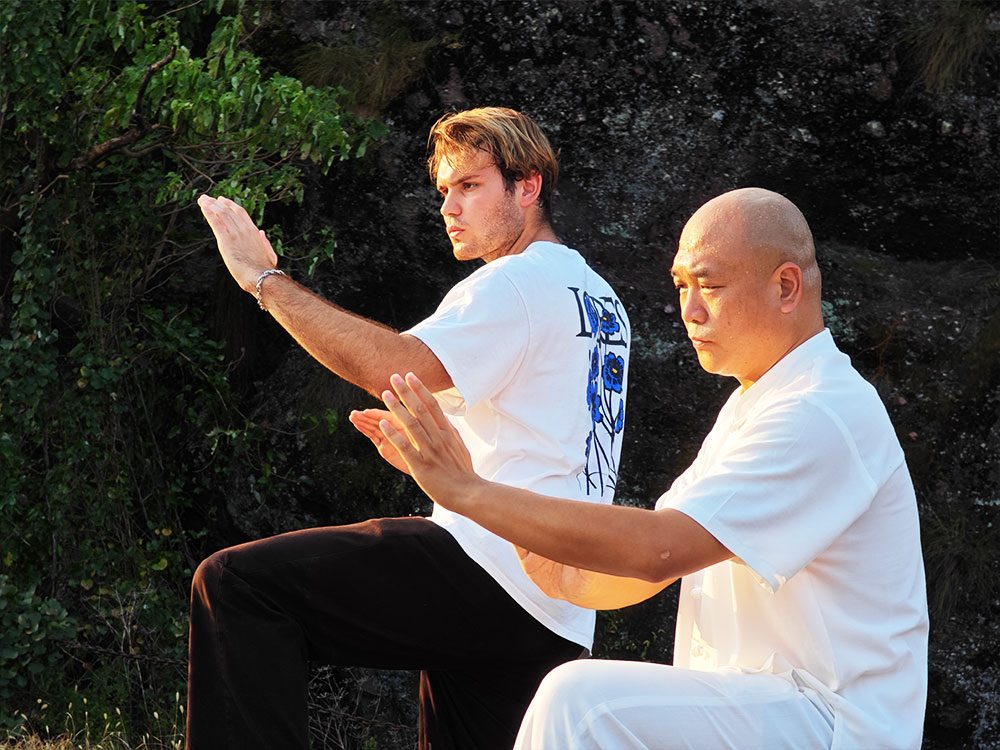
Training under Master Shen Jiangfei is grounded in traditional Chinese martial arts transmission. He is a descendant of Liuhe Quan and an 11th-generation inheritor of Chen-style Tai Chi. For a visitor, this lineage matters because a one-month stay is not only an expense decision. It is also a decision about what kind of daily practice, teacher guidance, and cultural setting you are seeking.
Cost: Build a 30-Day Total-Budget Model Before You Book
Clear recommendation: build your budget using seven separate categories, then add a personal contingency amount. This model fits overseas applicants from the United States, the United Kingdom, Europe, Australia, and other locations where flight costs and visa arrangements can vary widely. It does not provide a fixed public price because SJF Kung Fu School has not published confirmed current rates for every category, and airfare, visa fees, and insurance depend on the traveler.
Do not combine all expenses into one guessed number. Ask the school what its quoted training arrangement includes, then price the remaining items from your own country and travel dates.
| Budget category | What to confirm or calculate | Who usually controls the cost | Why it should stay separate |
|---|
| Training | Ask for the current 30-day course fee, training scope, start date, and payment terms. | SJF Kung Fu School | Course content and tuition should not be confused with travel expenses. |
| Accommodation | Confirm whether lodging is available, its dates, room arrangement, and whether it is included in the quote. | School and applicant | Arriving early or leaving late may create extra nights that are not part of a 30-day course. |
| Meals | Ask whether meals are included, how many per day, and whether dietary needs can be discussed. | School and applicant | Food is a recurring daily expense if it is not included in the stated arrangement. |
| Visa | Check the visa type, application requirements, fees, processing time, and supporting documents with the relevant official authority. | Applicant and relevant authorities | Visa rules and charges differ by passport and can change. |
| Flights | Price return flights from your departure airport and account for baggage, seat selection, and changes. | Applicant and airline | Airfare can change significantly by season, route, and booking date. |
| Insurance | Compare medical cover, training-related exclusions, trip interruption, and repatriation terms. | Applicant and insurer | A low-cost policy may exclude martial arts training or have limited medical cover. |
| Local transport | Estimate transfers, local taxis or public transport, and any personal travel outside the course schedule. | Applicant | Personal sightseeing and arrival arrangements vary from student to student. |
A useful working formula is:
Total 30-day budget = training + accommodation + meals + visa + return flights + insurance + local transport + personal contingency.
The contingency is not a school fee. It is your reserve for practical changes such as a delayed flight, additional baggage, a phone data plan, personal purchases, or extra meals during travel days. The correct amount depends on your own spending habits. A visitor who plans to train, rest, and follow a simple routine may spend differently from someone who intends to visit nearby sites during free time.
A practical 30-day budget worksheet
Use the following worksheet before sending an inquiry. Fill in confirmed figures only; mark unconfirmed items clearly. This prevents a preliminary estimate from being mistaken for a final cost.
| Item | Your estimated amount | Confirmed? | Action required |
|---|
| 30-day training fee | ________ | Yes / No | Request the current school quote. |
| Accommodation for course dates | ________ | Yes / No | Confirm room details and check-in/check-out dates. |
| Meals for 30 days | ________ | Yes / No | Confirm what is included and budget personal food needs. |
| Visa and documents | ________ | Yes / No | Check official requirements for your passport. |
| Return flights | ________ | Yes / No | Compare routes and baggage conditions. |
| Travel and medical insurance | ________ | Yes / No | Read martial arts activity exclusions. |
| Local transport and personal expenses | ________ | Yes / No | Set a realistic personal allowance. |
| Contingency reserve | ________ | Yes / No | Keep this separate from planned spending. |
Choose the Training Scope That Fits Your Month
Clear recommendation: choose one main discipline and one supporting practice for a 30-day stay, then discuss your prior experience and physical condition with the school. This approach suits beginners who need structure and experienced practitioners who want focused correction. It may not suit someone expecting to master several systems in a single month.
Traditional practice rewards repetition. A stance can be physically simple but demanding when held with correct alignment. A form may look graceful, yet it asks for coordinated waist movement, rooted footwork, timing, breathing, and intention. When a student tries to collect too many forms at once, the body has less time to absorb any one of them.
At SJF Kung Fu School, the available areas include Shaolin Quan, San Da, Qin Na, Tai Chi, Qi Gong, Zhan Zhuang, Ge Dou, Chinese Weapon training, and Meditation. This range gives applicants choices, but a 30-day plan should still have a primary purpose.
Tai Chi with Zhan Zhuang: suited to students seeking body mechanics, posture, balance, steady breathing, and a quieter daily practice. Explore Learn Tai Chi in China when this is your main reason for traveling.
Shaolin Quan with conditioning: suited to students who want structured movement, stances, coordination, and traditional empty-hand forms. It may require a gradual start for people who have been inactive.
San Da or Ge Dou with foundational training: suited to applicants interested in practical striking and combat-oriented practice. It is not a substitute for medical advice or a promise of competition readiness within 30 days.
Tai Chi with sword or broadsword work: suited to students who already have enough coordination to work carefully with traditional equipment. See the school’s Chinese Weapon training information before making this a primary request.
Qi Gong, Meditation, and standing practice: suited to those seeking a measured training rhythm alongside martial study. Learn more about Qi Gong if breath, posture, and calm attention are central to your plan.
The deeper aim is not hurried collection. Wu De, or martial virtue, asks a practitioner to approach training with respect, restraint, persistence, and responsibility. In a month of practice, these values appear in small choices: arriving ready, listening carefully, caring for training partners, resting when necessary, and repeating basics without seeking constant novelty.
What the School Can Confirm, and What You Must Confirm Yourself
Clear recommendation: separate school-provided facts from personal travel responsibilities. This is the best approach for any international applicant who needs a dependable decision record. It does not mean that every personal arrangement will be handled by the school; visa approval, airfare, insurance coverage, and individual spending remain outside its control.
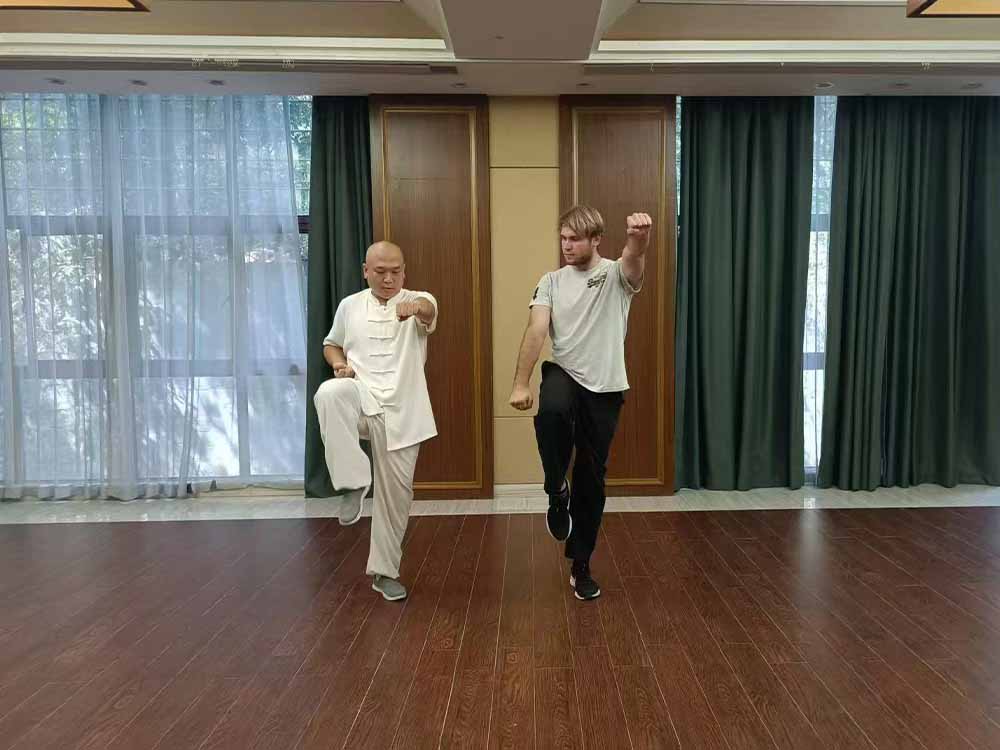
SJF Kung Fu School is a registered Kung Fu school with certified Shaolin Kung Fu instructors. Its indoor training center measures 200 square meters and supports year-round practice regardless of weather. For a visitor planning a full month, this provides a defined training setting rather than relying solely on outdoor conditions.
Master Shen has trained more than 3,000 students worldwide. That figure shows established teaching experience, but it should not be treated as a promise that every student will have the same result. Progress depends on starting condition, consistency, recovery, learning goals, and the training plan agreed during the stay.
| Question | Best person to confirm | Why the answer matters |
|---|
| Current course fee and dates | SJF Kung Fu School | These are the starting figures for your budget. |
| Training disciplines and suitability | SJF Kung Fu School | Helps match your plan to your experience and interests. |
| Accommodation and meal arrangement | SJF Kung Fu School | Prevents assumptions about what the school quote includes. |
| Passport, visa, and entry rules | Relevant embassy, consulate, or official authority | Rules depend on nationality and current government requirements. |
| Insurance conditions | Your insurer | You need to know whether training activities are covered. |
| Flights, baggage, and transfer timing | Airline and travel provider | These costs and conditions can change before departure. |
Use Past Student Experiences as Context, Not as a Financial Promise
Real student accounts can help an applicant understand the character of a longer stay. They cannot establish a universal result, fixed cost, or identical schedule.
Andrew Williams from the United States spent 30 days studying Tai Chi, Zhan Zhuang, and Dao Fa with his son. He described the time as life-changing physically, mentally, and spiritually, and planned to return the following year. His case may be useful for a parent and adult child considering a shared month of practice. It does not mean every family will follow the same training mix or experience the same outcome.
Austin Erkl from the United States completed a 30-day Tai Chi and Sword course. He said that after an adjustment period, he had a great time and valued the accommodation, food, and care shown by the master. This is a helpful reminder to budget not only money but also time for adaptation. Changes in food, sleep patterns, climate, training volume, and language environment can affect the first days of a stay.
For a longer example, Hayley Noel from the United Kingdom completed 120 days of Tai Chi, Zhan Zhuang, Sword, and Broadsword training. Her family shared gratitude that she had enjoyed her time in China. Her experience suggests that a student who finds a meaningful daily rhythm may later consider extended training. A 30-day applicant, however, should budget only for the period they have confirmed rather than assuming an extension will be possible or affordable.
Prevent the Budget Mistakes That Disrupt a Month of Practice
Clear recommendation: complete the checks below before purchasing non-refundable flights. This suits first-time visitors and experienced travelers alike. The list cannot replace official visa guidance, insurance advice, or medical advice.
Using tuition as the full trip budget. Keep training, lodging, food, flights, visa, insurance, and transport as separate lines. A single total without categories hides missing costs.
Booking flights before checking course dates. Confirm the intended training period first. Early arrival and late departure can add accommodation and meal costs.
Assuming visa requirements are the same for every passport. Check official information for your nationality. Do this before making irreversible travel commitments.
Buying insurance without reading activity exclusions. Ask directly whether planned martial arts practice is covered and retain the policy documents.
Choosing too many disciplines. State one main purpose and one secondary practice. A one-month period is better used for consistent work than for an overloaded list.
Ignoring recovery and personal needs. Bring suitable training clothing, allow for rest, and disclose relevant physical limitations when asking about course suitability.
Leaving no reserve fund. A personal contingency protects your plan if a travel detail changes. The school should not be expected to cover costs outside the agreed course arrangement.
Send a Focused Inquiry for a 30-Day Plan
When you contact Shen Jiangfei Martial Arts, provide the information that allows the school to give a relevant reply rather than a vague estimate. A clear inquiry respects both your budget and the teacher’s time.
State your preferred arrival and departure dates.
Say whether you are applying alone or as a group of two or more.
Describe your age range, martial arts background, and current fitness level.
Name your main interest, such as Tai Chi, Shaolin Quan, San Da, Zhan Zhuang, or Chinese weapons.
Ask what the 30-day training quote includes and what remains your responsibility.
Ask about accommodation and meals for your exact dates rather than assuming they are included.
Request any information needed for your own visa planning, then verify requirements with official authorities.
Finish your seven-part budget before booking flights.
A month of martial arts study can be a period of disciplined movement, quiet reflection, and cultural exchange. The financial plan should support that purpose. When costs are visible, the mind is freer to attend to stance work, breath, form, and the respectful practice of Wu De.
Ask about a 30-Day Kung Fu Course



 WhatsApp