Short Term Kung Fu: Is Seven Days Enough?
Is Seven Days Enough to Make a Meaningful Start?
Yes, seven days can be enough to begin well, provided you choose a focused goal. Short Term Kung Fu is most valuable when you arrive ready to train each day, accept correction, and avoid expecting mastery of a complete system in one week. A brief stay can give you a grounded introduction to stance work, breathing, coordination, martial etiquette, and the daily rhythm of traditional practice.
At SJF Kung Fu School, students can use a one-week stay to experience training near the Shaolin Temple while learning under certified Shaolin Kung Fu instructors. The school offers nine areas of practice, including Shaolin Quan, Tai Chi, Qi Gong, Zhan Zhuang, San Da, Qin Na, Ge Dou, Chinese Weapon training, and Meditation. That range matters, but a short visit should not try to cover every subject.
The better question is not, “Can I learn Kung Fu in seven days?” It is, “What can I carry home after seven days and continue with discipline?” A useful answer may be a corrected standing posture, a short movement sequence, a daily stretching routine, or a clearer relationship between breath, attention, and body mechanics.
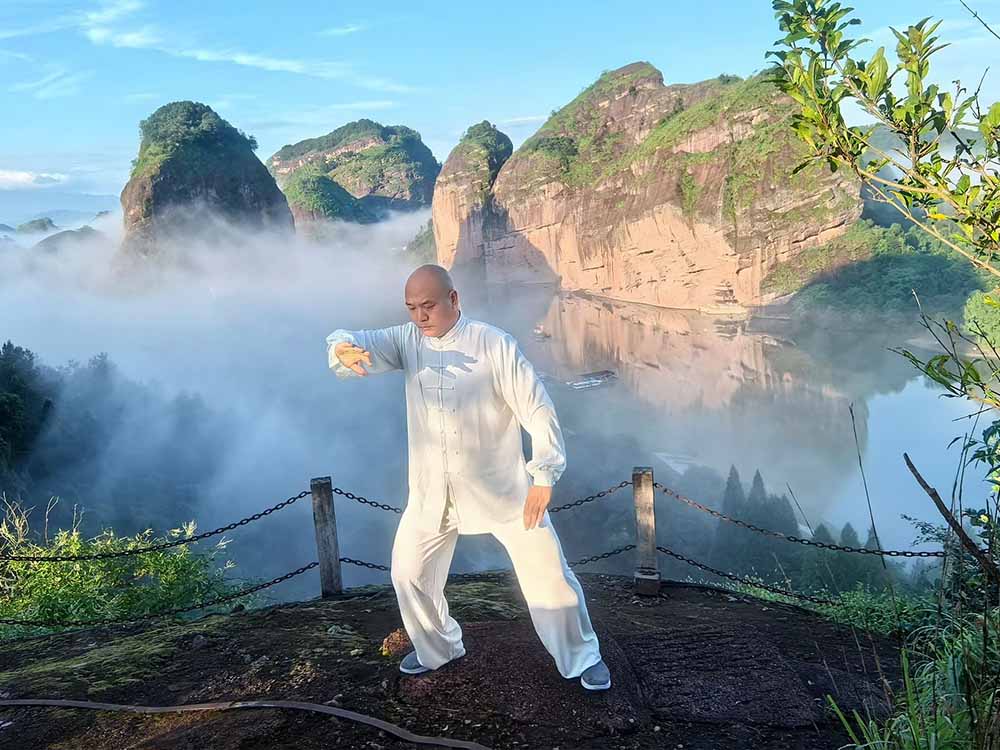
What seven days can realistically provide
- A training foundation: You can learn basic alignment, leg positioning, guard positions, mobility work, and safe practice habits.
- Direct correction: An instructor can identify errors that online videos rarely reveal, such as raised shoulders, collapsed knees, locked hips, or unstable balance.
- One clear study direction: Beginners may focus on basic Shaolin Quan or Tai Chi movement; experienced martial artists may use the week to refine body mechanics or explore a new discipline.
- A daily practice plan: You can leave with a manageable routine rather than a collection of movements you cannot remember.
- Cultural context: Training close to the Shaolin Temple and nearby historical sites can help connect martial practice with its Chinese roots.
Seven days are not enough to develop dependable fighting ability, deep flexibility, advanced weapon handling, or fluent performance of a long form. Those results need repetition over time. The value of a short course lies in receiving a correct beginning and learning what continued practice should feel like.
How Do Five Days, One Week, Two Weeks, and One Month Compare?
Choose the shortest course that matches your real objective, not the longest course your travel schedule can technically hold. A five-day visit suits a first encounter with training. One week gives more time for correction and repetition. Two weeks allow the body to settle into a regular rhythm. One month is the first length at which many students can experience more sustained change in coordination, conditioning, and study habits.
| Training Length |
Realistic Focus |
What You May Take Home |
Best Fit |
Limit to Understand |
| Five days |
Basic stances, warm-up methods, etiquette, introductory movements, and one selected subject. |
A first experience of daily practice and a simple routine for home. |
Travelers with a narrow schedule or those testing whether intensive training suits them. |
There is limited time to revisit corrections after fatigue or unfamiliar movement patterns appear. |
| One week |
Daily repetition of fundamentals, posture correction, introductory forms or drills, and recovery habits. |
A clearer grasp of movement quality, useful training notes, and enough repetition to remember core material. |
Beginners seeking a meaningful first course and martial artists adding a focused China training stop. |
One week builds direction, not long-term conditioning or technical fluency. |
| Two weeks |
More repetition, stronger basic conditioning, deeper work on one form or two connected subjects. |
More stable stance work, greater familiarity with the training schedule, and time to absorb feedback. |
Students who want to move beyond an introduction without committing to a month. |
Progress still depends on sleep, recovery, prior fitness, and whether you continue at home. |
| One month |
Repeated correction, more developed body awareness, broader practice across selected subjects, and a steadier routine. |
A stronger base for continued Tai Chi, Shaolin Quan, weapons, standing practice, or martial conditioning. |
Students seeking a substantial immersion period and time to adapt physically and mentally. |
A month is a serious start, not completion of a traditional martial art. |
The central difference is repetition. In the first few days, the body is learning unfamiliar positions. During the second week, students often begin noticing where tension interrupts movement. Over a month, there is simply more opportunity to correct the same issue several times rather than hearing the correction once and leaving immediately.
For travelers who can stay longer, the one month Kung Fu Course gives more room for this process. For a first visit with limited annual leave, a One Week Kung Fu Course is a sensible choice when expectations are modest and specific.
Which Training Goal Fits a Seven-Day Stay?
Choose one primary discipline and one supporting practice. This is the most practical way to use a week. Trying Tai Chi, San Da, weapons, meditation, Qin Na, and Shaolin forms all at once may sound appealing, but it leaves too little time for correction. Traditional martial training asks for attention to small details: how the feet meet the ground, how the waist turns, whether the shoulders remain relaxed, and whether breath becomes strained under effort.
Good combinations for a brief course
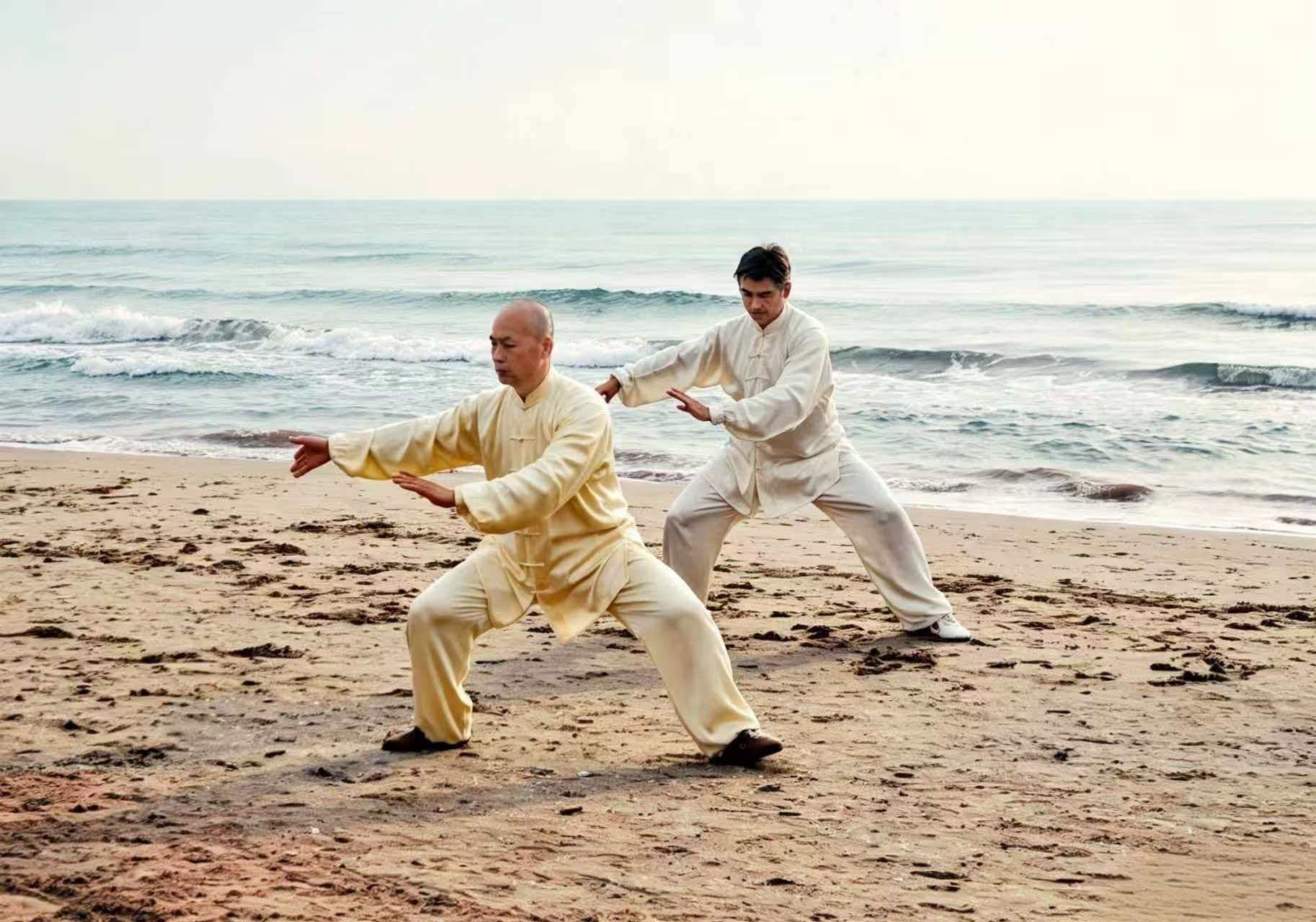
- Tai Chi plus Zhan Zhuang: Suitable for students interested in balance, structural alignment, slow movement, and quiet concentration. Begin with Learn Tai Chi in China if your aim is to understand Chen-style foundations rather than collect many techniques.
- Shaolin Quan plus Meditation: Suitable for active beginners who want martial forms, flexibility, coordination, and time to settle the mind after physical practice.
- San Da plus conditioning: Suitable for people with prior combat-sport or martial arts experience who want focused striking drills and physical training. A week is an introduction, not preparation for competition.
- Chinese Weapon basics plus stance work: Suitable for returning martial artists who already have body awareness. Weapon work needs control and safety, so beginners should expect basic handling rather than advanced sequences.
- Qi Gong plus Tai Chi: Suitable for students who want a slower pace and a repeatable personal practice. The Qi Gong curriculum can support breath awareness and calm, deliberate movement.
Master Shen Jiangfei’s teaching lineage provides meaningful context for students choosing Tai Chi. He is a descendant of Liuhe Quan and the 11th-generation inheritor of Chen-style Tai Chi, the original and oldest of the five primary family styles. This background does not mean a visitor will absorb a lineage in seven days. It means the instruction is rooted in a living tradition, and students can begin by respecting its method: patient repetition, correct structure, restraint, and Wu De, or martial virtue.
What Should a Beginner Expect During the First Week?
Expect the first days to feel physically and mentally demanding, especially if you are unused to daily movement practice. Sore legs, tired hips, and difficulty remembering details are normal responses to new stances and repeated training. They are not signs that you are failing. A good first week is often less about performing impressively and more about learning to notice the body without rushing.
At SJF Kung Fu School, training can take place in a 200㎡ indoor training center, allowing year-round practice regardless of weather. The school has trained more than 3,000 students worldwide, from complete beginners to returning martial artists. This experience is useful in a short course because instructors can adjust the entry point according to a student’s prior training, movement ability, and chosen focus.
A practical first-week pattern
- Day one: Learn the training environment, warm-up methods, basic stance positions, and safety expectations. Keep your goal simple.
- Days two and three: Repeat fundamentals. Ask for correction on feet, knees, hips, spine, shoulders, and breathing rather than asking for more material.
- Days four and five: Link basic movements into short drills or a section of a form. Notice which corrections appear repeatedly.
- Day six: Review the material slowly. Record written notes on names, key positions, and home practice priorities.
- Day seven: Confirm what to practice after departure. Ask which exercises should be done daily, which should be done cautiously, and what should wait until further instruction.
This approach fits beginners well. It also helps experienced practitioners who arrive with habits from another style. Previous training can be helpful, but it can also make a student rush ahead. In a new system, it is often wiser to return to basics for a few days and let the instructor see how you move.
When Should You Extend Your Stay Beyond One Week?
Extend to two weeks or a month if you want adaptation, not only exposure. More time is especially worthwhile if your aim includes standing meditation, Chen-style Tai Chi foundations, a weapon form, meaningful flexibility work, or physical conditioning. These practices depend on repetition after the initial novelty has passed.
Consider extending when one or more of the following statements is true:
- You want to establish a daily discipline rather than simply sample a martial art.
- You need time for the instructor to observe recurring posture errors and check whether you have corrected them.
- You hope to study both a primary art and a supporting practice, such as Tai Chi with Zhan Zhuang or Shaolin Quan with Meditation.
- You have prior training and want enough time to adjust to a different method instead of only comparing styles.
- You are seeking cultural immersion alongside training and would like time to visit some of the 30-plus nearby cultural and historical attractions without reducing every training day.
There are real examples of students finding value at different lengths. Othmane Echaouki and his wife from France completed a seven-day Chen-style Tai Chi course and thanked Master Shen for taking good care of the students and creating good conditions for training. Their experience shows that a week can be worthwhile for a focused Tai Chi visit.
For a longer example, Andrew Williams from the United States spent 30 days studying Tai Chi, Zhan Zhuang, and Dao Fa with his son. He described the experience as life-changing physically, mentally, and spiritually, and planned to return the following year. His result should not be treated as a promise for every visitor. It does show why a month can offer a different depth: there is time to train, rest, reflect, and return to the same foundations many times.
What Are the Common Mistakes When Booking a Brief Course?
The most avoidable mistake is choosing duration before choosing purpose. A short stay works best when the program is built around a clear personal question. “I want to learn Kung Fu” is broad. “I want a seven-day introduction to Tai Chi posture and Zhan Zhuang that I can continue at home” gives the instructor and student a workable direction.
- Trying to study every style: Choose one main subject. A broad taste of everything may be enjoyable, but it rarely creates a stable practice base.
- Expecting a finished form in a few days: Learning sequence is not the same as understanding movement. Prioritize quality and safe alignment.
- Ignoring recovery: Bring suitable training clothing, drink water, sleep well, and tell the instructor about injuries or physical limitations before training begins.
- Measuring progress only by speed: In Tai Chi, Qi Gong, and Zhan Zhuang, better awareness of tension and alignment is progress even when movement remains slow.
- Leaving without a home-practice plan: Ask for a short routine that fits your ordinary schedule. Fifteen consistent minutes can be more useful than an ambitious plan you abandon.
- Confusing cultural immersion with sightseeing alone: Visits to nearby sites can add context, but the daily training hall is where martial values become practical: respect, patience, restraint, and responsibility.
How Can You Decide Whether to Book Seven Days or One Month?
Book seven days when your goal is orientation and a correct beginning. Choose one month when your goal is adaptation and sustained practice. Neither choice is automatically better. The right decision depends on time, physical readiness, prior experience, and what you intend to do after returning home.
Use this booking checklist before confirming your stay
- State one primary goal: Tai Chi structure, Shaolin basics, standing practice, striking drills, weapons introduction, or meditation.
- Name your prior experience: Include martial arts background, regular exercise, injuries, and periods of inactivity.
- Choose a realistic duration: Five days for first contact, one week for focused introduction, two weeks for more repetition, or one month for a fuller training rhythm.
- Ask for the right supporting practice: Zhan Zhuang may support Tai Chi; Meditation may support demanding physical training; flexibility work may support Shaolin forms.
- Plan your return home: Decide where and when you will practice before you travel. A short course has greater value when it becomes the beginning of regular study.
A brief period of training can be small in length yet serious in purpose. The ancient principle is simple: do not chase many movements while neglecting one correct stance. In seven days, you may not finish a system, but you can learn how a disciplined practice begins.
View the One Week Kung Fu Course and contact SJF Kung Fu School to discuss the training length and study focus that fit your visit.



 WhatsApp