SJF Kung Fu School: Training, Housing, and Location
Choose a School by Daily Life, Not Martial Arts Style Alone
Before confirming a training place in China, international students often compare styles, course length, and instructor background. Those points matter. Yet the details that shape a productive stay are often more practical: Where will you train when the weather changes? What should you confirm about accommodation? How close is the school to cultural sites and quiet places for study?
SJF Kung Fu School is a registered Kung Fu school serving international students through short-term and extended programs. Its teaching scope includes Shaolin Quan, Chen-style Tai Chi, Qi Gong, Zhan Zhuang, San Da, Qin Na, Ge Dou, Chinese Weapon training, and Meditation. Students considering a One Week Kung Fu Course should assess the whole setting before booking, especially when travel time is limited.
Traditional martial arts study is not only a collection of forms. It is repeated attention to posture, breath, intention, discipline, and Wu De: martial virtue. A school can teach a hand form, but a suitable training environment also gives the student room to observe how practice affects daily habits. For a beginner, this may mean learning to stand with patience. For an experienced martial artist, it may mean refining body alignment rather than adding more techniques.
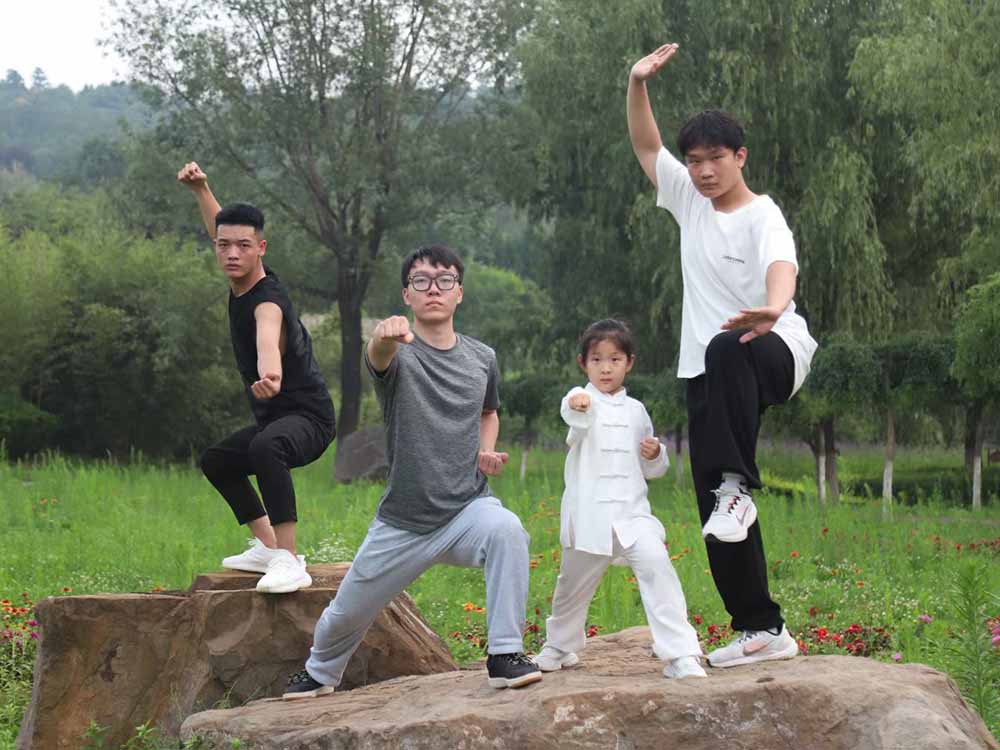
The school’s indoor training center covers 200㎡ and supports practice throughout the year. This matters for visitors who do not want a fixed training plan to depend entirely on outdoor conditions. It is a practical point, not a promise of any particular daily schedule. Before confirming dates, ask which subjects are available during your intended stay and how lessons are arranged around your level, duration, and physical condition.
What the Training Setup Supports—and What You Should Confirm
The strongest fit comes when a student selects a program according to the type of study they can sustain. A seven-day visit can introduce core principles and give a concentrated experience. A month or longer allows more time for correction, conditioning, and reflection. Neither option is automatically better. The right choice depends on your available time, physical preparation, and learning aim.
| Training aim |
Relevant study options |
Best suited to |
Limits to consider |
| Focused introduction to Chinese martial arts |
One-week intensive study, Tai Chi, Qi Gong, Meditation |
Visitors with a short China itinerary or beginners seeking direct instruction |
A short stay can introduce methods, but it may not provide enough repetition for long-term technical development |
| Daily practice and physical foundations |
One month Kung Fu Course, Zhan Zhuang, Shaolin Quan, weapon basics |
Students able to train consistently and adjust to a training-centered routine |
Students should clarify their current fitness level and preferred disciplines before booking |
| Internal practice and body mechanics |
Chen-style Tai Chi, Qi Gong, Zhan Zhuang, Meditation |
Adults seeking structure, balance, concentration, and traditional movement study |
Internal arts require patient correction; students should not expect quick mastery from a single course |
| Practical combat study |
San Da, Qin Na, Ge Dou, Shaolin Quan |
Students with an interest in applied martial methods and physical training |
Training content should be discussed in advance, particularly for beginners or people managing previous injuries |
| Extended immersion |
Three-month, six-month, and long-term programs |
Students who want time for deeper repetition across forms, standing practice, weapons, and meditation |
Longer stays need careful planning for travel, accommodation, personal commitments, and training priorities |
Master Shen Jiangfei leads this instruction as a descendant of Liuhe Quan and the 11th-generation inheritor of Chen-style Tai Chi. Chen-style Tai Chi is the original and oldest of the five primary family styles. This lineage is relevant to students who are not merely seeking exercise classes, but want to study the relationship between spiraling movement, rooted stance, calm attention, and martial application.
For example, Zhan Zhuang is often misunderstood as “just standing.” In structured practice, the student studies foot pressure, knee alignment, spinal length, relaxed shoulders, breathing, and attention. The apparent stillness gives the instructor a clear view of habitual tension. It fits students who want to improve body awareness. It does not suit someone seeking constant high-impact activity as their only training method. Those students should ask about combining standing work with San Da training or other physically active subjects.
The school has trained more than 3,000 students worldwide. This is useful evidence of international teaching experience, but it should not replace a personal discussion of your needs. Training results differ according to attendance, prior experience, health, attitude, and course duration.
Campus-Fit Evaluation: Training Setup, Accommodation, and Zezhou County Location
A school can be suitable in theory but unsuitable in daily practice. Use the following evaluation before you make contact. It links the known training setting, accommodation questions, and the Zezhou County location associated with this Jincheng City kung fu school.
| Campus factor |
What is confirmed |
Who it may suit |
Question to ask before booking |
| Training environment |
A 200㎡ indoor training center is available for year-round practice. Facilities include training mats, wooden dummies, traditional weapons, and a meditation hall. |
Students who value a designated practice space and want access to both movement training and quiet study. |
Which facilities will be used in my selected program, and what clothing or personal equipment should I bring? |
| Accommodation expectations |
A former student, Pamela Paes Ezawa of Brazil, praised the training-focused accommodation and welcoming school community during a seven-day Chen-style Tai Chi course. |
Visitors who prefer living arrangements that support regular practice rather than a sightseeing-only stay. |
What accommodation arrangement is available for my dates, what is included, and what practical items should I prepare? |
| Food and daily adjustment |
Austin Erkl of the USA, who completed 30 days of Tai Chi and Sword study, praised the accommodation and food after he had time to adjust to the routine. |
Students ready to approach the first days with flexibility while adapting to a new setting. |
What should I expect during the first days, and can dietary needs be discussed before arrival? |
| Zezhou County setting |
The school is located near the Shaolin Temple area and has more than 30 cultural and historical attractions nearby. |
Students who want martial arts study alongside access to local cultural and historical places. |
Which nearby places fit my available rest days, and what local travel planning should I arrange independently? |
| Program duration |
Programs range from one-week intensive courses to long-term training. Regular classes have no minimum enrollment; group bookings require at least two students. |
Solo learners and pairs who need flexibility in their intended stay. |
Is my preferred length available, and what subjects are practical within that time? |
This table offers a decision method, not a substitute for direct confirmation. Accommodation details can change by date and personal requirements. The school does not present a generic hotel experience; the available student feedback points instead to a training-focused setting. That distinction may suit a serious practitioner, but a visitor seeking a resort-style holiday should first consider whether a disciplined daily environment matches their purpose.
Zezhou County also gives the stay a cultural dimension. Martial arts in China developed alongside local customs, religious practice, medicine, philosophy, and community life. A visit to nearby historical sites can deepen context, but it should not distract from the daily work of training. The form practiced in the hall must still be practiced with care: a settled stance, clear waist movement, controlled breathing, and respectful conduct toward teachers and fellow students.
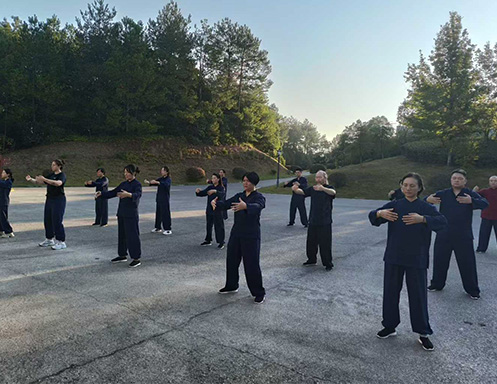
Use Course Length to Set Realistic Training Expectations
Course selection should reflect what you can reasonably absorb. The following procedure helps students compare SJF Kung Fu School training programs without making assumptions about speed of progress.
- Define one primary purpose. Choose the main reason for your stay: Chen-style Tai Chi, Shaolin forms, standing practice, practical combat study, weapons, meditation, or a balanced introduction. A clear first priority helps an instructor understand your direction.
- Set an honest time frame. Choose one week if your time is fixed and you want concentrated exposure. Consider a month or more if you want a fuller routine and more time for correction. Select a longer course only when you can commit to regular practice and extended residence.
- Describe your starting point. State whether you are a complete beginner, have trained in another martial art, or already practice Tai Chi. Mention any physical limitation that may affect stance work, kicking, partner drills, or weapon handling.
- Ask about subject balance. If your goal is Tai Chi, ask whether Zhan Zhuang, Qi Gong, and weapon work can complement it. If your goal is combat training, ask how San Da, Qin Na, and Ge Dou may relate to your experience level.
- Confirm living details separately. Ask about accommodation for your exact dates, food considerations, arrival planning, and what to pack. Do not assume that every student receives identical arrangements.
- Leave room for adjustment. A mature practice begins with listening. The first days may show that your body needs more stance training, slower form work, or additional recovery time than expected.
Andrew Williams from the USA provides a useful example of a family-oriented longer stay. He trained for 30 days with his son in Tai Chi, Zhan Zhuang, and Dao Fa. He described the experience as life-changing for him physically, mentally, and spiritually, and said he planned to return. This account supports the value of sustained daily study for one family; it does not guarantee the same outcome for every student.
Another example is Klaes Risbjerg Simonsen from Denmark, who completed 30 days of Tai Chi, Zhan Zhuang, and Broadsword study. He wanted a focused training experience and reported that Master Shen adapted training to his specific needs. This makes the school especially relevant for students who arrive with a defined learning purpose. It does not mean that every request can be assumed available without discussion, so explain your intended subjects when you inquire.
Questions That Prevent Misunderstandings Before Arrival
The best inquiry is specific. It helps both the student and the school determine whether the dates, training interests, and living expectations are suitable. Use this checklist when contacting the Shen Jiangfei Martial Arts Center.
- Dates: State your planned arrival and departure dates, plus whether they are fixed or flexible.
- Program length: Identify whether you are considering one week, one month, three months, six months, or a long-term stay.
- Training focus: Name no more than two or three priorities, such as Chen-style Tai Chi and Sword, or Shaolin Quan and San Da.
- Experience: Briefly describe prior martial arts practice, exercise habits, and any injuries relevant to training.
- Accommodation: Ask what is available for your dates and request practical information needed to prepare for a kung fu school accommodation China stay.
- Group status: Clarify whether you are travelling alone or with others. Regular classes have no minimum enrollment, while group bookings require a minimum of two students.
- Cultural interests: Mention whether you hope to visit nearby historical attractions during rest time, so you can plan your stay realistically.
A thoughtful inquiry also reflects Wu De. Respect in martial arts is practical: communicate clearly, arrive prepared, respect the limits of your body, and give sustained attention to correction. These habits serve the beginner and the advanced student equally.
For students interested in quieter internal study, Learn Tai Chi in China can be paired with Qi Gong, standing practice, and meditation. For those drawn to form, application, and historical methods, Shaolin Quan training provides another useful direction for discussion. The school’s nine teaching areas make it possible to state a focused aim while remaining open to foundational practices that support it.
Match Your Expectations to the School’s Best Fit
This school may be a good fit for international students who want a China-based training stay with access to an indoor practice center, a wide selection of traditional martial arts subjects, and a location connected to cultural and historical interests. It may also suit solo students because regular classes do not require a minimum enrollment, as well as pairs arranging a group booking.
It is particularly relevant for students who value Master Shen Jiangfei’s Liuhe Quan descent and Chen-style Tai Chi lineage. Hayley Noel from the UK completed a 120-day course covering Tai Chi, Zhan Zhuang, Sword, and Broadsword. Her family later expressed gratitude that she had enjoyed her time in China. Her extended course illustrates what longer study can include; it should not be read as a fixed curriculum for every visitor.
For a short, concentrated visit, Othmane Echaouki and his wife from France completed a seven-day Chen-style Tai Chi course and thanked Master Shen for the care given to students. Their case suggests that a shorter stay can still feel meaningful when expectations are clear. Its limit is equally clear: seven days offer only a beginning, not a replacement for continued practice after returning home.
If you are comparing SJF Kung Fu School China with other possible study arrangements, make your decision using the ordinary realities of training: your available time, preferred subjects, readiness for routine, accommodation needs, and interest in Zezhou County life. A well-chosen stay begins before arrival, with honest questions and a willingness to practice patiently.
View the one month Kung Fu Course and send your intended dates, training priorities, and accommodation questions for respectful booking guidance.



 WhatsApp