Three Month Course Abroad: How to Choose Kung Fu Training
Start With Purpose: A Simple Rule for Choosing Ninety Days
Ninety days is long enough to change how you stand, breathe and move, but long enough to disappoint you if the school doesn't match your goals. A Three Month Course abroad is a real commitment of time, savings and trust, so the decision deserves more than a brochure comparison. At SJF Kung Fu School, our Three-Month Kung Fu Course is built for people who want daily, supervised practice rather than a holiday with a few lessons attached.
Here is the selection rule we give to students who write to us before booking:
- Choose ninety days if you want to study one or two arts in depth, such as Chen-style Tai Chi with standing practice, and you can set aside your normal routine for the full period.
- Choose a shorter stay first if you have never trained in China, are unsure about the food, climate or teaching style, or cannot leave work and family for three months.
- Choose a longer stay only after you have already felt how your body responds to daily training and know you want to go further.
This rule has limits. It cannot tell you whether a particular school fits your temperament. That takes the verification steps later in this article.
What Ninety Days Changes in the Body and Mind
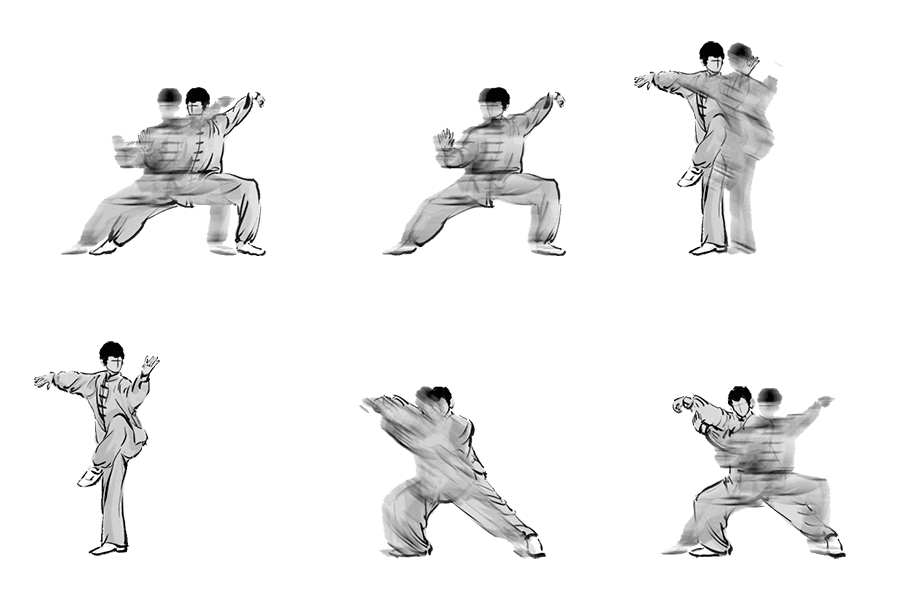
Traditional Chinese martial arts are not collected like certificates. They are absorbed. Chen-style Tai Chi, the oldest of the five family styles, asks you to coordinate legs, waist and spine so that movement starts from the ground rather than the arms. Most beginners understand this in theory within a week. Feeling it in the body takes far longer.
In a short course you meet the shape of a form. Over three months you start to meet its logic. Standing practice such as Zhan Zhuang shows why. Holding a posture for minutes at a time exposes tension you didn't know you carried, and the first weeks are usually uncomfortable. Only later does the stillness begin to feel useful.

Some of our students describe the same arc. Austin Erkl from the USA, who completed a 30-day Tai Chi and Sword course, told us he did not love it at first. After adjusting, he had a great time and left with memories he said he would cherish. That adjustment period is exactly what a longer stay gives you room for. You are not judged for needing time.
The martial virtues, known as Wu De, shape this adjustment too. Humility, respect and patience are not lectures. They show up in how you bow to a teacher, how you repeat a movement twenty times without complaint, and how you treat the person training beside you.
Side-by-Side Scorecard: Coaching Hours, Class Size, Accommodation and Practical Focus
Most listings for residential Kung Fu programs advertise duration and certificates. Those details tell you little about daily life. These four criteria can change your decision, so we suggest comparing every school you consider, including ours, against the same questions.
| Criterion |
What to ask |
Stronger sign |
Weaker sign |
What SJF has confirmed |
| Coaching hours |
How many hours per day are taught directly by a qualified instructor, and how many are self-practice? |
A written daily timetable, with the Shifu named as the teacher |
Vague wording such as "full-time training" with no schedule |
Training is led by certified Shaolin Kung Fu instructors under Master Shen Jiangfei. Ask us for the current daily timetable, since we do not publish a fixed hour count here. |
| Class size |
How many students share one teacher, and is the program adapted to individuals? |
Small groups where corrections reach each person |
Large mixed groups with one demonstration for everyone |
Regular classes have no minimum enrollment, and group bookings start at 2 students. Klaes Risbjerg Simonsen of Denmark noted that his training was adapted to his specific needs. |
| Accommodation |
Is housing built around training, and where do you eat? |
Rooms and meals arranged around the training day |
Hotel-style stays that leave you commuting to class |
Guests have praised the accommodation and food. Pamela Paes Ezawa of Brazil specifically valued the training-focused accommodation. |
| Practical training focus |
Is the emphasis on body mechanics, application and repetition, or on performance and photos? |
Basics, standing practice, forms and applications taught in sequence |
A rotating menu of unrelated activities |
Nine styles are offered, including Tai Chi, Zhan Zhuang, Qin Na and Chinese weapons, with a 200㎡ indoor training center for practice in any weather. |
How to read it: coaching hours and class size usually decide how fast you improve. Accommodation decides whether you can keep training in week nine when you are tired. Practical focus decides whether the three months build one skill or scatter across many. If a school cannot answer the first two in writing, treat that as missing evidence, not as a verdict. Ask again before booking.
Trade-Offs by Situation: One Month, Three Months or Longer
No duration wins in every case. The table shows which situations favor each option.
| Your situation |
Better fit |
Reasoning |
Where it falls short |
| First time in China, unsure about the training style |
A shorter stay, such as the 30 Day Kung Fu Course |
You test the teacher, food and daily rhythm at lower commitment |
One month rarely lets you refine a form or build lasting conditioning |
| Prior martial arts experience, wants to deepen one style |
Three months |
Enough time to correct habits and add standing practice, forms and weapons |
Won't cover many styles at depth; choose a focus |
| Wants to study a lineage and return home able to teach yourself |
Long Term Kung Fu Training |
Time to move from form to application and understanding |
Needs the largest block of time away from home and work |
| Parent and child training together |
A one-month stay, as Andrew Williams (USA) did with his son |
He called the 30 days of Tai Chi, Zhan Zhuang and Dao Fa life-changing, strengthening him physically, mentally and spiritually, and he plans to return |
Three months may be hard to fit around a school year |
Hayley Noel from the UK shows the other end. She completed 120 days of Tai Chi, Zhan Zhuang, Sword and Broadsword training. Her family had been worried when she flew to China alone. Afterwards they wrote to Master Shen that she had an awesome time, and she plans to return. That is one student's experience, not a promise of the same outcome, but it shows how a long stay can turn nervousness into commitment.
The Overlooked Factor: Does the Place Support Training Over Tourism?
The question most comparison pages skip is simple: after class ends, does the environment help you recover and practice, or pull you toward sightseeing? Klaes from Denmark said he chose SJF Kung Fu School because he wanted a focused experience rather than a touristy resort, and he felt from the first day that he was in the right place. Pamela described the Taoist heartland setting as part of why the training felt rooted.
The school sits near the Shaolin Temple, with more than 30 cultural and historical sites in reach. That matters for weekends and rest days, but it should stay secondary. Over ninety days, sleep, food and a quiet place to practice matter more than excursions.
Ask any school what an ordinary Tuesday looks like in week six. The answer tells you more than a list of attractions.
Common Mistakes When Choosing a Residential Course Abroad
- Choosing by certificate. A certificate says little about whether your posture, breathing or timing improved. Ask who teaches and what lineage they carry.
- Trying to learn everything. Nine arts are available here, from Shaolin Quan to Qi Gong, but three months spread across six of them rarely gives depth in any. Pick one anchor art and one supporting practice.
- Ignoring the first-month dip. Sore legs and homesickness are common. Austin's early doubts are a reminder to plan for them, not a reason to quit.
- Skipping the conversation with the teacher. A message exchange before booking reveals how responsive and attentive a school will be later.
- Treating location as the lesson. Being near a famous temple does not train your stance. Daily corrected repetition does.
How to Verify a School Before You Commit
Work through these steps in order. Each one narrows the field.
- Write down your goal in one sentence, for example "to learn the Chen-style Tai Chi form with Zhan Zhuang and a basic sword set."
- Request the daily timetable in writing, showing instructor-led sessions, rest and meals.
- Ask who will teach you. At SJF, that is Master Shen Jiangfei, an 11th-generation inheritor of Chen-style Tai Chi and a Liuhe Quan descendant, with certified Shaolin Kung Fu instructors alongside.
- Confirm group size and whether the program adapts to your level.
- Ask for accommodation details, including meals, and how far rooms are from the training hall.
- Read student accounts that describe daily life, not only star ratings.
- Consider a one-week or one-month stay first if any answer leaves you unsure.
When to Choose Each Option, and What Still Needs Confirming
Choose a Three Month Course when you have a clear focus, can take the full time away, and want corrected daily practice from a lineage teacher. Choose a shorter program when you are testing the idea, travelling with family, or have limited leave. Choose a longer program when ninety days has already shown you that the practice belongs in your life.
Some points can only be settled by direct conversation: your current fitness and any injuries, your preferred arts, your arrival dates, and the exact daily schedule for your intake. Send these details with your questions, and we will tell you plainly whether three months suits you or whether a shorter start would serve you better.
If you feel drawn to traditional Chinese martial arts, we would be glad to hear from you. Visit SJF Kung Fu School to view the course pages, send us a consultation request, and tell us what you hope to practice.



 WhatsApp