Your Journey to Balance Begins Here: Learn Chinese Kung Fu in China
What is Tai Chi? Beyond the Slow Motion, a Philosophy of Harmony and Skill
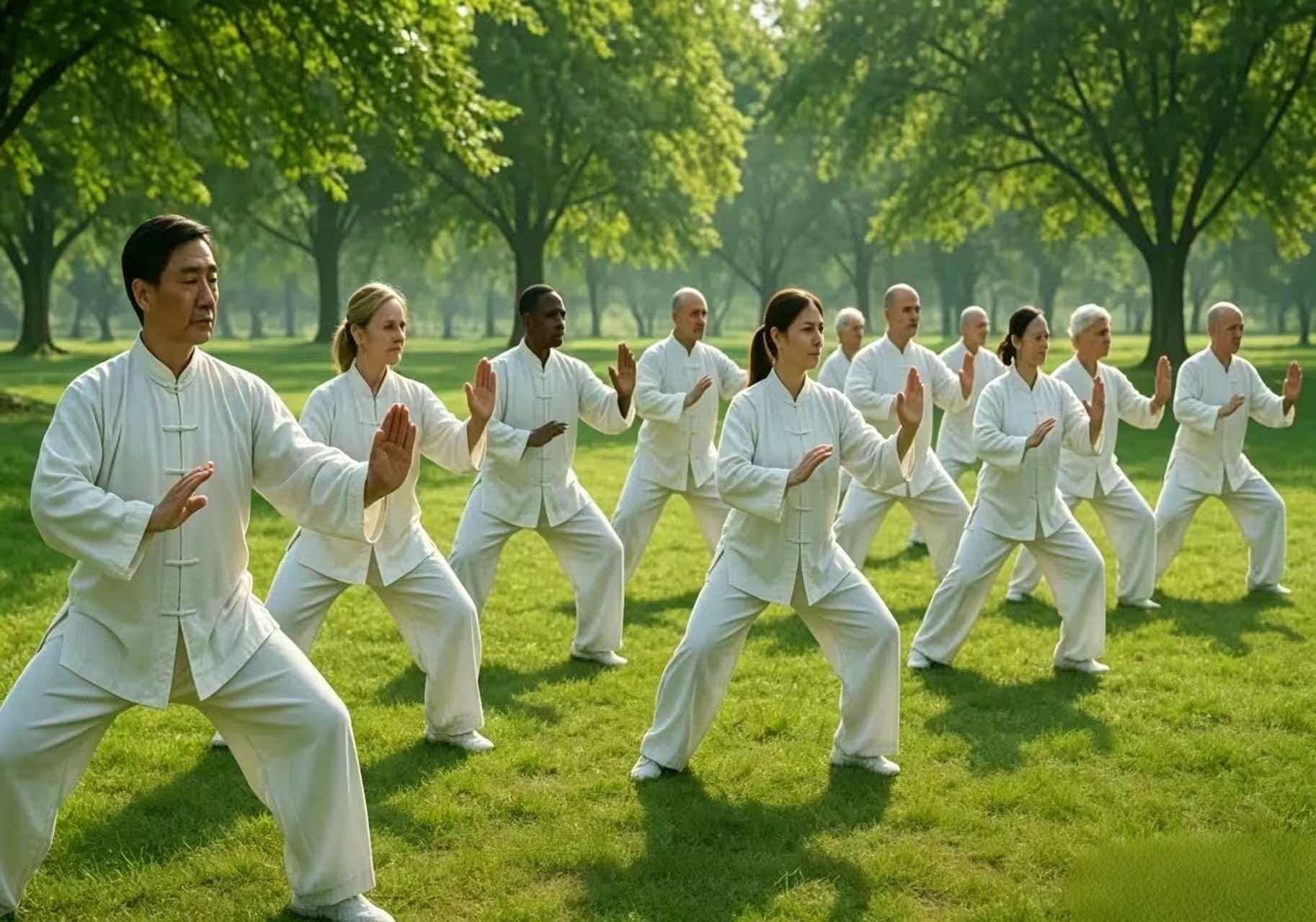
Tai Chi (Taijiquan) often appears as a series of slow, graceful movements performed in parks at dawn. It is easy to mistake these fluid postures for a gentle form of calisthenics or a meditative dance for the elderly. However, this perception barely scratches the surface of its profound depths. In the rich tapestry of Chinese culture, the term "Tai Chi" (太极拳 - Tàijíquán) is a concept that must be understood through the lens of both philosophy and practice.
The name itself offers the first clue. "Tai Chi" translates to "Supreme Ultimate," a foundational principle in Chinese cosmology that describes the state of infinite potential from which the universe originates. It is the source of Yin and Yang, the two complementary and opposing forces that govern all natural phenomena. Therefore, to practice Tai Chi is not merely to perform a sequence of movements; it is to embody this cosmic principle. As a martial art, it belongs to the internal systems (Neijia), distinguished by its focus on cultivating the mind, breath, and internal energy (Qi), rather than relying on brute muscular force. Its movements are designed to be circular, continuous, and relaxed, embodying the philosophy of using softness to overcome hardness and redirecting an opponent's force. Thus, Tai Chi is a holistic discipline—a moving meditation that unites the body, mind, and spirit into a single, harmonious entity.
The Quintessence of Tai Chi: A Microcosm of Kung Fu Culture
To truly appreciate Tai Chi, one must place it within the broader context of Chinese Kung Fu culture. As your school’s article on Kung Fu culture wisely elucidates, the true meaning of "Kung Fu" (Gōngfū) is not about fighting, but about "skill achieved through hard work, time, and patience." A master calligrapher possesses exceptional Kung Fu, just as a dedicated martial artist does. This understanding is central to Tai Chi. The "Kung Fu" in Tai Chi is not measured by the ability to break boards or win a sparring match, but by the depth of one’s concentration, the precision of one’s intent, and the seamless flow of one’s energy.
This perspective transforms practice from a mere physical activity into a lifelong journey of self-cultivation. It aligns perfectly with the concept of "Wude" (Martial Virtue)—a code of ethics that demands humility, respect, and discipline. When you step onto the practice floor to learn Tai Chi, you are not just training your body; you are training your character. The slow, deliberate movements require immense patience and perseverance, teaching students to confront their own inner turbulence—their anxieties and distractions—through the harmony of movement and stillness. This is the very essence of the spiritual journey rooted in Confucian, Buddhist, and Daoist thought, where the ultimate victory is not over an opponent, but over the limitations of one's own mind.
The Pillars of Practice: Internal Power and Mindful Motion
While its movements appear soft, Tai Chi is a powerful exercise in biomechanics and internal energy cultivation. This is where the science of "Qi" comes into play. Qi is the vital life force that flows through the body’s meridians. In Tai Chi, every posture and transition is designed to facilitate the smooth and unobstructed flow of Qi. The practice emphasizes three core pillars:
Posture and Alignment: Maintaining an upright, relaxed spine allows for optimal energy flow. The concept of "sinking the shoulders and dropping the elbows" is not just a stylistic preference; it is a functional necessity that connects the upper body to the lower body, grounding the practitioner.
Breath Coordination: Breathing is synchronized with movement. When the body expands, you inhale; when it contracts, you exhale. This deep, diaphragmatic breathing calms the nervous system, reduces stress, and massages the internal organs, fostering physiological health from the inside out.
Intent (Yi) Leading the Energy: The Chinese saying goes, "The mind (Yi) is the commander, and the body is the soldier." Your intention guides the movement and the flow of Qi. Before your hand moves, your mind is already there. This deep mind-body connection is what transforms a sequence of steps into a meditative experience.
Through this internal work, Tai Chi practitioners develop a unique form of power—a whole-body power that is relaxed yet incredibly strong. This power is not tense or rigid, but sprung and elastic, allowing for both explosive release and gentle, receptive yielding.
A Prescription for Modern Life: Health Benefits of the Supreme Ultimate
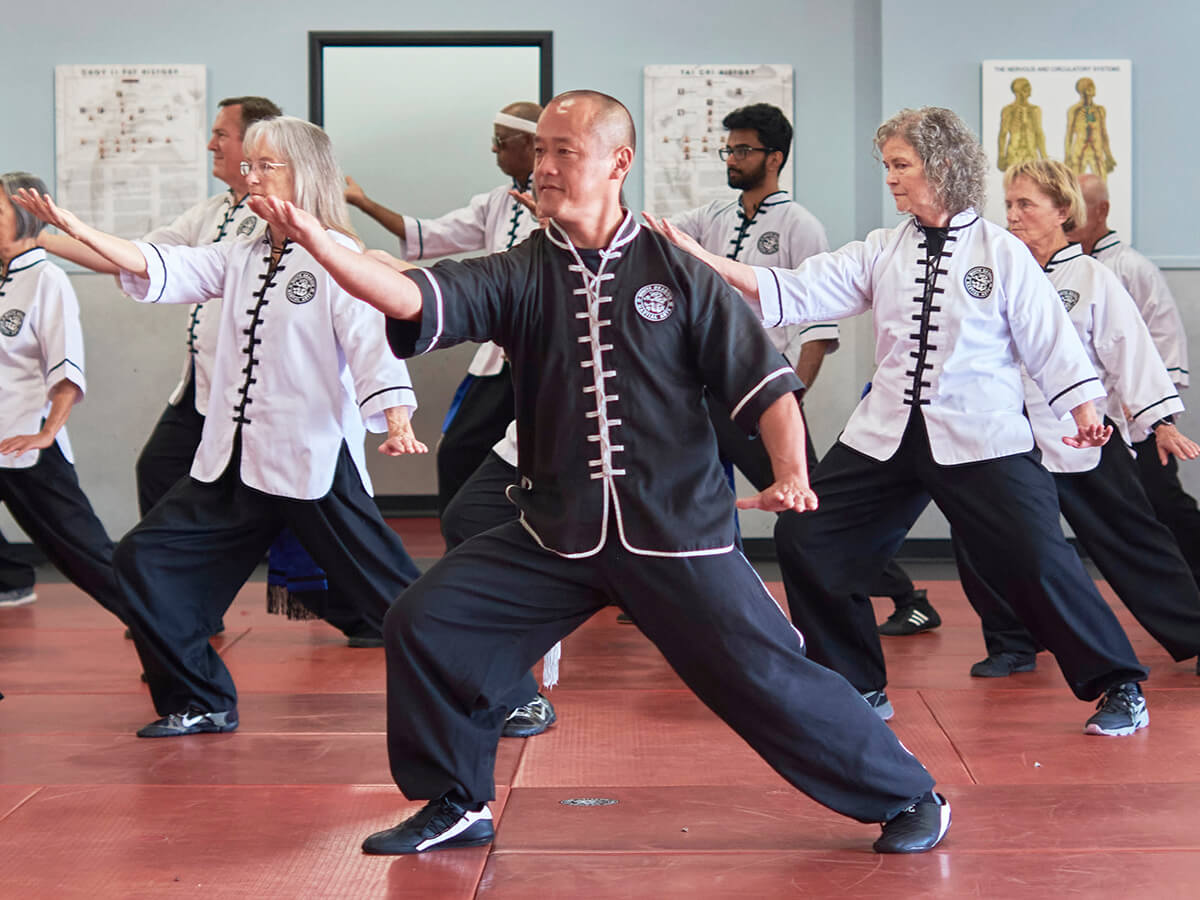
In our fast-paced, stress-laden modern world, the gentle art of Tai Chi offers a powerful antidote. Numerous scientific studies have validated what practitioners have known for centuries: Tai Chi is a potent tool for improving physical and mental health. Its health benefits are vast and well-documented, making it an ideal practice for people of all ages and fitness levels.
The slow, controlled movements enhance flexibility, balance, and muscular strength. For the elderly, this is particularly crucial as it significantly reduces the risk of falls. From a cardiovascular perspective, the deep breathing and rhythmic exercise improve circulation and lower blood pressure. On a neurological level, the focus and memorization required to learn the forms stimulate brain function and improve cognitive health.
Perhaps most importantly in this day and age, the meditative aspect of Tai Chi provides a sanctuary from the chaos. It reduces anxiety and depression by activating the parasympathetic nervous system—the body's "rest and digest" mode. It teaches us to be present, to focus on the moment, and to let go of external worries. In this sense, Tai Chi is not just a practice; it is a lifestyle that promotes resilience, calmness, and a profound sense of well-being.
The Path of Learning: Dedication and the Student-Teacher Bond
Learning Tai Chi is a unique journey that underscores the true meaning of Kung Fu. It cannot be learned from a book or a video alone. It requires the guidance of a skilled teacher (Sifu) who can correct postures, transmit subtle energies, and impart the philosophy behind the movements. A teacher does not just show you the form; they help you "feel" it. They adjust your stance so you can feel the connection to the ground, guide your breath so you can sense the flow of Qi, and challenge your mind to find stillness within the movement.
The student-teacher relationship in Tai Chi is built on mutual respect and trust. The student humbly learns not just the techniques, but also the virtues of patience and perseverance. The teacher, in turn, passes on not only a physical discipline but a living tradition. This process of transmission is integral to the Kung Fu culture. It ensures the art remains authentic and alive, evolving with each generation while staying true to its ancient roots. The deep, personal commitment to the practice, day after day, year after year, is the very "hard work, time, and patience" that defines true Kung Fu.
Weaving Tai Chi into Daily Life: A Philosophy of Action
The ultimate goal of Tai Chi is not to master a set of movements, but to integrate its principles into every aspect of daily life. The harmony and balance you find on the practice mat can be applied to how you handle stress, interact with others, and approach challenges. The principle of "overcoming hardness with softness" can be a powerful strategy in conflict resolution. Instead of reacting with force or aggression, you can yield, redirect, and find a way to resolve a problem with minimal friction.
The concept of "yin and yang" teaches us to find balance in our daily routines, balancing activity with rest, social interaction with solitude, and work with leisure. The mindfulness cultivated in Tai Chi extends to every action, from walking and sitting to eating and working. You learn to be more present, more aware, and more in tune with your own body and mind. By embodying these principles, the practice of Tai Chi becomes a living philosophy that guides you toward a more centered, peaceful, and fulfilling life.
Your Journey to Self-Mastery Begins at SJF Kung Fu School
The path of Tai Chi is a deep, rewarding, and lifelong journey. It is an inward exploration that cultivates inner strength, profound health, and a tranquil spirit. It is about discovering the "Supreme Ultimate" within yourself.
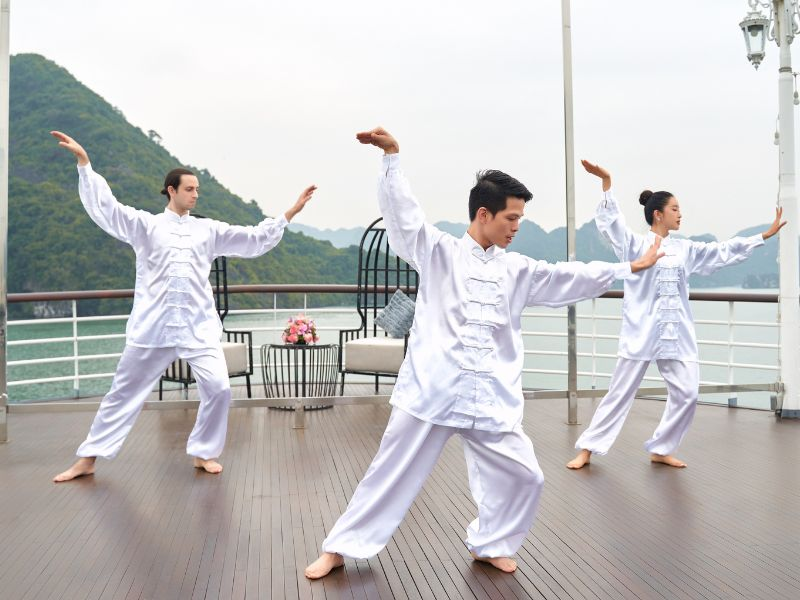
If you are ready to look beyond the slow motion and begin a transformative journey into the heart of Chinese martial arts and culture, SJF Kung Fu School is your ideal destination. We offer authentic, comprehensive training in a supportive and immersive environment, led by experienced masters dedicated to carrying on this ancient tradition. Whether you seek to improve your health, reduce stress, or begin a deeper study of internal martial arts, we invite you to join our community. At SJF Kung Fu School, we teach not just forms, but a way of life. Start your journey to self-mastery with us and discover the true meaning of Kung Fu through the profound art of Tai Chi.




 WhatsApp