Is Kung Fu Good for Self-Defense? My View as a Kung Fu Instructor
Yes, if you train to apply the moves to a person. But if you’ve spent three years going through the motions but never learning the application of moves in self-defense, don’t expect to be able to hold off someone who’s gone to a boxing gym for the past year.
I’m from a martial arts family in China, and I’ve been practicing Liuhequan and Chen-style Taiji (both of which include a variety of ways to throw and beat an opponent) since I was a child.
Why People Doubt Whether Kung Fu Really Works
In April 2017, Chinese MMA fighter Xu Xiaodongdefeated Tai Chi practitioner Wei Lei in Chengdu. The video of the defeat went viral worldwide, among those who had questioned the fighting capabilities of traditional Kung Fu masters before.
Two years after Xu Xiaodong defeated Wei Lei, Zhang Weili, a Chinese woman who did Sanda (a Chinese combat sport) before she became a MMA fighter, becameChina’s first UFC champion.
If you’re going to say that Wei Lei’s defeat is proof that Chinese martial arts don’t work, then you also need to acknowledge the evidence that they can work in competition. Zhang Weili’s martial arts background is evidence of that, as well.
In China, modern-day competitive Wushu is broken down into two disciplines:
Taolu (套路): Wushu athletes perform a martial arts routine which is then judged for performance.
Sanda (散打): Wushu athletes fight one another using punches, kicks, and throws.
A Taolu champion may have incredible flexibility, agility and strength, which are good for a martial art but don’t necessarily mean they know how to fight.
Also, not everyone practicing Kung Fu wants to fight. Some people do Tai Chi to help keep their mobility as they age. Others may be interested in training in the weapons or just the culture of martial arts.
However, if you’re paying someone to teach you self-defense, you should be learning more than a series of exercises.
In my experience, very few Kung Fu schools in China focus on combat applications, and it has nothing to do with how old a style is.
Why Kung Fu Forms Look Different in Combat
It’s often said that nobody fights like they do in Kung Fu forms.
They don’t always have to.
Take the horse stance, ma bu (马步) in Chinese. A practitioner may spend hours building up strength in the legs while in this stance, but if you stood in a deep horse stance and tried to fight someone, you’d have very little mobility.
A boxer also performs exercises that have little to do with fighting, such as jumping rope, which improves coordination, but nobody expects a boxer to jump rope in the ring.
Similarly, traditional Kung Fu includes a mix of movements that build physical skills and some with fighting applications.
Chinese martial arts expert Liu Wenwu notes in his2024 study on the combat efficacy of Wushu forms that there are different levels of techniques within a form, from individual attacking and defending movements to combinations and showpiece movements that emphasize physical skill.
For those learning self-defense, the core fighting movements are most important.
Chai Zhao: What’s in the Form?
In traditional Chinese martial arts, chai zhao (拆招) refers to the breaking down of movements to see how they are applied.
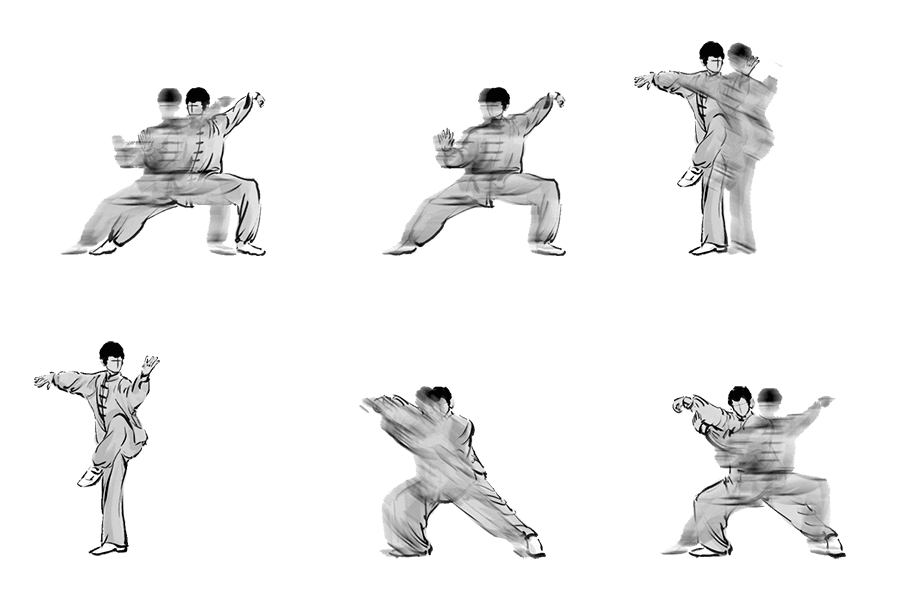
InChen-style Tai Chi, a lot of the movement of the arm involves rotating the waist and shifting the body’s weight. You might get the impression from watching just that that Tai Chi is just a lot of slow exercise, but add a partner to the mix and you will quickly understand the importance of the rotation and weight shifts.
In the video below, you can see some of the practical combat applications of traditional Tai Chi movements.
I want to caution everyone who watches martial arts demonstrations to pay attention to the recipient of the technique. The person being demonstrated on is a willing participant in a learning exercise.
If the partner were to interfere with the movement of the person demonstrating the technique, it would be hard to explain that particular movement to a person watching the demonstration for the first time.
On the other hand, once you know how to do the movement, you still need to learn when to use it against someone who isn’t cooperating.
I don’t want to judge a person’s fighting ability based on them demonstrating a technique they’ve done a thousand times without knowing how they respond when the conditions of the demonstration change.
Defending Yourself Is Not the Same as Winning a Fight
Kung Fu can be effective in a street fight, but a street fight is not the same as a martial arts competition. You need to understand the difference in the types of fights if you are going to learn the right skills.
I would recommend taking boxing lessons for self-defense. A boxer who practices fighting with others develops real skills in judging distance and understanding how different punches feel. But remember, most of boxing is about defeating someone else in competition.
For example, two people might be fighting outside a restaurant. One is a wrestler and brings the other down to the ground. In a competition, that wrestler has gained the upper hand. But what happens if someone else joins the fray? What if the wrestler needs to get away?
This is something to consider when studying the four main categories of Chinese martial arts moves: ti, da, shuai, na (踢、打、摔、拿):
Ti (踢): Kicking.
Da (打): Striking.
Shuai (摔): Throwing.
Na (拿): Seizing and controlling.
For example, a martial artist who has only practiced kicking and punching may not be familiar with physical contact at close range as taught in traditional grappling andQin Na.
Similarly, martial artists who only learn grappling may not be familiar with the experience of dealing with incoming punches, like boxers are.
We suggest that martial artists respect the value of other martial arts, no matter how different they are.
Does Kung Fu Help a Smaller Person Defend Themselves?
There’s a common proverb in Tai Chi, si liang bo qian jin (四两拨千斤), meaning “four ounces can move a thousand pounds.”
Unfortunately, these kinds of sayings are sometimes taken literally.
While there’s no doubt that a little good body mechanics can go a long way for the practitioner, if you’ve never had anyone grab hold of you, you’ll be surprised at how little effort it takes for an experienced practitioner to move you.
If both you and your opponent know the same moves and are equally experienced but the opponent is much stronger than you, physical strength and body weight matter.
Learning Kung Fu certainly helps you move in ways you could not before, but you can’t get away from physical limitations.
Of course, you don’t have to win a fight to practice self-defense. Chinese martial arts emphasize Wu De (武德; “martial virtue”), which includes a sense of restraint and responsibility in the practice of martial arts. There’s little sense in risking injury to prove your martial arts skills when you can safely leave.
How Much Is Too Much When Practicing Contact Work?
A student may practice striking a bag for hours and build up a lot of power, but when they try to practice on a moving target, their power is not accompanied by the ability to gauge distance and timing.
What does the instructor do? Tell them they need to do an hour more of bag work?
If the student’s problem is that they can’t recognize the other person’s movements, more bag work alone will not help.
Why I Don’t Do Much Sanda Sparring at My School
At Shen Jiangfei Martial Arts School, we do a lot ofSanda movements by ourselves and kick and punch training bags, but for partner work, we focus on traditional grappling and throws.
I don’t allow a lot of Sanda sparring because it can lead to injuries.
If a student comes from Europe or the United States to train with me for a month, and they get hurt in the second week, let’s say they twist their ankle, they may not be able to practice throws for the rest of their trip. They may also be unable to practice forms or weapons, and so on.
A competitive fighter who is training for a tournament has a very different set of needs than someone training for a Kung Fu program for a few weeks.
We practice throws and grappling on mats, with lots of warm-up and stretching before we start. Of course, grappling in general carries risks, especially when you’re learning to fall and control your joints.
There is a big difference, however, between the resistance a partner can offer and the force of physical contact in the exercise. There’s no rule saying that making exercise more challenging with a partner means it has to be more physically demanding.
If you’re considering classes, I would encourage you to ask your instructor about both aspects, not just if they offer sparring.
You want to know what the point of the exercises is (what you’re supposed to be learning), what freedoms you have, and whether or not you get to discover your own limitations.
How Long Does It Take to Learn Kung Fu for Self-Defense?
It can take you a few weeks to pick up basic movements of Kung Fu and a couple of combat applications. However, learning to use those movements in actual combat can take months or even years.
Learning 20 moves and knowing their applications is different from knowing when to apply them.
At my school, different students follow different training plans. For example, I don’t spend too much time on kicking drills for students who have a background in martial arts like Muay Thai. Instead, I will let them explore the martial arts they have less knowledge of, like grappling.
Before you decide to learn with me, it is important you establish four things:
Why you want to learn Kung Fu.
What you wish to learn.
What your experience is in martial arts and your physical ability.
What the instructor can teach you in the time you have.
If your only desire is to know how to box, there’s no need to fly to China and learn from Kung Fu masters when you can learn from a boxing trainer in your area.
However, if you wish to learn traditional Chinese martial arts like Liuhequan or Chen-style Tai Chi, with their applications, finding that kind of instruction locally may be difficult.
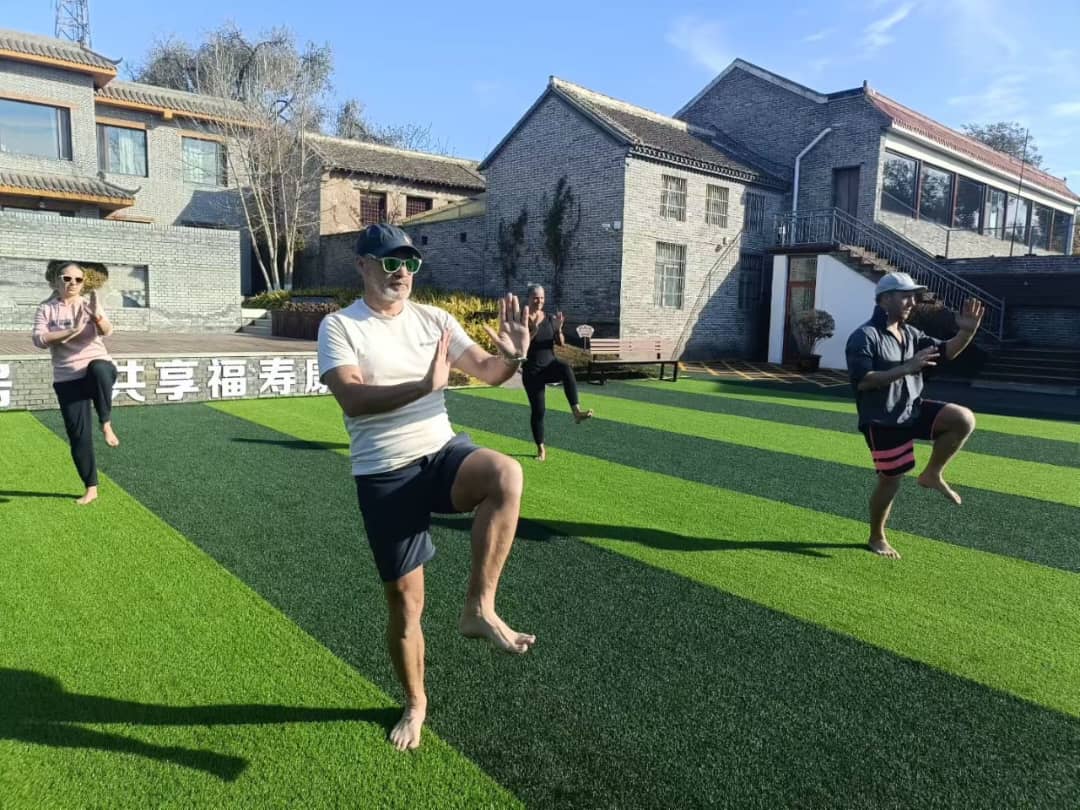
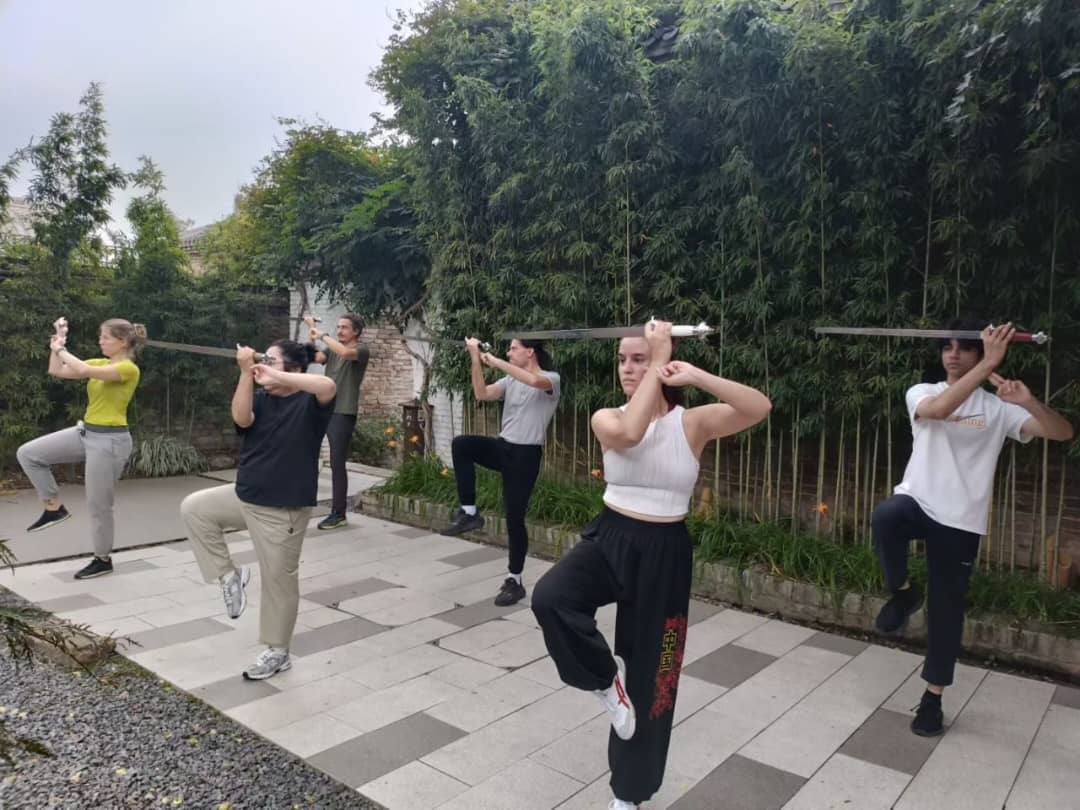
In our school at Dayang Town in Shanxi, we train five days a week, and this allows us to concentrate on specific aspects of traditional Kung Fu.



 WhatsApp